
Game review
Turtle Riders
5.6 / 10
- Developer
- Solenya
- Publisher
- Solenya
- Released
- 23 March 2025
- Platforms
- Windows
- Genre
- Roguelike / Tower Defense
- Monetisation
- Premium (one-time purchase)
- Players
- false
The short version
Turtle Riders takes a genuinely novel premise — a slow-walking turtle you must simultaneously defend and feed, switching constantly between shooting incoming enemies and scrambling to gather resources — and builds a short, cheap, occasionally very fun roguelike around it. What holds it back is execution rather than concept: small, unreliable hitboxes on both enemies and gatherable resources, ability timing that too often just misses, a meta-progression system many reviewers found nearly worthless, and a difficulty curve that several players describe as an unfair wall rather than a fair challenge. Reviewers who click past the jank find something worth the low price; those who don't tend to bounce off within a couple of hours.
Biggest strengths
- A genuinely fresh hybrid of moving tower defence and resource gathering, distinct from most roguelikes in its genre
- Catchy soundtrack and a chill, slightly eerie atmosphere reviewers consistently praise
- Cheap price point that several reviewers say is easily worth it for a handful of hours
Biggest weaknesses
- Small, unreliable hitboxes on both enemies and gatherable resources lead to frequent, frustrating misses
- Time-based abilities frequently fire at the wrong moment or miss entirely, adding heavy RNG to combat
- Meta-progression upgrades are widely criticised as weak, often amounting to small, capped stat bonuses
Who it's for: Roguelike and tower-defense fans looking for a short, cheap, mechanically unusual game, especially those who enjoy fast, twitchy clicking and don't mind a rough, RNG-heavy difficulty curve.
Our recommendation: A cautious recommendation at this price for genre fans who can tolerate jank — go in expecting a rough, sometimes frustrating aim-trainer-adjacent challenge rather than a polished roguelike, and temper expectations for its meta-progression.
5.6 / 10
What Is Turtle Riders?
Turtle Riders is a single-player roguelike from solo developer Solenya, built around a simple but unusual central tension: players ride a giant turtle across three zones, and must constantly switch between aiming ranged weapons at oncoming waves of enemies and scrambling to gather resources — sticks, stones, and other small pickups scattered across the path — needed to heal and upgrade the turtle between fights. Runs are built from a roster of unlockable weapons and turtles, each offering different elemental abilities, with permanent meta-progression available between attempts. Released 23 March 2025 at a budget NZ$7.39, it currently sits at 76% positive across 115 reviews — solidly "Mostly Positive," but with a substantial and detailed critical minority whose complaints are worth taking seriously.
The pitch is genuinely distinctive within its genre: rather than a straightforward horde-survival shooter, Turtle Riders asks players to manage attention between offense and logistics in real time, which several reviewers single out as the game's most interesting idea.
A Clever Hook Let Down by Small Targets and Bad Timing
The most consistent and specific criticism across the review sample concerns hitboxes and ability reliability. One detailed negative review breaks this down precisely: sparks that are supposed to kill on hit "miss like 90% of the time because they are like 3 pixels," a hawk ability meant to dive-bomb enemies has what the reviewer calls "a 100% miss rate," and a lightning-calling ability lands unpredictably depending on enemy speed. A separate review corroborates the same specific complaint about the hawk ability, noting it is "legitimately blind." This isn't an isolated impression — it recurs across reviews with very different overall verdicts, including from players who otherwise recommend the game, which suggests it's a real and unaddressed mechanical issue rather than a skill gap.
Resource gathering suffers a related problem: pickups are often tiny, fast-moving, or otherwise fiddly to click, and switching between combat and gathering modes is reported to sometimes fail to register cleanly, forcing players to fumble between the two systems mid-fight. One recommending review frames the whole game as "an aim trainer disguised as a roguelike," which is meant as a genuine compliment by that particular player but doubles as an accurate description of where the game's difficulty actually comes from.
Thin Meta-Progression and an Uneven Difficulty Curve
Beyond moment-to-moment jank, the most detailed critical review in the sample — a long, structured breakdown that also recommends against purchase — lays out a case that the game's difficulty comes from overtuning rather than clever design. The first zone is described as "piss easy," while the second and third are "a constant battle of attrition" with few reliable ways to heal quickly, compounded by a system where one enemy type per zone can spawn at a hugely inflated rate, creating runs that can be effectively doomed by bad luck alone. The same review catalogues the permanent upgrade system as poorly balanced: most meta-upgrades offer only a 2% stat bonus capped at level 5, while the shared currency they're bought with is also required to unlock new weapons and turtles and to buy in-run healing, spreading a fairly small resource too thin to feel meaningfully rewarding over time. A separate, shorter review makes a similar point more casually, noting that "once everything is unlocked or you beat the game once, there's not much variation anymore."
Specific bugs are reported too: items falling through the floor when picked up in groups, menus becoming unresponsive after alt-tabbing at the wrong moment, and at least one report of a currency reset occurring after certain purchases. None of these appear catastrophic individually, but together they paint a picture of a game that shipped with rough edges its developer hadn't fully sanded down. The same long-form review also notes that most of the game's weapons ultimately boil down to reskinned stat variants of one another, with only three carrying genuinely unique traits, which compounds the progression problem by narrowing viable builds down to whichever weapon happens to synergise best with a player's preferred playstyle rather than offering a wide field of equally valid choices.
Where It Still Works
None of this means Turtle Riders lacks fans, and the positive side of the sample is worth taking just as seriously. Several reviewers describe the game as "addictive," praise its catchy soundtrack and quietly eerie atmosphere, and appreciate being able to enjoy it in short one-to-two-hour sessions without it demanding a larger time commitment. A review posted several months after launch specifically credits post-launch updates with making the game "a bit easier to play" while preserving what made it fun, suggesting the developer has continued working on balance since release. For players who enjoy fast, twitchy, somewhat chaotic clicking challenges and can treat the RNG as part of the fun rather than an obstacle to it, there's a real, if rough, roguelike underneath the jank.
Final Verdict
Turtle Riders deserves credit for trying something genuinely different — a moving-tower-defence-meets- resource-gathering hybrid is not a combination seen often in the crowded roguelike space, and when it clicks, reviewers describe real fun. But small hitboxes, unreliable ability timing, weak permanent progression, and a difficulty curve several detailed reviews describe as unfairly spiky hold it back from being an easy recommendation. At its low asking price, genre fans willing to tolerate real jank in exchange for a distinctive premise should find a few enjoyable hours here; anyone hoping for a tightly tuned, satisfying power fantasy is more likely to come away frustrated.
Pros and cons
Pros
- A genuinely fresh hybrid of moving tower defence and resource gathering, distinct from most roguelikes in its genre
- Catchy soundtrack and a chill, slightly eerie atmosphere reviewers consistently praise
- Cheap price point that several reviewers say is easily worth it for a handful of hours
- Post-launch updates reported by more recent reviewers to have smoothed out some early difficulty
Cons
- Small, unreliable hitboxes on both enemies and gatherable resources lead to frequent, frustrating misses
- Time-based abilities frequently fire at the wrong moment or miss entirely, adding heavy RNG to combat
- Meta-progression upgrades are widely criticised as weak, often amounting to small, capped stat bonuses
- Reported bugs including items falling through the floor, bricked menus, and a currency reset on certain purchases
Screenshots
-
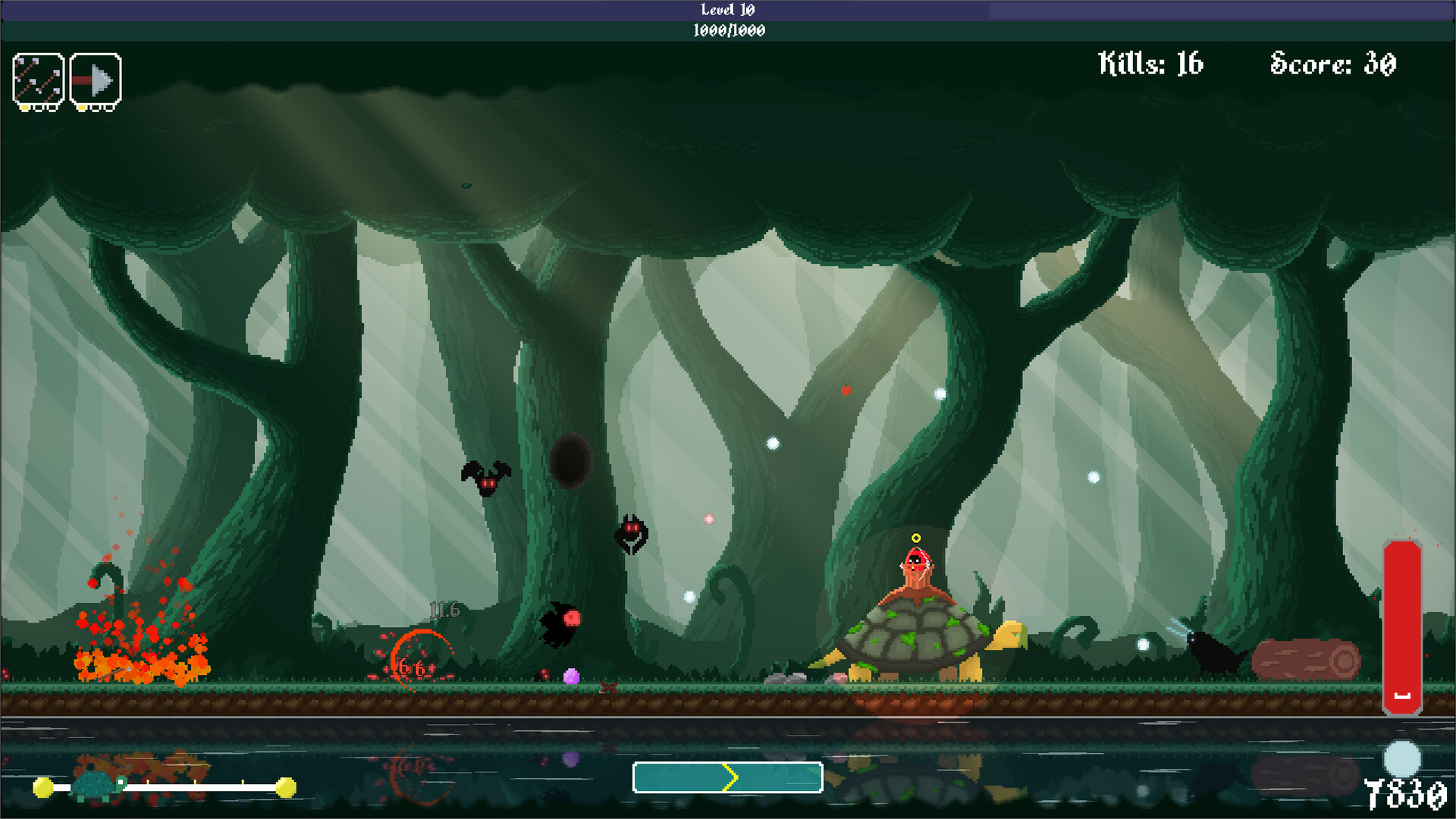
Combat plays out as the turtle steadily advances, forcing constant attention on incoming enemiesSolenya -
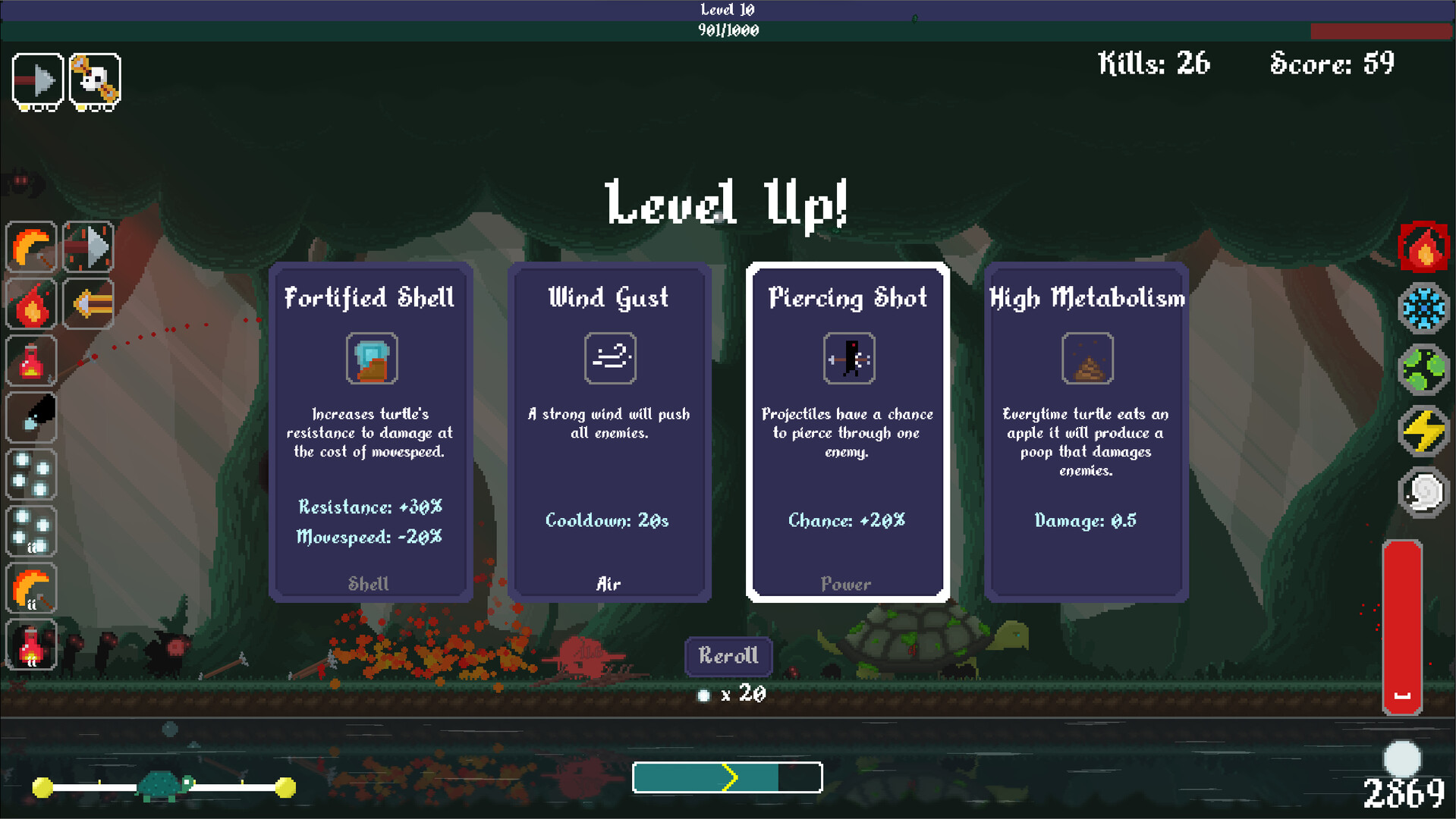
Level-ups offer a choice of upgrades, though reviewers note the pool leans heavily on small, incremental bonusesSolenya -
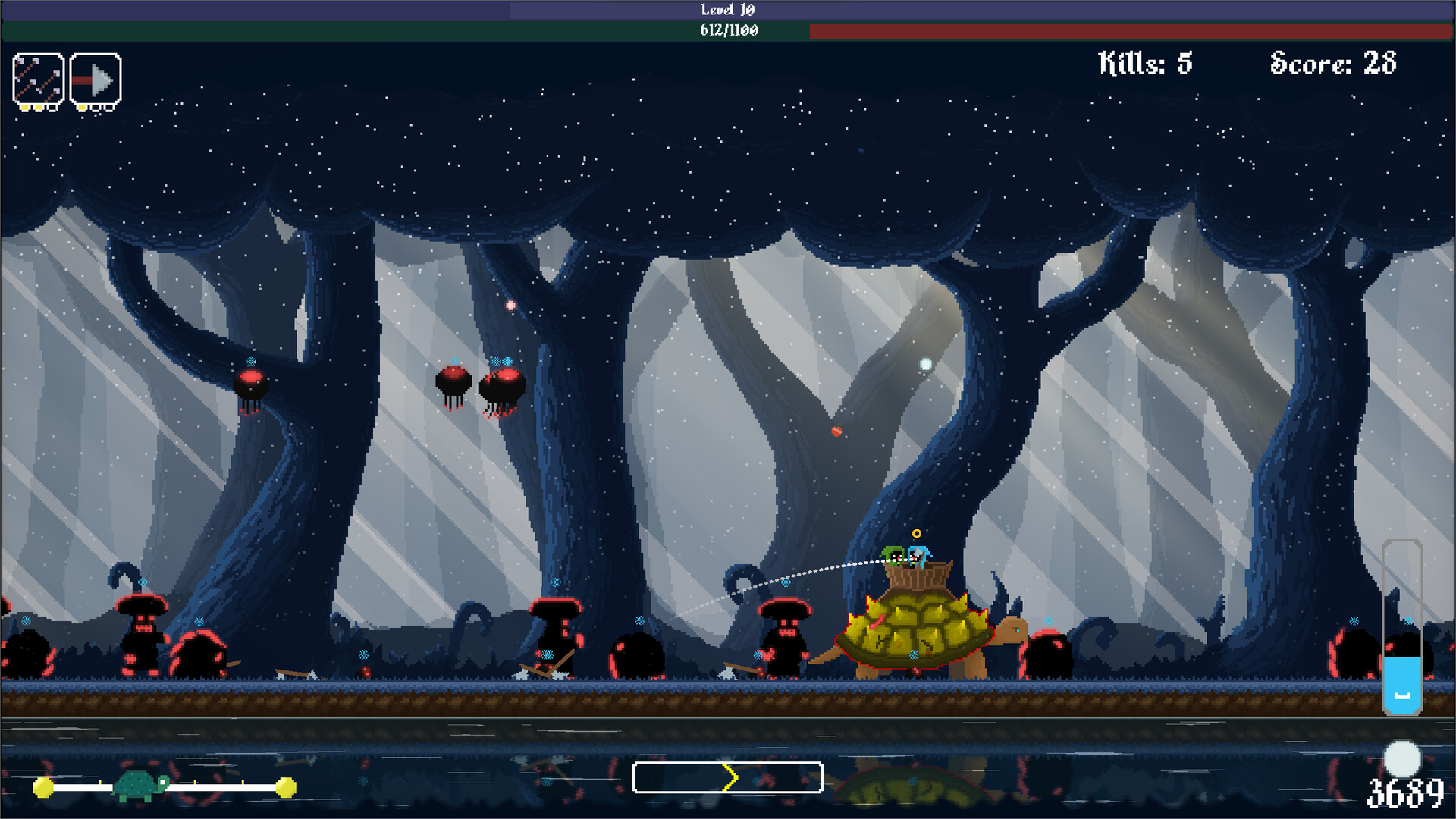
Later zones introduce tougher enemies and a noticeably harsher difficulty spikeSolenya -
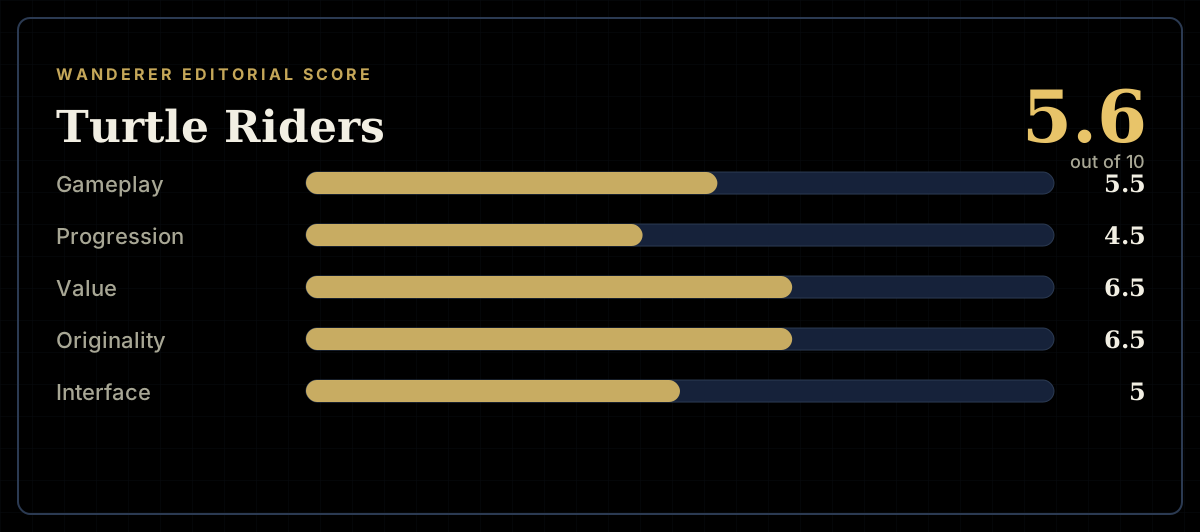
How the review scores each part of the gameWanderer Editorial -
The short versionWanderer Editorial