Game review
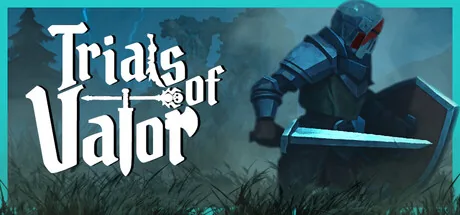
Trials of Valor
7 / 10
- Developer
- Armored Goblin
- Publisher
- Armored Goblin
- Released
- 5 March 2026
- Platforms
- Windows
- Genre
- Action / Adventure / Indie / RPG
- Monetisation
- One-time purchase
- Players
- Single-player
The short version
Trials of Valor combines an FTL-style branching node map with real-time, block-parry-dodge fighting game combat and a full RPG's worth of classes, skills, and gear to build across each run. Developed and published solo by Armored Goblin, it released 5 March 2026 at $18.99. Its review sample consistently praises the hybrid concept as genuinely fresh and well executed for a budget indie, while raising one specific, recurring complaint: most of the game's eight classes are locked behind grind-heavy unlock conditions that the game's own achievement data confirms very few players ever clear.
Biggest strengths
- This review's sample repeatedly praises the core hybrid concept, with reviewers calling it 'a unique gameplay loop,' 'fast paced dark souls but as a 1v1 fighting arena,' and 'Slay the Spire level selection with a simple fighting control,' crediting the combination of parries, dodges, and build-crafting as something not really found elsewhere in the genre
- This review checked the developer's partner-events feed and found sustained, substantial post-launch support: seven major numbered content updates (versions 1.1 through 2.0) between the 5 March 2026 release and August 2026, including a full 'Endless mode, player camp and lots of new content' update six months in, directly corroborating reviewer praise that 'the devs actually talk to you and respond to your feedback'
- This review's sample specifically calls out strong Steam Deck performance, with one reviewer reporting a 'constant 60fps' and dedicated Steam Deck graphics options, and another noting the game does not eat into battery life, both checked against the store's confirmed full controller and DualSense support
Biggest weaknesses
- This review's sample includes one detailed, sharply negative review describing the class-unlock structure as disrespectful of players' time, stating that 'basic gameplay content' is gated behind grinding very specific kinds of runs rather than general playtime, and this review checked the achievement data and found it corroborated directly: class-unlock achievements range from 75.5% for the first class down to just 4.2% and 5.2% for the last two, Spirithunter and Warchanter
- This review's sample repeatedly notes that enemy variety hasn't kept pace with the game's build variety, with reviewers describing spawns as feeling 'a little bit static between all the zones' and wanting more enemy types to fight, even as they praise the combat itself
- This review's sample includes a specific complaint about voice acting quality undermining an otherwise appreciated concept, and this review found no dedicated accessibility category tags (text size, colorblind support, or similar) on the store listing at all, an omission for a combat-timing-dependent game that demands precise reads on enemy attacks
Who it's for: Players who enjoy roguelike run-building and want real skill-based combat instead of stat-check auto-battling, especially fans of fighting games or souls-likes looking for something built around short, replayable runs; a poor fit for anyone unwilling to grind through a slow class-unlock curve to see most of what the game offers.
Our recommendation: Recommended, with a clear caveat: the core combat and build variety genuinely deliver on a unique premise, but go in prepared for a long, achievement-confirmed grind before most of the class roster actually opens up.
7 / 10
Trials of Valor sends players down an FTL-style branching map of encounters, but instead of turn-based combat or simple auto-battling, every fight plays out as a real-time, parry-and-dodge duel with fighting-game DNA, while a full RPG's worth of classes, skills, perks, and gear shapes how each run's build comes together. It's developed and published solo by Armored Goblin and released 5 March 2026 at $18.99. This review draws on roughly 30 individual reviews read across the game's full 104-review, all-language total, alongside its global achievement data and an unusually extensive developer post history.
A genre hybrid reviewers keep struggling to fully categorize
This review's sample repeatedly reaches for combinations to describe the game, "Slay the Spire level selection with a simple fighting control," "fast paced dark souls but as a 1v1 fighting arena," "build your own combo roguelike basically." That difficulty pinning it to one comparison reads as a compliment: reviewers consistently frame the mix of node-based run structure, skill-timing combat, and deep build customization as something they haven't quite played before, even from reviewers who are explicit that the fighting-game engine itself isn't tournament-tier.
Combat that lands even on a budget
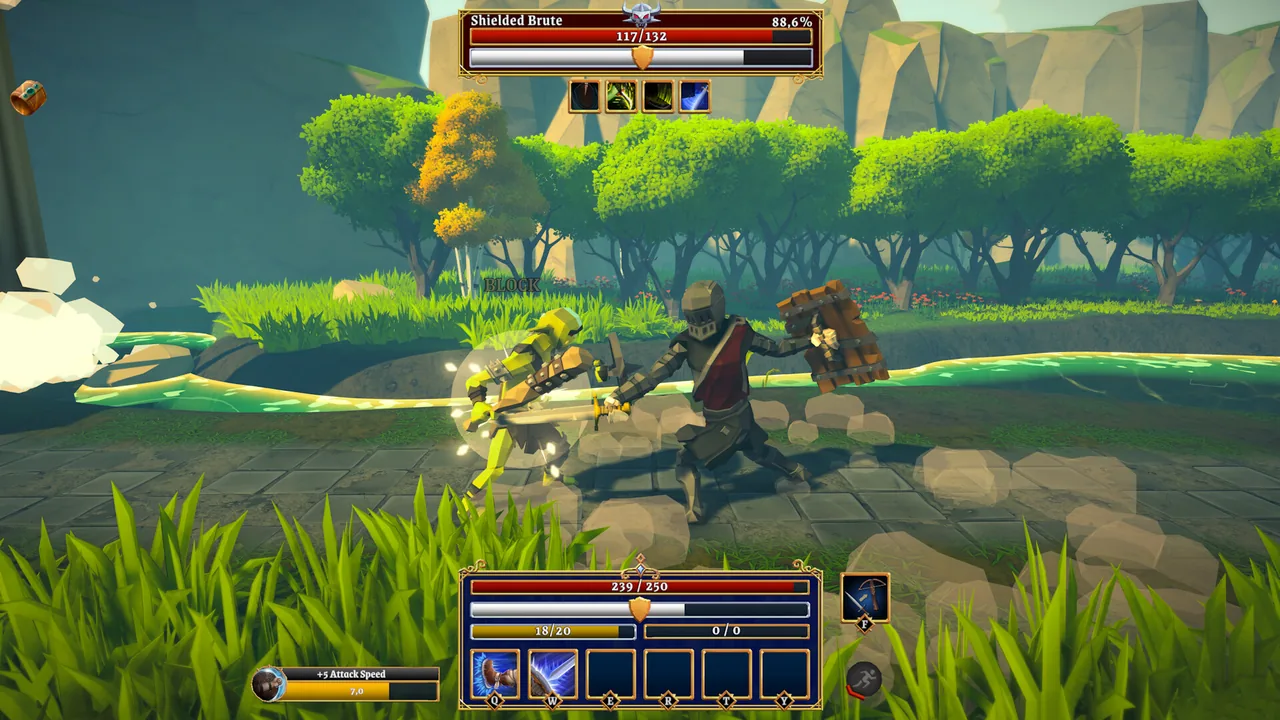
This review checked the store's own pitch and found it matches what reviewers describe directly: parrying, dodging, and staggering enemies at precise moments, with one reviewer specifically praising how "countering and dodging feels fluid" and another calling combat "very satisfying" on Steam Deck specifically. Multiple reviewers acknowledge the game was clearly made with real budget limitations and some reused asset sets, and credit the developer for making the combat feel this responsive despite those constraints rather than treating the limitation as disqualifying.
What the class-unlock achievements confirm about the game's biggest complaint
The single most detailed negative review in this sample argues the class-unlock system gates "basic gameplay content" behind grinding very specific kinds of runs, calling it disrespectful of players' time. This review checked the global achievement data directly and found firm confirmation: of the game's eight class-unlock achievements, the first (Rogue) sits at 75.5%, but the last two, Spirithunter and Warchanter, sit at just 4.2% and 5.2%. That's not a minor grind, it's a curve steep enough that the large majority of players who bought this game have never unlocked most of what it advertises, which meaningfully changes how this review weighs the positive reviews praising build variety: much of that variety may be effectively locked away from a typical buyer.
A genuine, honest difficulty ceiling for players who push through
Where the class-unlock grind reads as a real design misstep, the game's Ascension difficulty system reads as intentional and well-calibrated. This review checked the achievement data for its ten Ascension tiers and found a similarly steep but more defensible curve, 62.9% of players clear the first tier, dropping to 29.2% at tier one, and down to just 0.3% at the tenth. Unlike the class-gating complaint, no reviewer in this sample frames the Ascension ladder itself as unfair, reading it instead as the kind of escalating, opt-in challenge roguelike veterans expect from an endgame.
Enemy variety hasn't kept pace with build variety
A smaller but recurring critique in the sample is that enemy encounters feel repetitive compared to the depth of the classes and builds fighting them. One reviewer specifically described spawns as "a little bit static between all the zones," and this review found no counter-evidence in the store's own feature list, which emphasizes classes, skills, and gear far more heavily than enemy design. It's a real, acknowledged soft spot even among otherwise glowing reviews.
A development history that backs up "the devs actually talk to you"
This review checked the developer's partner-events feed and found an unusually extensive public history: an open playtest as early as August 2025, a public demo through Steam Next Fest in February 2026, and, since the 5 March 2026 launch, seven major numbered content updates, culminating in a substantial "Endless mode, player camp and lots of new content" update in August 2026 alongside a retrospective post looking back on the game's development. That sustained cadence directly supports one reviewer's specific praise that "the devs actually talk to you and respond to your feedback," a level of ongoing solo-developer support this lane doesn't see from every release.
Strong controller and Steam Deck support, but nothing accessibility-specific
This review checked the store's category tags and confirmed full controller support along with dedicated DualShock and DualSense support, matching reviewer praise for smooth Steam Deck performance and dedicated in-game graphics options for it. However, this review found no dedicated accessibility category tags at all, no text-size, colorblind, or difficulty-assist options listed, a real gap for a game whose core combat depends on reading and reacting to enemy attack timing precisely.
A price some reviewers worry is limiting the game's reach
Several reviewers in this sample connect the $18.99 price directly to the game staying niche, with one explicitly hoping the developer "sold enough copies to continue updates." Given how reliant this game's fuller class roster is on players actually grinding through its unlock curve, and how reliant its longer-term appeal is on the update cadence documented above, that commercial uncertainty is worth naming directly rather than glossing over.
Verdict
Trials of Valor delivers a genuinely novel hybrid, real-time fighting-game combat wrapped around a roguelike run structure and full RPG build customization, executed well enough on a clear budget that its review sample keeps recommending it despite acknowledged rough edges. The class-unlock grind is a real problem this review's own achievement-data check confirms is affecting most buyers, and enemy variety lags behind build variety, but the underlying combat and an unusually committed six months of post-launch support make this a worthwhile pick for roguelike fans willing to put in the time.
Pros and cons
Pros
- This review's sample repeatedly praises the core hybrid concept, with reviewers calling it 'a unique gameplay loop,' 'fast paced dark souls but as a 1v1 fighting arena,' and 'Slay the Spire level selection with a simple fighting control,' crediting the combination of parries, dodges, and build-crafting as something not really found elsewhere in the genre
- This review checked the developer's partner-events feed and found sustained, substantial post-launch support: seven major numbered content updates (versions 1.1 through 2.0) between the 5 March 2026 release and August 2026, including a full 'Endless mode, player camp and lots of new content' update six months in, directly corroborating reviewer praise that 'the devs actually talk to you and respond to your feedback'
- This review's sample specifically calls out strong Steam Deck performance, with one reviewer reporting a 'constant 60fps' and dedicated Steam Deck graphics options, and another noting the game does not eat into battery life, both checked against the store's confirmed full controller and DualSense support
- This review checked the global achievement data for the game's ten Ascension difficulty tiers and found a steep, honest difficulty curve, 62.9% of players clear the first tier but only 0.3% reach the tenth, evidence the game offers real, escalating challenge for players who want to keep pushing rather than an artificially inflated endgame
Cons
- This review's sample includes one detailed, sharply negative review describing the class-unlock structure as disrespectful of players' time, stating that 'basic gameplay content' is gated behind grinding very specific kinds of runs rather than general playtime, and this review checked the achievement data and found it corroborated directly: class-unlock achievements range from 75.5% for the first class down to just 4.2% and 5.2% for the last two, Spirithunter and Warchanter
- This review's sample repeatedly notes that enemy variety hasn't kept pace with the game's build variety, with reviewers describing spawns as feeling 'a little bit static between all the zones' and wanting more enemy types to fight, even as they praise the combat itself
- This review's sample includes a specific complaint about voice acting quality undermining an otherwise appreciated concept, and this review found no dedicated accessibility category tags (text size, colorblind support, or similar) on the store listing at all, an omission for a combat-timing-dependent game that demands precise reads on enemy attacks
- This review's sample repeatedly frames the $18.99 price as the main reason the game 'stayed niche' and 'overlooked,' with one reviewer directly worrying whether the developer 'sold enough copies to continue updates,' a real tension for a budget solo project this reliant on ongoing post-launch support to reach its full class roster
Screenshots
-
Trials of ValorImage: Armored Goblin via Steam -
Trials of ValorImage: Armored Goblin via Steam -
Trials of ValorImage: Armored Goblin via Steam