Game review
Toy Shop Tidy Up Review
5.5 / 10
- Developer
- Shiftmoon
- Publisher
- Shiftmoon
- Released
- 7 August 2026
- Platforms
- ["Windows"]
- Genre
- Simulation
Riding The Tidy-Up Wave
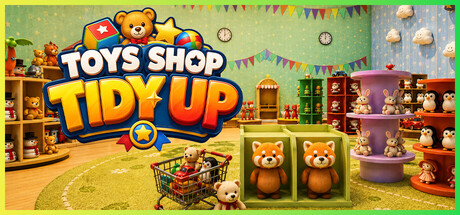
Toy Shop Tidy Up is a $4.99 cozy organizing sandbox from small studio Shiftmoon, released on Steam on August 7, 2026 with no prior demo or Early Access period, a clean, single-date original release confirmed via a short news history that runs straight from wishlist milestones to launch day. The pitch is simple: 1,274 toys, from plush animals to supercars to gundam-style mecha figures, are dumped in a heap across a messy toy shop, and it's up to you to sort them into whatever categories and displays you like, with no timers and no rules. It's the latest entry in a genre that exploded in 2026 following breakout hits like Library: Tidy Up, and the review pool, 143 English reviews, split 106 positive to 37 negative for a Mostly Positive rating, reads like a genre in the middle of sorting out its own growing pains. Reviewers who love this specific style of unstructured, freeform tidying are genuinely charmed; reviewers expecting the snap-to-place precision of the genre's biggest names are frequently let down, and a meaningful minority raise a specific, repeated concern about how the game's assets were made.
Freedom Is The Whole Pitch, And It Splits The Room
Toy Shop Tidy Up's defining choice, letting players place any toy anywhere within a general zone rather than snapping it to one correct spot, is simultaneously its most praised and most criticized feature. On the positive side, one reviewer wrote, "If you like organizing games but hate when they basically become 'find the highlighted slot and put object here,' this is worth checking out. Toy Shop Tidy Up gives you much more freedom." Another described genuinely embracing that openness: "I made one shelf perfectly organized by size and another shelf that looks like a five-year-old arranged it. Some people might prefer more objectives, but I enjoyed making my own goals." But the same feature reads as a flaw to players expecting a more traditional tidy-up experience: "It doesn't play like one of the organizing/tidy up other games. There's no autoplacement of stuff and you have to manually place everything yourself," wrote one, while a more pointed review joked, "This game is giving me way too much freedom. Why can I put toys on ANY random shelf? Babe, I have anxiety. I need designated places." A reviewer who came in from genre favorites summed up the split cleanly: "If you liked Arcane Library and Sort Them Ducks, look elsewhere. Most of the toys do not have designated locations."
Multiple Reviewers Flag The Same AI-Content Concern
A distinct and recurring thread across several independent negative reviews raises a specific concern about how the game's toy models and signage were produced. One reviewer wrote bluntly, "In a nutshell - AI slopbox... Every toy asset is AI generated. Pictures on walls are slop as well." A separate reviewer echoed the same claim in different words: "It lags, the graphics look horrible, all the assets are AI generated, and its clear this has never been play tested." A third, independent review raised it again specifically about the signage added in a later patch: "The placement of signs is ugly and off putting and clearly looks like they use AI." A fourth reviewer stated it as a dealbreaker on its own: "Game uses AI which is a immediate no for me," and a fifth wrote, "The models of the toys + you is AI generated." Five separate reviewers making the same specific claim, independently of one another, is enough to report as a real, corroborated pattern in the review pool rather than one person's pet complaint, even though it's impossible to verify from the outside whether the claim is accurate.
Bugs, Missing Items, And A Surprisingly Loud Soundtrack
Beyond the structural and AI-asset complaints, a long tail of specific, repeated technical issues shows up across the review pool. Several reviewers reported being unable to fully complete the game due to items that are missing or stuck out of reach: "I'm unable to finish, but had fun anyway, a sword was missing and no matter how much I tried to find it I could not," wrote one, and another separately reported "about 30 items are completely missing." Physics bugs come up constantly, players and toys alike getting launched through the ceiling, items falling through the floor or getting stuck in walls, and items placed on shelves knocking other items off. One reviewer flagged a persistent frustration: "the bug that just YEETS [stuff] if you re-pick up an item next to some stuff on the shelves is just so frustrating." The audio mix draws a specific, repeated complaint too: "damn THE MUSIC IS SOOOOO LOUD. You can't even lower it, the slider does nothing. But you can turn it off," wrote one reviewer, a bug independently corroborated by at least one other player. None of these are exotic complaints, they're the kind of rough edges a small studio's first outing in a hot new genre tends to ship with, but they're numerous and specific enough to weigh seriously against the asking price.
For The Right Player, It Genuinely Works
Despite the real complaints, a large share of the positive reviews describe exactly the experience the store page promises: a low-stakes, meditative organizing session. "A lovely way to unwind after work. No timers, no scores, just picking up toys at my own pace. Time flies," wrote one reviewer, and another described the appeal in almost therapeutic terms: "I like the feeling of like mind empty, listen to some relaxing music and do some work without even thinking." Several reviewers explicitly pushed back against the negative reception, with one writing, "I'm honestly a bit baffled by the bad reviews, it's a reasonable game for a reasonable price... I really haven't seen any game-breaking issues," and crediting the developer's quick response: "They released some QOL updates on day two (!!) after release based on player feedback so that's encouraging to see." That responsiveness shows up in the news history too, a shelf sign-board update landed the day after launch, aimed directly at the "no structure" complaint, though as the AI-signage complaint above shows, the fix itself became a new point of contention for some players.
A Short Experience At A Low Price
Length is one area where reviewers broadly agree, even if they disagree on whether it's a problem: most players report finishing the game's single toy shop in two to eight hours. "It took me around 4 hours to place all of the 1,273 toys on their respective shelves and honestly? I wish there were even more toys to go through," wrote one satisfied reviewer, while a more critical review saw the same runtime as a value problem: "it could use some quality of life stuff... you can complete it in less th[an] 2 hours and refund." At $4.99, most reviewers treat the price as fair for what it is, a short, disposable cozy session rather than a substantial game, though several explicitly frame it as riding the coattails of the genre's bigger, more polished hits rather than offering something that justifies a purchase on its own merits.
Verdict
Toy Shop Tidy Up delivers exactly the loose, freeform organizing sandbox it advertises, and for players who specifically want that lack of structure, no snap-to-place, no correct answers, just a pile of cute toys and your own sense of order, it can genuinely be a relaxing couple of hours for five dollars. But the review pool's Mostly Positive score is doing real work to paper over a cluster of legitimate, independently corroborated problems: missing and unreachable items that block full completion, a long list of physics and placement bugs, an unadjustable music volume, and a repeated, multi-reviewer concern that its toy models and signage were AI-generated rather than crafted by hand. This is a fine five-dollar impulse buy for genre fans who've already exhausted the bigger tidy-up titles and want more of the same vibe at a lower bar for polish; anyone hoping for the structured, satisfying click of a well-made organizing sim should look to the games this one is clearly, and by its own reviewers' repeated admission, following in the footsteps of.
Screenshots
-
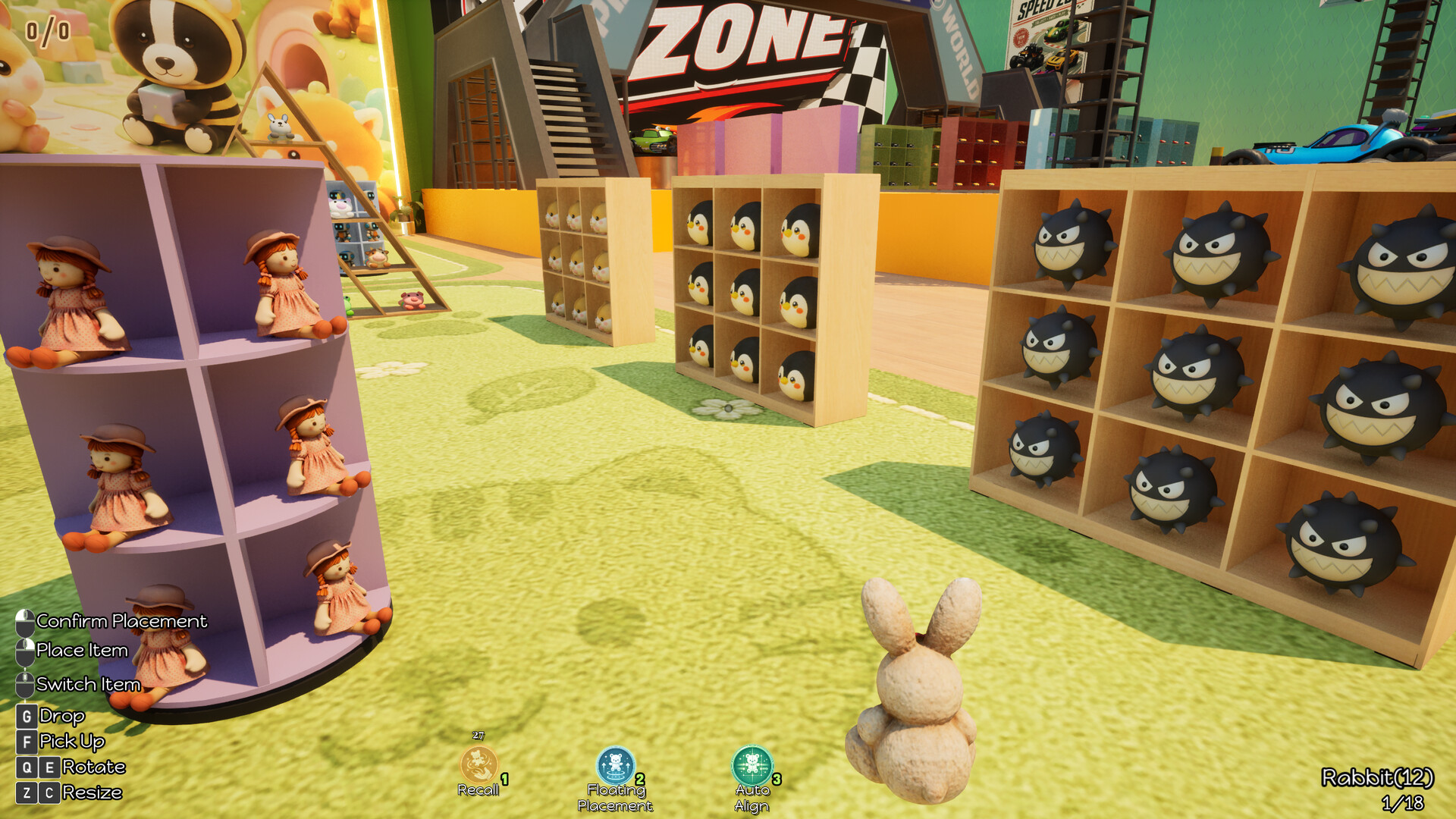
Sorted shelves like these are the whole point: no snap-to-place slots, just whatever grouping makes sense to you.Image: Shiftmoon via Steam -
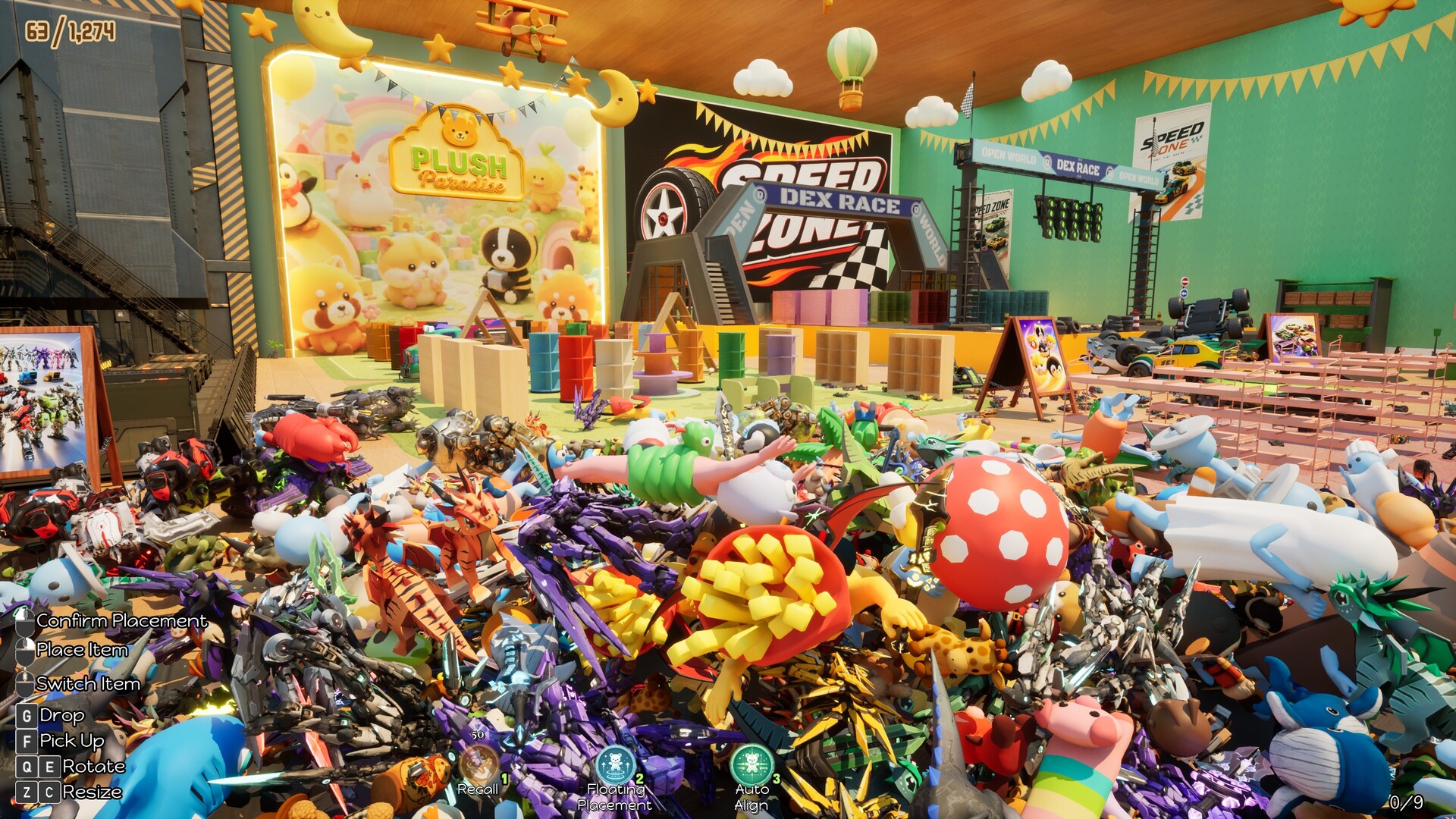
Sixty-three toys down, 1,211 to go: the unsorted pile is the game's starting state and its recurring visual joke.Image: Shiftmoon via Steam -
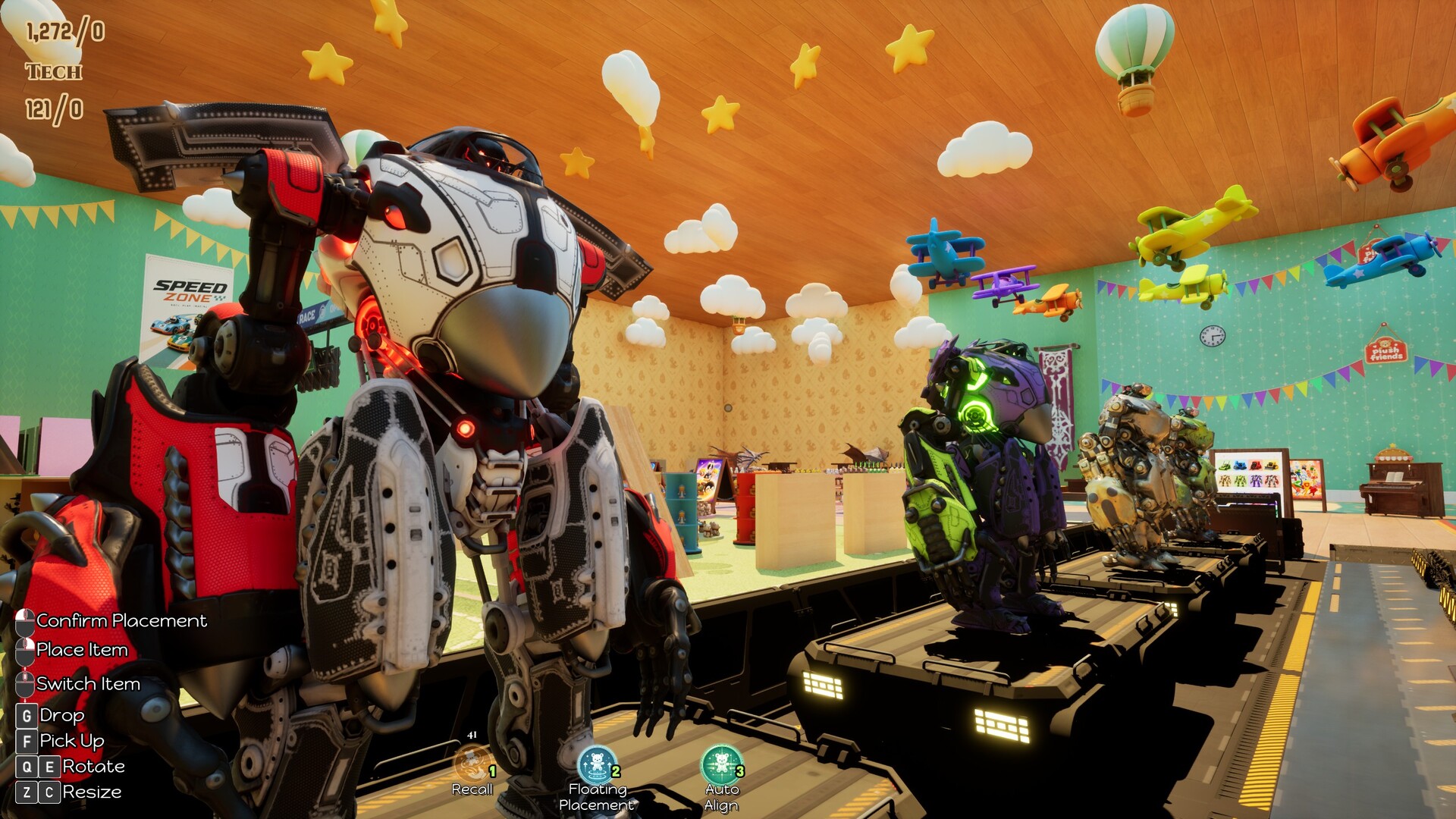
Not every toy in the 1,274-piece roster is cute and cuddly; mecha and robot figures get their own display row too.Image: Shiftmoon via Steam