Game review
Total War: PHARAOH
6 / 10
- Developer
- Creative Assembly
- Publisher
- SEGA
- Released
- 11 October 2023
- Platforms
- Windows
- Genre
- Grand Strategy, Tactics, Fantasy
- Monetisation
- One-time purchase, reduced from $59.99 to $39.99 post-launch with partial refunds issued to existing buyers; subsequent faction content shipped free rather than as paid DLC.
- Players
- Online multiplayer campaigns and battles
The short version
Total War: PHARAOH is Creative Assembly's Bronze Age entry in the long-running grand strategy series, published by SEGA and released 11 October 2023, set during the collapse of Egyptian power amid invasion and civil war. It sits at a lifetime Mixed 63.1% across 5,405 reviews, with recent sentiment holding at a similar 64.4%. This review reads a substantial share of both samples and finds a launch defined by a specific, widely repeated complaint — that the game reused Total War: Troy's engine and systems without enough new content to justify a full-price release — followed by an unusually direct publisher response: within two months, Creative Assembly publicly apologised, cut the price from $59.99 to $39.99, issued partial refunds to everyone who'd already bought it, and committed future faction content to free updates rather than paid DLC.
Biggest strengths
- Long-time series veterans, including several with two decades of Total War history, describe genuine improvements to Troy's underlying gameplay loop and call it one of the more interesting recent entries once judged on its own terms
- Creative Assembly's response to launch criticism was unusually direct and substantive: a public apology, a permanent price cut from $59.99 to $39.99, partial refunds issued to existing buyers, and a shift to free rather than paid faction content going forward
- The Bronze Age Egyptian setting offers genuine thematic distinctiveness within a series that has mostly covered more familiar historical periods
Biggest weaknesses
- The single most consistent complaint at launch was that PHARAOH reused Total War: Troy's engine and systems closely enough that reviewers repeatedly called it "a reskin" or "lipstick on a pig," rather than a meaningfully new entry
- A significant share of reviewers, including veterans who'd never left a negative Total War review before, describe the original $59.99 asking price as badly mismatched to a limited faction roster and unit selection
- AI behaviour draws specific, recurring criticism, with multiple reviewers describing computer opponents building armies without the resource constraints the player is bound by
Who it's for: Total War veterans curious about the series' Bronze Age setting who can accept it as a smaller-scope entry rather than a mainline epic; a weaker fit for newcomers or anyone expecting the scale of Rome or Attila.
Our recommendation: A genuinely improved, better-priced game than the one that launched, held back by systems many longtime fans still find derivative of Troy — worth it at its intended price, not at the original asking price.
6 / 10
Introduction
Total War: PHARAOH drops players into the collapse of Bronze Age Egyptian power, managing factions, armies and diplomacy across a Mediterranean world under invasion. Developed by Creative Assembly and published by SEGA, it released 11 October 2023 and sits at a lifetime Mixed 63.1% across 5,405 reviews, with recent sentiment holding at a similar 64.4%. This review reads a substantial share of both samples and finds a game whose launch controversy and its aftermath are nearly as important to the story as the mechanics themselves.
"A reskin, not a sequel" — the dominant launch complaint
The clearest, most repeated criticism across this review's negative sample concerns originality. Reviewers, including many long-time series veterans, describe PHARAOH as reusing Total War: Troy's engine and core systems closely enough to feel like a repackaged expansion rather than a new mainline entry. "Lipstick on a pig," writes one reviewer bluntly, arguing the underlying engine "didn't even hold up to the gaming standards when it was first utilized" in Troy. Another, self-described as having played every Total War game since the series began, calls it "the worst sort of 'bad' game" precisely because its flaws — thin faction rosters, familiar mechanics — only become fully apparent well past Steam's two-hour refund window. That specificity, and the volume of veteran players making the identical point independently, is what separates this from ordinary launch grumbling.
A publisher response this library rarely gets to report
What makes PHARAOH's story distinctive is what Creative Assembly did next. Facing sustained criticism over price and content scope, the studio's leadership publicly apologised to the community, and within two months of launch announced a permanent price reduction from $59.99 to $39.99, alongside partial refunds issued automatically to everyone who had already purchased the game at full price. Future faction content, originally expected to arrive as paid DLC, shipped instead as free updates. Several reviewers explicitly changed their assessment because of this response — one positive review states plainly: "I'm giving this a positive review because CA went out and did a bold thing," crediting the price cut and refund directly. This is a genuinely rare outcome in this library's coverage of launch controversies, where publisher responses more often amount to silence or minor patches rather than a direct, substantive correction.
The game underneath, on its own terms
Separating the pricing controversy from the mechanics, this review's sample includes real, credible praise from veterans willing to judge PHARAOH after the correction. One reviewer with decades of Total War history calls it "genuinely one of the most interesting Total Wars in recent memory," crediting new ideas layered onto the familiar gameplay loop even while acknowledging its imperfections. A separate, more measured review states the game is "much better than the player reviews would have you believe," while still wishing for a return to full-scale mainline entries in the Medieval or Shogun tradition. AI behaviour remains a specific, recurring complaint even among otherwise positive reviewers, with computer factions described as building and expanding without the same resource constraints the player operates under.
Final Verdict
Total War: PHARAOH launched into a genuine, substantiated controversy over content scope and price, and this review's sample shows Creative Assembly responding to that criticism more directly and substantively than most publishers do — a real price correction and refunds, not just an apology. Judged today, at its corrected price, it's a smaller-scope but competently made Total War entry that a meaningful share of series veterans have come around on, even as many continue to wish for a larger mainline release. Buy it expecting Troy's scale with new ideas layered on top, not a Rome or Attila-sized epic, and the value proposition holds up considerably better than it did at launch.
Pros and cons
Pros
- Long-time series veterans, including several with two decades of Total War history, describe genuine improvements to Troy's underlying gameplay loop and call it one of the more interesting recent entries once judged on its own terms
- Creative Assembly's response to launch criticism was unusually direct and substantive: a public apology, a permanent price cut from $59.99 to $39.99, partial refunds issued to existing buyers, and a shift to free rather than paid faction content going forward
- The Bronze Age Egyptian setting offers genuine thematic distinctiveness within a series that has mostly covered more familiar historical periods
- Reviewers who stuck with the game past the initial hours describe solid core mechanics once expectations are calibrated to its smaller scope
Cons
- The single most consistent complaint at launch was that PHARAOH reused Total War: Troy's engine and systems closely enough that reviewers repeatedly called it "a reskin" or "lipstick on a pig," rather than a meaningfully new entry
- A significant share of reviewers, including veterans who'd never left a negative Total War review before, describe the original $59.99 asking price as badly mismatched to a limited faction roster and unit selection
- AI behaviour draws specific, recurring criticism, with multiple reviewers describing computer opponents building armies without the resource constraints the player is bound by
- Even after the price correction, a meaningful share of veteran reviewers continue to call for the series to return to a full-scale mainline entry (a Medieval III or Shogun III) rather than another smaller-scope release
Screenshots
-
Total War: PHARAOHImage: SEGA via Steam -
Total War: PHARAOHImage: SEGA via Steam -
Total War: PHARAOHImage: SEGA via Steam -
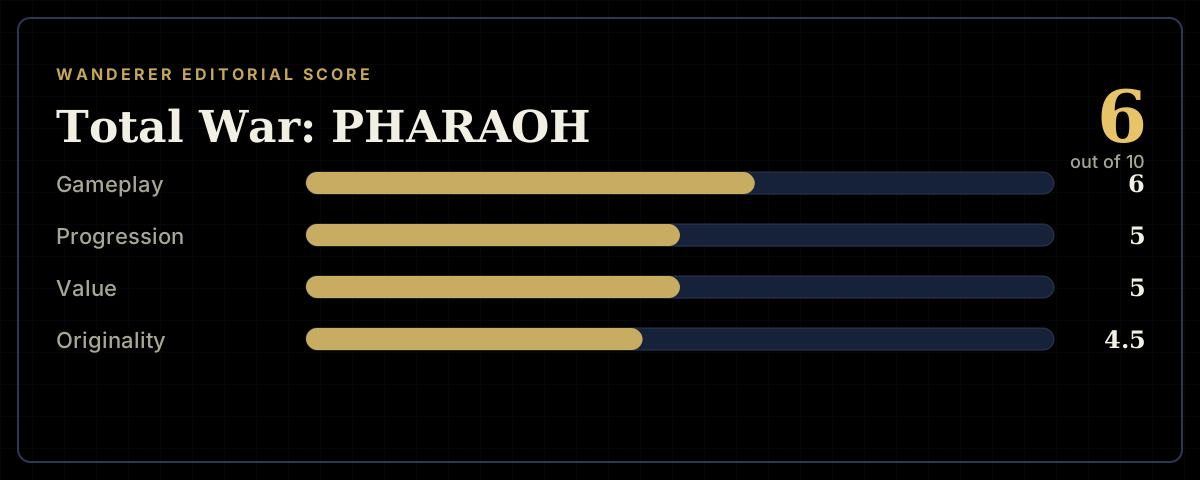
How the review scores each part of the gameWanderer Editorial -
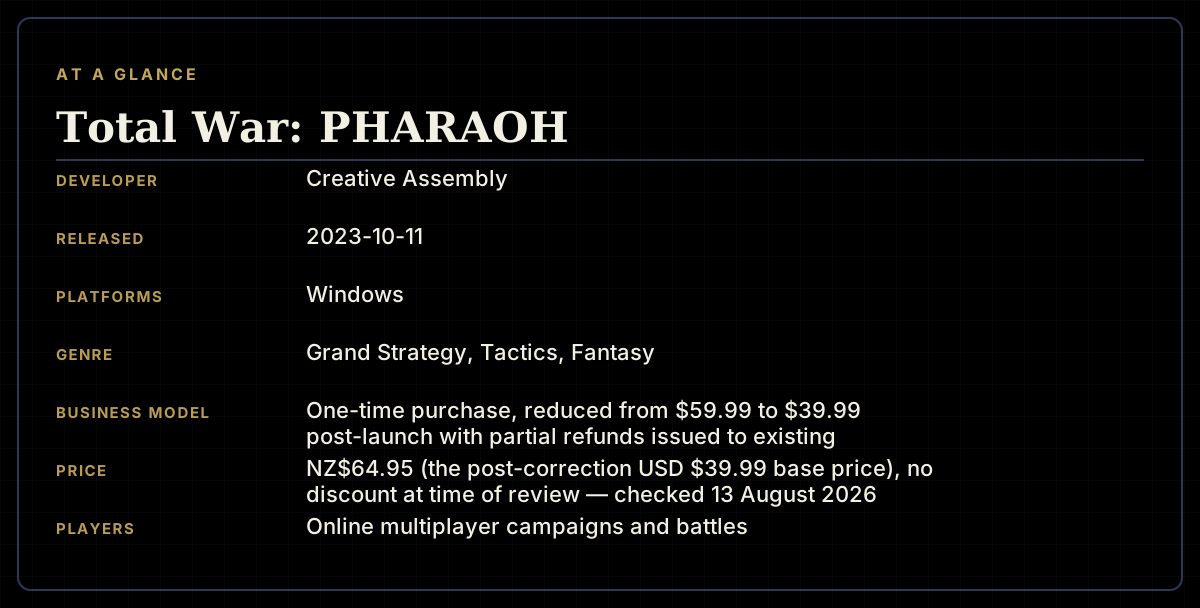
The essentials at a glanceWanderer Editorial -
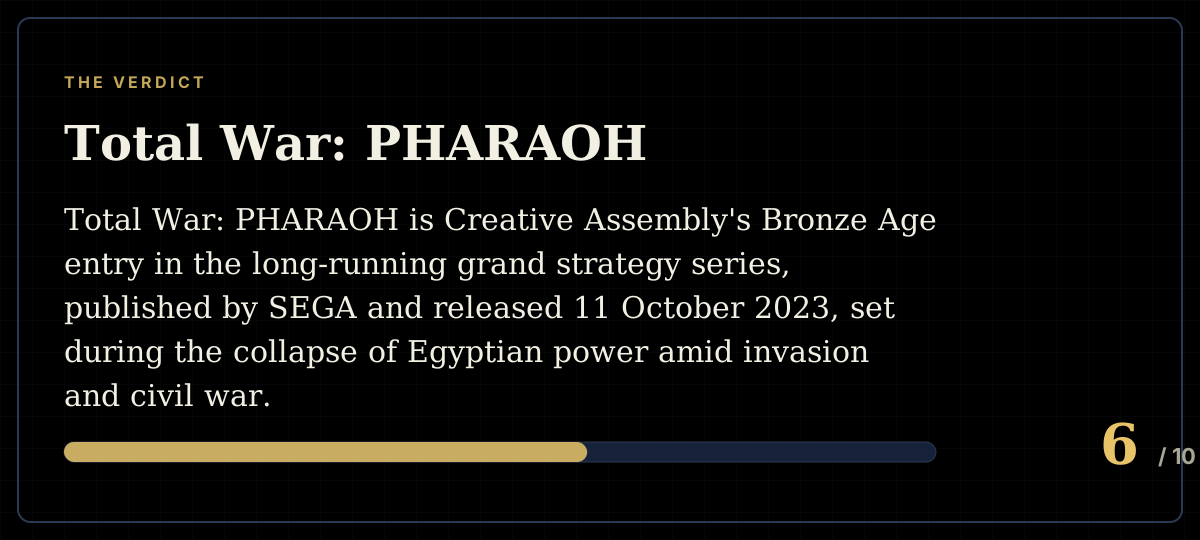
The short versionWanderer Editorial