Game review
Token x Token x Clicker Review
6.6 / 10
- Developer
- Preferred Networks
- Publisher
- Preferred Networks
- Released
- 8 September 2026
- Platforms
- ["Windows"]
- Genre
- Casual
A Desk Full of Robots Dropping Loot on Your Screen
Token x Token x Clicker is a desktop-companion idle and clicker game built around a small 3D office populated by robot employees called Grammis. Left to their own devices, the Grammis clock in, type at their desks, occasionally doze off, and scatter "token embers" across the office floor as they work, and those embers are the game's entire currency, picked up manually with clicks or automatically with vacuum robots once a player can afford them. Coins earned from collecting embers go toward winning jobs on a contract lottery reel, which spins up new Grammis to handle the workload, weathering "golden overtime rushes" that flood the office with a temporary surge of embers, and renovating the office itself, growing it from a one-room startup into a full corporate tower, with each renovation offering a choice between three risk-and-reward "Business Directions" that shape a player's management style going forward. A 200-plus-item collection book with gacha pulls and crafting gives the idle loop long-term goals, and the whole experience is built to run entirely locally with zero network traffic, no accounts, and nothing to configure beyond launching it. The game's most distinctive feature is an optional Companion Mode that can visualize compatible coding-activity logs already stored locally on a player's machine, currently supporting Claude Code and Codex as coding agents, letting the office's activity level reflect actual coding work happening elsewhere on the PC, though the developer is explicit that the complete game requires no external software, account, or internet connection to play on its own. Developed and published by Preferred Networks, Token x Token x Clicker launched on Steam on September 8, 2026, priced at $2.99.
Two Reviews, Both Positive, One Genuinely Detailed
Token x Token x Clicker has drawn only two reviews so far, both positive, giving it a 100% approval rating on an extremely small sample. Both reviews are written in Japanese; one is a brief single-word "Good!" while the other is a substantial, thoughtful write-up from a player who had reached renovation level 7, detailed enough to function as a genuine review of the game's pacing and design rather than just a rating.
An Interesting Gamification Concept Praised for Its Novelty
The detailed review opens by calling the core concept "interesting," specifically praising the idea of gamifying everyday work activity through the Companion Mode, and suggesting that turning routine daily tasks into something trackable and rewarded could plausibly help with focus and concentration over time. That framing, an idle game that can optionally reflect a player's own real coding activity back at them through the office's busyness, is treated by the reviewer as a genuinely novel hook rather than a gimmick, distinct from the flood of generic idle and clicker games already on Steam. The shorter review simply confirms overall satisfaction with a plain "Good!," offering no further detail but adding to the small pool's unanimous positivity.
Early-Game Pacing Breaks Down When Token Income Runs Too Hot
The detailed review's core criticism is specific and well-reasoned: the game's early-game level design still needs work, because feeding it data from high-throughput AI coding sessions using recent models can generate coins far faster than the idle progression curve was tuned for. The reviewer notes that with the fastest, most token-hungry models available as of mid-September 2026, coins pile up "in the blink of an eye," which undercuts one of the genre's core pleasures: the slow, steady satisfaction of methodically unlocking new facilities and upgrades the way a game like Cookie Clicker is built around. For players chasing that specific incremental-unlock feeling, the reviewer warns the experience "might feel a bit lacking" once income outpaces the content meant to be gated behind it. Their proposed fix is concrete and reasonable, a settings option to manually cap the token-to-coin acquisition multiplier, so players could throttle their own income back down to a pace that matches the game's intended renovation curve rather than blowing through it. With only two reviews total and neither addressing the game's later-game content, the 200-plus collection book's long-term depth, the gacha and crafting systems, or how satisfying the corporate-tower renovation actually feels once fully built out, remain genuinely untested by this launch-week pool. It's also worth noting that the pacing complaint is specific to Companion Mode users feeding it unusually heavy AI-model activity; players who ignore that optional feature entirely and just click and manage the office manually should encounter the slower, more deliberately tuned curve the reviewer wishes the game defaulted to for everyone.
Verdict
Token x Token x Clicker takes the well-worn idle-clicker formula and gives it a genuinely fresh angle: a tiny robot office that can, if a player opts in, reflect their own real coding activity back at them as in-game progress, wrapped in a fully local, no-account, watch-it-hum-along presentation that costs nothing to keep running in the background. The two reviews on record are enthusiastic about the concept's novelty, but the one detailed critique raises a legitimate pacing concern: without a way to throttle token-driven income, heavy users of fast AI coding models can blow past the game's intended slow-burn renovation curve and lose the genre's signature steady-unlock satisfaction. At $2.99, it's a low-cost curiosity worth trying for anyone who wants an idle game with an unusually personal hook, just go in aware that the pacing may run hot until, or unless, the developer adds the income-limiting option its own early reviewer is asking for. With a review pool this thin, that request should be read as an early sign of a small, attentive community already invested enough in the office's slow, room-by-room growth to want the option protected rather than a dismissal of the game itself.
Screenshots
-
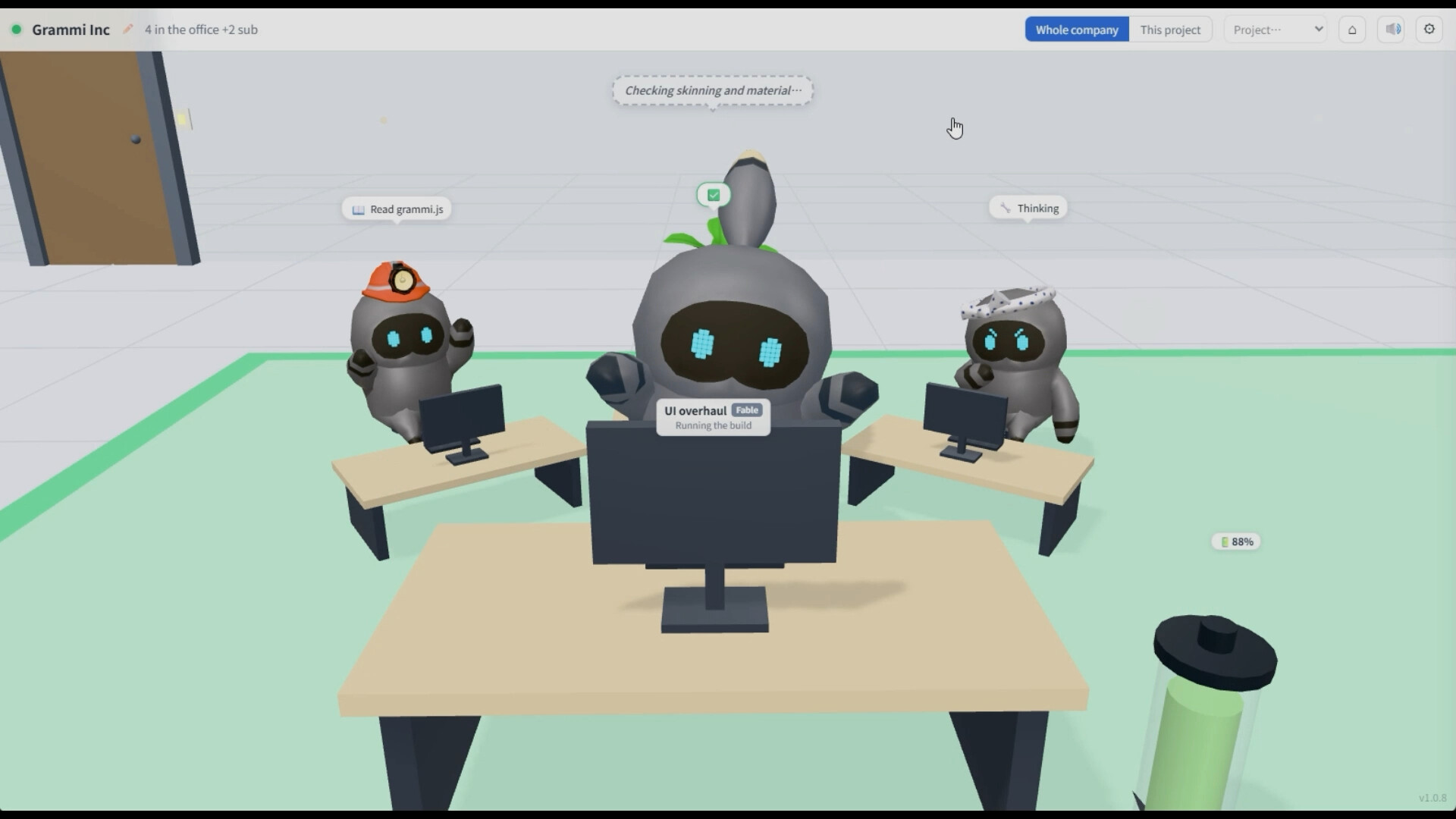
Companion Mode surfaces real coding-agent activity as office chatter, like a worker reading a file or thinking through a taskImage: Preferred Networks via Steam -
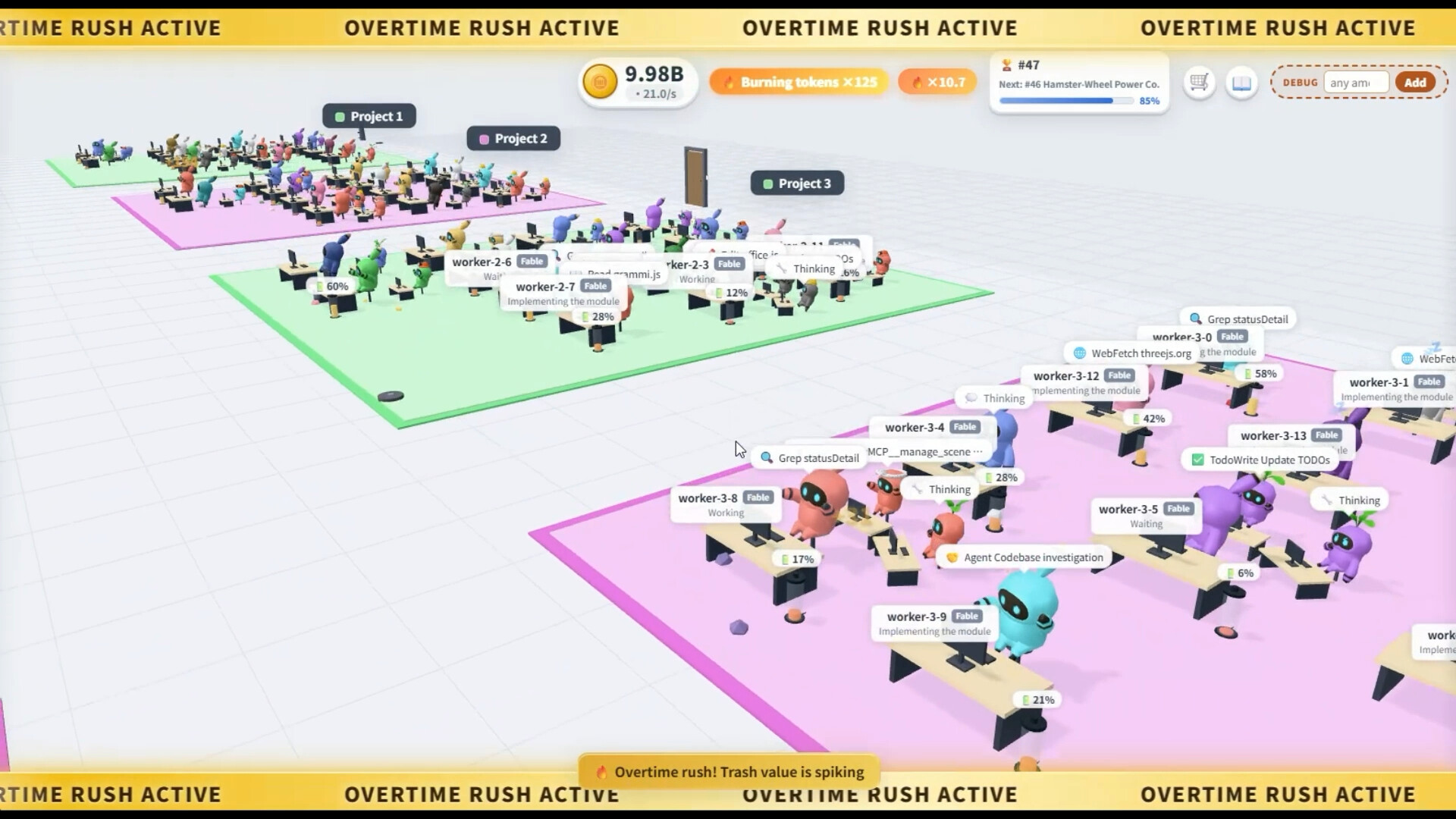
An overtime rush floods the office with workers as the token counter races upward and a burning-tokens multiplier spikesImage: Preferred Networks via Steam -
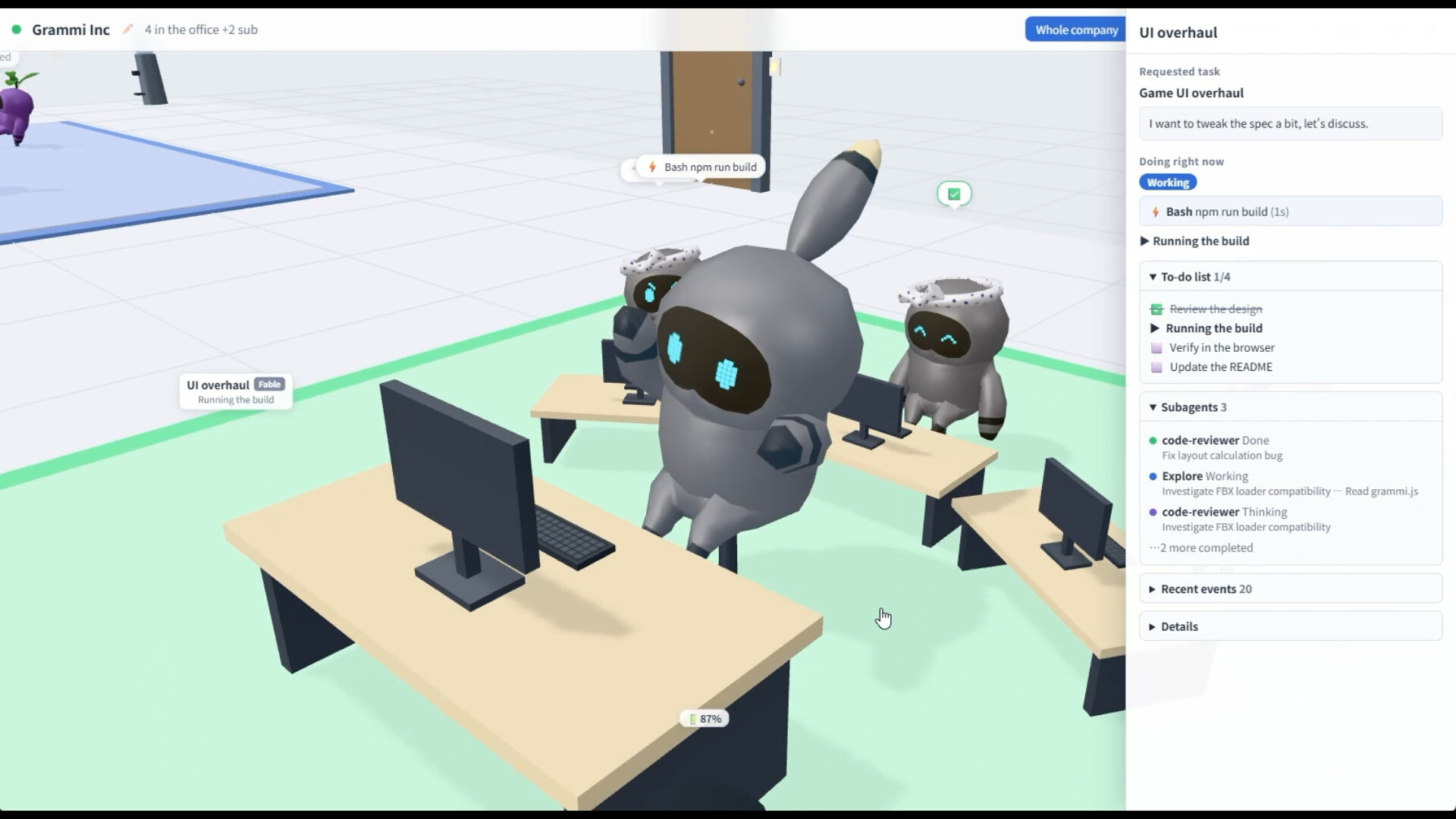
Clicking into a task opens a detail panel tracking its to-do list and subagent progress in real timeImage: Preferred Networks via Steam