
Game review
Fish Lab Review
4.9 / 10
- Developer
- stonecodes
- Publisher
- stonecodes
- Released
- 14 September 2026
- Platforms
- ["Windows"]
- Genre
- Simulation
A Mesmerizing, Music-Synced Ocean Incremental
Fish Lab is a short incremental game from solo developer stonecodes that drops players into a mysterious underwater research expedition, scanning and collecting glowing schools of fish to fund upgrades, drones, and new equipment across a series of timed dives, all synced tightly to an ambient electronic soundtrack. Runs unfold mostly on their own once set in motion — fish swim past in colorful schools, automated scanning tools rack up currency, and the player's main job is choosing which upgrades to buy between dives rather than actively controlling anything moment to moment. It's built and priced as a compact, bite-sized experience rather than a sprawling incremental epic, following a public demo period that built real anticipation ahead of launch, and it released on Steam on September 14, 2026 at $6.99.
A Mostly Positive Launch With a Loud, Specific Minority Report
Fish Lab launched to 113 reviews, 90 of them positive, for an 80% "Mostly Positive" score on Steam. That's a solid debut, but the pool is unusually polarized for a score that high: the single most-upvoted review by a wide margin, at 144 votes, is a negative one, and it's echoed by a meaningful cluster of similarly-detailed critical reviews rather than standing alone. What emerges reading through the pool isn't really a split between people who like incremental games and people who don't — reviewers on both sides are clearly genre fans — but a split over whether the specific way Fish Lab handles its progression and pacing works, or quietly undermines the whole genre's appeal.
A Genuinely Gorgeous, Hypnotic Presentation
The praise for Fish Lab centers almost entirely on its audiovisual craft, and it's consistent and specific rather than vague. One detailed review, posted by a curator account focused on incremental games, calls it "the most mesmerizing runs I ever played in an incremental game," singling out the way schools of fish "move like colorful fluids" and specifically praising the zoom-out upgrade as a favorite because it makes runs simultaneously more beautiful and more effective to play. That same reviewer addresses the game's deliberately unexplained mechanics head-on, describing an initial assumption that leaving upgrades and fish values unexplained was bad design, before concluding it was a conscious choice that deepens the game's "mysterious eerie atmosphere" rather than undermining it, writing approvingly, "good job not breaking the third wall." Another reviewer frames the whole experience more simply as "a nice crafted experience that gets the essential of incremental growth right," specifically praising how well it scales visually without taxing hardware — a meaningful compliment for a genre where screens routinely fill with hundreds of simultaneous objects. A shorter review adds that by the end of a completed run there are "so many units on screen at once it's pretty awesome," and wishes for a New Game Plus mode to extend the experience further. For reviewers tuned to its specific wavelength, Fish Lab's presentation alone appears to be enough to carry the experience.
Progress That Doesn't Actually Depend on Progress, and a Short, Pricey Runtime
The dominant complaint, expressed independently and in remarkably similar terms by several reviewers, is that the game's core economic loop doesn't function the way an incremental game's should. The top-voted review states it plainly: "you don't actually get money for the fish you catch. The game just gives you whatever amount is needed for an upgrade at the end of a round. It doesn't matter what you do in the game, you could just do nothing and the progress would be the same." Multiple other reviewers independently describe the identical experience in their own words, with one writing that upgrades "do not seem to have any sort of impact on how much money you gain," since each round simply grants enough currency for the next purchase regardless of performance, and another summarizing flatly, "not fun — could just do nothing and the progress would be the same." One reviewer who had anticipated the game for months after trying its demo says the finished version left them underwhelmed specifically because fish values feel arbitrary and new species don't appear to carry any different worth than ones caught early on. A separate strand of criticism concerns pacing and escalation: one reviewer who loved the demo's calm "floating in the ocean" vibe says the full release "tramples" it by the midgame, when drones and effects shift into what they describe as "non-stop explosion electricity crackle sound laser orb machines" that clash tonally and texturally with the underwater setting rather than complementing it. A more pointed review calls the game "very vibecoded," reporting a full completion in about three hours where a "good run" and "bad run" become functionally indistinguishable, since a single triggered laser chains the rest automatically and cursor-based upgrades stop mattering entirely by the end. At $6.99 for a sub-three-hour experience several reviewers describe as linear and light on real decision-making, more than one concludes the asking price isn't quite justified, with one advising to "get it on sale though."
Verdict
Fish Lab is a beautifully made, hypnotic little incremental game whose ambient underwater presentation and music-synced runs clearly land with the audience it's built for, and its most enthusiastic reviewers make a genuinely compelling case that its intentionally opaque mechanics are a feature of its mysterious atmosphere rather than a flaw. But its 80% "Mostly Positive" score is weighed down by a specific, well-corroborated structural complaint: several reviewers independently report that the game's currency and upgrade systems don't meaningfully respond to how you actually play, turning what should be a satisfying feedback loop into a scripted march toward a predetermined ending. Combined with a runtime several completed in well under three hours and a late-game shift in tone and sound design that some feel betrays the calm of its opening, this is a short, gorgeous experience best picked up on a discount rather than at full price, and best suited to players who value atmosphere and presentation over a deep or reactive incremental system underneath it.
Screenshots
-

By the midgame, drones and effects escalate into the bright laser-and-explosion chaos some reviewers say clashes with the game's calmer openingImage: stonecodes via Steam -
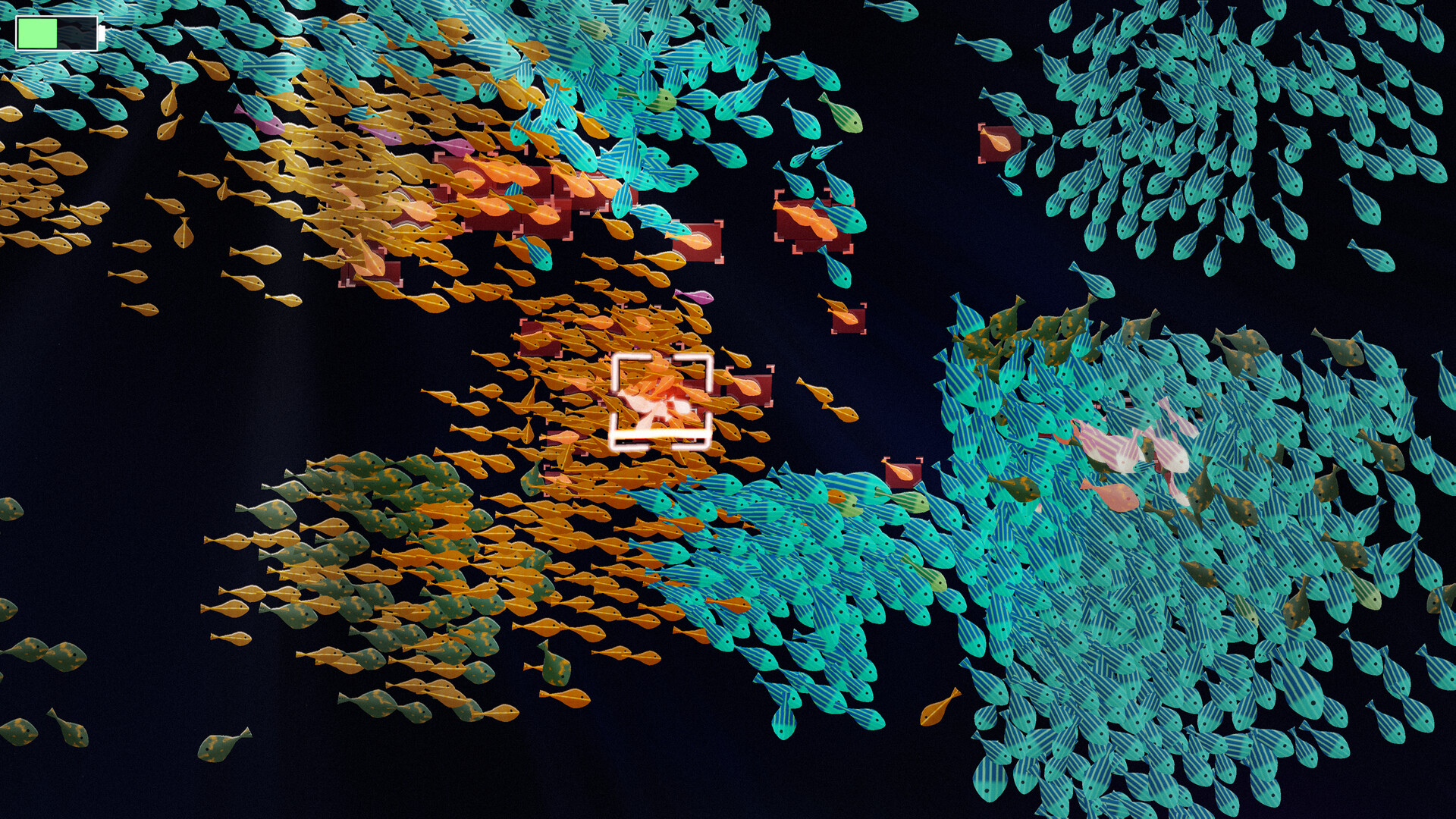
Large, colorful schools of fish swirl and cluster in the game's mesmerizing, music-synced runsImage: stonecodes via Steam -

Visual effects intensify as runs progress, filling the screen with particles, beams, and schools of fishImage: stonecodes via Steam