Game review
DETSTVO Review
4.7 / 10
- Developer
- VD Games, PropilGames
- Publisher
- VD Games
- Released
- 15 September 2026
- Platforms
- ["Windows"]
- Genre
- Simulation
A Post-Soviet Childhood, Rebuilt Block by Block in Unreal Engine 5
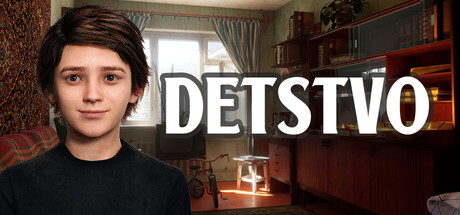
DETSTVO — Russian for "childhood" — is a short, budget-priced nostalgia walking sim from VD Games and PropilGames that drops players back into a courtyard straight out of a late-Soviet or early-2000s Russian apartment block, complete with a familiar cast of neighborhood kids, hopscotch chalk, a rusting swing set, and a battered playground transformer box with its lettering peeling off. The pitch is entirely mood-driven: you wander the yard playing hide and seek, tic-tac-toe, and other half-remembered schoolyard games, poking through apartment interiors and courtyard corners for small scripted vignettes that stand in for a loose, dreamlike plot about growing up. There's no combat, no real failure state, and barely a tutorial — just a bounded slice of a childhood memory to walk through for the length of a single sitting. It released on Steam on September 15, 2026 at $1.99, following a short public run-up of a single announcement and trailer posted the month before.
A Genuinely Mixed Launch, Split Almost Entirely Along Technical Lines
DETSTVO launched to 89 reviews, 62 of them positive, for a 70% "Mixed" score on Steam. The pool is overwhelmingly Russian-language, with only a small handful of English and Ukrainian reviews scattered in, which makes sense for a game built so specifically around a particular time and place's childhood iconography — this is a release aimed squarely at a nostalgic domestic audience rather than an international one. What's notable is how consistent the fault line is on both sides: almost nobody disputes that the mood and setting land, but a large and vocal minority say the execution is rough enough to undercut the experience, and even many of the positive reviews carry an asterisk about bugs, short length, or a scattershot sense of time period.
A Nostalgic Setting That Clearly Connects, Even in a Small Package
When DETSTVO's reviewers connect with it, they connect hard. One reviewer opens their review with a verse of a well-known Russian children's song about childhood slipping away, using it as their entire pitch for the game's mood. Another writes that "childhood inspiration meets modern simplicity of gameplay — soft tones, cute characters, and an exploratory walk create a feeling of a warm memory; this is more than a game, it's a small comfort for every day" (translated from Russian). A Steam Deck player who reports finishing the game to 100% completion praises its optimization specifically, joking that running it on medium settings on Unreal Engine 5 was still demanding, but that turning settings down struck a good balance, and adding, "the game is worth every ruble, I went back in time — they even recreated the 'Ye' lettering from the transformer box" (translated). Several other reviewers single out specific period details as the game's strongest asset — the courtyard games, the design of the apartment interiors, the found-photo-album framing of its small story vignettes — with one describing the narrative structure as unfolding "through small scenes from a family photo album" that "doesn't rush toward big climaxes" but instead "carefully builds threads of memory" (translated). A reviewer running the game on modest laptop hardware reports a locked 60fps at high settings with Lumen enabled, and says a post-launch patch improved performance further while letting them finish the last two achievements. For the audience it's built for, the emotional hit is clearly real, and for $1.99 several reviewers frame their purchase explicitly as a tip to the developer rather than a full transaction.
Bugs, Undisclosed AI Dialogue and Voice Work, and a Very Small, Very Short World
The negative side of DETSTVO's launch is dominated by three overlapping complaints: stability, scope, and disclosure. Bugs are the most frequently cited issue by far, with reviewers describing textures popping in directly in front of the camera, interactive objects like chairs and the tic-tac-toe board failing to register clicks or trapping players until a restart, and one reviewer specifically warning that walking away from a stuck session for two hours cost them their refund window entirely. Several reviewers flag the game's dialogue and voice work as feeling artificially generated, and are unambiguous about it: one writes that a boy character early in the game "talks like a philosopher — you can immediately tell the line was AI-written" (translated), while another describes the voice acting as "a mishmash of live and AI voices" that would have been better left silent (translated), and a third dismisses the whole package as "neuro-slop" using a Russian internet slang term that specifically implies low-effort AI-generated content. A second recurring complaint concerns scope: the playable courtyard is bounded by an invisible wall a short walk in every direction, several reviewers say a slide and other playground equipment are visibly present but non-interactive, and multiple reviewers describe finishing the entire game in under an hour, with one clocking it at 45 minutes and calling the asking price steep without a launch discount. A related complaint concerns period accuracy: several reviewers note the game mixes visibly incompatible eras and objects — an early-2000s Windows XP reference alongside 1990s-style cars, Soviet-style prefab buildings next to details that read as much later — with one asking pointedly why a schoolyard sports court has birch trees growing through it and garages are overgrown with weeds, describing the whole thing as an unfinished-feeling grab bag of "everything from the '80s to the 2000s" thrown together without care (translated). Character models and animations also draw specific criticism, with more than one reviewer describing them as dated or unfinished relative to the quality of the environmental art and music.
Verdict
DETSTVO is a sincere, occasionally moving piece of hyper-specific childhood nostalgia that clearly resonates with the audience it's built for, evoking a very particular time and place through its courtyard games, apartment interiors, and family-album framing with a level of period detail that more than one reviewer singles out by name. But its 70% "Mixed" launch score reflects real, specific problems rather than just a niche appeal: persistent interaction bugs, a courtyard-sized playable area that can be fully explored in well under an hour, an inconsistent sense of which decade it's actually set in, and — most seriously — a cluster of reviewers who say its dialogue and voice acting sound artificially generated rather than written and performed by hand. At $1.99 the financial risk is genuinely minimal, and reviewers moved by its atmosphere describe the purchase more as a tip than a transaction, but anyone expecting a polished, substantial walking sim rather than a rough, deeply personal sketch of a memory should adjust expectations accordingly.
Screenshots
-
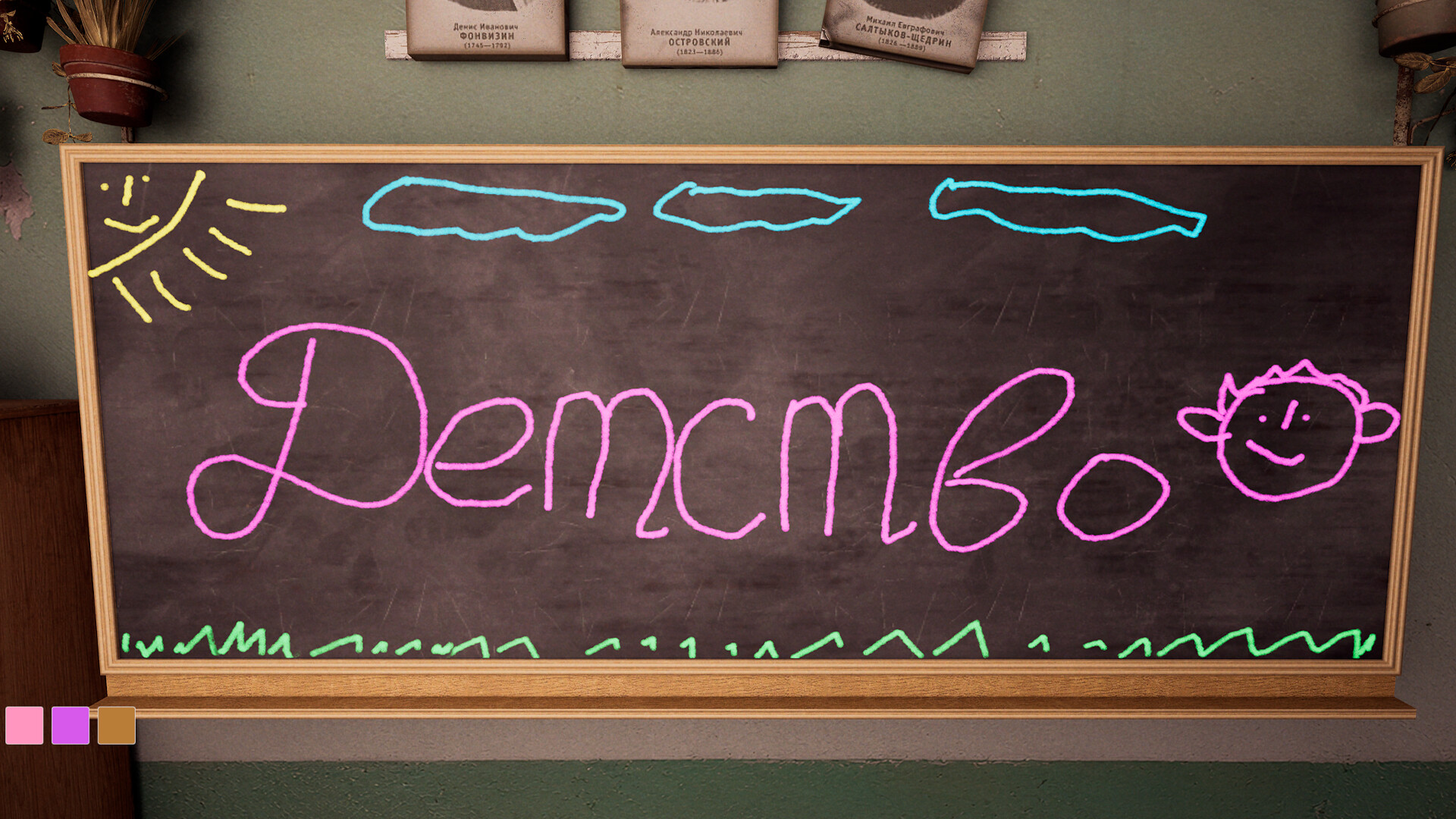
A handheld Brick Game console sits on the bed in one of the game's period-accurate apartment interiorsImage: VD Games via Steam -
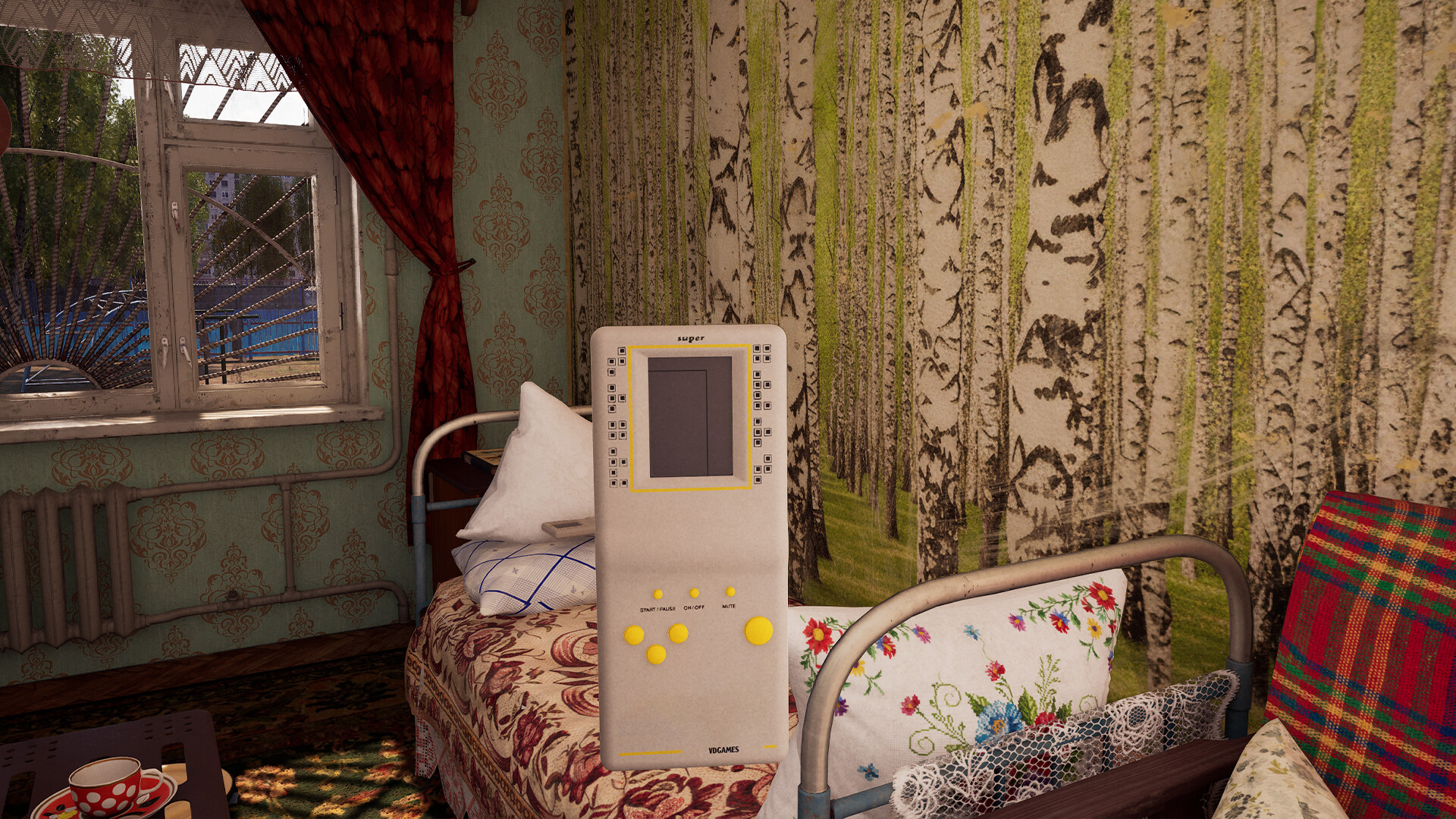
A pedal car sits outside the apartment blocks that make up the game's small, walkable courtyardImage: VD Games via Steam -
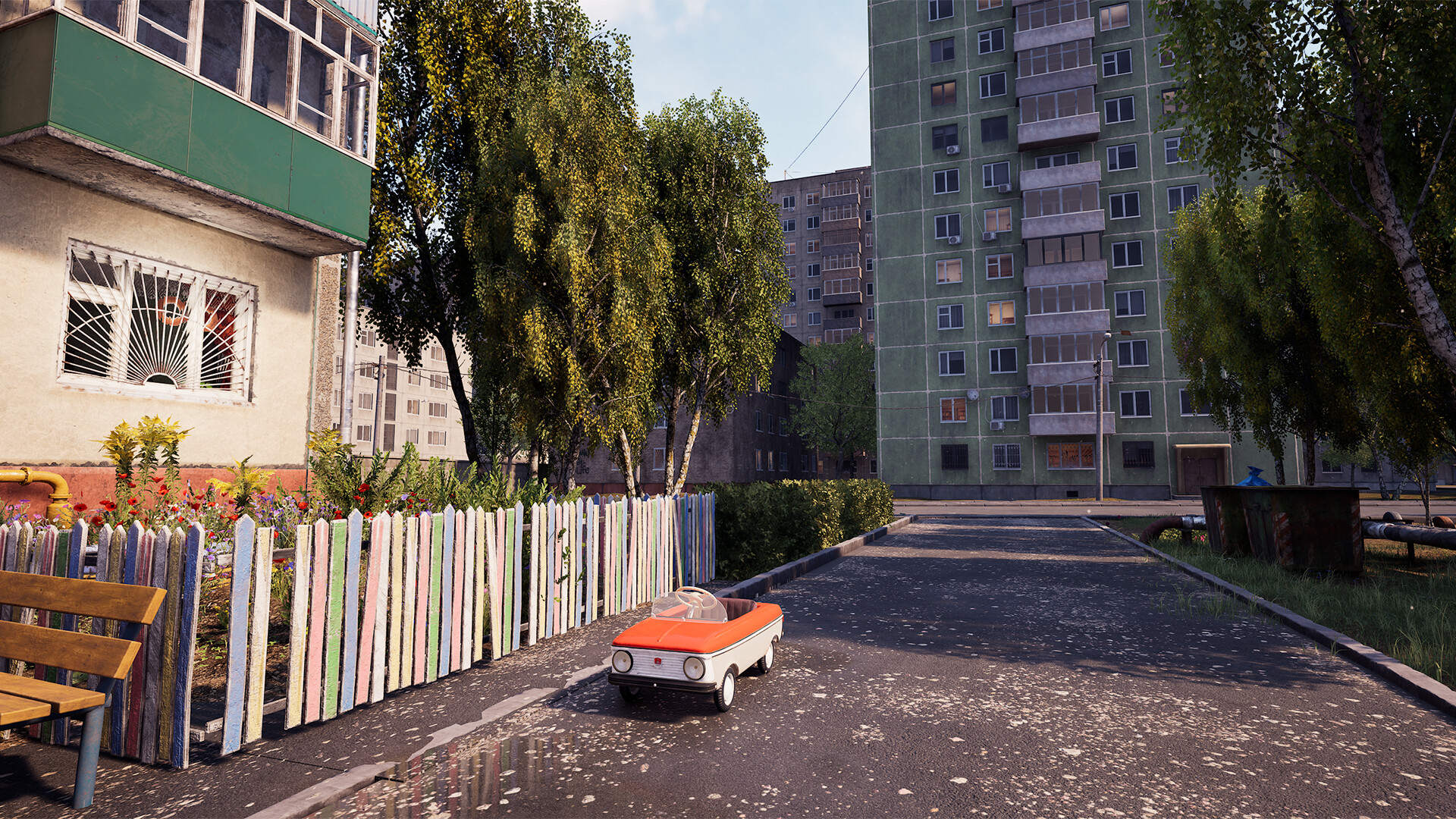
A chalkboard drawing spells out the game's title, Detstvo, meaning 'childhood'Image: VD Games via Steam