Game review
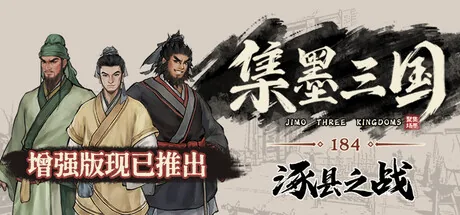
Three Kingdoms Part One: Battle of Zhuo County Review: Gorgeous Art, Rocky Launch
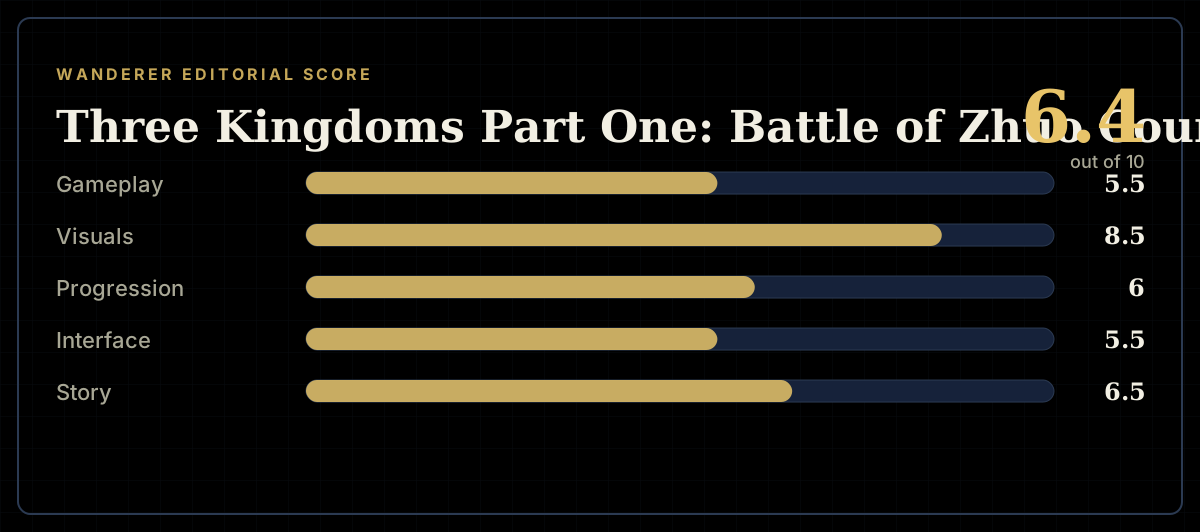
6.4 / 10
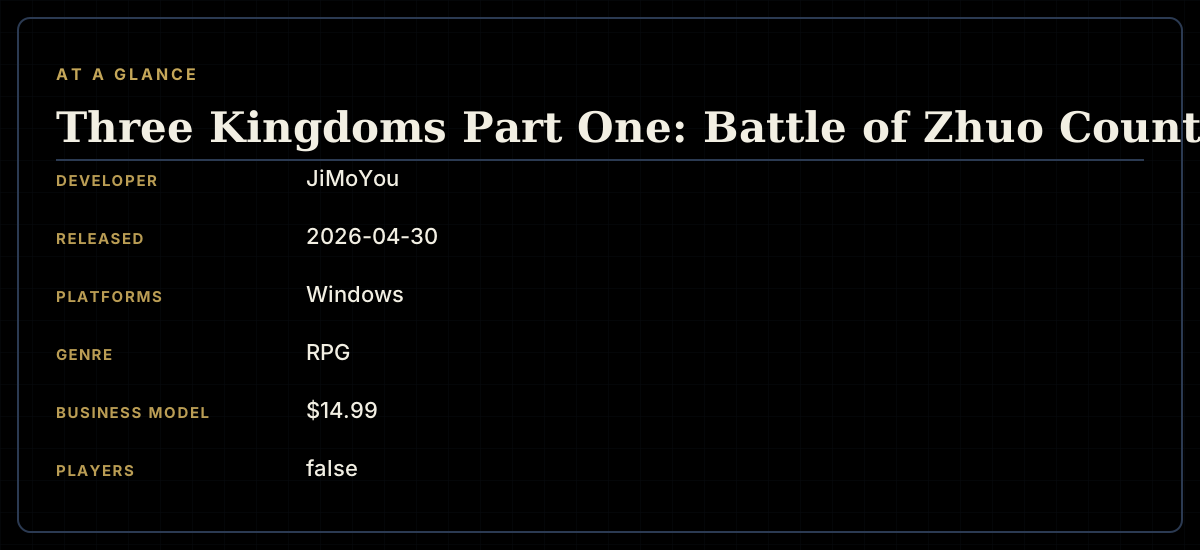
- Developer
- JiMoYou
- Publisher
- JiMoYou
- Released
- 30 April 2026
- Platforms
- Windows
- Genre
- RPG
- Monetisation
- $14.99
- Players
- false
The short version
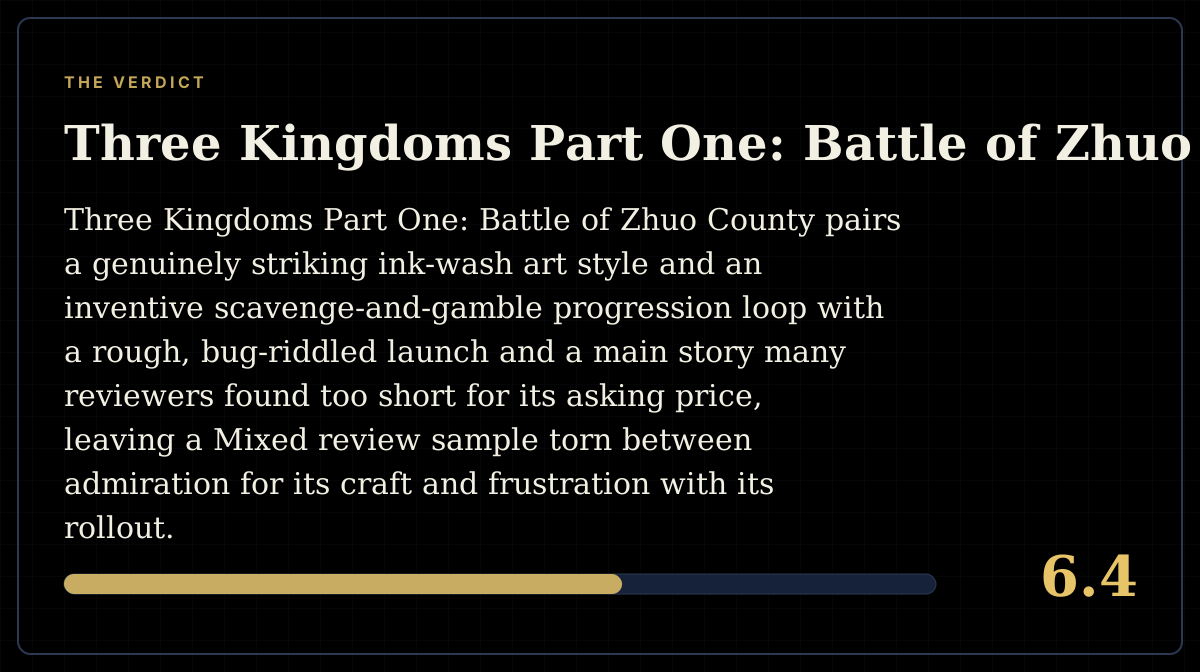
Three Kingdoms Part One: Battle of Zhuo County pairs a genuinely striking ink-wash art style and an inventive scavenge-and-gamble progression loop with a rough, bug-riddled launch and a main story many reviewers found too short for its asking price, leaving a Mixed review sample torn between admiration for its craft and frustration with its rollout.
Biggest strengths
- A distinctive 3D ink-and-watercolor art style that reviewers across the sample, including several harsh critics, single out as genuinely striking and among the best-looking Chinese-themed indie releases they've played
- A novel progression loop that replaces traditional grinding with scavenging, bartering, and a dice-gambling system for upgrading gear, which many reviewers describe as unexpectedly addictive
- Sandbox militia battles that let players build and deploy custom troop compositions before major fights, a feature reviewers repeatedly wish was expanded into its own standalone mode
Biggest weaknesses
- Multiple reviewers report launch-window bugs ranging from black-screened cutscenes and crashes to save files that fail to restore lost items or progress, with one describing two separate crashes in a single 50-minute session
- The main story is widely described as short, roughly three to six hours depending on playstyle, and several reviewers feel it ends abruptly after a single major battle despite the grander scope implied by the Three Kingdoms name
- Basic quality-of-life features are missing at launch, including a way to speed up or skip automated battle animations and a marker showing the player's own position on the map
Who it's for: Best for players drawn to Three Kingdoms settings and striking visual presentation who can tolerate launch-window bugs and a short main campaign; a poor fit for players wanting a long, polished RPG or one who isn't willing to wait for patches.
Our recommendation: Wait for a sale
6.4 / 10
Three brothers, one county, and a single tightly-packed campaign
Three Kingdoms Part One: Battle of Zhuo County tells the very beginning of the Three Kingdoms saga: the first meeting of Liu Bei, Guan Yu, and Zhang Fei, their oath of brotherhood, and their fight to defend Zhuo County from the Yellow Turban rebellion. Rather than the sprawling, dozens-of-hours epics the setting usually implies, the developer designed this as a tightly paced RPG meant to be finished in roughly one or two sittings, with side content and higher difficulties offered for players who want a longer stay.
An art style reviewers keep coming back to praise
Nearly every reviewer in the sample, including several who otherwise rate the game harshly, singles out its 3D ink-and-watercolor visual style as a genuine standout, with more than one calling it the best-looking Chinese-themed indie release they've played this year. The soundtrack draws similarly consistent praise, and reviewers repeatedly note that the presentation alone puts the game in what one calls the "first tier" of independent releases, regardless of how they feel about everything else.
Scavenging and gambling instead of grinding
Rather than traditional monster-farming, the game builds its progression around scavenging supplies from the environment, bartering with merchants, and a dice-based gambling system for upgrading equipment. Several reviewers describe this loop as unexpectedly compelling, framing themselves as converts to a playstyle built around looting and wagering rather than repetitive combat, though others feel the loot economy skews too heavily toward the gambling mechanic once players reach the later stages.
Custom militias give the strategy layer a highlight
Beyond the core story missions, players can recruit, promote, and customize militia troops for large-scale tactical battles ahead of major story fights. Reviewers consistently call this system a highlight and one of the freshest ideas in the game, with several explicitly suggesting the developer expand it into its own standalone mode with more unit types and effects, drawing comparisons to card-battler and roguelike deck-builders as a template for where it could go next.
A launch that many reviewers describe as unfinished
The most serious and most repeated criticism in the sample concerns the state the game shipped in. Reviewers report black-screened cutscenes, crashes during normal play, and save files that fail to properly restore lost items or progress after a reload, with one reviewer describing two separate crashes within a single 50-minute session. Others report paying in-game currency for upgrades that never registered, or progress-blocking bugs around scavenging areas rendering entire map sections unusable.
Missing conveniences make early hours harder than they should be
Several reviewers flag the absence of basic quality-of-life tools at launch: there's no way to speed up or skip the game's automated battle animations, no marker showing the player's own position on the map, which multiple reviewers say makes early navigation confusing, and no way to skip dialogue-linked cutscene animations even on repeat viewings. None of these are described as game-breaking on their own, but reviewers say they compound with the technical bugs to make the opening hours rougher than the game's polish elsewhere would suggest.
A short story that some feel oversells its scope
A recurring complaint concerns runtime and scope: several reviewers finished the main story in three to six hours and describe the ending, arriving abruptly after a single major battle against the Yellow Turbans, as covering only the barest opening chapter of the Three Kingdoms story despite the grand framing of the title. One Traditional Chinese-language reviewer jokes that the developer should rename the game to drop the "Three Kingdoms" subtitle entirely and just call it "Battle of Zhuo County," arguing that would better set expectations for how much story is actually included.
A price tag reviewers feel doesn't match the content
Tied closely to the length complaint, a meaningful share of the sample argues the roughly $14.99 asking price is too high given how little main-story content is on offer, with one detailed review specifically arguing anything over roughly $7-10 for a linear campaign this short is overpriced regardless of how good the presentation is. Several reviewers explicitly recommend waiting for a discount rather than buying at launch price.
Frequent patches are winning back goodwill
Despite the rocky launch, an unusually active post-release update cadence, more than 24 patches by some counts, comes up again and again as a mitigating factor, including from reviewers who otherwise left negative reviews. Several explicitly frame their score as provisional, saying they bought at launch expecting rough edges and are choosing to support continued development rather than judge the game solely on its first days, with more than one reviewer noting the game already feels meaningfully improved from its earliest state.
A harder alternate mode rewards a second playthrough
Beyond the default story mode, which several reviewers nickname the "wheelchair mode" for how forgiving its combat is, the game offers a separate, tougher mode built around tighter resource management and less room for error. Reviewers who tried both describe the default mode as an easy on-ramp for players unfamiliar with the systems, while the harder mode gives returning players a genuine reason to revisit a story they've already finished, something the short main campaign would otherwise struggle to justify on its own.
Goodwill toward a homegrown effort, warts and all
A recurring undertone across the Chinese-language portion of the sample is a specific kind of patience extended to homegrown, self-published Chinese RPGs: several reviewers explicitly frame their positive score less as an endorsement of the game's current state and more as a vote of support for a small, ambitious domestic team willing to keep patching rather than abandon a rocky launch. That sentiment cuts both ways, though, with at least one reviewer explicitly rejecting it, arguing a rough launch shouldn't be excused just because the developer is local and the art direction is strong.
Verdict
Three Kingdoms Part One: Battle of Zhuo County pairs a genuinely striking ink-wash art style and an inventive scavenge-and-gamble progression system with a launch rough enough, and a story short enough, to leave its review sample genuinely split. Reviewers overwhelmingly credit the developer's aggressive post-launch patching for keeping goodwill alive, but with technical issues still being reported and the main campaign covering only the opening chapter of a much larger story, this is one to watch patch notes for and consider on sale rather than buy at launch price.
Pros and cons
Pros
- A distinctive 3D ink-and-watercolor art style that reviewers across the sample, including several harsh critics, single out as genuinely striking and among the best-looking Chinese-themed indie releases they've played
- A novel progression loop that replaces traditional grinding with scavenging, bartering, and a dice-gambling system for upgrading gear, which many reviewers describe as unexpectedly addictive
- Sandbox militia battles that let players build and deploy custom troop compositions before major fights, a feature reviewers repeatedly wish was expanded into its own standalone mode
- An unusually active post-launch update cadence, with the developer pushing over 24 patches in the weeks after release, which several reviewers credit with softening their score despite a rough launch
Cons
- Multiple reviewers report launch-window bugs ranging from black-screened cutscenes and crashes to save files that fail to restore lost items or progress, with one describing two separate crashes in a single 50-minute session
- The main story is widely described as short, roughly three to six hours depending on playstyle, and several reviewers feel it ends abruptly after a single major battle despite the grander scope implied by the Three Kingdoms name
- Basic quality-of-life features are missing at launch, including a way to speed up or skip automated battle animations and a marker showing the player's own position on the map
- A number of reviewers argue the roughly $14.99 asking price is too high for the amount of content delivered, with several recommending a sale purchase over buying at launch
Screenshots
-
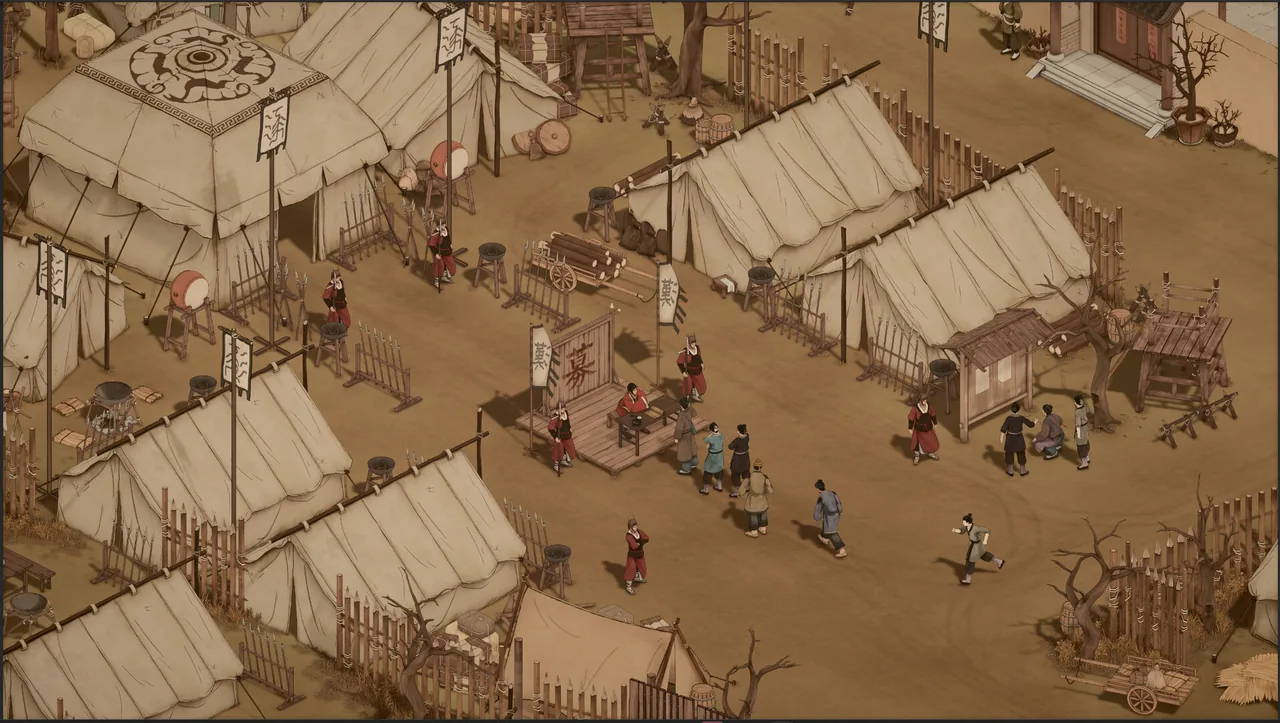
Image: JiMoYou via Steam -
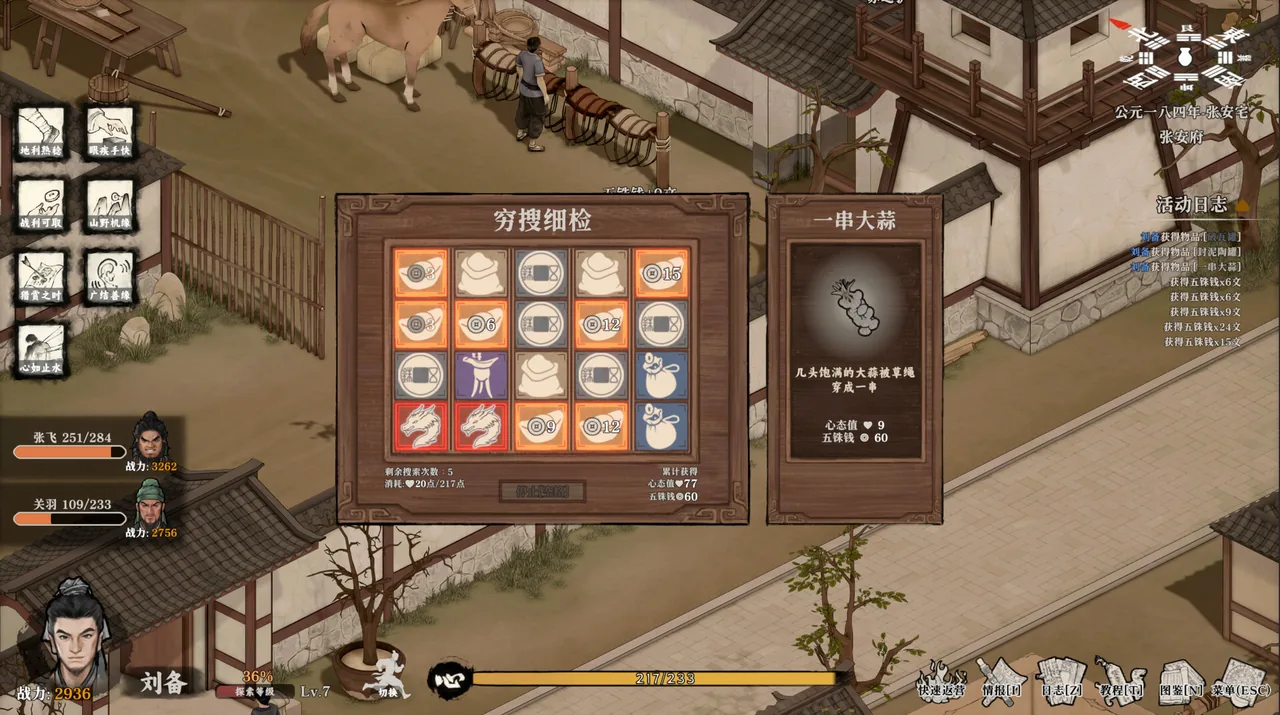
Image: JiMoYou via Steam -
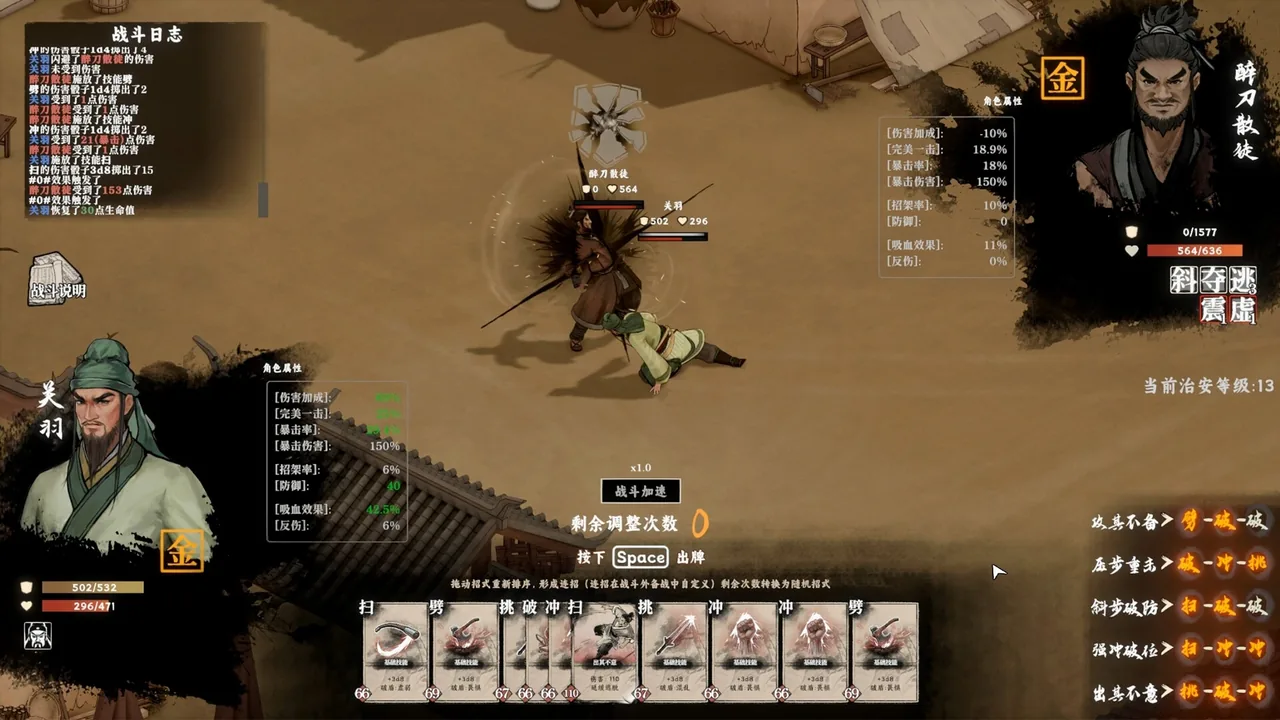
Image: JiMoYou via Steam -
Wanderer Editorial -
Wanderer Editorial -
Wanderer Editorial