Game review
The Necromancer's Tale
7 / 10
- Developer
- Psychic Software
- Publisher
- Psychic Software
- Released
- 17 July 2025
- Platforms
- Windows, macOS
- Genre
- RPG
- Monetisation
- One-time purchase (NZ$35.99); no in-game store, no IAP, no DLC
- Players
- None; fully single-player
The short version
The Necromancer's Tale asks you to earn a necromancer's powers the slow way: years of a minor noble's life spent sneaking, studying and being quietly corrupted by a spellbook, told across 400,000 words of hand-written narrative and 180-plus hand-drawn NPC portraits. A little over a year after launch it sits at Very Positive on Steam — 662 of 724 reviews, 91% — and the praise is specific and consistent: this is a slow-burn gothic CRPG whose Trust system makes dialogue choices carry real, lasting weight, drawing direct comparisons to Disco Elysium and to the Lich mythic path in Pathfinder: Wrath of the Righteous.
The other side of that same coin is the minority report, and it's a coherent one. I read every negative review this game has — all 62 of them — and the same handful of complaints recur independently: combat that stays basic and slow long after the story has earned its stakes, a reputation system whose swings feel arbitrary rather than earned, and softlocks serious enough that regulars recommend rotating save slots as a survival habit. Steam's own achievement data backs up the pacing complaint — a majority of players clear the opening chapters, and under 3% ever see the back half of the story.
Biggest strengths
- 400,000 words of hand-written narrative and 180+ individually hand-drawn NPC portraits, widely praised as some of the best writing in an indie CRPG from 2025, with direct comparisons to Disco Elysium
- The Trust system gives dialogue choices genuine, lasting consequences — several reviewers completed two or three full playthroughs chasing different endings and different starting backgrounds
- A distinctive premise executed patiently: you begin as an ordinary noble and are gradually, convincingly drawn into the Dark Arts rather than starting as a necromancer on day one
Biggest weaknesses
- Combat is described almost universally, across the negative sample, as basic, slow and undercooked — several reviewers report reaching forced fights their non-combat build (Academic, low-aggression choices) simply can't win, with no way around them
- The Trust system that earns the most praise is also the most repeated complaint: multiple reviewers describe major, unexplained reputation swings from innocuous-seeming dialogue, pushing them toward save-scumming or quitting outright
- Persistent reports of softlocks and progress-blocking bugs, serious enough that experienced players recommend saving to a fresh slot every 10-15 minutes as standard practice
Who it's for: Readers of story-heavy CRPGs and visual novels who want their dialogue choices to carry real, remembered weight — Disco Elysium and Age of Decadence fans specifically, and anyone drawn to a slow necromancer-corruption arc over immediate undead-army spectacle.
Our recommendation: Buy it for the writing and the Trust system, not the combat — go in expecting a patient, dialogue-first CRPG with real softlock risk, save across multiple slots from the start, and don't expect to be raising skeletons in the first few hours.
7 / 10
The Necromancer's Tale opens with a decision most RPGs save for a mid-game twist: you are not a necromancer. You're a minor noble in an alternate 1733, in a fictional kingdom near Venice and the Adriatic, and the great spellbook in front of you is a promise, not a starting kit. Getting good at the Dark Arts is something the game makes you earn — chapter by chapter, secret by secret — across a story its solo studio, Psychic Software, built from 400,000 words of hand-written narrative and more than 180 individually hand-drawn NPC portraits. It is, by its own design, a slow game about a fast fall, and a little over a year after its July 2025 launch, 724 Steam reviews put it at Very Positive — 91% recommend it. Read past the headline number, though, and the split is instructive: the praise is about the writing and the choices, and almost every serious complaint is about everything built to hold that writing up.
A necromancer's origin story, told patiently
The pitch is specific and the game commits to it. Character creation is a fully voiced backstory sequence that sets your gender, upbringing and career track — military, diplomatic or academic — and those choices don't just flavour later dialogue, they gate it: reviewers report entire approaches to conversations, and entire fights, opening or closing off depending on what was picked at the very start. From there, the main loop is investigation and persuasion: you negotiate, coerce, flatter and occasionally blackmail your way through a courtly, superstitious 18th-century setting where science is just beginning to elbow magic aside. The developer pitches a 25-to-50-hour playthrough depending on how much side content and automatic combat resolution a player uses, and the longest-playtime reviews in the positive sample bear that out — several report multiple full playthroughs well past the 80-hour mark chasing different endings and different starting backgrounds.
The writing is what earns the game its strongest praise, and reviewers reach for serious comparisons to make the point: "gothic Disco Elysium with combat," one blurb on the store page puts it, and player reviews independently land in the same territory, citing Age of Decadence and the Lich mythic path from Pathfinder: Wrath of the Righteous as the nearest points of reference. One long-time player calls it simply "one of the best CRPGs I've ever played," a sentiment echoed often enough in the sample to read as the game's actual centre of gravity — not the fighting, the fiction.
The Trust system: real stakes, and real friction
The mechanic doing the most work to make that fiction feel consequential is Trust — a running measure of how the surrounding town regards you, which drops as you take necromantic risks and recovers, or doesn't, depending on how carefully you manage your public face. Let it collapse and the game doesn't just lock you out of options; it can end your character's story on the end of a rope or at the hands of a mob. Reviewers who like the system like it a lot, describing lasting, felt consequences from choices made hours earlier and citing it as the reason a second or third playthrough feels genuinely different rather than cosmetically different.
It's also the single most repeated complaint in the negative sample. More than one reviewer describes losing a large chunk of Trust from what read as an entirely innocuous line — one cites a flat -25 swing from a routine conversation at a bar with no warning attached, another singles out throwaway-seeming options like "so who are you?" as silent reputation traps. The frustration isn't that choices matter; it's that several players can't tell, in the moment, which choices matter or by how much, which pushes exactly the save-scumming behaviour a consequence system is supposed to discourage. One reviewer who initially rated the game positively changed to negative and back twice over this single issue before settling on negative, writing that the system had gone from "opaque options" to something they'd stopped loving entirely by the time they finished.
Where the story and the systems pull apart
The complaint that shows up most often in the negative sample, in one phrasing or another, is that the game undersells its own RPG and combat framing. Several reviewers describe long opening stretches — one says fifteen hours — spent entirely on fetch quests and dialogue before the necromancy the store page promises actually opens up, and a recurring line across the sample brackets the game as closer to a point-and-click visual novel with a moveable character than to the party-based CRPGs it's tagged alongside. That's not automatically a flaw for the audience that's here for the writing, and several of those same reviewers say so explicitly — but for players who arrived expecting a Baldur's Gate-shaped party RPG, the mismatch reads as false advertising rather than a stylistic choice.
The combat that does exist draws the sample's most consistent low marks: slow, mechanically thin, and in a few reported cases outright buggy, with one player describing a hard lock during the very first combat encounter caused by broken button prompts. More seriously, several reviewers describe genuine softlocks tied to build choices — a character built around investigation and diplomacy, with points pulled away from combat, can hit a mandatory fight it's mathematically unable to win. One reviewer who committed fully to a non-violent, disconnected necromancer build got stuck at a required confrontation in chapter eight with no way to route around it; another, playing an Academic with points nowhere near combat stats, describes twenty failed attempts against the game's very first real enemies. These aren't reports of the game being merely hard — they're reports of specific builds the character creator allows becoming unwinnable partway through a 20-to-30-hour investment.
Bugs, save discipline, and an unreliable controller
Beyond the build-specific softlocks, a smaller but recurring thread in the negative sample describes general instability: progress-blocking bugs serious enough that one detailed review lists four or five separate reverts to earlier saves before giving up, and another states plainly that unless a player saves to a different slot every 10 to 15 minutes, a softlock is eventually likely. That's a real tax on a story-first game whose main appeal is momentum through a long narrative. On the technical side, the game advertises partial controller support, but multiple players report it doesn't meaningfully work — one couldn't navigate the settings menu at all with a pad connected — and keybinds can't be remapped on keyboard and mouse either, a rough edge for a game that otherwise ships a genuinely long accessibility feature list: adjustable text size, adjustable difficulty, camera comfort and save-anywhere all appear as store-listed categories. A handful of reviewers also flag the visuals as dated or Unity-stock-asset-adjacent, though the game's stylised painterly filter — criticised by some, defended by others — can be switched off entirely in settings.
How far players actually get
Steam's global achievement data lines up with the pacing complaints closely enough to be worth citing directly. Early-chapter achievements sit in the high-50s to high-60s percent — the large majority of buyers get that far — but the curve falls off a cliff from there: achievements tied to roughly the back third of the story sit at 2% or lower, and the single achievement furthest into the plot has been earned by under 1% of the player base. Read alongside the negative reviews' talk of 15-hour slow burns before the necromancy properly starts, and the positive reviews' 80-plus-hour completionist playthroughs, that curve reads less like players losing interest and more like a long, demanding game whose second half is reached by a determined, self-selecting subset of its audience — the same subset writing most of the glowing reviews.
Final verdict
The Necromancer's Tale is a genuinely ambitious piece of narrative game design let down by the systems built to carry it. The writing, the Trust-driven consequence structure and the slow, believable descent from noble to necromancer are strong enough that a large majority of its Steam audience — 91% of 724 reviewers — recommends it without qualification, and the direct comparisons to Disco Elysium and the best CRPG writing of 2025 aren't hollow marketing lines; they show up, unprompted, from players deep enough into the game to have earned an opinion. But the minority report is specific, convergent and hard to wave off: thin, occasionally glitchy combat that can outright strand a non-combat build, a reputation system whose punishments can feel arbitrary rather than earned, and softlocks real enough that "save to a new slot constantly" is standard advice among the game's own fans.
For readers who came here from a dialogue-heavy CRPG or visual novel background and want their choices to actually cost something, this is an easy recommendation with clear eyes about what it isn't. For anyone expecting a combat-forward necromancer power fantasy from the opening hour, the marketing oversells it — go in patient, save often, and don't build a character who can't fight.
Pros and cons
Pros
- 400,000 words of hand-written narrative and 180+ individually hand-drawn NPC portraits, widely praised as some of the best writing in an indie CRPG from 2025, with direct comparisons to Disco Elysium
- The Trust system gives dialogue choices genuine, lasting consequences — several reviewers completed two or three full playthroughs chasing different endings and different starting backgrounds
- A distinctive premise executed patiently: you begin as an ordinary noble and are gradually, convincingly drawn into the Dark Arts rather than starting as a necromancer on day one
- A fully voiced, choice-driven character-creation backstory (military, diplomatic or academic) that meaningfully colours dialogue options for the rest of the game
- Extensive accessibility options on paper — adjustable text size, adjustable difficulty, camera comfort, save-anywhere — and no generative AI used for its art, a point the developer states directly
Cons
- Combat is described almost universally, across the negative sample, as basic, slow and undercooked — several reviewers report reaching forced fights their non-combat build (Academic, low-aggression choices) simply can't win, with no way around them
- The Trust system that earns the most praise is also the most repeated complaint: multiple reviewers describe major, unexplained reputation swings from innocuous-seeming dialogue, pushing them toward save-scumming or quitting outright
- Persistent reports of softlocks and progress-blocking bugs, serious enough that experienced players recommend saving to a fresh slot every 10-15 minutes as standard practice
- A large minority feel misled by the RPG/CRPG marketing, describing the actual moment-to-moment experience as closer to a visual novel or a 2000s-style point-and-click, especially across the many hours before real necromancy enters play
- Partial controller support is advertised but reported broken by multiple players, and keybinds cannot be remapped
- Steam's achievement data shows a steep drop-off — a majority of players clear the opening chapters, but under 3% ever reach the final third of the story
Screenshots
-
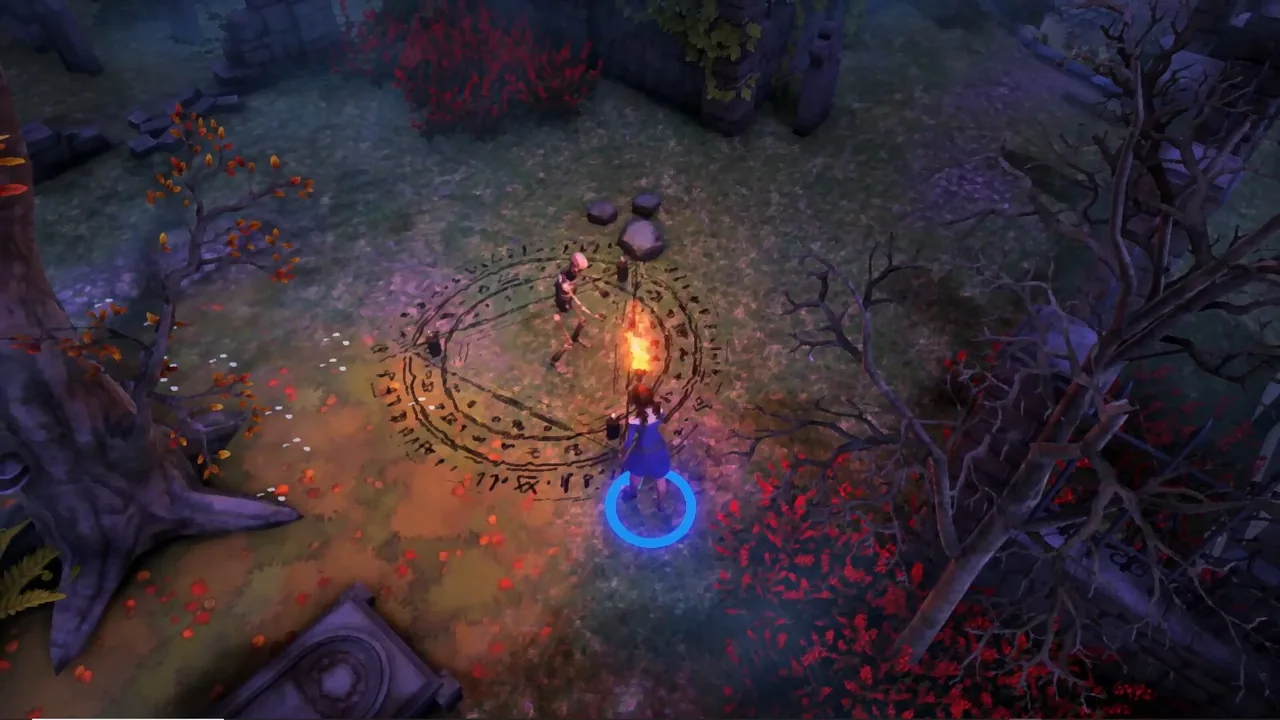
The Necromancer's TaleImage: Psychic Software via Steam -
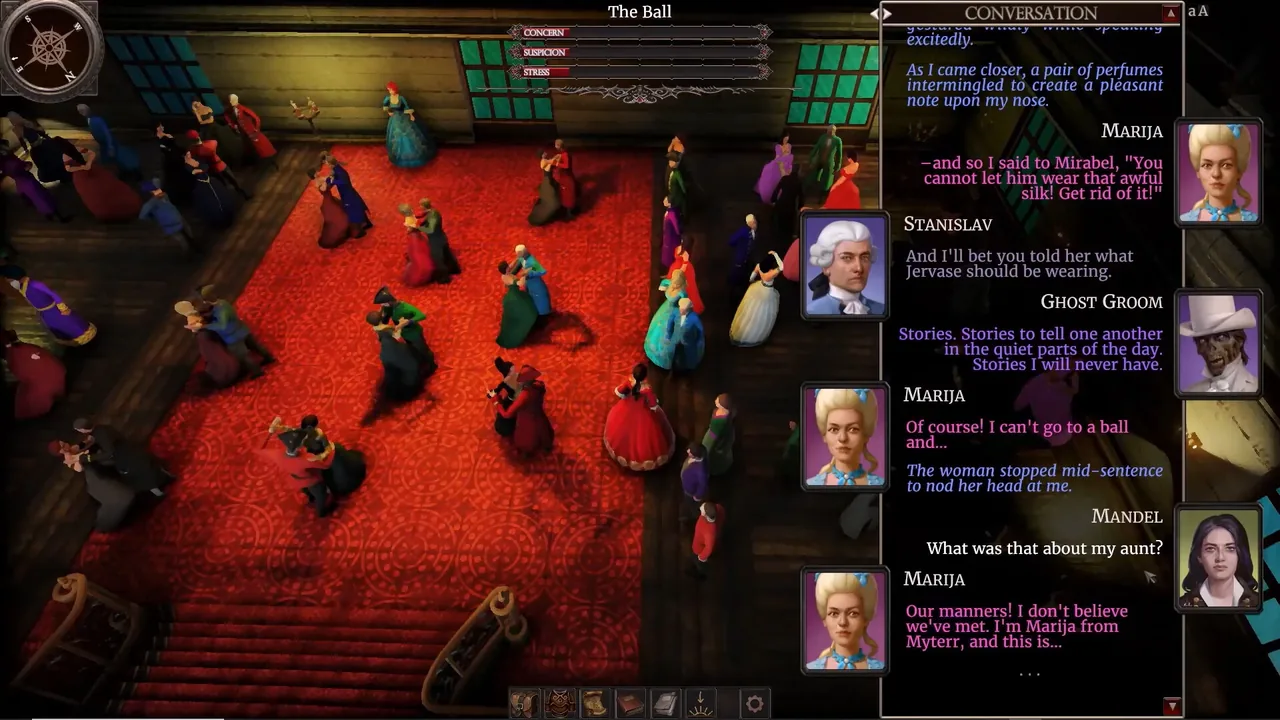
The Necromancer's TaleImage: Psychic Software via Steam -
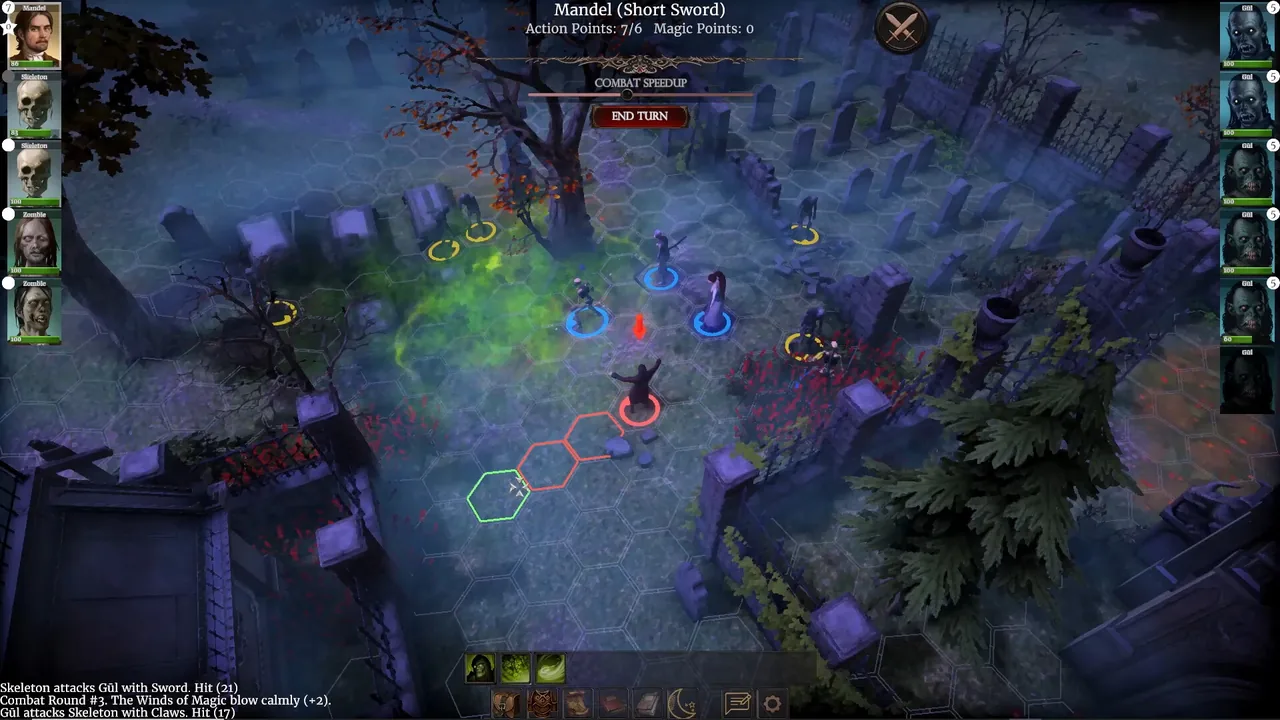
The Necromancer's TaleImage: Psychic Software via Steam -
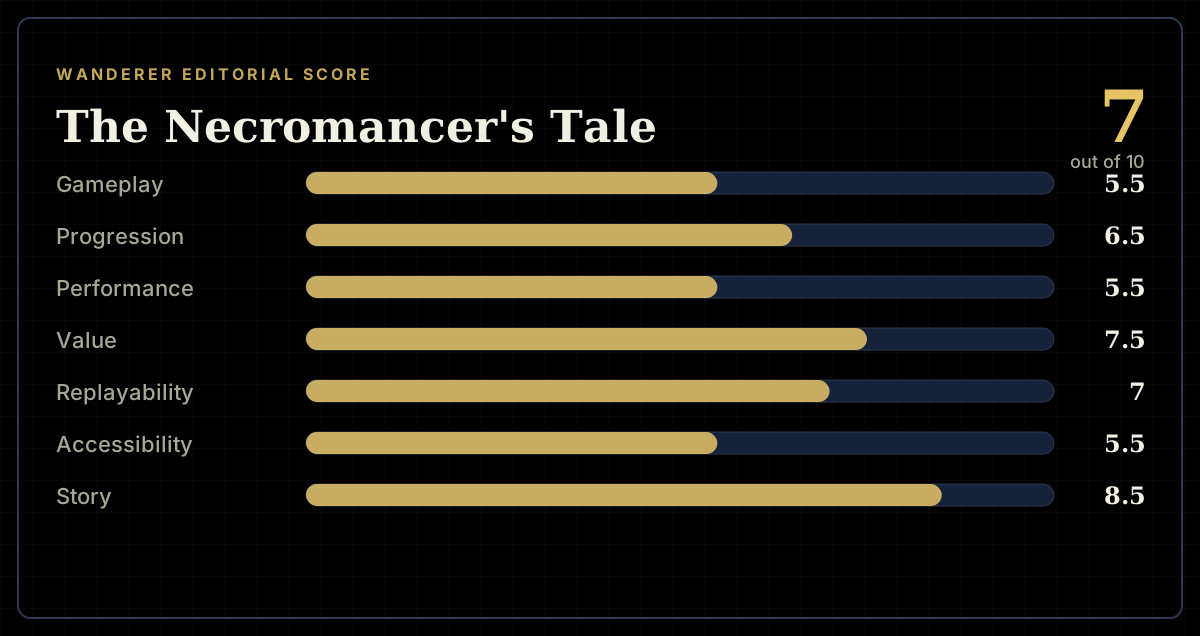
How the review scores each part of the gameWanderer Editorial -
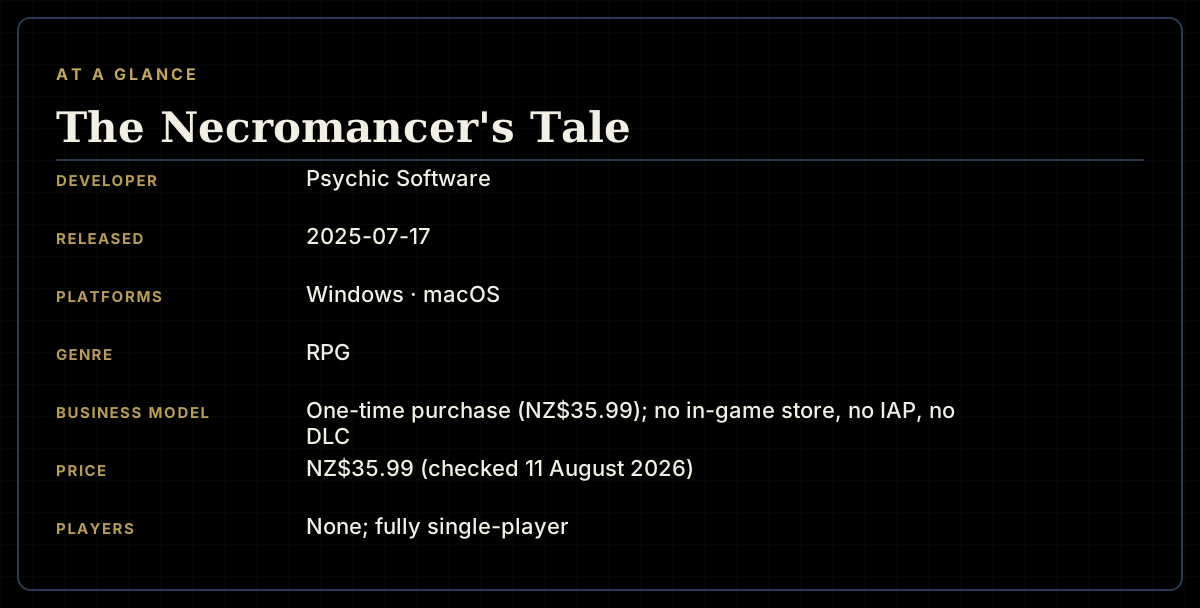
The game at a glanceWanderer Editorial -
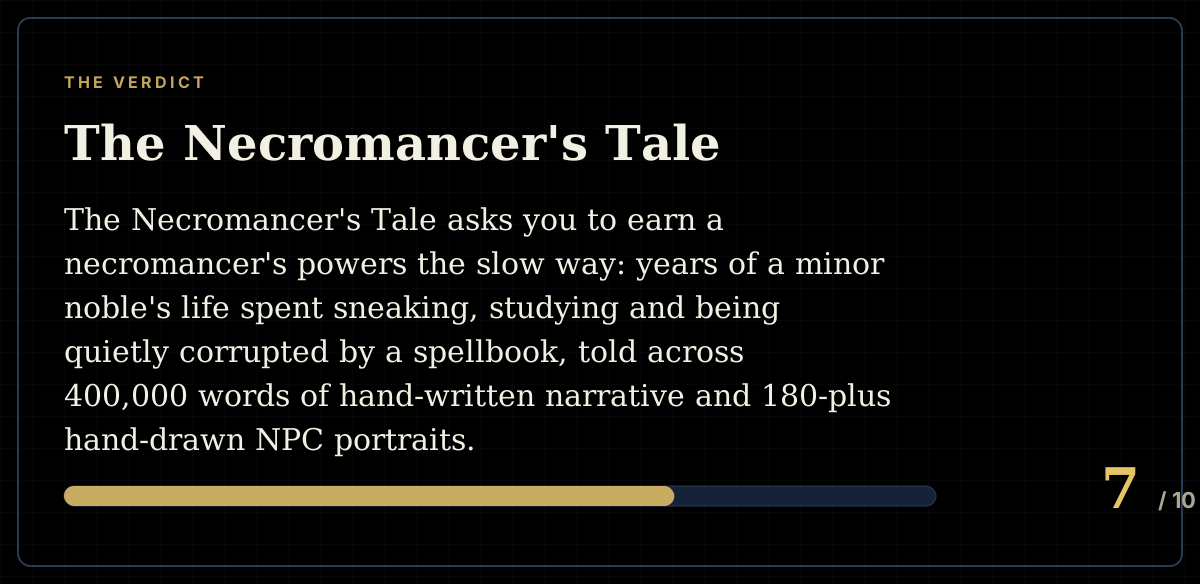
The short versionWanderer Editorial