Game review
The Name I Wear
7.5 / 10
- Developer
- ISART DIGITAL
- Publisher
- ISART DIGITAL
- Released
- 18 June 2026
- Platforms
- Windows
- Genre
- Adventure, Indie, Free To Play, Puzzle
- Monetisation
- free
- Players
- false
The short version
Biggest strengths
- A genuinely novel central mechanic, spelling out names on available devices to temporarily become other people and inherit their memories and skills, that reviewers consistently called clever
- Impressive production values for a free student project, with reviewers repeatedly praising the 3D graphics, voice acting, and atmosphere as comparable to a priced commercial release
- A strong, mystery-driven story centered on identity and betrayal that kept reviewers engaged through multiple endings
Biggest weaknesses
- At least one reported game-breaking bug involving a train puzzle that some players had to restart the entire game to work around
- No option to disable mandatory motion blur, which one reviewer said made the game literally unplayable for them
- Some misleading or mistimed on-screen puzzle hints that pointed toward the next puzzle rather than the current one, causing real confusion
Who it's for: Fans of short, story-driven puzzle adventures looking for a genuinely novel central mechanic, who can tolerate some student-project rough edges like bugs and a lack of a motion blur toggle
Our recommendation: recommended
7.5 / 10
Identity as a tool, not just a theme
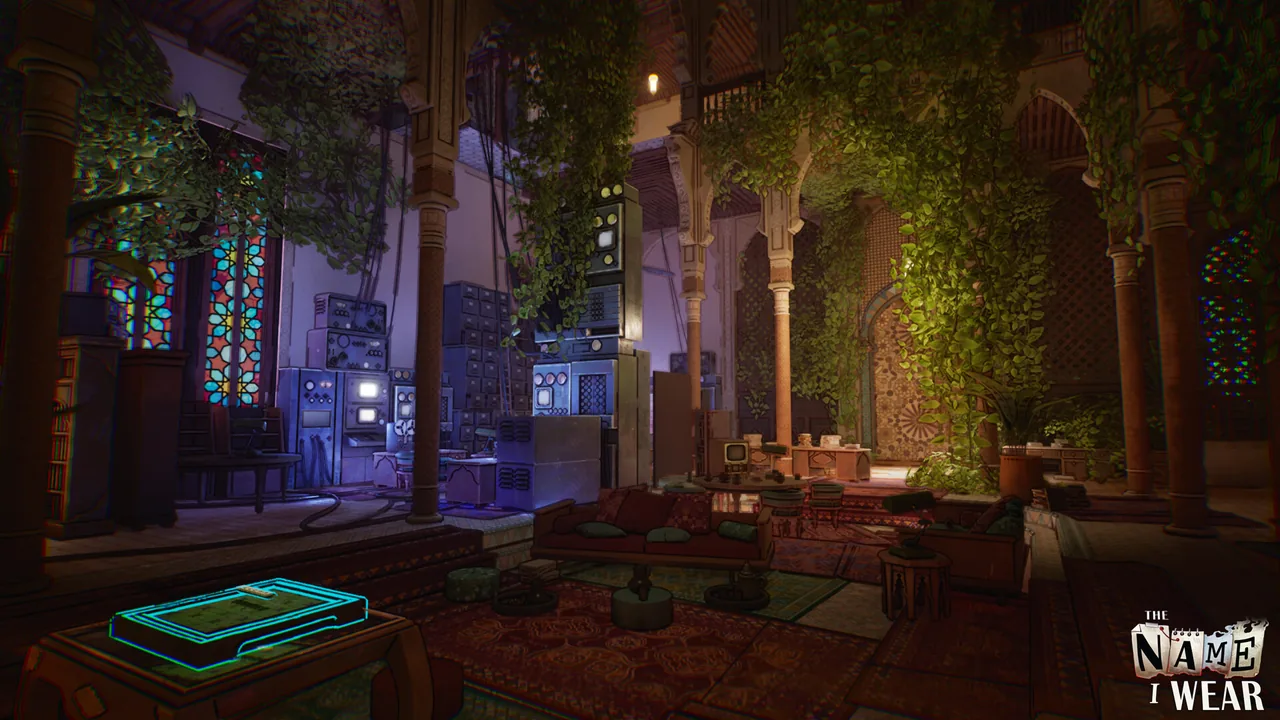
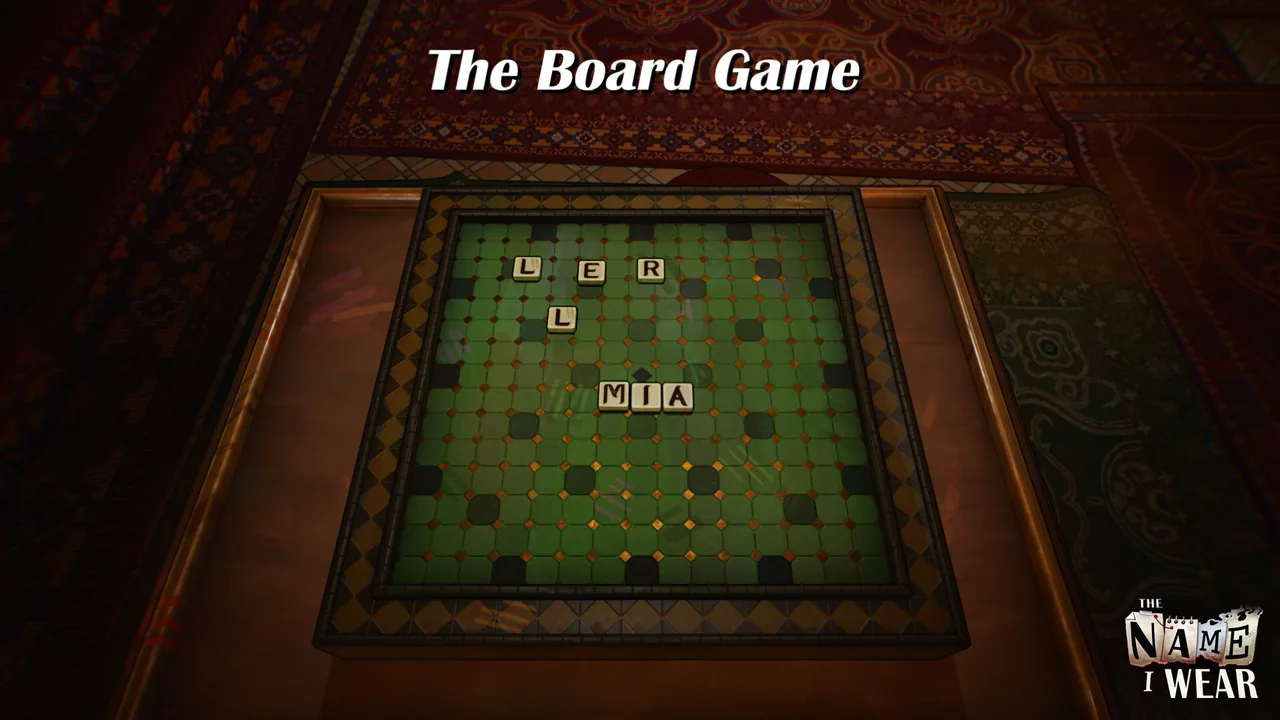
The Name I Wear sends players through an ancient riad once used as a spy network's base, piecing together the events behind a forgotten tragedy using an unusually literal central mechanic: finding names, writing them down, and becoming the people they belong to. One detailed review laid out why that concept works so well in practice: "The Name I Wear is a free-to-play narrative puzzle adventure developed and published by ISART DIGITAL that builds its entire experience around a fascinating concept: identity as a tool. Rather than relying on combat, action sequences, or traditional [puzzle mechanics], the game asks players to inhabit other people to progress." Another reviewer distilled the same mechanic concisely: "a very clever mechanic (becoming another person, with their memories and skills e.g. lockpicking or languages, by spelling out their name on any available device)."
Production values that punch well above a student project
Given the game is a final-year student project from the ISART Digital game school, the consistency of praise for its polish stands out. One reviewer wrote, "Fantastic game from some very talented game devs. It's ridiculous that this project is free. The art assets are charming and great aesthetically. The music and atmosphere are all on point." Another reviewer went further, directly comparing it to paid commercial work: "The game is a relatively short student project... but has the overall quality of a priced commercial game." A third reviewer summed up the same surprise: "I was pleasantly surprised at this game. Looking for a game to 100%, this game immediately grabbed my attention from the store page from the visuals, as well as the artwork for the game cover."
A mystery worth following through to the end
Beyond the mechanics, reviewers credited the writing and voice work for making the central mystery, uncovering who betrayed an intelligence network decades earlier, genuinely compelling. One wrote, "The Name I Wear is a 3D puzzle game set in the 20th century, with a strong story (finding out who betrayed an intelligence group)... The game has excellent 3D graphics and very good voice acting." Another reviewer described the tone with an evocative comparison: "You know that feeling where you wake up from a dream with the thought and feeling of, 'What on Earth just happened?' That's how this game felt. It was fun. The puzzles were clever and it always pointed you in the direction of the puzzle answer it ne[eded to]."
Real bugs beneath the polish
Despite the strong overall reception, several reviewers flagged concrete, specific technical problems. One of the pool's most detailed reviews opened directly: "It's a solid game with some flaws. There's at least one game-breaking bug. On my first run, the train bugged out when I reloaded my save, which made completing the puzzle impossible. I had to restart the game from the beginning." The same reviewer also flagged interaction precision issues: "There's a lot of clunk like clicking the right side of the dove's face, but the game registering that you clicked the left side instead," alongside "a ton of environmental clutter, so you have to pixel hunt at times to find the correct things to interact with." Notably, that same detailed critical review still landed on a clear recommendation, closing with, "there's a good game underneath all the jank and bugs... The game's definitely worth checking out, but I hope they take the time to fix the bugs."
Hints that sometimes point the wrong way
A specific and unusual complaint concerns the game's hint system pointing toward the wrong puzzle. The same detailed reviewer explained, "Sometimes the on-screen hints are for the puzzle after the current puzzle. For example, it shows 'Hit "H" on the radio' when what you actually need to do is figure out how to turn on the power. I got stuck for a while once because by the time I got to the puzzle the on-screen hint was about, I'd already forgotten about the hint, so I started wandering around lost." That's a design bug rather than a difficulty complaint, since the reviewer was explicit that they "never [got stuck] because of puzzle difficulty," only because of hints referencing the wrong step.
Accessibility gaps hit a couple of players hard
The pool's two negative reviews both concern specific technical accessibility issues rather than disliking the game's core concept. One reviewer wrote plainly, "I Really wanted to love this game, but the mandatory motion blur makes this game unplayable for me. PLEASE add an option to turn it off!" A second reviewer described a lighting problem: "whatever wasn't illuminated by lamps was completely unreadable for me... I only got to an ending through sheer force of luck and would surely never manage to complete the game without an internet guide," while still conceding "game's pretty okay, as long as you have a good setup for it." For a free, story-driven puzzle game, a missing motion blur toggle and inconsistent lighting readability are avoidable barriers that a settings menu could likely resolve.
Verdict
The Name I Wear is a genuinely impressive achievement for a student project, built around a clever, well-executed core mechanic that makes identity itself the primary puzzle tool, wrapped in production values, voice acting, and atmosphere that multiple reviewers compared favorably to paid commercial releases. Its real bugs, a game-breaking train puzzle issue, occasionally mistimed hints, and a lack of basic accessibility options like a motion blur toggle, are worth taking seriously, but most reviewers found them worth pushing through for a short, free, genuinely inventive story. An easy recommendation for puzzle and narrative adventure fans, with the caveat that some technical rough edges remain unresolved.
Pros and cons
Pros
- A genuinely novel central mechanic, spelling out names on available devices to temporarily become other people and inherit their memories and skills, that reviewers consistently called clever
- Impressive production values for a free student project, with reviewers repeatedly praising the 3D graphics, voice acting, and atmosphere as comparable to a priced commercial release
- A strong, mystery-driven story centered on identity and betrayal that kept reviewers engaged through multiple endings
- A well-paced runtime with real replay incentive through achievements, speedrunning, and a hidden alternate ending
Cons
- At least one reported game-breaking bug involving a train puzzle that some players had to restart the entire game to work around
- No option to disable mandatory motion blur, which one reviewer said made the game literally unplayable for them
- Some misleading or mistimed on-screen puzzle hints that pointed toward the next puzzle rather than the current one, causing real confusion
- Lighting and visibility issues for some players, with unlit areas reported as effectively unreadable regardless of hardware
Screenshots
-
The Name I WearImage: ISART DIGITAL via Steam -
The Name I WearImage: ISART DIGITAL via Steam -
The Name I WearImage: ISART DIGITAL via Steam