Game review
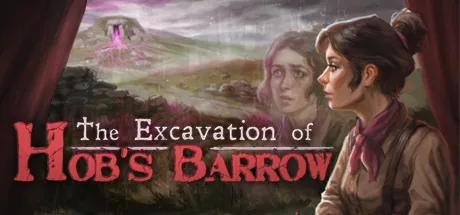
The Excavation of Hob's Barrow
7 / 10
- Developer
- Cloak and Dagger Games
- Publisher
- Wadjet Eye Games
- Released
- 28 September 2022
- Platforms
- Windows, macOS, Linux
- Genre
- Point-and-Click, Folk Horror, Adventure
- Monetisation
- One-time purchase, no DLC, no in-app purchases
- Players
- Single-player only
The short version
The Excavation of Hob's Barrow follows antiquarian Thomasina Bateman into an isolated Victorian moorland village to investigate a mysterious burial mound, in a classic point-and-click adventure steeped in folk horror dread. Developed by Cloak and Dagger Games and published by Wadjet Eye Games, it released 28 September 2022 and sits at Very Positive, 92.3% across 2,575 English-language reviews. Voice acting, atmosphere and pixel art draw exceptionally consistent, specific praise across nearly the entire sample. What runs through a large, detailed share of the negative reviews and a meaningful number of otherwise-positive ones is a sharp complaint about the ending — several argue it abandons the protagonist's established logic and undercuts the tension built over the game's first two acts, though a genuine minority defends it as an earned, genre-appropriate cosmic-horror payoff.
Biggest strengths
- Voice acting draws exceptionally specific, consistent praise, with the lead performance singled out repeatedly as elevating the entire experience
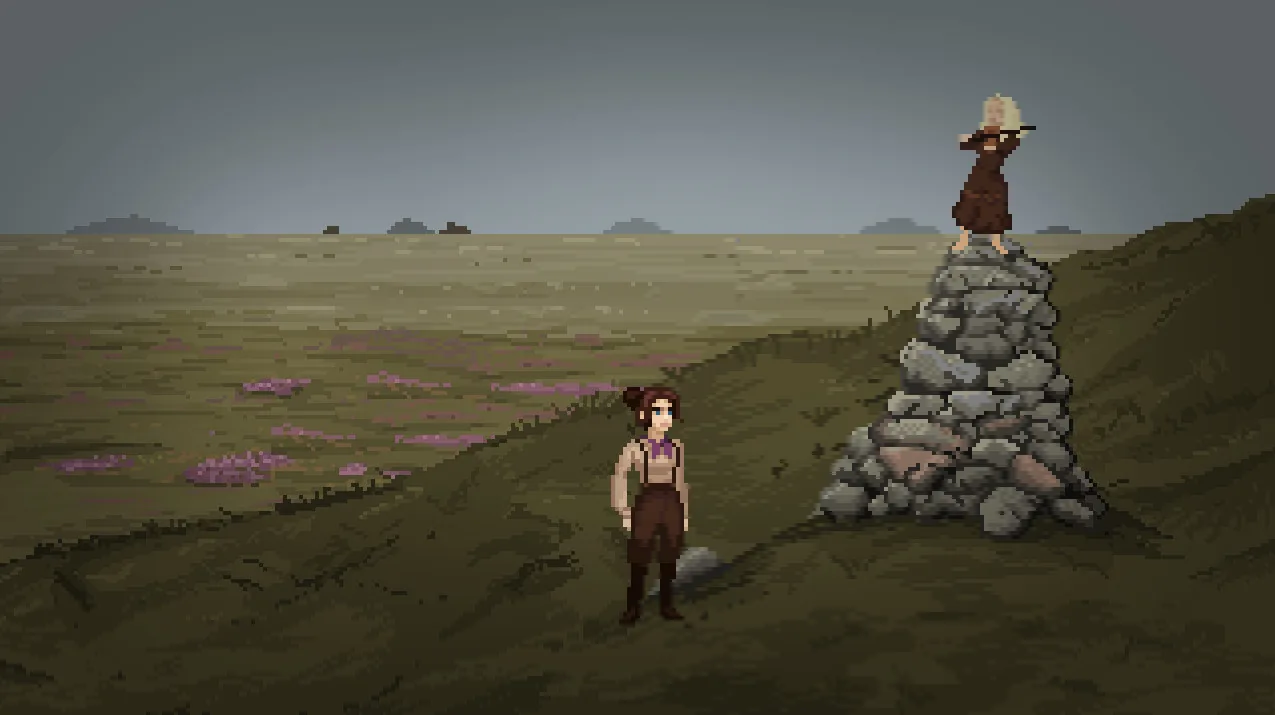
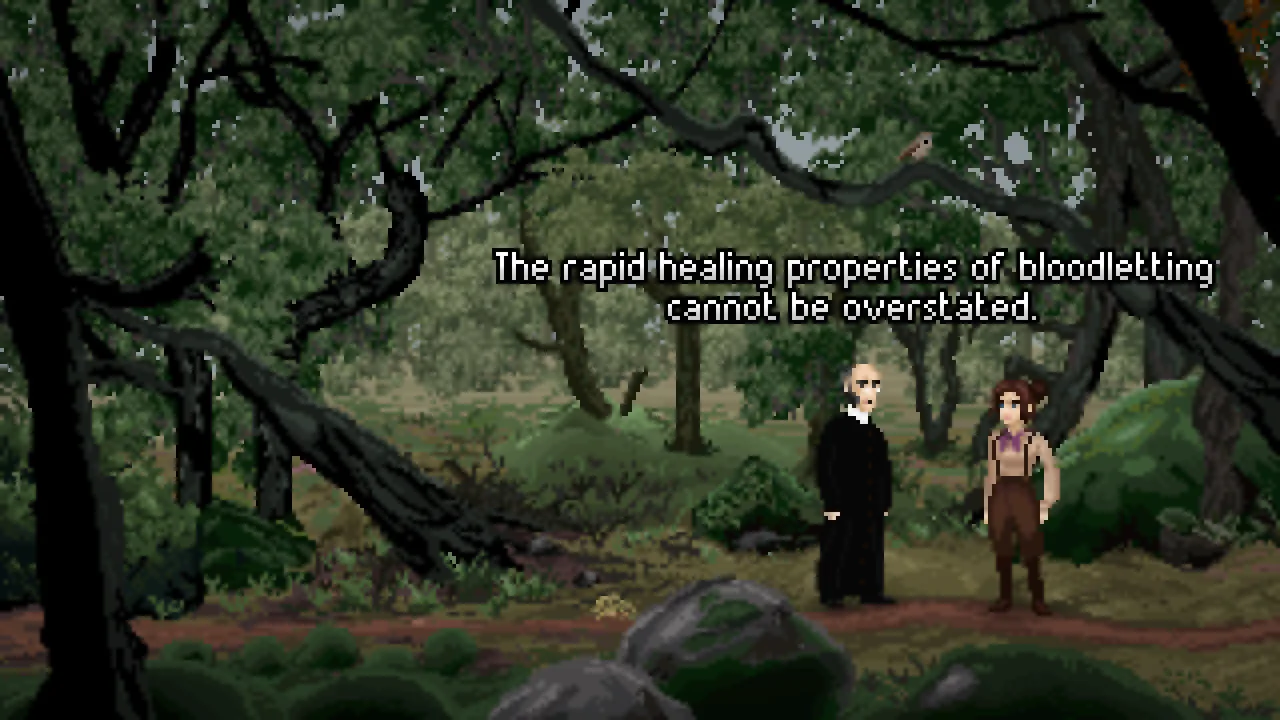
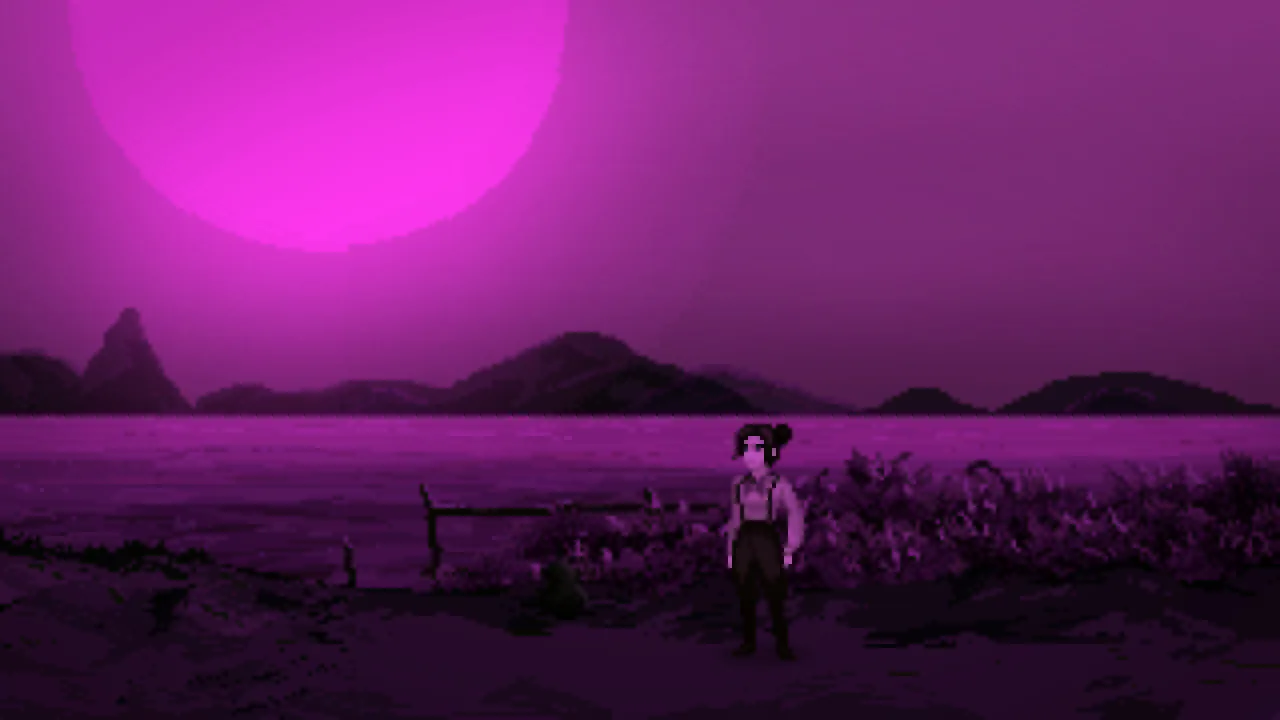
- Atmosphere and pixel art earn wide acclaim for capturing genuine Victorian folk horror dread, with reviewers describing individual scenes and settings in detail rather than generic praise
- The opening act and much of the middle section are credited, even by the game's harshest critics, as some of the strongest slow-burn mystery writing in the genre
Biggest weaknesses
- A large, detailed share of reviewers describe the ending as a significant let-down, arguing it forces the protagonist into choices that contradict her established rational character and resolves the mystery in a way several call illogical or railroaded rather than earned
- A genuine, meaningful minority pushes back directly, defending the ending as an appropriate cosmic and folk-horror payoff consistent with the genre's traditions — this review presents both readings rather than adjudicating between them
- A specific complaint concerns pacing in the game's middle stretch, described by several reviewers as a tedious fetch-quest section that dilutes the tension the opening act carefully built
Who it's for: Fans of classic LucasArts-style point-and-click adventures and slow-burn folk horror who value atmosphere and voice performance; a poor fit for anyone who needs a satisfying, earned ending to feel the whole experience was worthwhile.
Our recommendation: An exceptionally well-crafted, atmospheric adventure for most of its runtime, whose ending is genuinely one of the most contested in this library's coverage — go in appreciating the journey rather than expecting the destination to land for everyone.
7 / 10
Introduction
The Excavation of Hob's Barrow follows Thomasina Bateman, an antiquarian researching burial mounds across rural England, as she arrives in an isolated Victorian moorland village to investigate a barrow the locals clearly want left undisturbed. Developed by Cloak and Dagger Games and published by Wadjet Eye Games, it released 28 September 2022 and sits at Very Positive, 92.3% across the 2,575 English-language reviews this review draws from. The presentation and performance here are genuinely exceptional by this corpus's own consistent account — what makes this review worth reading closely is a sharply contested disagreement about the ending, one that recurs across both the negative and positive samples with unusual specificity.
Atmosphere and performance that earn real, specific praise
Start with what draws essentially unanimous acclaim. Voice acting is singled out constantly and specifically, with the lead performance repeatedly credited as elevating the entire game beyond what its pixel-art presentation alone would suggest. Atmosphere earns equally consistent praise — reviewers describe individual moments of dread and folk-horror unease with real specificity rather than generic compliments, and the game's opening hours draw praise even from its harshest critics. One detailed review, ultimately negative overall, still credited "the opening section" with setting "the mood and pacing flawlessly with incredible voice acting and a pitch-perfect discomfort to its art style." Puzzle design in the game's best stretches draws its own specific praise for logical, fair clue placement that rewards attention rather than obscure guessing.
An ending that splits even its own fans
Here's the specific, remarkably consistent complaint running through this game's negative sample and a meaningful share of its positive one. A large number of detailed reviews describe the ending as a significant, specific letdown — not vague disappointment, but a precise complaint that the protagonist, established throughout as rational and self-possessed, is written into choices that contradict her own character to force a particular conclusion. One reviewer summed up the structural problem: "You get railroaded into a completely illogical series of choices that the main character... really would not have realistically made," arguing the writer was "so anxious to give us this horrible, nihilistic outcome they forgot" to make it earn that outcome honestly. Another, a longtime Wadjet Eye fan who pushed through a slow start hoping the payoff would justify it, wrote plainly: "I kinda wish I hadn't" finished, specifically because of how the story lands.
It's important to state the other side of this disagreement fairly, because it's genuinely substantial rather than a token counterpoint: several reviewers defend the ending directly as an appropriate, earned cosmic and folk-horror payoff, consistent with the genre's oldest traditions of protagonists losing control to forces beyond rational explanation. One reviewer, self-identified as particularly drawn to cosmic horror, wrote that they "absolutely loved the ending," describing it as following the Lovecraftian and folk-horror playbook precisely. This review doesn't adjudicate which reading is correct — both are informed, specific responses to the same material, and which one a given reader lands on likely depends on what they want a folk horror story to do with its protagonist's agency by the end.
A tedious middle stretch, separate from the ending debate
A second, more moderate complaint concerns pacing rather than the ending specifically: several reviewers describe the game's middle section as a comparatively tedious fetch-quest stretch that dilutes the tension the opening act so carefully established, with one detailed review calling it "a tortured yak-shaving fetch quest with too much wandering that shatters the dramatic tension." That's a distinct, structural pacing critique worth separating from the ending controversy, since it affects the journey rather than the destination.
A pattern worth knowing about the writer
A smaller but specific observation recurs among reviewers who've also played the same writer's earlier game, Sumatra: The Fate of Yandi: several report a similar shape to that game's reception, with a strong, atmospheric build-up giving way to a divisive, contested ending. One reviewer who'd played both titles put it as direct advice: "please, please let someone else write the ending for him the next time." That's not proof of a consistent authorial weakness on its own, but it's a specific, informed data point worth passing on to readers deciding how much weight to put on this particular ending complaint.
Where players actually get to
Steam's achievement data shows a healthy, gradually tapering completion curve typical of a narrative adventure — early story-progress achievements sit in the high 50s to high 60s percent range, tapering to around 9-12% for the more easily-missed, optional-content achievements, consistent with a game the large majority of buyers see through to its contested conclusion rather than abandoning partway.
Final Verdict
The Excavation of Hob's Barrow delivers exceptional atmosphere, voice work and slow-burn folk horror craft for most of its runtime, earning the near-unanimous praise this review's sample gives those elements specifically. Where it becomes a genuinely contested game is its ending, which a large, detailed share of players say betrays the protagonist's established character to force a particular dark conclusion, while a real and equally informed minority defends it as exactly the kind of loss-of-control payoff the folk horror genre has always promised. This review can't settle that argument for you, and doesn't try to — but knowing it exists before you start, rather than discovering it in the final act, is the most useful thing this review can offer.
Pros and cons
Pros
- Voice acting draws exceptionally specific, consistent praise, with the lead performance singled out repeatedly as elevating the entire experience
- Atmosphere and pixel art earn wide acclaim for capturing genuine Victorian folk horror dread, with reviewers describing individual scenes and settings in detail rather than generic praise
- The opening act and much of the middle section are credited, even by the game's harshest critics, as some of the strongest slow-burn mystery writing in the genre
- A logical, fair puzzle design in its best stretches, with several reviewers specifically praising clues and solutions that make sense in hindsight rather than requiring obscure leaps of logic
Cons
- A large, detailed share of reviewers describe the ending as a significant let-down, arguing it forces the protagonist into choices that contradict her established rational character and resolves the mystery in a way several call illogical or railroaded rather than earned
- A genuine, meaningful minority pushes back directly, defending the ending as an appropriate cosmic and folk-horror payoff consistent with the genre's traditions — this review presents both readings rather than adjudicating between them
- A specific complaint concerns pacing in the game's middle stretch, described by several reviewers as a tedious fetch-quest section that dilutes the tension the opening act carefully built
- Some reviewers who've also played the same writer's earlier game, Sumatra: The Fate of Yandi, report a similar pattern of a strong build-up undercut by a divisive ending, suggesting this may be a recurring authorial tendency rather than a one-off misstep
Screenshots
-
The Excavation of Hob's BarrowImage: Wadjet Eye Games via Steam -
The Excavation of Hob's BarrowImage: Wadjet Eye Games via Steam -
The Excavation of Hob's BarrowImage: Wadjet Eye Games via Steam -
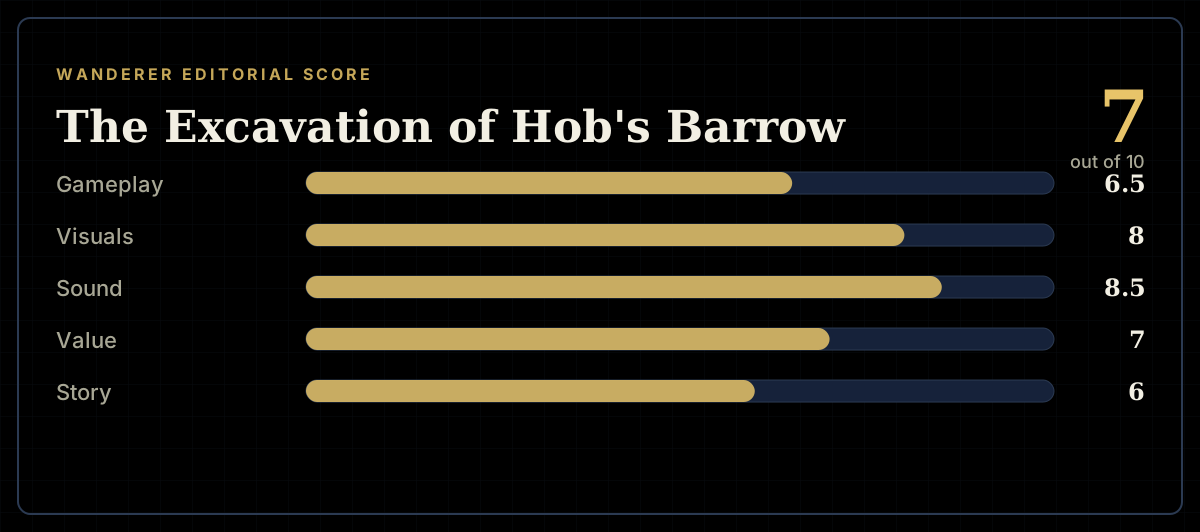
How the review scores each part of the gameWanderer Editorial -
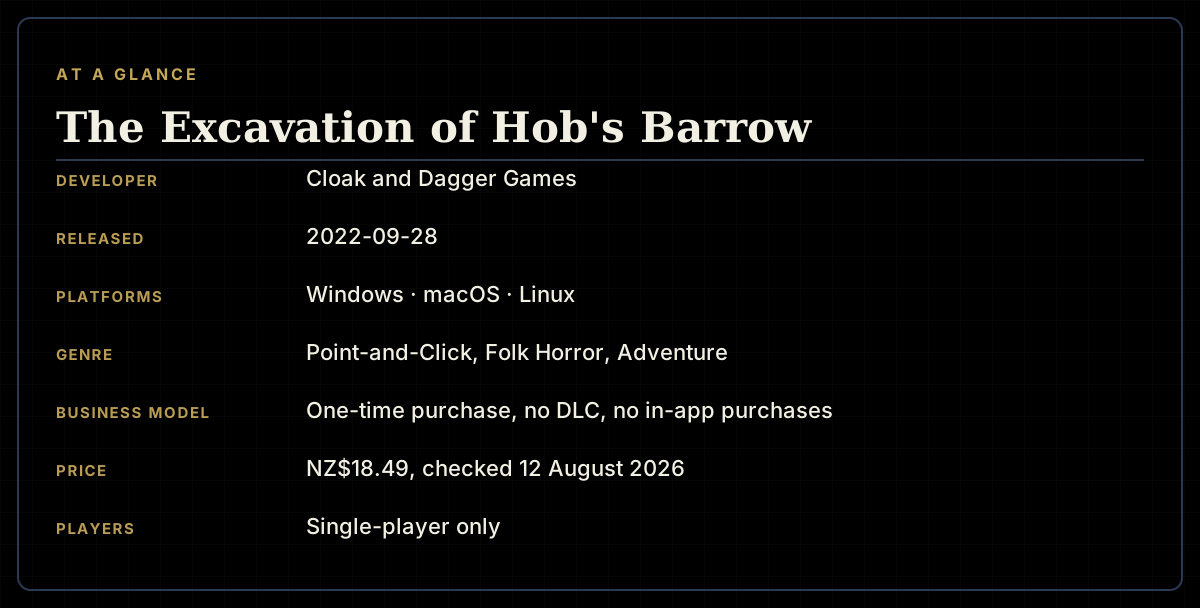
The essentials at a glanceWanderer Editorial -
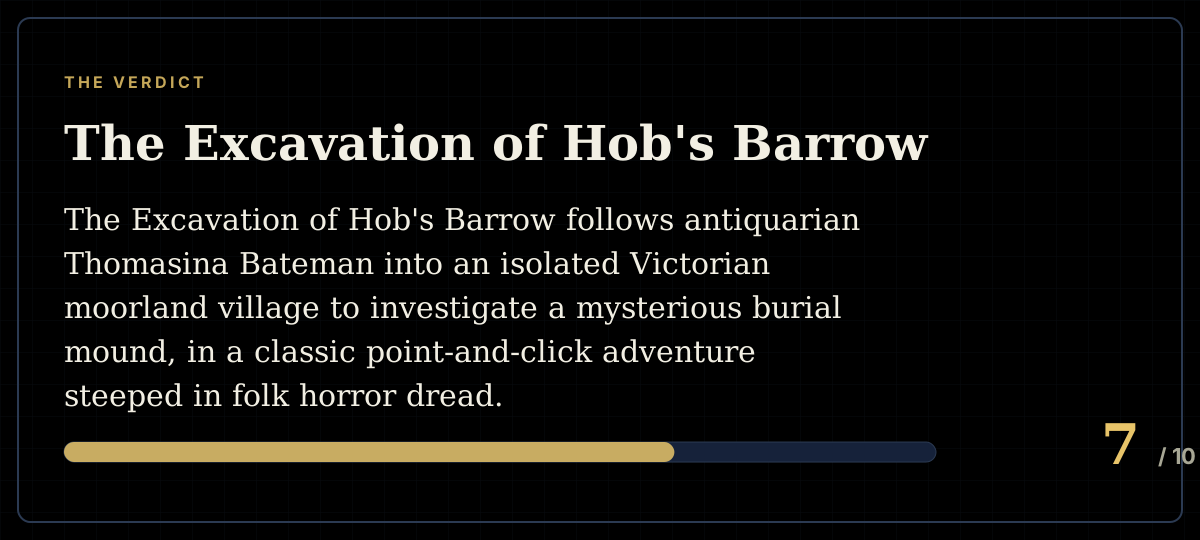
The short versionWanderer Editorial