Game review
Tales Beyond The Tomb - No Witnesses
5.5 / 10
- Developer
- 616 GAMES
- Publisher
- 616 GAMES
- Released
- 19 June 2026
- Platforms
- Windows
- Genre
- Action, Adventure, Casual
- Monetisation
- paid
- Players
- false
The short version
Biggest strengths
- A genuinely tense true-crime-inspired premise, based on a real named case, that several reviewers say lends the story real weight
- Strong voice acting and sound design, singled out as a highlight even by the game's harshest critics
- A distinctive optional microphone-detection stealth mechanic that lets enemies react to a player's real-life breathing and movement
Biggest weaknesses
- The story is widely described as flat and predictable, with little in the way of genuine twists or surprises
- A punishing respawn design that forces players to rewatch the same lengthy cutscene after every failed chase sequence
- Puzzle-solving pacing is criticized as slow and repetitive relative to the story's short overall length
Who it's for: Budget horror fans who want a short, atmospheric true-crime-inspired scare with a novel microphone-based stealth twist, and can tolerate a predictable plot and repetitive death-and-replay flow
Our recommendation: recommended with caveats
5.5 / 10
A true-crime hook for a new horror anthology
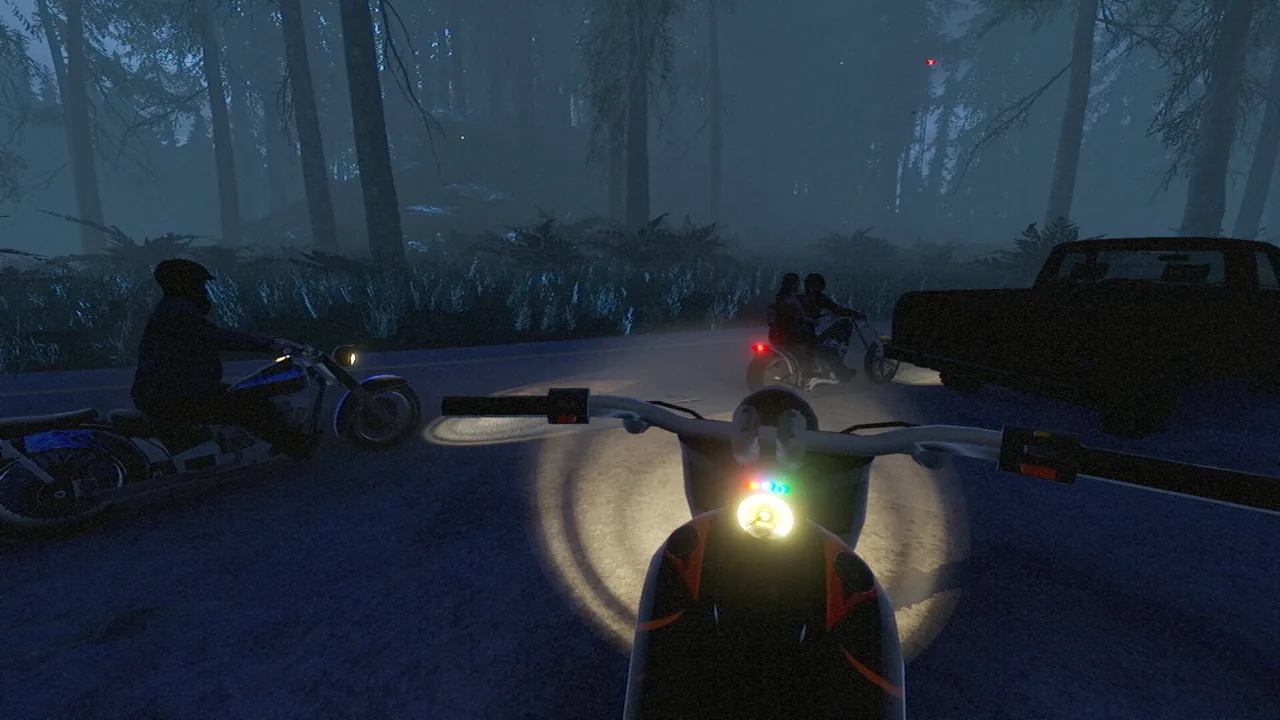
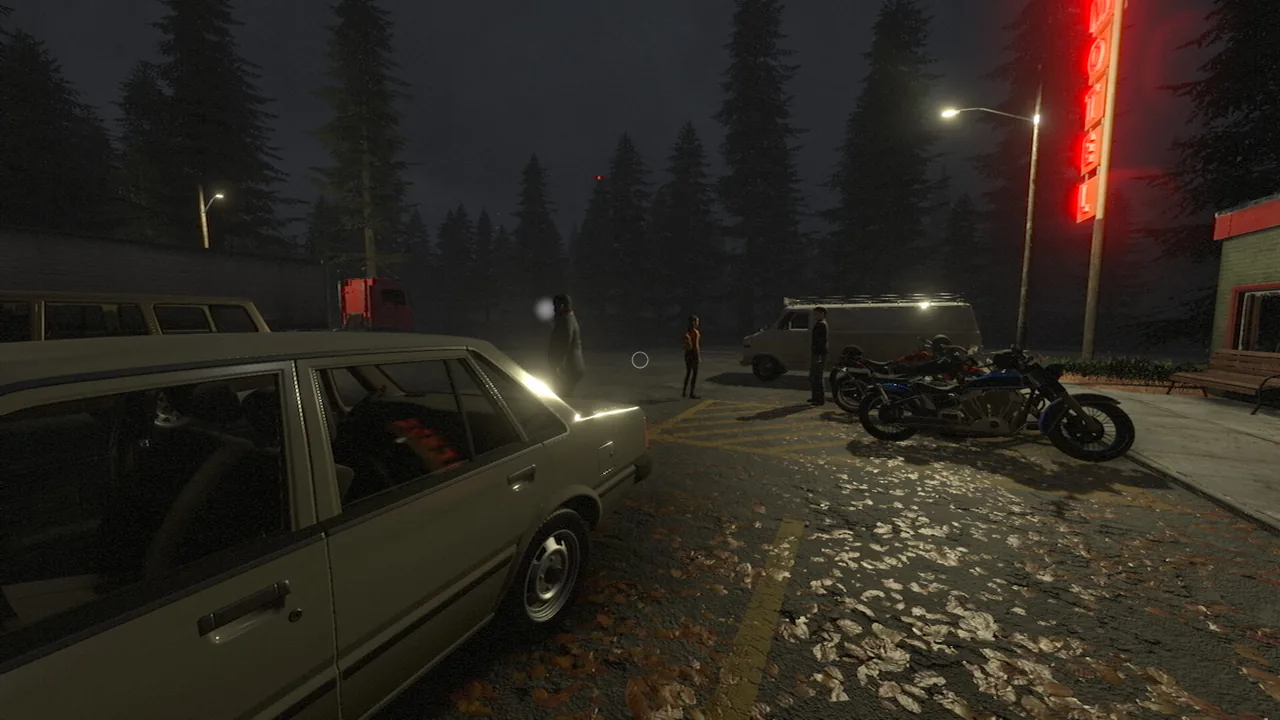
Tales Beyond The Tomb - No Witnesses opens a planned anthology series, with 616 GAMES promising that "each episode tells a new standalone nightmare — with different characters, locations, and killers," explicitly inspired by disturbing real-life cases. This first entry follows two sisters and their friends whose road trip to a concert turns into a fight for survival after crossing paths with a killer stalking the highways at night. Reviewers who engaged with the premise seriously credit that true-crime framing with giving the story real weight: one review, translated from its original language, noted the plot is "still based on a real historical case," referencing a killer who shares a name with a real perpetrator — a detail that lends the short runtime a grounded, uncomfortable edge distinct from a purely fictional slasher setup.
A distinctive stealth twist, and where the atmosphere lands
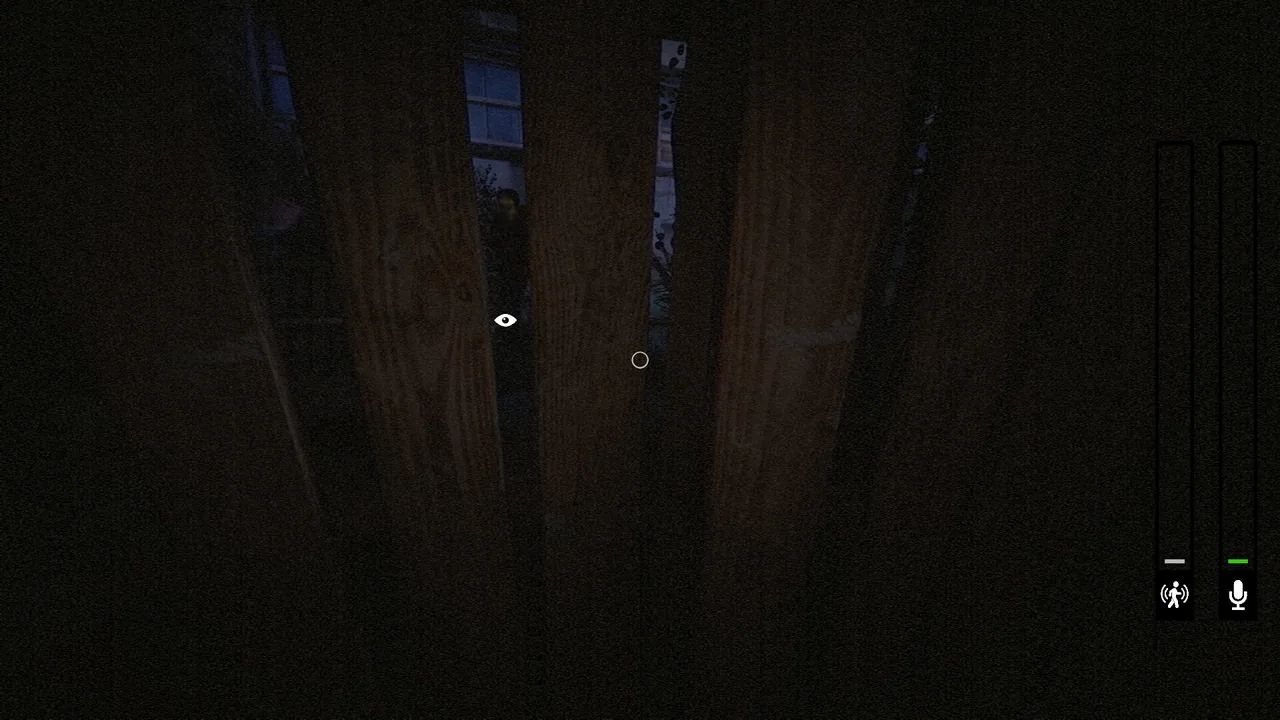
The game's most genuinely novel feature is an optional microphone-detection system, letting enemies hear the player's real-life breathing, movement, and voice through their own microphone — a mechanic the developer frames directly: "sometimes, silence is the only way to stay alive." That's a meaningfully different stealth hook than most horror games attempt, turning a player's own physical restraint into a literal survival mechanic rather than just an on-screen meter. Voice acting and sound design draw consistent praise as well, even from the game's more critical reviewers — one detailed review that was otherwise unimpressed with the story still singled out "voice acting and music" as the clearest highlights of the experience, and another shorter review specifically praised the sound effects and full voice cast as standout elements of the presentation.
A flat story that telegraphs its own ending
Where the game consistently falls short, according to the reviews available, is in its actual narrative execution. One reviewer rated the game 7 out of 10 but was direct about the weak point: "the story is rather flat, without much of a twist." A more detailed, more critical review went further, describing the plot as dragging with "no real tension" and noting the ending was easy to predict well before it arrived — a meaningful problem for a horror anthology entry whose entire pitch rests on delivering a "short, brutal, and unforgettable" standalone nightmare in a compressed runtime. When a story this short telegraphs its destination early, there's little room left for the game to recover that tension elsewhere.
A punishing respawn loop undercuts the pacing
The most specific, substantive complaint in the negative feedback isn't about the story at all — it's about death and replay design. One detailed review described the puzzle-solving pacing as "long and tedious" relative to the game's short overall length, but reserved its sharpest criticism for what happens after failing a chase sequence: players are forced to rewatch the same lengthy cutscene in full before getting another attempt, a design choice the reviewer called genuinely damaging to the overall experience and immersion, closing with a pointed, sarcastic dismissal of the game's polish. That's a concrete, fixable pacing problem rather than a fundamental flaw in the game's premise, but it's a real one worth flagging clearly for anyone sensitive to repetitive failure states in short horror experiences.
A thin review pool worth being upfront about
It's worth being direct about the limits of the evidence here: No Witnesses currently has very few detailed reviews in any language, and fewer still in English specifically, with much of what does exist being brief one-line reactions rather than substantive accounts. That thinness doesn't undermine the specific, detailed critiques quoted above, but it does mean this is a newer, lower-visibility release without the kind of broad community consensus a longer-running or higher-profile horror title would have accumulated by now — worth factoring in alongside the reviews themselves when weighing a purchase.
Where it sits in a crowded budget horror field
No Witnesses arrives into a genre that's become increasingly crowded with short, cheap, cinematic first-person horror titles built around a single scary premise and a handful of hours of content. Against that backdrop, its true-crime framing and microphone-detection stealth system are genuine differentiators rather than another interchangeable haunted-house or found-footage riff, and that's worth crediting even where the execution falls short elsewhere. What separates the stronger entries in this budget horror space from the weaker ones usually comes down to exactly the areas where this game struggles most: pacing discipline and a willingness to subvert expectations rather than follow the most obvious narrative beat available. As the opening chapter of a planned anthology, No Witnesses reads less as a definitive statement of what the series can do and more as a foundation the developer can build on — the ingredients for something sharper are visibly present, even if this specific episode doesn't fully assemble them.
Weighing the price for a short opening chapter
At $6.99, No Witnesses is priced appropriately for what it is: a short, standalone opening chapter rather than a full-length horror campaign. That low price meaningfully softens the impact of its pacing and replay-flow complaints — a few hours of atmospheric, well-voiced horror with a genuinely novel stealth mechanic is a reasonable ask at this cost, even with a predictable story and a repetitive death loop factored in. Buyers going in with expectations calibrated to a short, imperfect anthology opener rather than a fully realized horror epic are the ones most likely to come away satisfied.
Verdict
Tales Beyond The Tomb - No Witnesses opens its anthology with a genuinely distinctive stealth hook and a true-crime premise that lends its short runtime real unease, backed by consistently strong voice work and sound design. But its narrative doesn't fully deliver on that setup, landing as predictable rather than genuinely unsettling, and a punishing forced-replay flow after failed chase sequences undercuts pacing that should feel tight and brutal rather than repetitive. Worth a look at its low price for horror fans curious about the microphone-detection mechanic and willing to treat this as a short, imperfect opening chapter rather than a complete standalone triumph; those sensitive to predictable plotting or repetitive death loops should wait to see how later episodes in the anthology refine the formula.
Pros and cons
Pros
- A genuinely tense true-crime-inspired premise, based on a real named case, that several reviewers say lends the story real weight
- Strong voice acting and sound design, singled out as a highlight even by the game's harshest critics
- A distinctive optional microphone-detection stealth mechanic that lets enemies react to a player's real-life breathing and movement
- A low, accessible entry price for a short, standalone opening chapter in a planned anthology series
Cons
- The story is widely described as flat and predictable, with little in the way of genuine twists or surprises
- A punishing respawn design that forces players to rewatch the same lengthy cutscene after every failed chase sequence
- Puzzle-solving pacing is criticized as slow and repetitive relative to the story's short overall length
- An extremely thin, mostly non-English review pool made it genuinely difficult to find much detailed, corroborated feedback on the game at all
Screenshots
-
Tales Beyond The Tomb - No WitnessesImage: 616 GAMES via Steam -
Tales Beyond The Tomb - No WitnessesImage: 616 GAMES via Steam -
Tales Beyond The Tomb - No WitnessesImage: 616 GAMES via Steam