Game review
Table 9
6.5 / 10
- Developer
- BwBro
- Publisher
- BwBro
- Released
- 8 June 2026
- Platforms
- Windows, Mac
- Genre
- Adventure, Casual, Indie, Simulation
- Monetisation
- paid
- Players
- false
The short version
Biggest strengths
- A consistently praised, eerie atmosphere built on an industrial humming ambience and an otherwise silent, unmoving cafe
- Anomalies that reviewers repeatedly described as genuinely difficult to spot, rewarding close observation and photographic-memory-level attention
- A cheap, accessible price point that most of the pool considered fair or better for the amount of content on offer
Biggest weaknesses
- A single, small cafe location and only 14 total anomalies that several reviewers found thin, with one estimating they'd 'seen half of the game after 10 minutes'
- Occasional stutter or lag when anomalies load in, which one reviewer called out as effectively spoiling the game's core mechanic by telegraphing changes
- A repetitive, imperfectly looped ventilation ambient sound that one reviewer found actively annoying over a play session
Who it's for: Fans of anomaly-spotting horror games (The Exit 8, I'm on Observation Duty) who want a short, cheap, genuinely eerie fix rather than a lengthy experience
Our recommendation: recommended
6.5 / 10
Table 9 released on Steam on June 8, 2026, a $2.99 anomaly-spotting horror game from developer BwBro that drops players into a looping European-style specialty cafe, tasked with delivering coffee to nine numbered tables while watching for anything that's changed since the last lap. It's a small, focused entry in the genre popularized by titles like The Exit 8, and its 17-review English pool lands at Positive (14 up, 3 down, 82%), describing a game that nails its central hook of quiet dread even as its scope draws real criticism.
Atmosphere is the pool's strongest and most consistent point of praise. One reviewer, describing it as their first exposure to the genre, wrote that "the atmosphere is eerie: an industrial humming sound plays in your ears, yet no one speaks and no one moves but yourself," and singled out the anomaly design specifically: "this game had everything: great design, attention to detail, anomalies most people would miss, some really creepy ones, and others rather cheeky." Another reviewer echoed the same core appeal in fewer words: "the game is simple, the atmosphere is eerie and there is an unexpected jump scare that did get the heart skip a beat if I am honest." A third player, framing the whole thing in the game's own terms, wrote "always wanted to serve coffee to the dead," a good shorthand for the tonal mix of mundane service work and quiet horror the game is going for.
The difficulty of actually spotting the anomalies draws praise from most of the pool as a deliberate, well-tuned challenge rather than a frustration. One reviewer noted "the anomalies are subtle and require a photographic memory making the game a bit challenging. Might be a turn off for some but I love a good challenge so it kept me entertained and extended the run time for me." Another player admitted candidly, "I'm not very good at spotting anomalies - I've not got past table 4 so far. But that's part of the fun and I'm enjoying the challenge and the spooky atmosphere," and a third simply wrote "i can get to 7 and still have literally 0 clue on what the anomaly is," a negative review, but one whose frustration still reads as evidence the anomalies are genuinely well-hidden rather than badly designed.
Where the negative reviews concentrate is on the game's scope and technical polish. The pool's most detailed critical review argued the whole experience is "too shallow," describing "one small not very detailed location, some screamers, some anomalies, including ridiculously subtle," and reporting getting "stuck in interior a few times" along with performance issues: "despite okayish pc, game lags sometimes, especially on anomaly loading (which is hint by itself spoiling main mechanic)." That's a specific, checkable complaint, stutter during anomaly loading effectively telegraphing that something has changed before the player consciously notices it, and it directly undercuts the observation-based tension the rest of the pool praises so highly. The same reviewer flagged the ambient sound design too: "ventilation sound (the only ambient sound) is very annoying and not looped perfectly." A second critical reviewer raised a related visibility complaint: "the anomalys are way to small and barely visilbe," a different angle on the same underlying concern about difficulty tuning tipping from "challenging" into "obscure" for some players.
Length is the other recurring caveat, even among reviewers who otherwise enjoyed it. With only 14 total anomalies and a single cafe location, several players described finishing quickly, with one reporting "complete 1 round in 40 minutes" and another getting their run "under 2 minutes" once familiar with the layout. The pool's most positive reviewer put it plainly: "my only complain is perhaps its short length, I definitely wanted to play more." That's a common shape for anomaly-walker games generally, but Table 9's single static setting makes the ceiling feel lower than genre peers that rotate through multiple locations or escalate their anomaly pool over a longer session.
At $2.99, most of the pool treated the price as fair for what's here, and one reviewer specifically noted it "worked smoothly on my laptop without a dedicated graphic card," suggesting reasonably low system demands for anyone curious to try it without committing much money or hardware. A reviewer who streamed the game also mentioned the developer personally joining their stream to interact with viewers, a small but notable sign of an actively engaged small studio behind the release.
The game also offers an easy and a normal difficulty mode, a structural choice that draws no complaints in the pool and seems to have quietly resolved some of the tension between the players who wanted a serious challenge and those who just wanted to sample the atmosphere. One reviewer who "finished it in both easy and normal mode" treated the pair as complementary rather than redundant, using easy mode to see the full anomaly set and normal mode to actually test their observation skills against it. A couple of reviewers also mentioned chasing the game's leaderboard, with one boasting "thanks for the global #2 leaderboard" and another admitting "I'm not making it to the top 10 leaderboard anytime soon though," a small competitive layer stacked on top of the core loop that gives returning players something to chase beyond simply finding every anomaly once.
Taken as a whole, Table 9 is a competent, appropriately unsettling entry in the anomaly-spotting horror genre that gets its core hook right, quiet dread built from careful observation, even if its single small location, occasional technical stutter, and thin anomaly count leave it feeling more like a solid proof of concept than a fully realized package. At its low price, it's a reasonable pickup for genre fans looking for a short, cheap scare, with the caveat that a handful of players found the challenge tipping into frustration rather than tension.
Pros and cons
Pros
- A consistently praised, eerie atmosphere built on an industrial humming ambience and an otherwise silent, unmoving cafe
- Anomalies that reviewers repeatedly described as genuinely difficult to spot, rewarding close observation and photographic-memory-level attention
- A cheap, accessible price point that most of the pool considered fair or better for the amount of content on offer
- Full controller support that one reviewer specifically praised as working perfectly
Cons
- A single, small cafe location and only 14 total anomalies that several reviewers found thin, with one estimating they'd 'seen half of the game after 10 minutes'
- Occasional stutter or lag when anomalies load in, which one reviewer called out as effectively spoiling the game's core mechanic by telegraphing changes
- A repetitive, imperfectly looped ventilation ambient sound that one reviewer found actively annoying over a play session
- No standard anomaly-walker convenience feature of removing already-found anomalies from the rotation, which one reviewer specifically missed
Screenshots
-
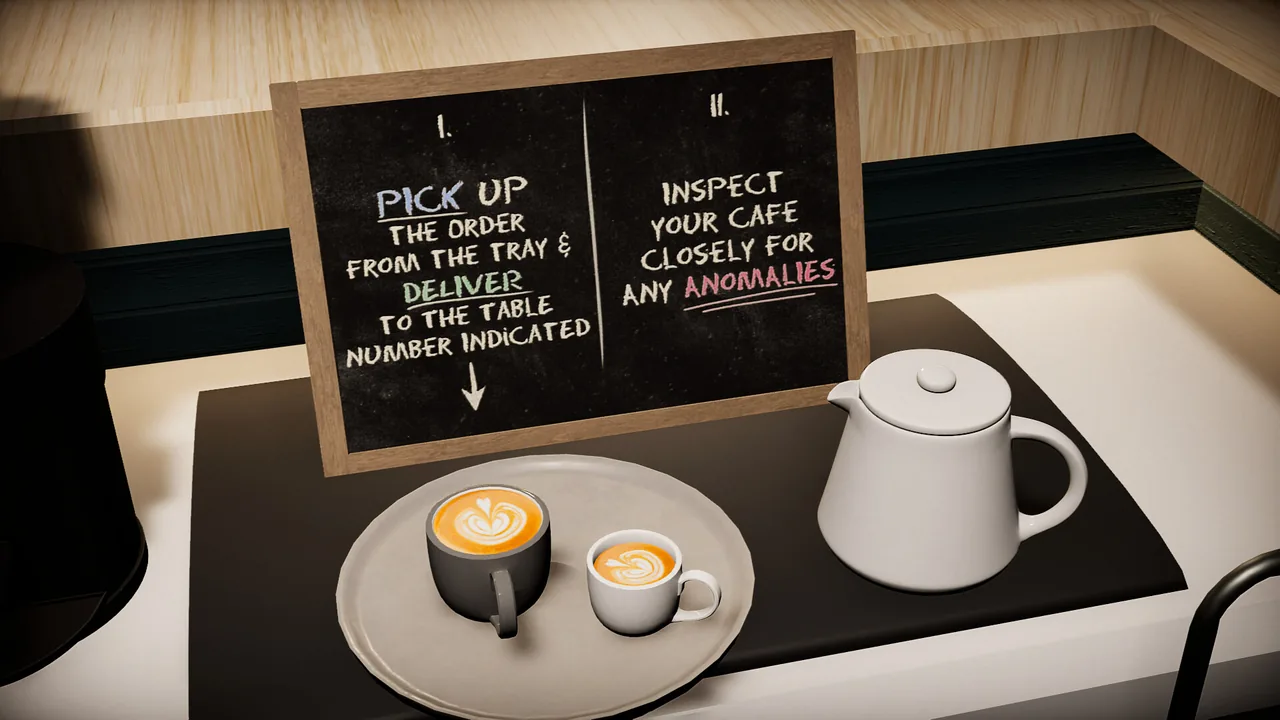
Table 9Image: BwBro via Steam -
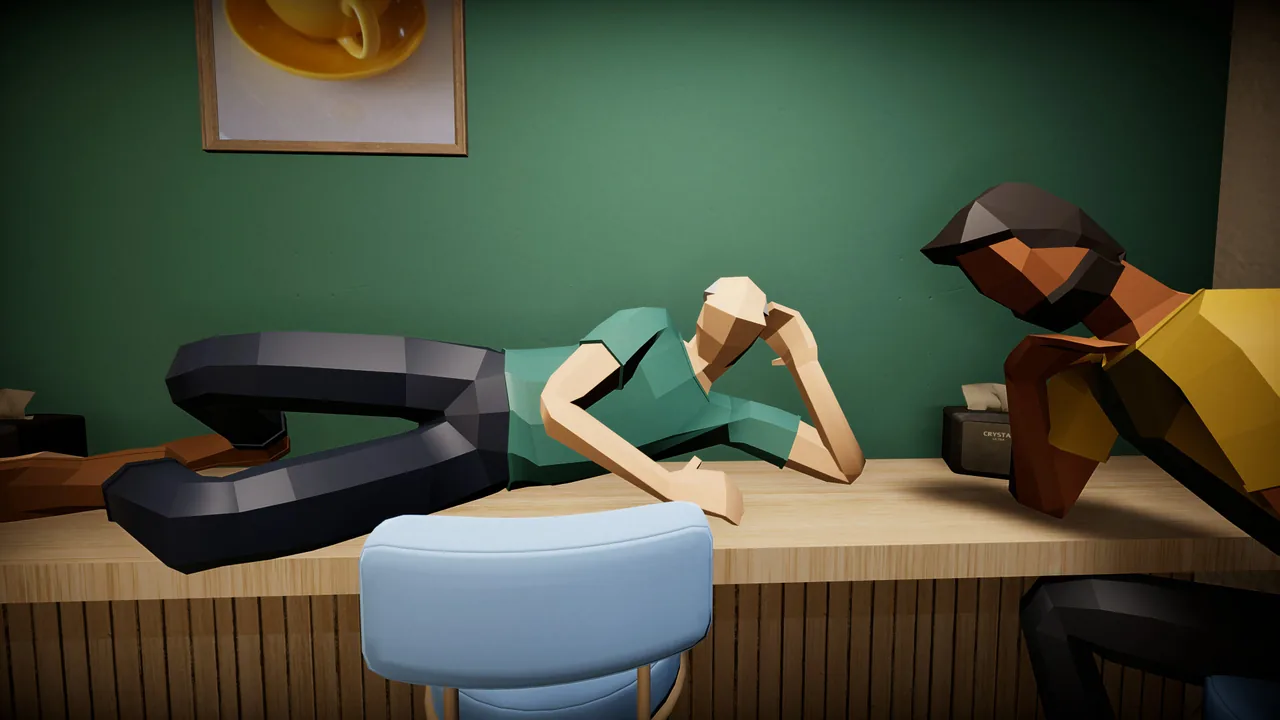
Table 9Image: BwBro via Steam -
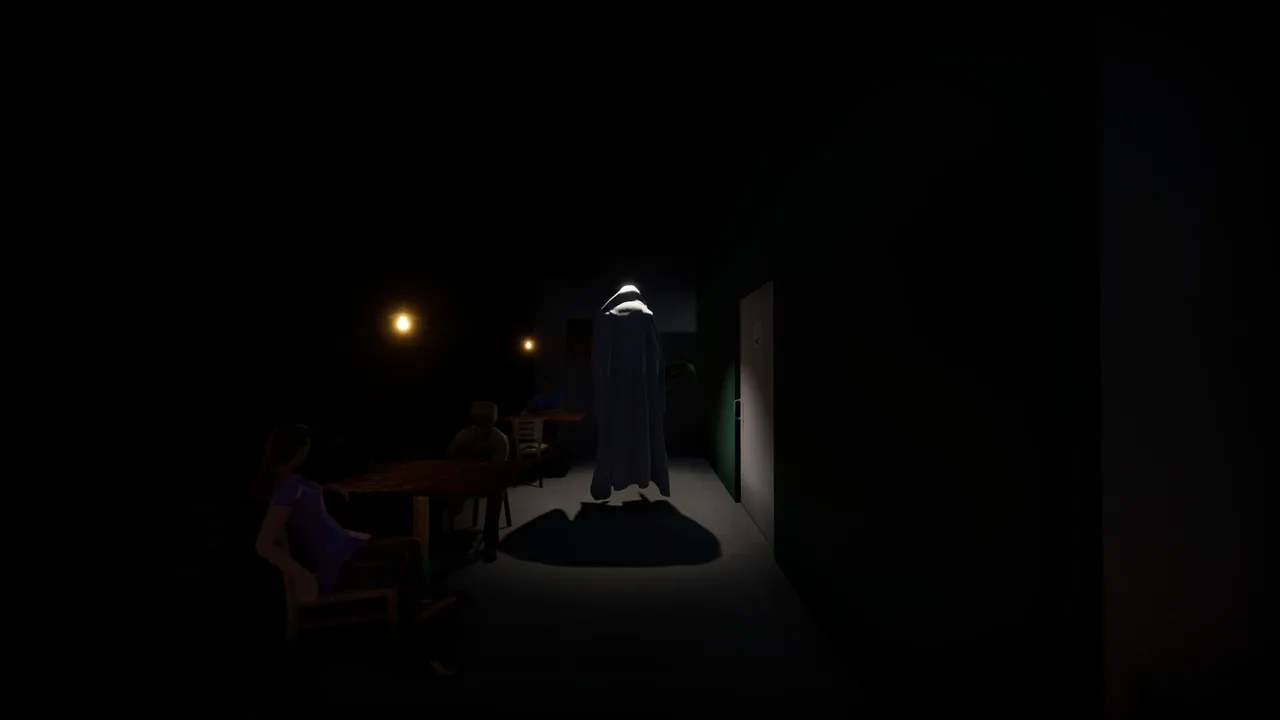
Table 9Image: BwBro via Steam