Game review
Struggling
6.5 / 10
- Developer
- Chasing Rats Games
- Publisher
- Frontier Foundry
- Released
- 27 August 2020
- Platforms
- Windows
- Genre
- Physics-Based Co-op Platformer
- Monetisation
- Premium one-time purchase; no DLC or in-game purchases
- Players
- Local couch co-op for two players, plus Steam Remote Play Together for online sessions; no dedicated online netcode
The short version
Struggling asks two players, or one very coordinated solo player, to control the two flailing arms of a "squishy abomination" through a deliberately deranged, QWOP-and-Getting-Over-It- inspired physics gauntlet, and its inventiveness and audio design earn near-unanimous praise even from reviewers frustrated by other parts of it. What holds it back is a specific, corroborated gap between its co-op-first design and its actual multiplayer infrastructure — there's no dedicated online mode, only Steam Remote Play Together standing in for one — plus a widely reported quality dip in the game's later stages.
Biggest strengths
- The core concept, independently controlling two flailing arms to grab, climb and hurl a squishy creature through increasingly absurd environments, is repeatedly praised as genuinely inventive rather than a simple retread of Getting Over It or QWOP
- Audio design and the soundtrack draw some of the most enthusiastic, specific praise in the entire review sample, with several reviewers calling it a genuine highlight independent of the gameplay
- Couch co-op specifically produces the "expletive filled bonding experience" multiple reviewers describe as the game's best use case, with each new area finding fresh ways to make players laugh together
Biggest weaknesses
- There is no dedicated online multiplayer mode; playing with a remote friend depends entirely on Steam Remote Play Together, which multiple reviewers specifically call out as clunky, hard to set up, or simply absent when they expected real netcode
- Several detailed reviews argue the controls cross the line from intentionally frustrating into simply inconsistent, citing arms spawning clipped into level geometry and precision challenges that don't respond reliably to correct input
- A specific, named stretch of levels late in the campaign, referred to by players and by the game's own achievement list as "the Canyon," is repeatedly singled out as a drop in both thematic and gameplay cohesion compared to the stronger opening hours
Who it's for: Fans of brutally difficult physics-comedy games like Getting Over It, QWOP or Octodad who specifically want a couch co-op partner to suffer alongside, more than solo players or anyone expecting a smooth online multiplayer setup.
Our recommendation: Play it locally with a friend on the same couch for the best experience the game actually delivers reliably; don't buy it specifically expecting easy online play with a remote friend, since that path is reported as clunky at best.
6.5 / 10
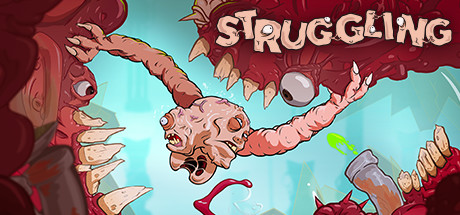
Somewhere between Getting Over It's deliberate cruelty, Octodad's flailing-limb comedy, and Brothers: A Tale of Two Sons' asymmetric co-op structure sits Struggling: a game about controlling the two independent arms of a squishy, gross, barely-alive creature as it claws, grabs and hurls itself through an increasingly unhinged world. One of the review sample's most concise summaries puts it best: this is what happens when talented developers looked at Getting Over It, decided a co-op version was worth building, and mostly did it right.
An inventive idea that earns its comparisons
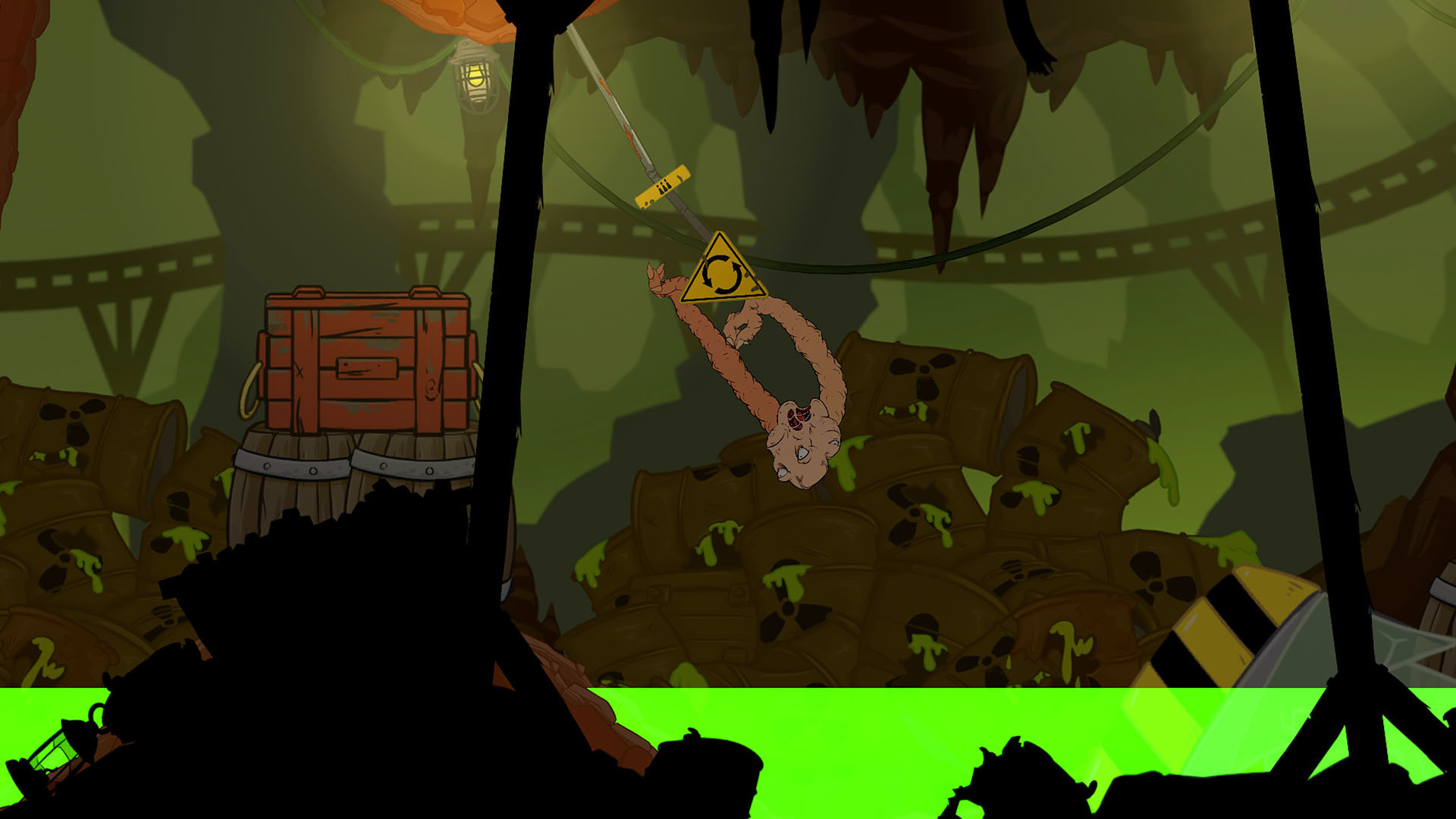
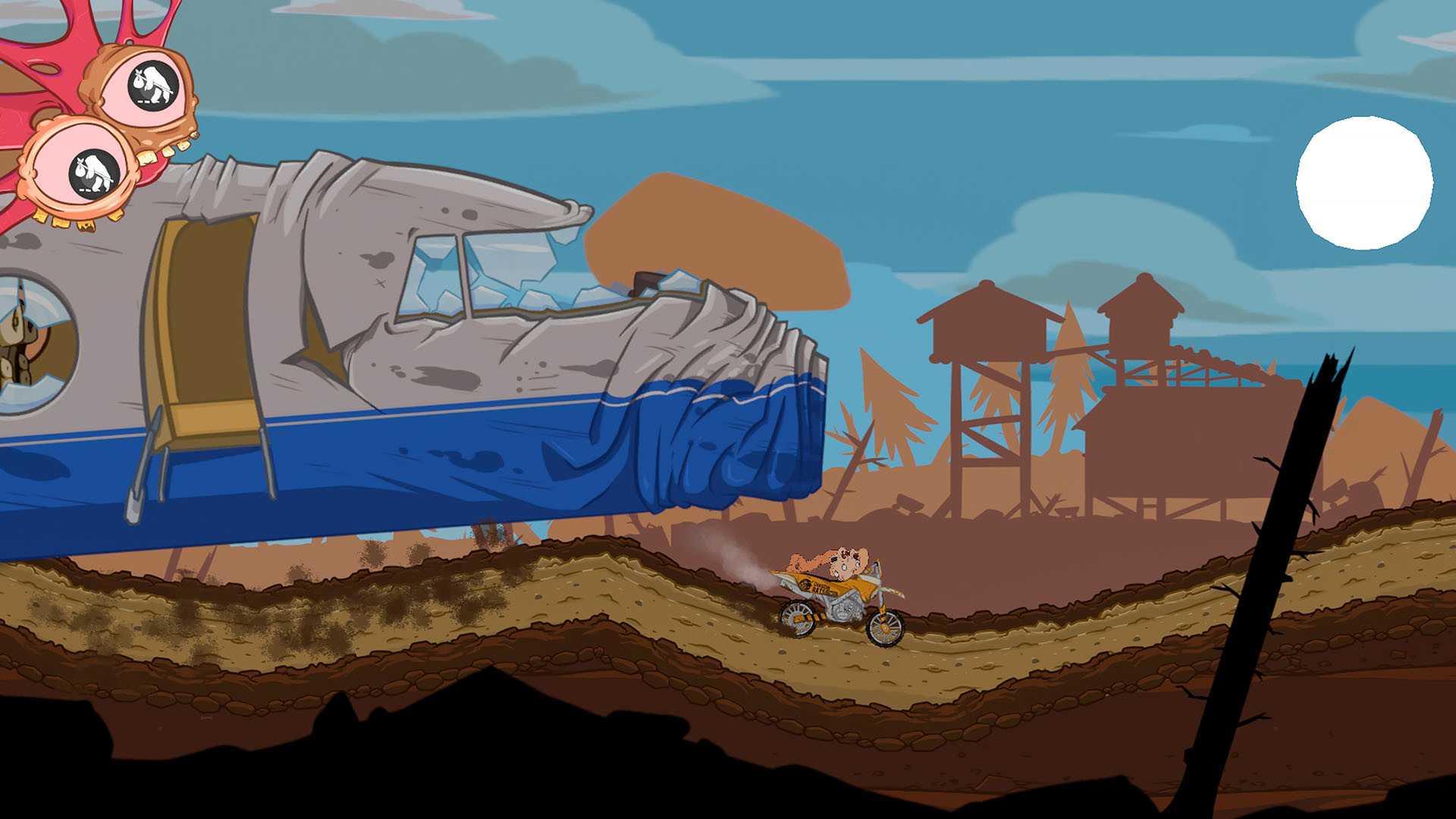
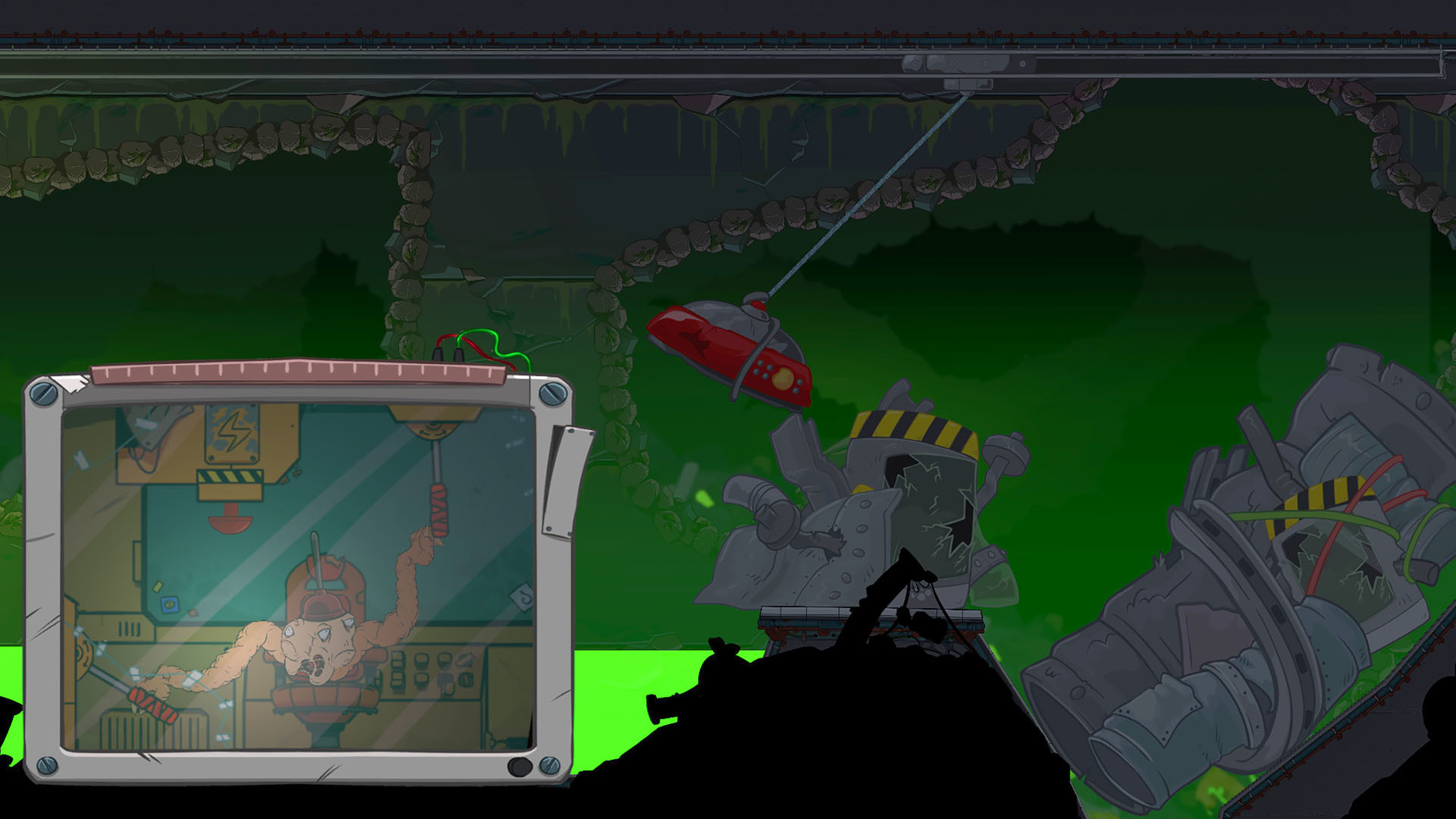
Reviewers consistently credit Struggling with clearing the bar those comparisons set rather than just borrowing their reputation. Splitting arm control between two players (or asking one player to manage both) turns basic movement into a genuine coordination puzzle, and the game keeps introducing new environmental gimmicks often enough to stay fresh through its opening hours. Audio design draws the most consistently enthusiastic praise of anything in the review sample — multiple reviewers single out the soundtrack by name as a highlight independent of everything else, an unusually strong and specific compliment for a game this irreverent. Played locally, on a shared couch, with a friend willing to yell through the frustration together, reviewers describe exactly the "expletive filled bonding experience" the game is clearly built around.
The online gap reviewers keep hitting
The specific, corroborated complaint that recurs most is about a feature the game's own co-op framing implies but doesn't fully deliver: real online multiplayer. Struggling has no dedicated netcode of its own, relying entirely on Steam Remote Play Together to let a local player's screen and controls extend to a remote friend. Multiple reviewers report this arrangement as clunky to set up or simply confusing compared to a real online mode, with at least one calling the absence of a proper online option "unbelievable laziness" for a game built so specifically around a two-player experience. That's a meaningful gap for anyone whose primary co-op partner isn't sitting on the same couch.
Where the controls stop being a feature and become a bug
A second, more contested thread concerns the controls themselves. Games in this lineage generally ask players to accept that imprecision is the point — Getting Over It's entire identity rests on that idea. Several detailed Struggling reviews argue the game crosses a different line, describing specific, reproducible issues like arms spawning clipped into level geometry and precision sequences that don't respond consistently to correct input, distinguishing that from intentional difficulty. Whether a given player reads a specific frustrating moment as "the challenge working as designed" or "the game glitching" seems to depend heavily on which side of that line they land on, and it's worth knowing going in that both readings show up seriously in the review sample rather than one being an outlier complaint.
A specific late-game dip, by name
One more concrete, repeated criticism deserves direct mention: a set of levels late in the campaign, which the game's own achievement list names "the Canyon," is singled out by multiple reviewers as a noticeable step down in both thematic coherence and gameplay quality compared to the stronger opening stretch. That specificity — the same named section drawing the same complaint independently — makes it a more useful signal than a vaguer "it gets worse near the end" comment, and global achievement data backs up the general shape: barely half of owners reach even the earliest milestones, and full completion sits under 1%, consistent with a difficulty and quality curve that loses a real share of players before the credits.
Struggling versus its closest 2020 cousin
More than one reviewer directly compares Struggling to Heave Ho, a similarly physics-driven co-op platformer released the same year, and the comparison is a useful calibration tool rather than a simple "which is better" argument. Reviewers who tried both generally describe Heave Ho as the friendlier, more broadly accessible pick for casual groups, while Struggling's harder edge, narrative framing and willingness to get genuinely strange sets it apart for players specifically looking for something weirder and more demanding. Neither comparison is a knock on either game; it's a useful signal for matching the right title to the right group of friends before buying.
A tone that isn't for everyone, on purpose
The game's crude sense of humor, constant moaning, farting and gore-adjacent sound design, deserves its own direct mention rather than folding into a general "not for everyone" caveat. Most of the review sample treats this as a deliberate, successful comedic choice consistent with the game's overall commitment to being deranged, and it's clearly intentional rather than an oversight — the tone is baked into every level rather than an occasional gag. A minority of reviewers find it actively off-putting even while acknowledging real craft elsewhere, and that split is worth flagging plainly: this isn't a game that tries to appeal broadly by softening its edges, and buyers sensitive to that specific style of humor should weigh it accordingly before purchasing.
Verdict
Struggling nails its central creative idea well enough to earn its comparisons to genre touchstones rather than merely invoking them, and its audio design alone is worth hearing. What keeps it from a stronger score is concrete rather than a matter of taste: a real gap between its co-op-first design and the online infrastructure to support it, specific control inconsistencies multiple reviewers distinguish from intentional difficulty, and a named, repeatedly-cited dip in quality during its later stages. Play it on a couch, with a friend, and expect the second half to ask more patience of you than the first.
Pros and cons
Pros
- The core concept, independently controlling two flailing arms to grab, climb and hurl a squishy creature through increasingly absurd environments, is repeatedly praised as genuinely inventive rather than a simple retread of Getting Over It or QWOP
- Audio design and the soundtrack draw some of the most enthusiastic, specific praise in the entire review sample, with several reviewers calling it a genuine highlight independent of the gameplay
- Couch co-op specifically produces the "expletive filled bonding experience" multiple reviewers describe as the game's best use case, with each new area finding fresh ways to make players laugh together
- Cartoonish, colorful art direction gives the game real personality even where reviewers describe the visuals as a little rough around the edges
- A hidden-collectible hat system adds a light layer of completionist incentive for players who enjoy hunting for extra content beyond the main path
Cons
- There is no dedicated online multiplayer mode; playing with a remote friend depends entirely on Steam Remote Play Together, which multiple reviewers specifically call out as clunky, hard to set up, or simply absent when they expected real netcode
- Several detailed reviews argue the controls cross the line from intentionally frustrating into simply inconsistent, citing arms spawning clipped into level geometry and precision challenges that don't respond reliably to correct input
- A specific, named stretch of levels late in the campaign, referred to by players and by the game's own achievement list as "the Canyon," is repeatedly singled out as a drop in both thematic and gameplay cohesion compared to the stronger opening hours
- The game's crude, gross-out humor — constant moaning, farting and gore-adjacent sound effects — is a specific turn-off for a minority of reviewers who otherwise found real quality underneath the tone
- Global achievement data shows a steep completion curve, with barely half of owners reaching even the earliest general milestones and under 1% completing full collectible sets, consistent with reports that the difficulty spikes hard enough to lose a real share of the audience
Screenshots
-
StrugglingImage: Frontier Foundry via Steam -
StrugglingImage: Frontier Foundry via Steam -
StrugglingImage: Frontier Foundry via Steam -
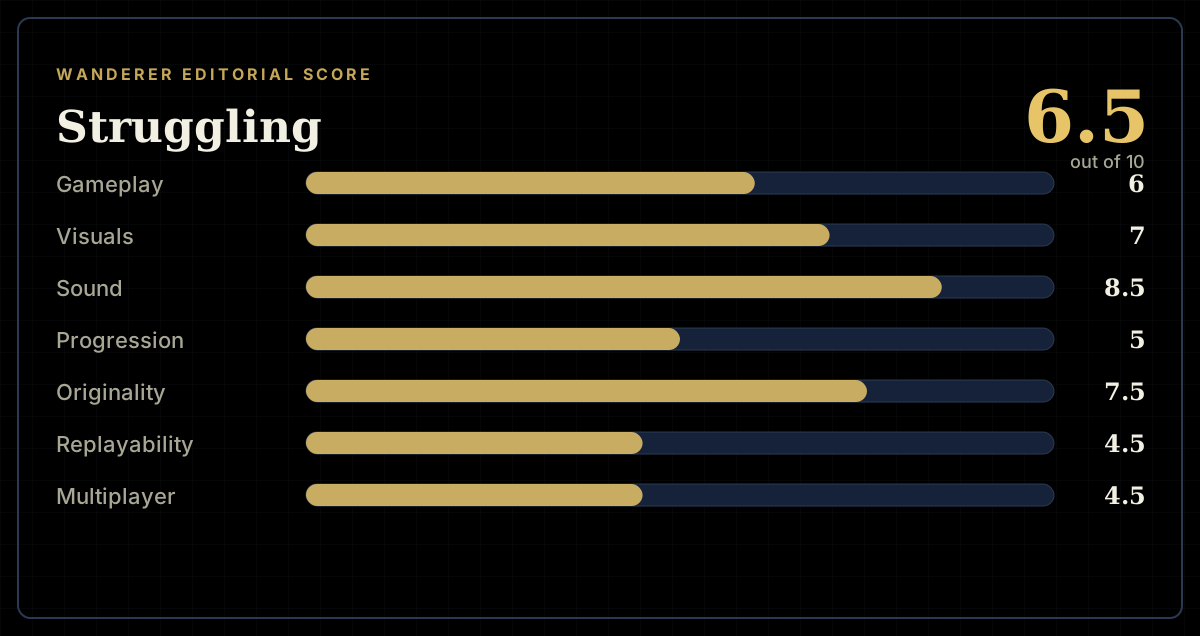
How the review scores each part of the gameWanderer Editorial -
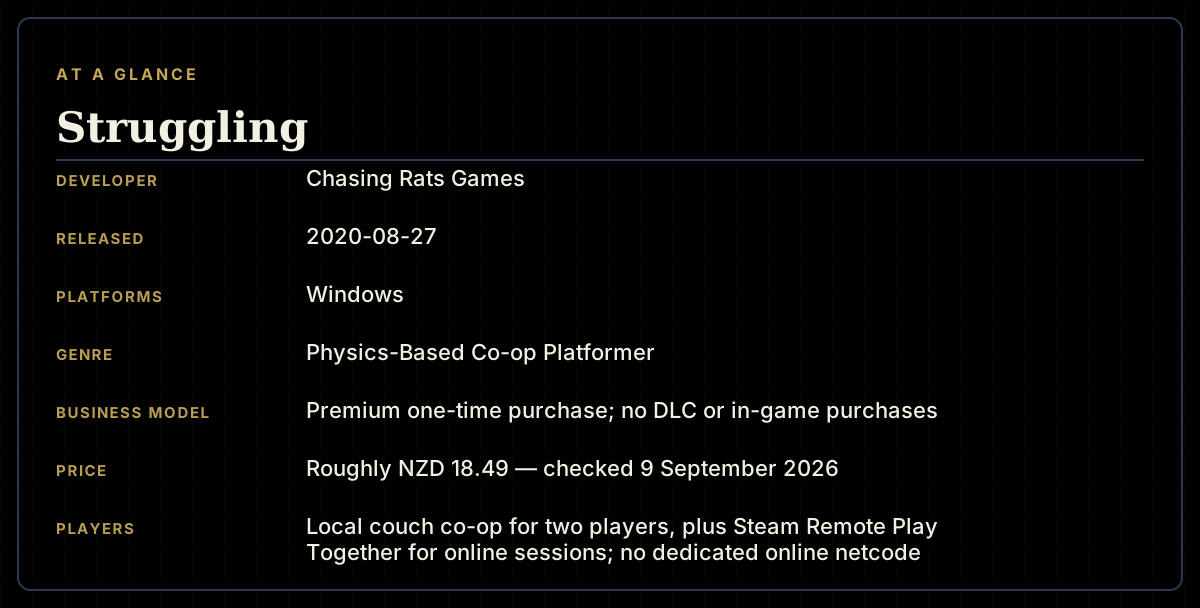
At a glanceWanderer Editorial -
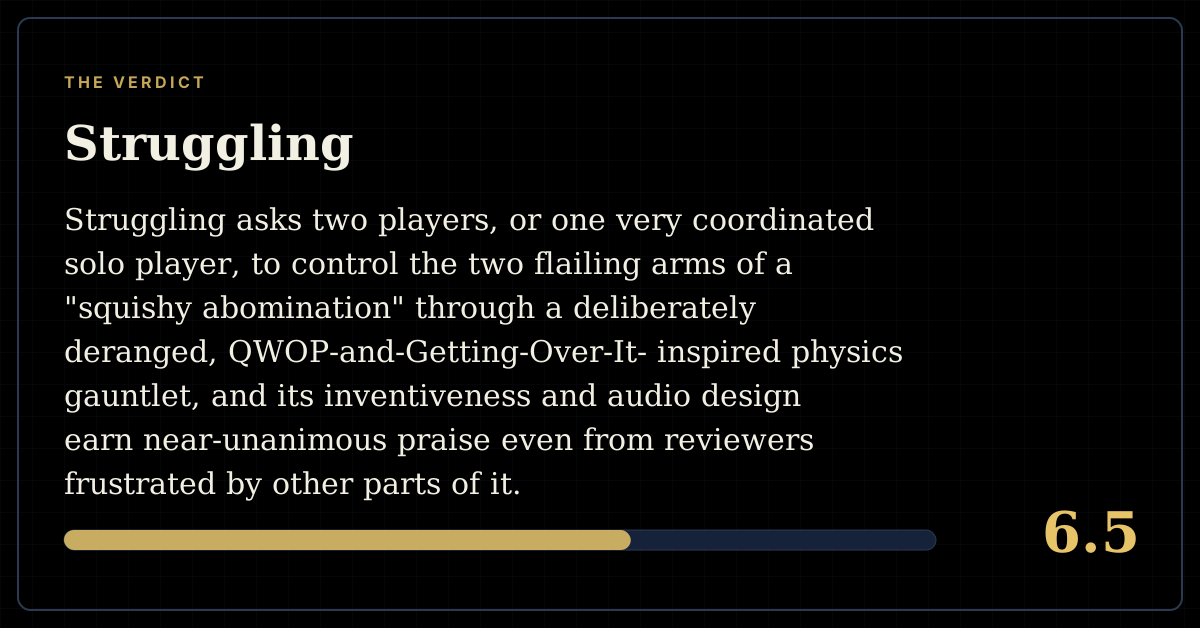
The short versionWanderer Editorial