Game review
Starvester
6.5 / 10
- Developer
- Syphono4
- Publisher
- Future Friends Games
- Released
- 29 May 2026
- Platforms
- Windows
- Genre
- Incremental, Simulation
- Monetisation
- One-time purchase with an optional cosmetic-only Supporter Pack DLC (gold-skinned buildings, no gameplay effect)
- Players
- Single-player only
The short version
Starvester deploys drone swarms across a solar system, layering mining, refining and megastructure-building into a short, self-contained incremental with an actual ending rather than an infinite treadmill. The presentation is genuinely lovely and the first two or three hours click along nicely.
Where it comes apart is the back half: the prestige system that's supposed to reward a full reset feels thin and occasionally malfunctioning, price scaling turns the last stretch into a waiting game, and a five-hour campaign at seven dollars invites exactly the "did I get my money's worth" argument that's now playing out in its own review section.
Biggest strengths
- The drone-swarm automation genuinely scales, growing from a single mining rig into a star-system network without ever feeling like a menu re-skin
- Pixel art and ambient soundscape are consistently good, and the game leans into that atmosphere instead of just decorating the numbers
- A five-hour campaign with a defined ending is a rare and welcome shape for this genre
Biggest weaknesses
- Player reports describe prestige talents that don't apply correctly across all planets, undermining the one system meant to reward starting over
- Price scaling accelerates sharply after the trading unlocks, turning the last hour or two into idle waiting rather than active decision-making
- The interface has no production-per-second readout, so optimising a sprawling drone network means eyeballing trends instead of reading them
Who it's for: Players who want a tidy, one-sitting incremental with a real conclusion and don't mind the late campaign turning passive. Less suited to genre veterans who judge these games by the depth of their prestige loop.
Our recommendation: Worth the asking price if you treat it as a five-hour game rather than a long-term incremental, which is exactly how it's built. Go in expecting a short, pretty curiosity and not a Cookie Clicker-style forever-loop, and it delivers what it promises.
6.5 / 10
Most incrementals are built to never end. Starvester is built to end in about five hours, and that single decision shapes almost everything good and bad about it. It's a space factory game where you deploy swarms of automated drones to strip-mine planets, refine what they bring back, and eventually pour the surplus into star-spanning megastructures — and then, unlike almost everything else in the genre, it stops. There's no forever-ladder waiting past the credits, no promise of "just one more prestige." That makes Starvester one of the more interesting recent entries in a genre defined by infinite scroll, and also one of the harder ones to score, because a short game lives or dies on whether every one of its hours earns its keep. Roughly the first three do. The last two are where the argument starts.
The core loop
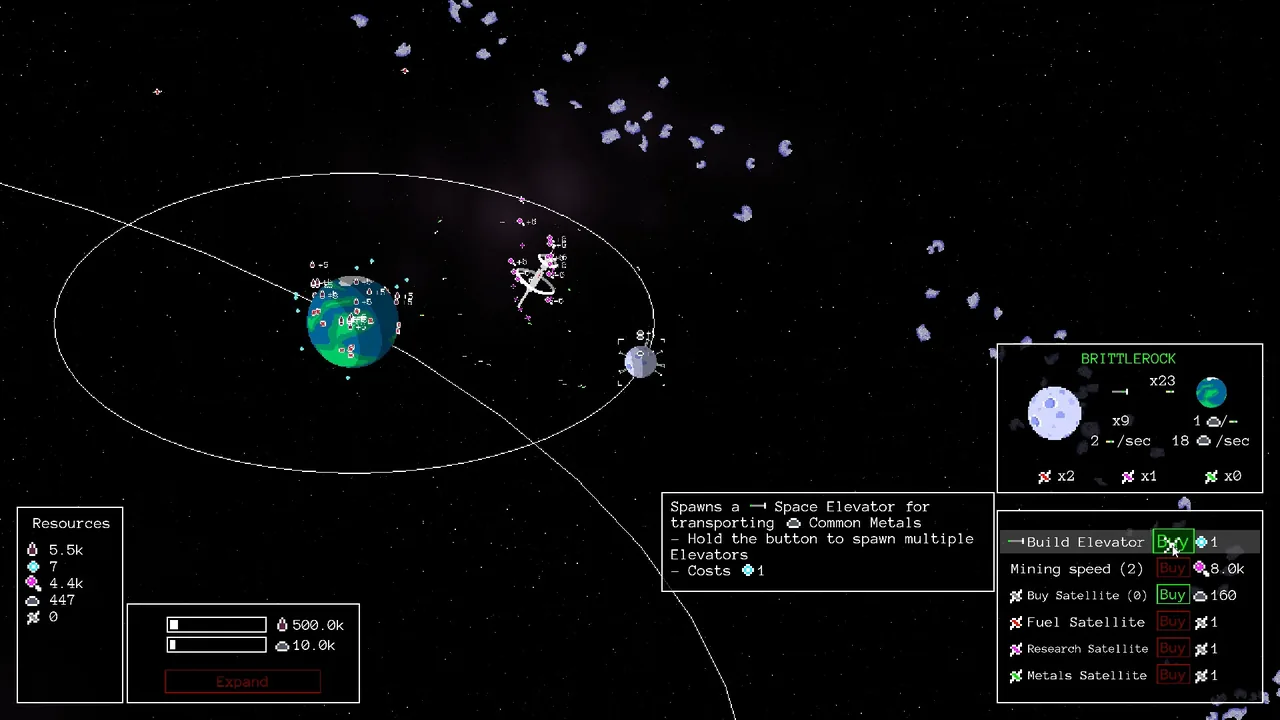
You start with a handful of drones and a single asteroid to chew through, and the game teaches its own vocabulary quickly: deploy units, automate the boring parts, spend the surplus on the next unlock. Syphono4, the solo developer behind it, builds the escalation in clean stages — mining gives way to refining, refining gives way to trade and logistics between bodies, and the whole thing eventually scales up into system-wide megastructure projects that are clearly meant to be the payoff for everything before them. It's a 2D abstraction rather than a physical conveyor-belt sim, organised into modular extraction and processing nodes rather than something you route by hand, which keeps the early hours legible even as the number of moving parts increases.
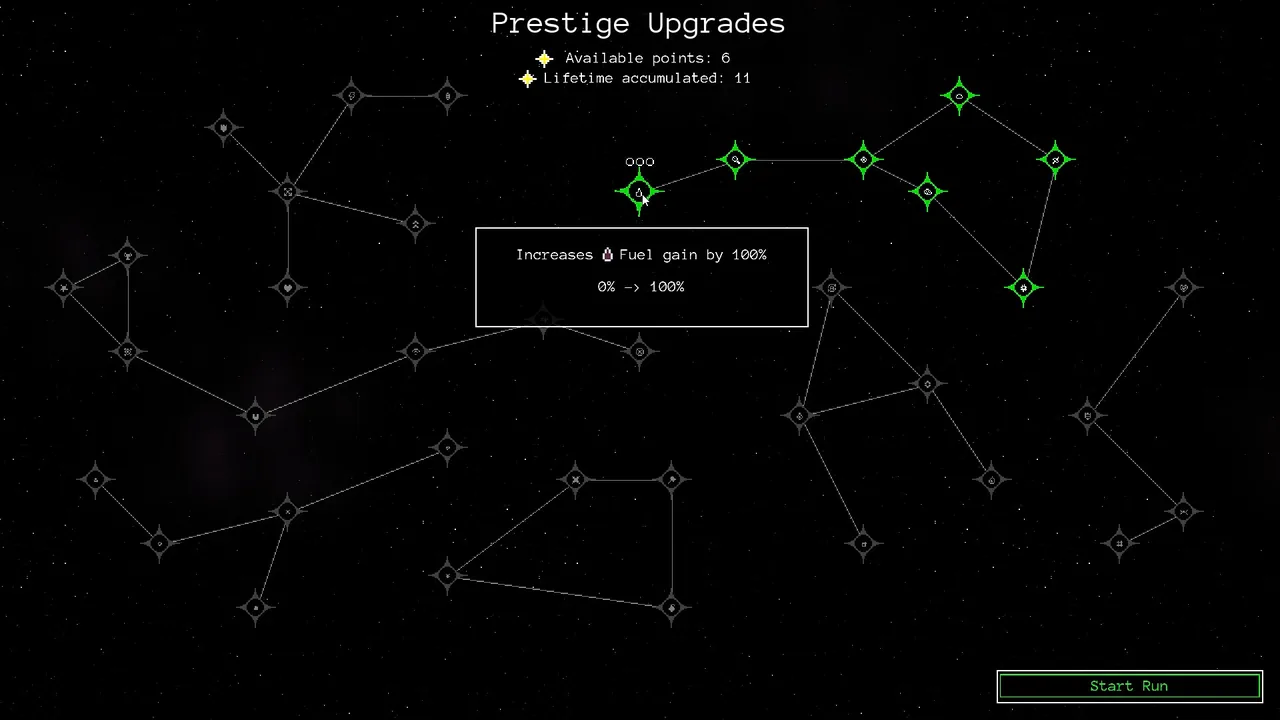
The prestige system is the mechanical backbone holding the five-hour arc together: rather than random rewards, resets grant deterministic, permanent efficiency gains, so each cycle through the loop is meant to compound cleanly into the next. On paper that's a smart choice for a game this short — it avoids the "reset and hope" randomness that makes prestige feel like gambling in other incrementals. In practice, a number of players report specific prestige talents failing to apply correctly once you're operating across multiple planets, which turns the moment that's supposed to feel like meaningful reward into a shrug, or worse, a system you route around rather than lean into. When the one loop built to give a short campaign long-term shape doesn't reliably do what it says, that's a bigger problem than it would be in a hundred-hour game with room to spare.
Pacing and the back half
The opening stretch is genuinely well-tuned. New mechanics arrive at a rate that respects your attention without overwhelming it, and there's real satisfaction in watching a single mining operation become a small empire. The trouble starts once trading and cross-planet logistics unlock: cost curves steepen quickly, and the final push toward the endgame megastructures leans hard on idle waiting rather than active decisions. That's not automatically a flaw — plenty of incrementals use downtime deliberately — but Starvester's early pacing trains you to expect constant forward motion, and the abrupt shift into passive waiting in the last act feels like a different game wearing the same skin. Mid-tier resources that mattered two hours earlier stop mattering at all once the late-game curve takes over, narrowing what was a broad resource- management puzzle into a single-track optimisation exercise.
The interface doesn't help here. There's no production-per-second breakdown anywhere in the game, which is a strange omission for something whose entire late-game challenge is optimising throughput across a dozen simultaneous operations. You end up estimating trends by eye instead of reading them off a number, and once several planetary clusters are running at full tilt, the screen gets visually dense enough that spotting the one stalled node among the rest takes longer than it should. None of this is disqualifying on its own, but it compounds with the pacing problem at exactly the point where the game most needs to be readable.
Presentation
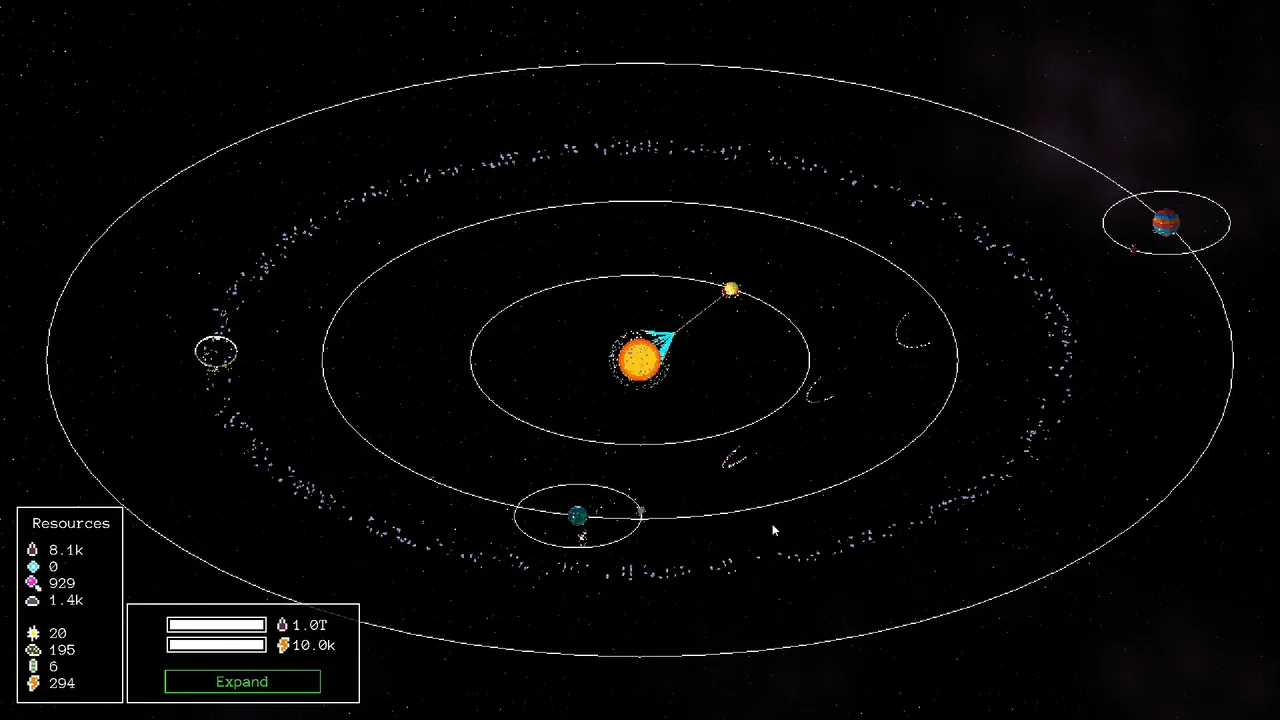
Whatever else is uneven, the presentation isn't. The pixel art holds up well as the scale expands from a single asteroid to a full star system, drone animation gives the automation a sense of physical life rather than abstract numbers ticking upward, and the ambient soundscape does real work selling the "quiet industry in the dark" mood the game is going for. It's the kind of incremental you can leave running in a window just to look at, and that's not a small thing in a genre that often treats visuals as an afterthought behind the spreadsheet. Syphono4 has also been upfront that no generative tools touched the art or writing, a detail some buyers clearly care about and one that lines up with the handmade feel of the presentation.
Value, monetisation and the campaign length question
Starvester sells for $6.99 and delivers roughly five hours of campaign, with an optional Supporter Pack DLC that swaps in three gold-tinted building skins and nothing else — no stat changes, no unlocked content, just a way to throw the solo developer a few extra dollars if you liked what you played. That's about as clean as monetisation gets in this space: no ads, no energy system, no premium currency standing between you and content that should just be yours.
The honest tension is length against price, and it's the single most common thread running through the game's own review section. A meaningful slice of negative feedback isn't about bugs or balance at all — it's players who finished the whole campaign in one sitting and came away feeling the runtime was tuned to land just past Steam's two-hour refund window rather than to justify the asking price on its own terms. That's a harsh read, and probably an unfair one given how much of the five hours is genuinely well-built, but it's not a read the design does much to discourage. A short, focused incremental with a real ending is a good idea. Whether this specific execution of it is worth seven dollars depends heavily on whether you value the destination or the journey, because the destination — those endgame megastructures — arrives right as the game's pacing and prestige problems are at their most obvious.
Final verdict
Starvester deserves credit for trying something the genre rarely does: committing to an ending instead of chasing infinite retention. The first half of that promise is delivered beautifully — sharp pixel art, a relaxing soundscape, and an automation curve that ramps up cleanly from one drone to a small system-wide operation. The second half falters. A prestige system that's supposed to be the mechanical spine of a short campaign doesn't reliably work as described, the back third of the game trades active decisions for idle waiting without warning, and the interface never gives you the readouts a game this ambitious about scale actually needs.
None of that makes Starvester bad. It makes it a good idea executed at about seven-tenths strength, sold at a price where that gap matters more than it would in a longer or cheaper game. Recommended for players who want a tidy, good-looking one-sitting incremental and are willing to let the late game coast on atmosphere rather than mechanics. Genre veterans who measure a prestige loop by how well it rewards mastery should wait for a patch, or at least a deeper sale.
Players who'd rather have their progression keep running quietly in the background between sessions, with a persistent world attached to it instead of a five-hour clock, might also want to look at Wanderer.
Pros and cons
Pros
- The drone-swarm automation genuinely scales, growing from a single mining rig into a star-system network without ever feeling like a menu re-skin
- Pixel art and ambient soundscape are consistently good, and the game leans into that atmosphere instead of just decorating the numbers
- A five-hour campaign with a defined ending is a rare and welcome shape for this genre
- The Supporter Pack DLC is purely cosmetic and doesn't touch balance, so the base game isn't holding anything back
- No ads, no energy timers, no premium currency dressed up as a shop
Cons
- Player reports describe prestige talents that don't apply correctly across all planets, undermining the one system meant to reward starting over
- Price scaling accelerates sharply after the trading unlocks, turning the last hour or two into idle waiting rather than active decision-making
- The interface has no production-per-second readout, so optimising a sprawling drone network means eyeballing trends instead of reading them
- At this length and price, the value argument is genuinely split, and a few players have finished the whole thing in a single sitting
- Visual clarity suffers once several planetary clusters are running at once, making it hard to spot which node needs attention
Screenshots
-
StarvesterImage: Future Friends Games via Steam -
StarvesterImage: Future Friends Games via Steam -
StarvesterImage: Future Friends Games via Steam -
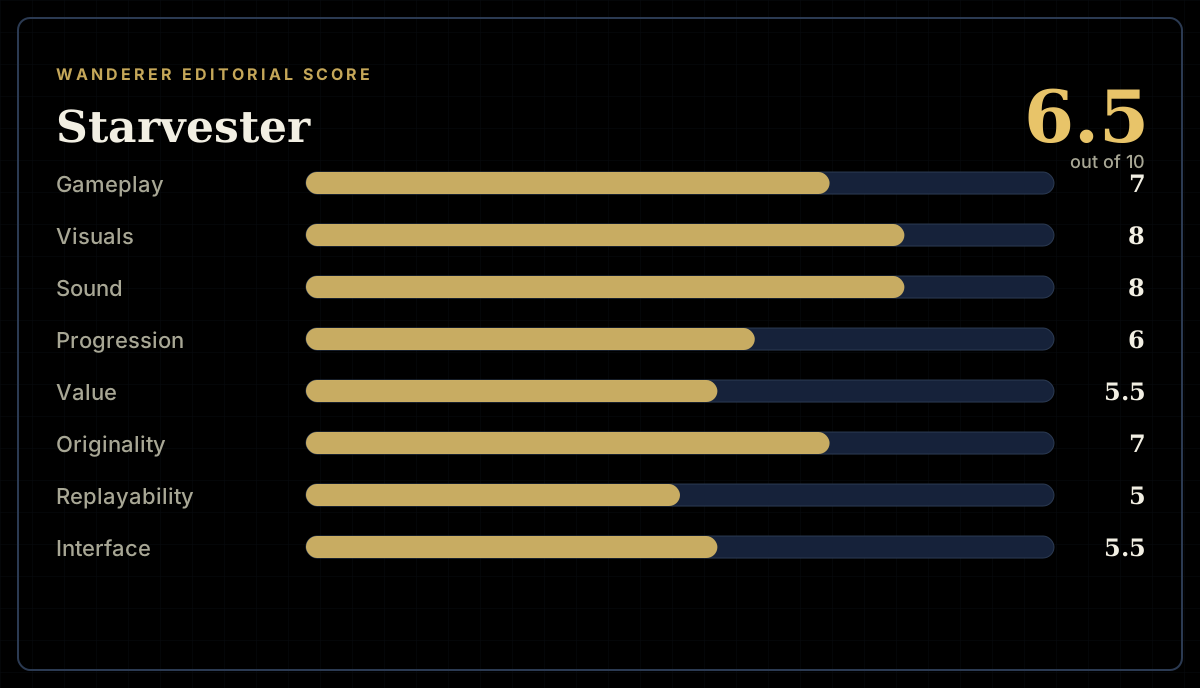
How the review scores each part of the gameWanderer Editorial -
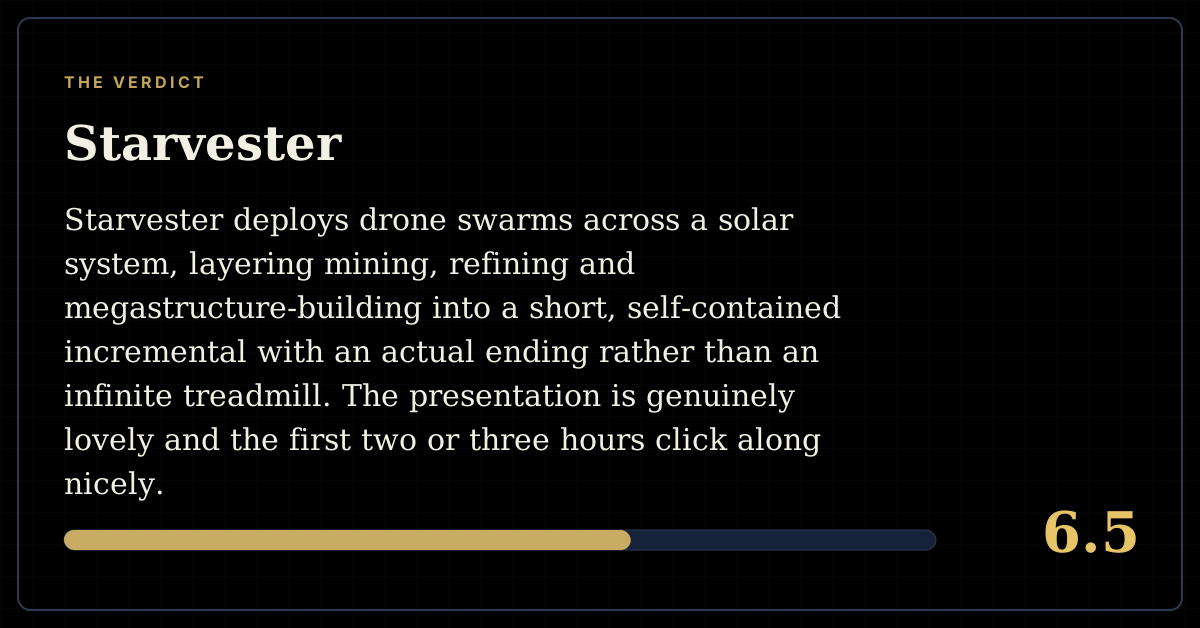
The short versionWanderer Editorial