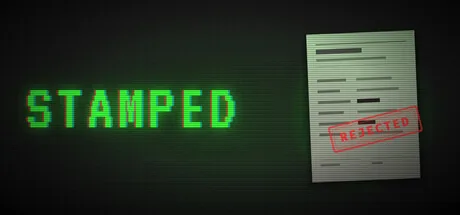
Game review
STAMPED
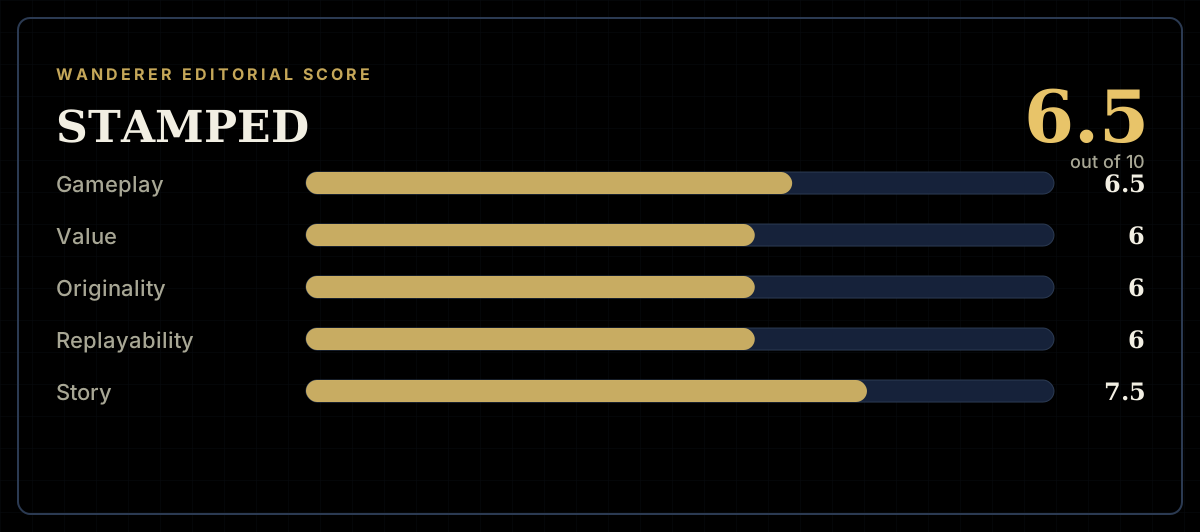
6.5 / 10
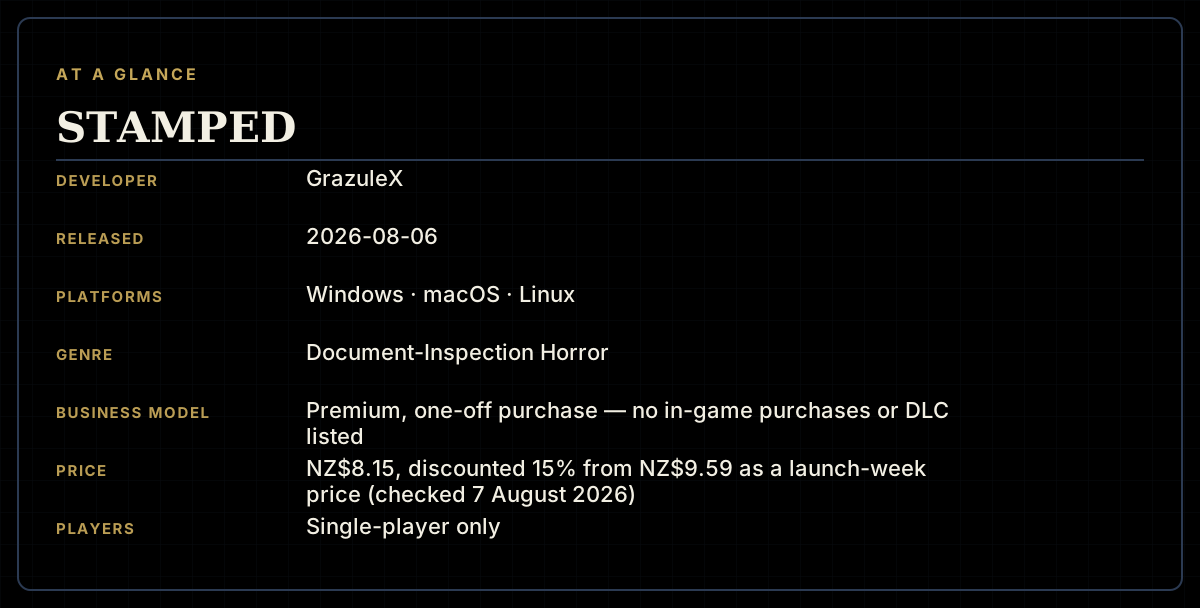
- Developer
- GrazuleX
- Publisher
- GrazuleX
- Released
- 6 August 2026
- Platforms
- Windows, macOS, Linux
- Genre
- Document-Inspection Horror
- Monetisation
- Premium, one-off purchase — no in-game purchases or DLC listed
- Players
- Single-player only
The short version
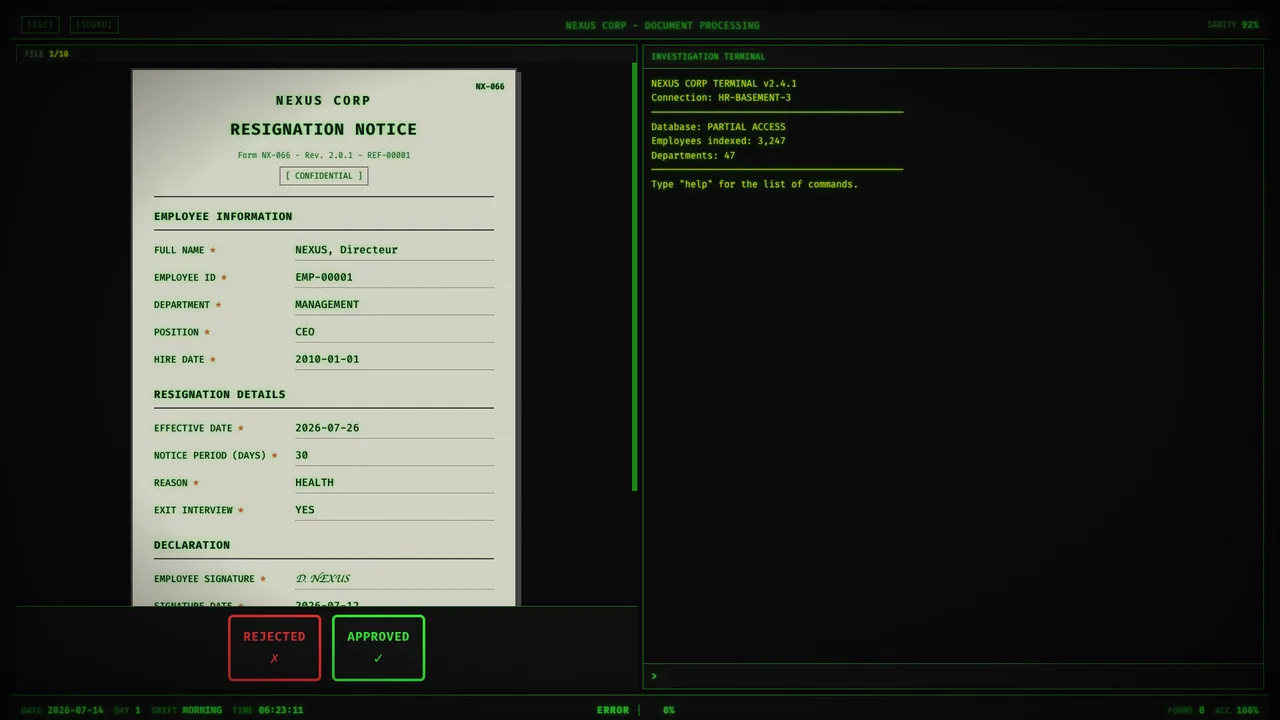
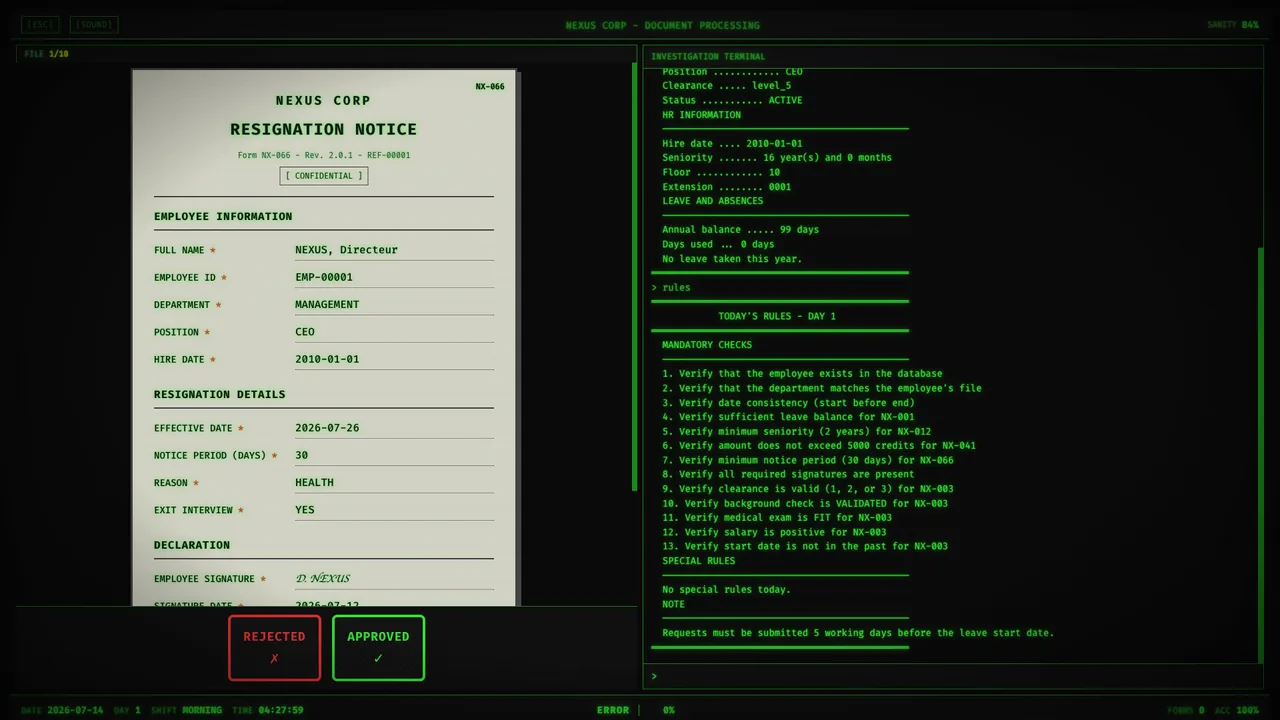
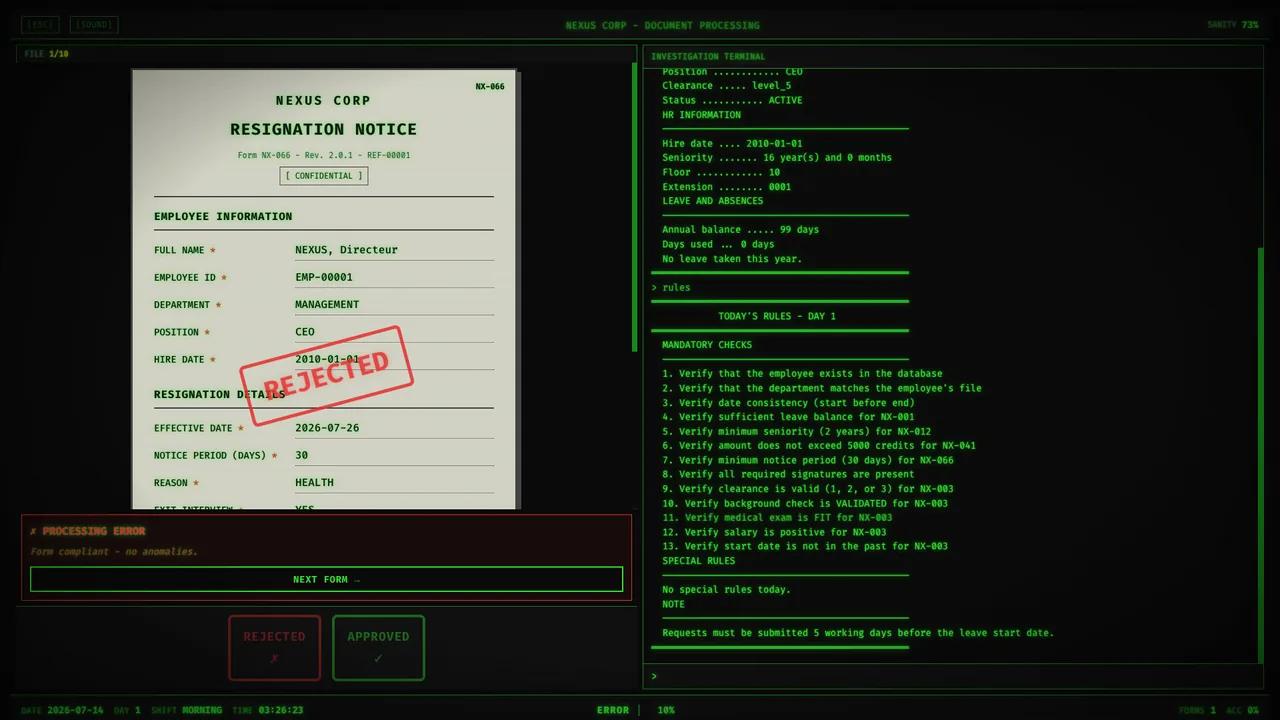
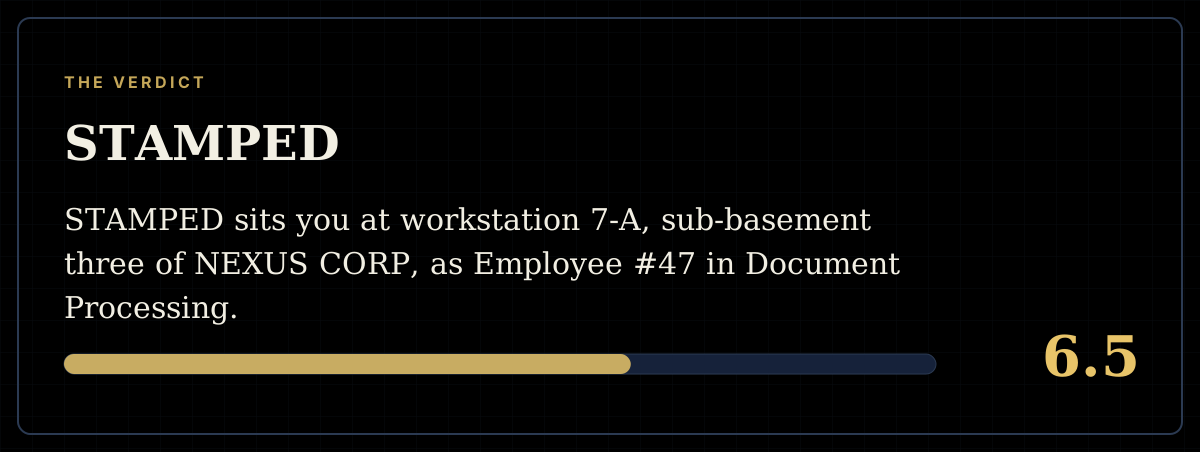
STAMPED sits you at workstation 7-A, sub-basement three of NEXUS CORP, as Employee #47 in Document Processing. Forty-six clerks before you have been "reassigned." Your job is to pull up a form, cross-check its claims against a company terminal — employee records, department codes, clearance levels, supervisors — and stamp it APPROVED or REJECTED before the queue or Compliance notices catch up with you. It's Papers, Please's document-matching skeleton with a slow-burn horror engine grafted on: a sanity meter, a suspicion meter, and endings that branch on whether you comply, investigate, or refuse to sign.
The premise is sharp and the price is close to nothing, but the listing itself only promises "Chapter 1: Protocol 47" with no stated roadmap for what follows, no achievements yet defined, and — as of this writing — no user reviews at all to weigh against the pitch. It also isn't a standalone effort: the same developer released two other small horror games in the same fortnight, one built on an almost identical "isolated desk job, ominous coworkers, something's wrong with the records" premise.
Biggest strengths
- A well-drawn premise that earns its Papers, Please comparison — active terminal cross-referencing rather than a static side-by-side document check
- A genuinely unusual dual-pressure design: a stamping queue that punishes hesitation alongside a sanity/suspicion pair that punishes digging too hard or not hard enough
- Three branching endings (comply, investigate, refuse to sign) built into the pitch from the start rather than bolted on
Biggest weaknesses
- The store page explicitly labels this "Chapter 1," with no stated timeline, price or scope for further chapters, and no way yet to judge how much story NZ$8.15 actually buys
- Zero user reviews and no press coverage exist yet, so nothing outside the store page's own claims currently backs up how the terminal-investigation loop actually plays
- No achievements are defined, which removes one of the few objective signals — completion rate, drop-off point — normally available for a game this new
Who it's for: Fans of Papers, Please and Golden Idol-style document detective work who also want a horror hook, and who are fine buying a first chapter on trust rather than a finished arc.
Our recommendation: A low-risk purchase at its launch price if the pitch appeals, but wait for the first wave of reviews and a sense of how much game "Chapter 1" actually is before expecting a complete story for your money.
6.5 / 10
Employee #46 is listed as "reassigned." She isn't coming back to workstation 7-A, sub-basement three, and neither have forty-five clerks before her going back to 1952. You're #47, and NEXUS CORP didn't ask many questions when you needed the job — it just needed someone at the desk, stamping forms, since 1952 apparently isn't the kind of streak a company likes to leave unbroken.
That's the pitch for STAMPED, a document-inspection horror game that wears its debt to Papers, Please openly and mostly earns the comparison. A form lands on your terminal. You cross-check its claims — employee records, department codes, working days, clearance levels, who reports to whom — against a company database that rarely agrees with itself. You decide: APPROVED or REJECTED. Stamp the wrong one and Compliance notices. Take too long and the queue notices instead. Somewhere underneath the paperwork, something from forty-six years ago is still sealed by exactly the forms you're stamping, and every decision moves a suspicion counter and a sanity counter that both sit quietly in the corner of the screen, doing their own accounting on you.
Cross-checking, not just comparing
The mechanical difference from Papers, Please is worth dwelling on, because it's the thing that could make or break the loop. Lucas Pope's game worked by putting two documents side by side and asking you to spot the mismatch — a fast, visual, largely static comparison. STAMPED's terminal is described as an active investigation tool: you query employee records, departments, calendars and clearance histories yourself, hunting for the specific lie buried in a form rather than having the evidence handed to you pre-arranged. That's a meaningfully different kind of attention. Done well, it turns each form into a small detective puzzle in the vein of games like The Case of the Golden Idol, where the satisfaction comes from knowing where to look rather than how fast you can scan two boxes. Done badly, it's a chore — searching a database under a timer is a much easier way to produce tedium than it is to produce tension, and the store page's own warning that "the queue notices" if you're slow is the detail that will decide which of those two outcomes the finished game leans toward.
Two meters, two kinds of pressure
The horror layer sits on top of that investigation loop rather than replacing it. A sanity meter and a suspicion meter both track your progress through the story, and the framing suggests they pull in different directions: dig too hard into what's sealed beneath the building and your grip on the situation frays; comply too cleanly and the company's trust in you rises while your own unease presumably does too. Three endings are promised on the strength of that tension — comply, investigate, or refuse to sign — which is a reasonable structure for a game built around a single repeated decision. Whether those branches feel earned rather than arbitrary is exactly the kind of thing a review corpus normally settles quickly, and none exists yet to check it against.
The atmosphere leans on implication rather than jump scares, going by the store page's own description, which fits the setting: an office horror story told through paperwork that contradicts itself is a slower, colder kind of dread than something jumping out of a vent. That's a defensible choice for a game this size, and it's the same restraint that made Papers, Please's best moments land — the horror of realising what a stamp actually did, after the fact, rather than in the moment.
What "Chapter 1" actually buys
The most important practical fact for a buyer sits in the feature list rather than the pitch: this release is labelled "Chapter 1: Protocol 47." Nothing on the store page states how many chapters are planned, whether later ones are free updates or separate purchases, or when they might arrive. That's not automatically a problem — plenty of small narrative games ship a complete first act and expand later — but it is a real unknown for anyone deciding whether NZ$8.15 buys a satisfying, self-contained story or a taste of one. No achievements are defined either, which removes the usual fallback for guessing at length: there's no completion curve to check, no "how many players saw the ending" signal to lean on. All that exists right now is the developer's own framing, and a buyer has to take the chapter structure on trust until reviews start describing actual playtime.
A familiar face in the same building
Worth knowing before buying: GrazuleX isn't a first-time name this month. The same developer released two other small games in the two weeks before STAMPED — DISPATCHED, a horror roguelike about an emergency-line operator answering calls where "some callers don't sound human," and NOVAE: Last Light, a neon action roguelite in a different genre entirely. DISPATCHED in particular runs the same basic shape as STAMPED: a numbered employee (Operator #15, rather than Clerk #47) alone at a desk, processing something ordinary while the process itself turns out to be haunted. All three games ship at the identical NZ$9.59 list price and all three carry unusually light system requirements.
None of that is disqualifying — a developer finding a formula that works and running it twice in quick succession is a normal, sometimes very good thing, and STAMPED's paperwork framing is distinct enough from DISPATCHED's call-centre framing that they read as siblings rather than reskins. But a fortnight covering three separate releases is also a fair signal about scope: this reads like a small, fast production rather than a single game that absorbed a team's full attention, and that's worth weighing against a "Chapter 1" label that already implies more is meant to come later.
The unglamorous technical footprint
STAMPED's minimum system requirements are almost comically modest — a dual-core 2GHz processor, 4GB of RAM, integrated graphics, and 500MB of storage. The reason shows up in the small print: the game requires the Microsoft Edge WebView2 runtime, installed automatically if it isn't already present. That means the game is effectively a web application running inside a native shell rather than a traditionally rendered 3D or 2D game, which explains both the featherweight requirements and the genre choice — a document-inspection sim built around reading forms and querying a database is a natural fit for that kind of engine, arguably more natural than it would be for something demanding tight action or physics. It also means almost nobody is locked out on hardware grounds, which is a genuine point in the game's favour for a horror title that wants to reach beyond players with gaming rigs.
The developer's AI-use disclosure is worth quoting directly rather than summarising, since the brief's own wording matters here: "AI tools were used to assist with code development, some in-game text, and marketing visuals. All game design, story direction and gameplay mechanics were created and reviewed by the developer. No AI-generated content is produced in real-time during gameplay." That's a more specific and more limited disclosure than the vague ones some storefronts allow, and it's stated up front rather than forced out by review pressure — a fairer starting position than most games this size manage.
Where it sits
STAMPED launches into a moment when the "stamp the paperwork" idea is suddenly everywhere on Steam — a search for the game's own name turns up at least two other unrelated titles built around the identical stamping-clerk hook, released around the same window. That's a crowded shelf for a small studio to stand out on, and STAMPED's answer is the horror layer: sanity, suspicion, a building with something sealed under it, and a mystery that a document-checking loop alone doesn't usually carry. On the strength of the pitch, that's a reasonable point of difference. Whether the execution holds up over a full Chapter 1 playthrough is the one thing this review genuinely cannot settle yet — there is no review corpus, no achievement data and no press coverage to check the pitch against, only the storefront's own account of what it built.
The verdict
STAMPED earns a 6.5 for a premise that's genuinely well constructed and a price that makes it an easy, low-stakes purchase for anyone who likes this specific flavour of slow-burn office dread. It doesn't score higher because so much of what would normally justify a firmer number — how satisfying the terminal investigation actually feels form after form, how fairly the sanity and suspicion systems are tuned, how much story a first chapter really delivers — currently exists only as a promise on a store page, made by a developer juggling two other launches the same fortnight. Buy it if the Papers, Please-meets-cosmic-horror pitch is exactly your thing and the price barely registers either way; wait a little longer if you'd rather spend on Chapter 1 once early buyers have said whether the queue and the terminal turn out to be tense or just tedious.
Readers who want the genre's foundational version of this exact loop, minus the horror, should start with Papers, Please — the game STAMPED is most directly in conversation with, and one this library already rates highly.
Price and store data checked 7 August 2026, the day after launch.
Pros and cons
Pros
- A well-drawn premise that earns its Papers, Please comparison — active terminal cross-referencing rather than a static side-by-side document check
- A genuinely unusual dual-pressure design: a stamping queue that punishes hesitation alongside a sanity/suspicion pair that punishes digging too hard or not hard enough
- Three branching endings (comply, investigate, refuse to sign) built into the pitch from the start rather than bolted on
- Trivial system requirements — the game is playable on nearly any machine that can run a web browser, since it explicitly runs on Microsoft's WebView2 runtime
- Inexpensive even before its launch discount, with no in-app purchases or DLC to budget for
Cons
- The store page explicitly labels this "Chapter 1," with no stated timeline, price or scope for further chapters, and no way yet to judge how much story NZ$8.15 actually buys
- Zero user reviews and no press coverage exist yet, so nothing outside the store page's own claims currently backs up how the terminal-investigation loop actually plays
- No achievements are defined, which removes one of the few objective signals — completion rate, drop-off point — normally available for a game this new
- The developer released two other small games in the same two-week window, one with a near-identical "haunted desk job" premise, which raises fair questions about how much attention any single one received
- Language support tops out at English, French and Dutch, and there's no listed controller support for a game built entirely around reading dense text
Screenshots
-
STAMPEDImage: GrazuleX via Steam -
STAMPEDImage: GrazuleX via Steam -
STAMPEDImage: GrazuleX via Steam -
How the review scores each part of the gameWanderer Editorial -
The game at a glanceWanderer Editorial -
The short versionWanderer Editorial