Game review
Spinny Dungeon
6.4 / 10
- Developer
- Typing Monkey
- Publisher
- Typing Monkey
- Released
- 6 April 2026
- Platforms
- [Windows, Linux]
- Genre
- Roguelike
- Monetisation
- Premium
- Players
- false
The short version
Spinny Dungeon takes the Luck Be a Landlord slot-machine formula and dresses it up with genuine dungeon-crawler resource management and character-specific magic, but a thin roster of symbols and uneven character balance leave it feeling smaller than its best ideas deserve.
Biggest strengths
- An addictive core loop that layers real dungeon-crawler resource management, hunger, mana, gold, onto the slot-machine formula
- Character-specific spells and symbol synergies that reduce reliance on pure luck compared to genre touchstones
- Cheap, polished, and clearly well-loved by fans of Luck Be a Landlord and similar games
Biggest weaknesses
- A genuinely small pool of symbols, companions, and enemies that several reviewers say limits long-term replayability
- Noticeably uneven character balance, with some characters reportedly far easier or harder than others
- No controller support and an interface several reviewers describe as underdeveloped
Who it's for: Luck Be a Landlord fans looking for a fantasy-flavored variant with more resource management, and slot-machine roguelike fans in general.
Our recommendation: Recommended
6.4 / 10
Pull the lever, fight the dungeon
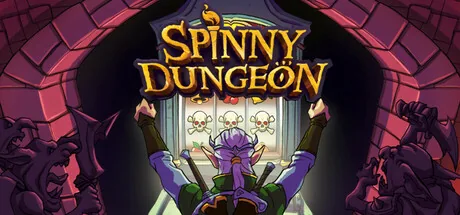
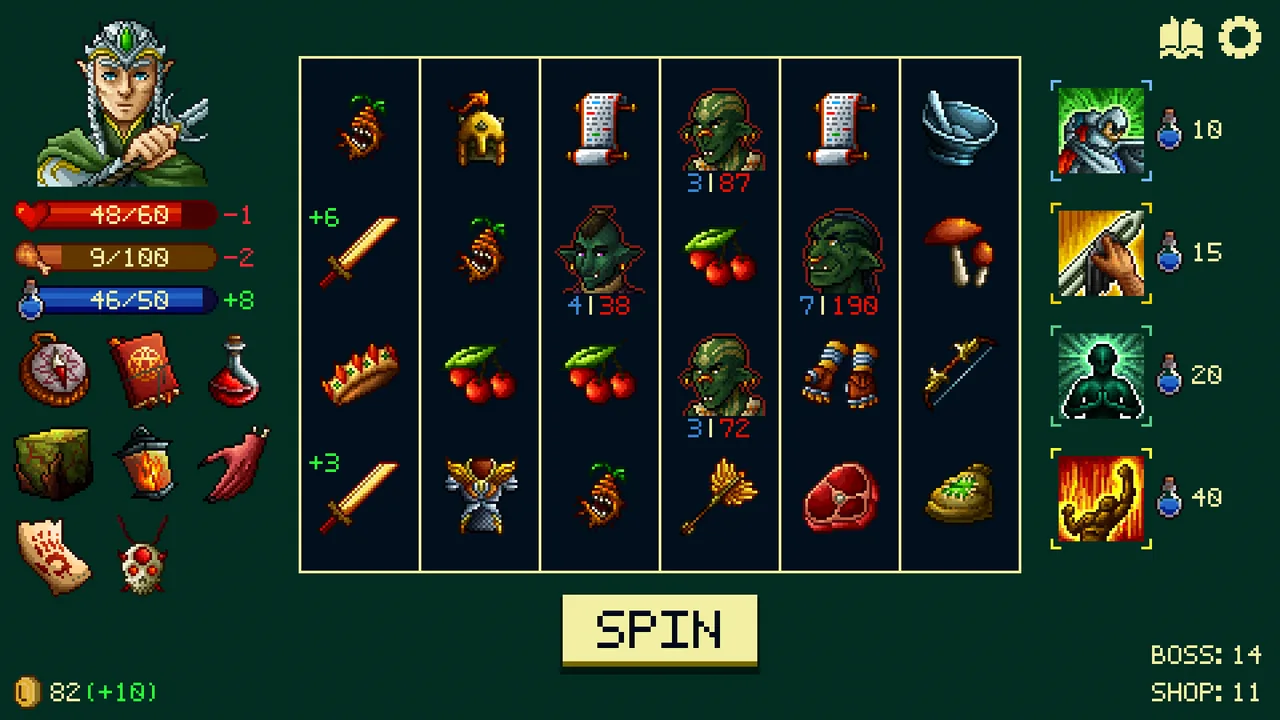
Spinny Dungeon, developed and self-published by Typing Monkey, released April 6, 2026, after a demo period that reviewers repeatedly say they spent dozens of hours in while waiting for the full launch. Its premise is a direct descendant of Luck Be a Landlord: instead of drawing a hand of cards, players build a deck of symbols, weapons, spells, companions, food, that get randomly arranged across a slot-machine reel each spin, triggering combos that damage an advancing horde of monsters before they reach the player. The twist is a dungeon-crawler layer bolted on top: hunger, mana, and gold all need managing alongside the reel itself. It launched to a Very Positive reception, 93 reviews and roughly 91% positive, with the review sample dominated by fans of the slot-machine roguelike subgenre who see this as a worthy, if smaller, companion to the games that inspired it.
More than a Luck Be a Landlord reskin
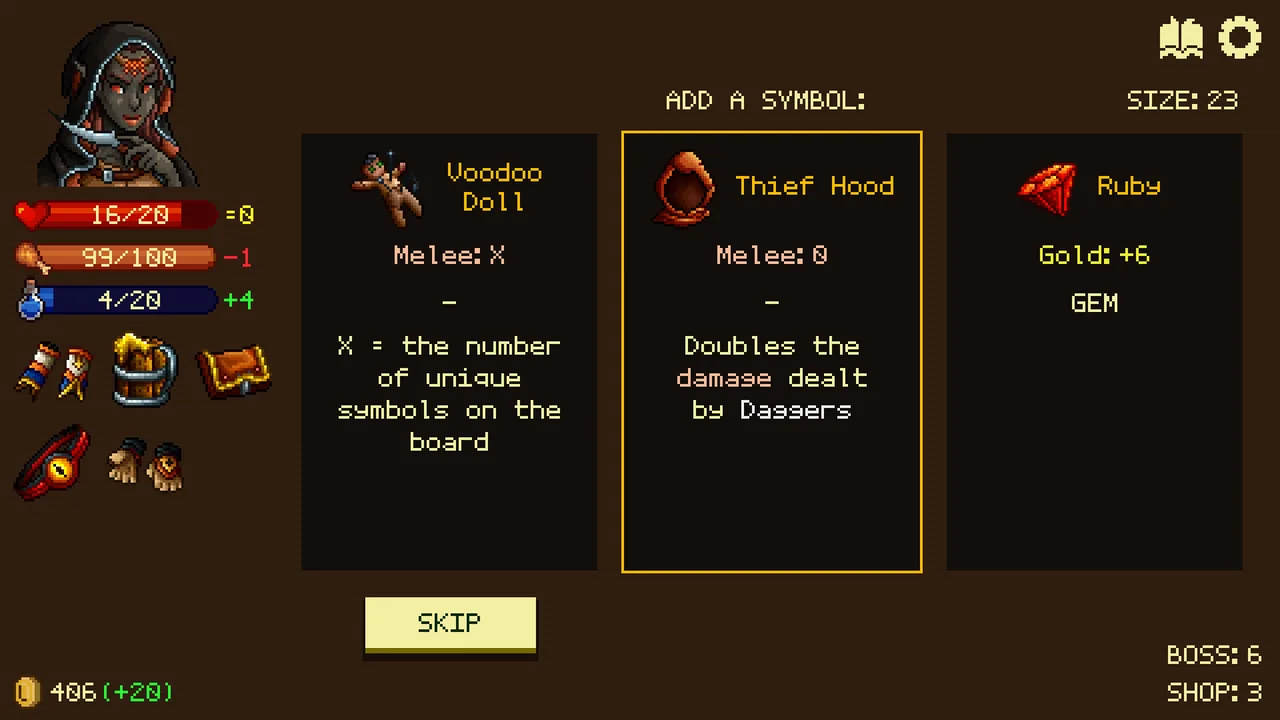
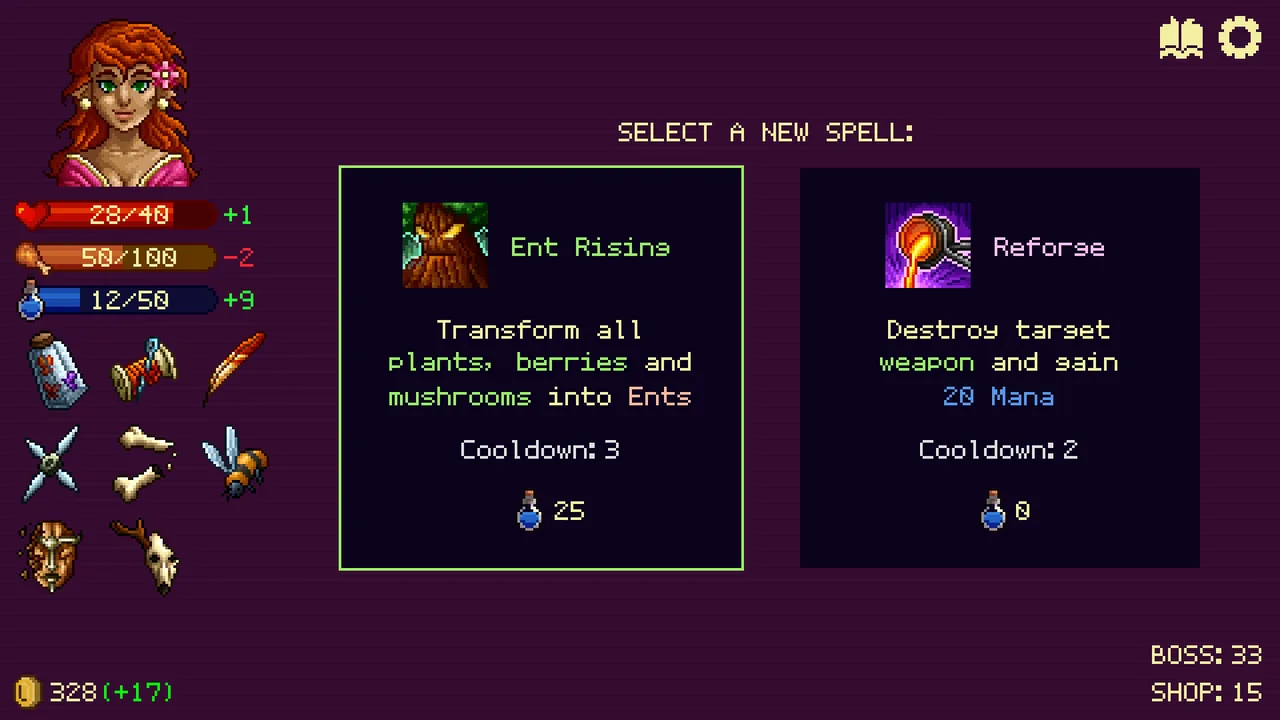
What earns the most consistent praise is that the resource-management layer isn't decorative. Reviewers describe having to balance hunger, mana, and gold simultaneously as meaningfully changing the calculus compared to genre touchstones, where the core tension is usually just "which symbols do I keep." One reviewer specifically credits this layer with preventing the game from becoming "a pure luck grind," since character-specific spells add a controllable, skill-expressive counterweight to the reel's randomness. Four playable characters, each with distinct symbol synergies, from a spellblade who doubles explosive damage through weapon-forging to a survivalist who thrives on discarded "junk" cards, give reviewers real reason to replay with different strategies in mind.
A loop that's genuinely hard to put down
Across dozens of reviews, in English, Chinese, Russian, and beyond, the word "addictive" appears constantly. Several reviewers frame it explicitly through a gambling lens, joking about being "gambling addicts" getting their fix without real money on the line, and the appeal is easy to see: watching symbols line up for a big combo hits the same reward loop as an actual slot machine, but with just enough strategic input, choosing what to keep, what to remove, when to spend gold clearing weak symbols, to feel earned rather than purely lucky. For a couple of evenings, or considerably longer for the more dedicated reviewers who report 18, 35, or even 100-hour totals, that loop clearly delivers.
The content pool runs thin
The most frequent substantive criticism, and it comes up in nearly every language represented in the sample, is that there simply isn't enough game here yet. Chinese-language reviewers in particular are vocal that the symbol pool feels too small, with no character-unique symbols and a general sense that the game needs "more symbols, more enemies, more free updates" to fully deliver on its concept. One reviewer flatly compares it unfavorably to Luck Be a Landlord on exactly this point, arguing it feels shallower than its inspiration and should be priced closer to five dollars than ten. This isn't a universal view, plenty of reviewers are happy with what's here for the asking price, but it's a consistent enough thread to take seriously as a real limitation rather than a one-off complaint.
Character balance needs work
A second recurring complaint concerns balance between the four playable characters. A detailed Russian-language review lays out a specific frustration: the first two characters feel nearly unbeatable at times while the latter two are comparatively easy, a pattern the reviewer says should logically run in reverse for a well-paced difficulty curve, and asks pointedly why the developer hasn't addressed it. A Chinese reviewer echoes this from the other direction, saying only two of the four characters currently feel genuinely fun to play, with the remaining two feeling like afterthoughts. Combined with reports of a specific ability bug, a symbol-destruction effect that's supposed to grant a gemstone reward but doesn't trigger correctly, it points to a launch that could use another meaningful balance pass.
Interface and accessibility gaps
A smaller but pointed complaint concerns the interface itself: no controller support at all, an underdeveloped UI that a few reviewers call out directly as lacking polish relative to the rest of the game, and reports that spin animations remain slow even with the dedicated fast mode enabled, meaning the game shows you its own animations rather than getting out of the way of repeated spins. None of these are dealbreakers on their own, but together they suggest interface work that didn't get quite the same attention as the underlying systems.
Where it sits next to its inspiration
Spinny Dungeon doesn't need to beat Luck Be a Landlord to justify its own existence, and on the evidence here, most of its audience agrees, the resource-management layer and character-specific spells are different enough ideas to stand on their own. But the comparison is inevitable given how directly the genre invites it, and right now Spinny Dungeon comes across as the more thoughtful, more narratively dressed cousin with noticeably less content behind it. A developer that's already shipped a post-launch fast-mode update has clearly signaled intent to keep building, and this genre in particular tends to reward exactly that kind of ongoing content support.
Worth spinning for the price
At ten dollars, the calculus most reviewers land on is straightforward: even with a thinner content pool than they'd like, the core loop is engaging enough, and the price low enough, that it's an easy recommendation for genre fans, with the caveat that anyone expecting Luck Be a Landlord-level depth right out of the gate should adjust expectations accordingly and watch for content updates.
The verdict
Spinny Dungeon takes a well-worn slot-machine roguelike formula and adds enough of its own ideas, real resource management, character-specific magic, meaningful build variety, to earn its place rather than just riding its inspiration's coattails. It's currently held back by a symbol pool that runs dry faster than fans would like and character balance that clearly needs another pass, but for the price, it's a genuinely addictive few evenings with real room to grow.
Pros and cons
Pros
- An addictive core loop that layers real dungeon-crawler resource management, hunger, mana, gold, onto the slot-machine formula
- Character-specific spells and symbol synergies that reduce reliance on pure luck compared to genre touchstones
- Cheap, polished, and clearly well-loved by fans of Luck Be a Landlord and similar games
- Meaningful build variety within each of its four playable characters
Cons
- A genuinely small pool of symbols, companions, and enemies that several reviewers say limits long-term replayability
- Noticeably uneven character balance, with some characters reportedly far easier or harder than others
- No controller support and an interface several reviewers describe as underdeveloped
- Slow spin animations, even in the game's dedicated fast mode, that some reviewers say undercut its own pacing
Screenshots
-
Spinny DungeonImage: Typing Monkey via Steam -
Spinny DungeonImage: Typing Monkey via Steam -
Spinny DungeonImage: Typing Monkey via Steam -
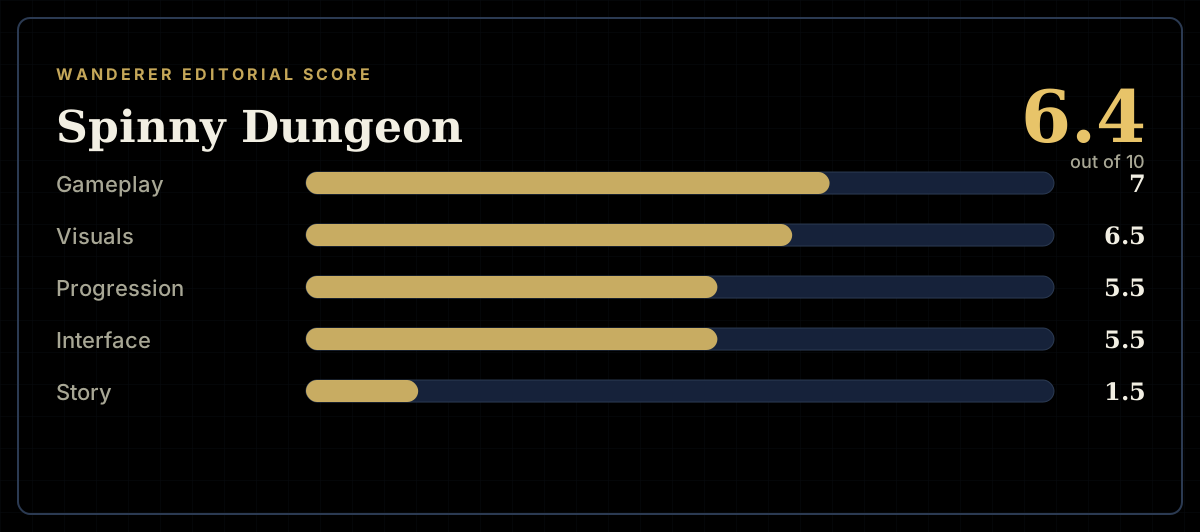
How the review scores each part of the gameWanderer Editorial -
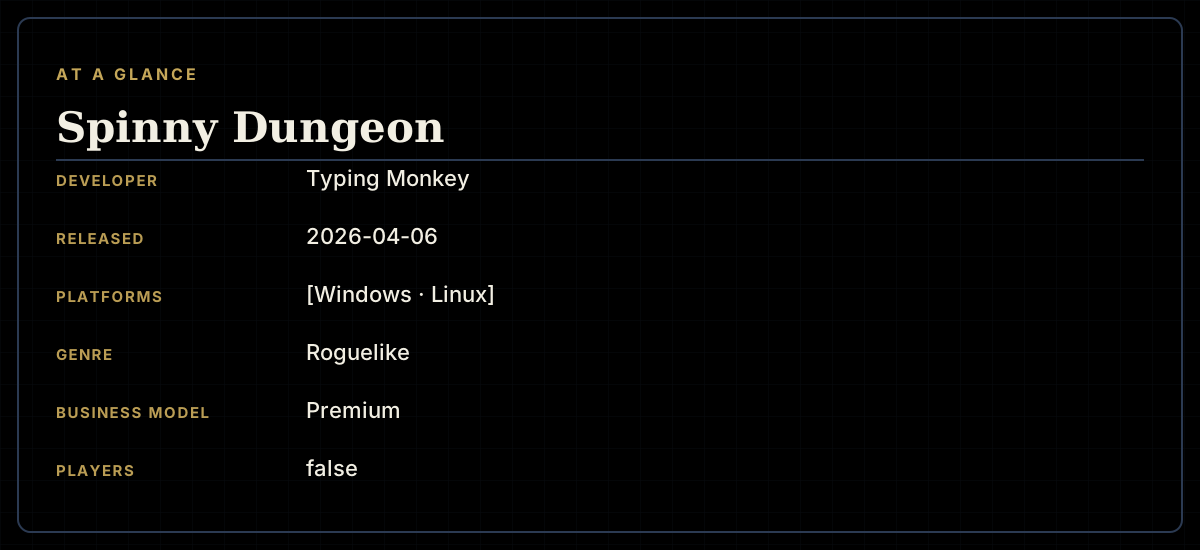
Key facts at a glanceWanderer Editorial -
The short versionWanderer Editorial