Game review
Scratch Off!
6.5 / 10
- Developer
- Juice Store Studios
- Publisher
- Juice Store Studios
- Released
- 23 June 2026
- Platforms
- Windows
- Genre
- Indie, Simulation, Strategy
- Monetisation
- paid
- Players
- false
The short version
Biggest strengths
- A genuinely addicting core scratch-and-build loop that multiple reviewers said only reveals its depth after an hour or two of patient play
- Interesting card modifiers (rainbow, curse, and others) and multiplier combinations that reviewers found more strategically rich than they first expected
- An auto-scratch option that one reviewer specifically praised for accessibility reasons, calling it great for players with hand problems
Biggest weaknesses
- Harsh, near-total RNG dependency in early rounds that several reviewers agreed can make a run unwinnable before it properly begins
- A short repetitive music loop that multiple reviewers said became grating quickly, alongside a first hour that risks losing players before the strategy layer shows itself
- A thin content pool at launch, with one detailed reviewer estimating they'd 'seen everything' after roughly two hours compared to dozens of hours in genre comparisons
Who it's for: Balatro and roguelike-deckbuilder fans who don't mind a slow first hour or two and are comfortable with a still-thin content pool at launch
Our recommendation: recommended
6.5 / 10
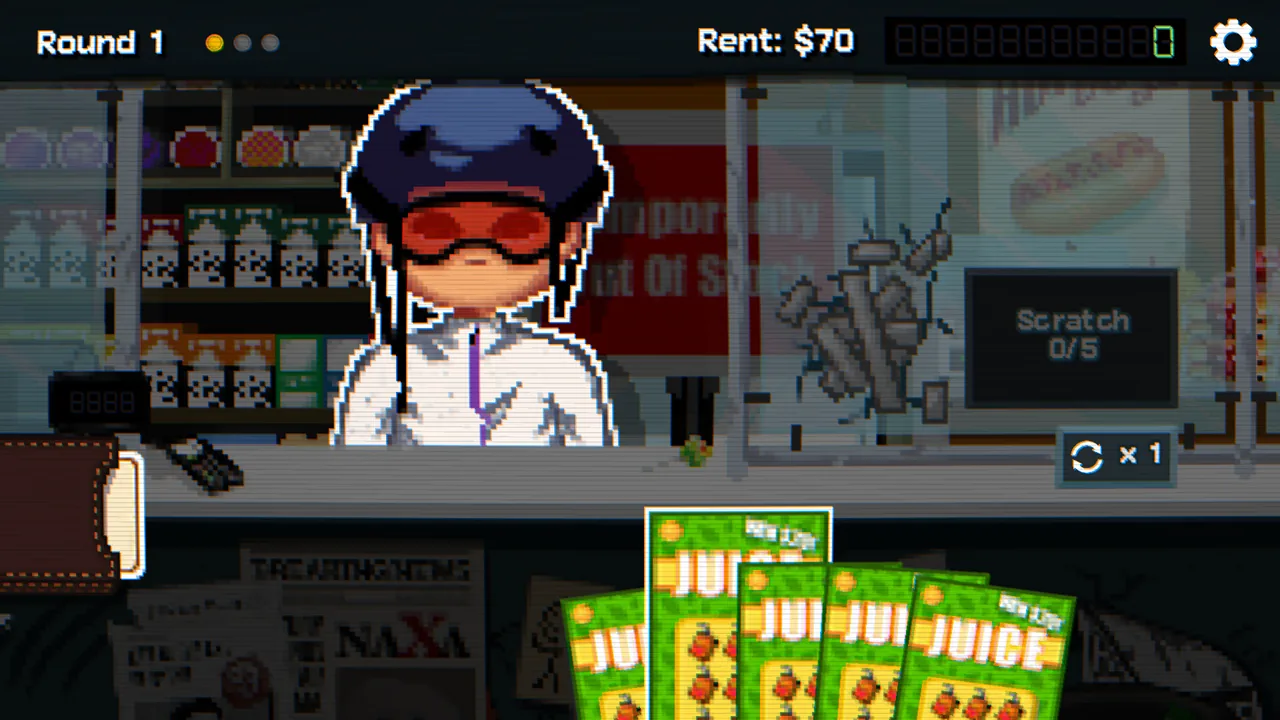
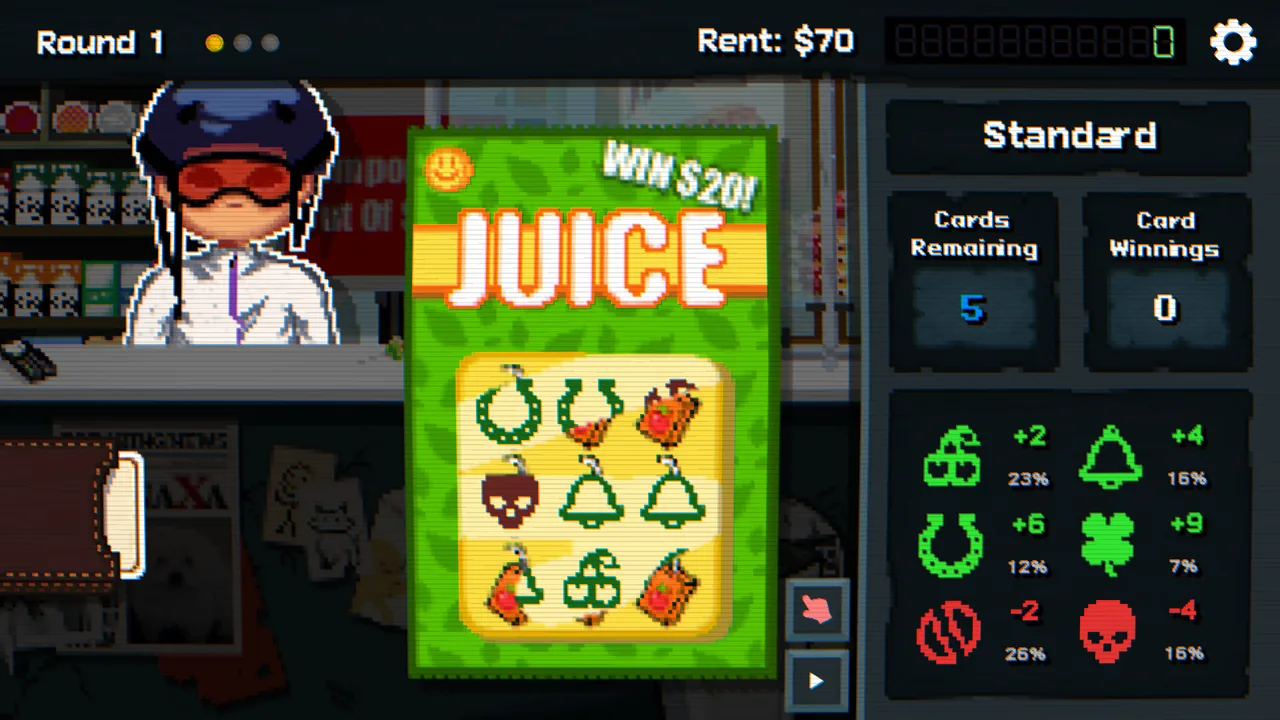
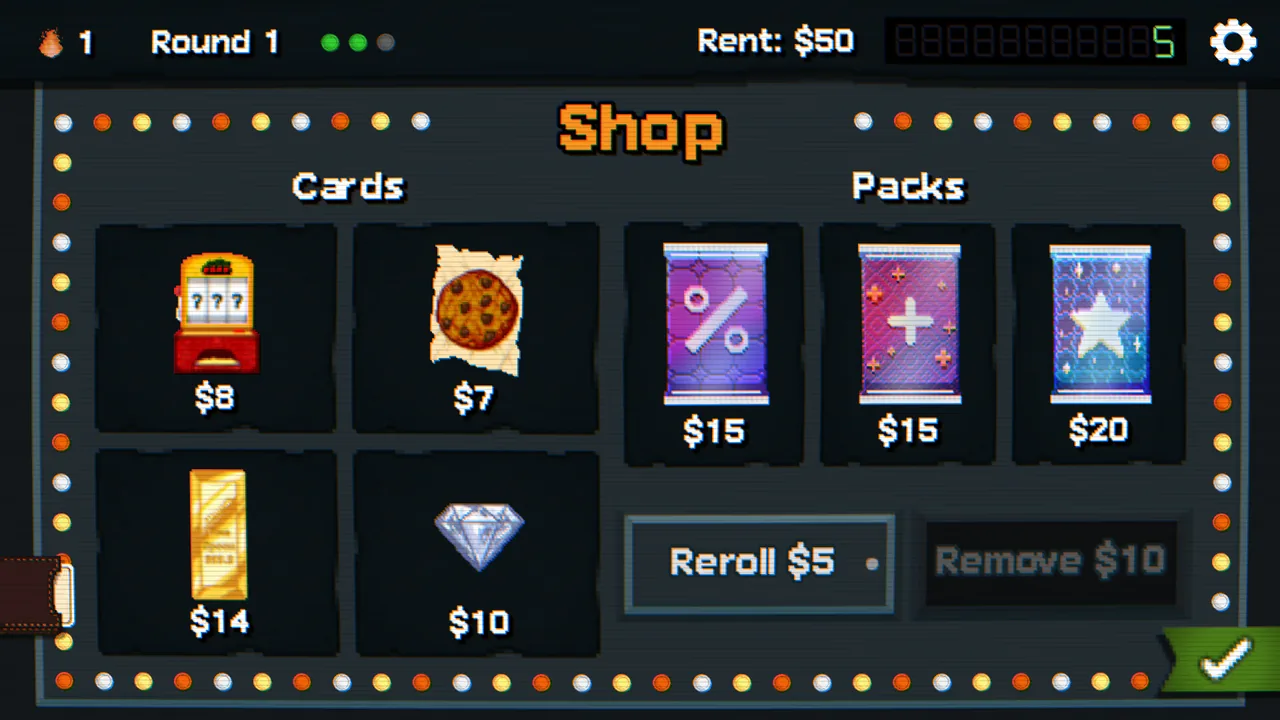
Scratch Off! released on Steam on June 23, 2026, a $9.99 roguelike deckbuilder from developer Juice Store Studios that swaps the poker-hand scoring of genre touchstone Balatro for literal scratch cards, tasking players with building a deck of coins and modifiers to scratch their way past an escalating rent payment each round. Its 14-review English pool lands at Positive (13 up, 1 down, 93%), describing a game with a real, satisfying hook buried under some rough edges that several reviewers felt needed more time in the oven.
The most consistent theme across the pool is that Scratch Off! is a slow-burn game that asks for patience before it pays off. One detailed reviewer put it directly: "Scratch off is one of those games that you have to let simmer after an hour or two before you start seeing it's value... with no specific tutorial and a game loop that doesn't show its potential in the first goes, you may think it's just another in the Balatro like clones out there. But, after an hour or two, when you start to understand where the strategy lies and the deck building elements starts to show itself, that's when it starts to kick off." That same reviewer specifically praised the modifier system once it clicked: "I do like some of the modifiers, in particular with the card effects (rainbow, curse, etc) that I wouldn't have guessed to do at first glance." Another reviewer echoed the addictive quality once the systems came together, writing "very addicting, especially once you get some coins that work together. feels very satisfying when you have a good run."
That slow start comes with real friction, and several reviewers were candid that it nearly cost the game their recommendation. The same detailed reviewer who praised the eventual payoff also warned that "the lack of variation of visuals and the music loop that will dig into your head early on with its very very short repetition will cause you to possibly stop and refund the game." A second reviewer independently flagged the same issue: "while I initially liked the music, I found it got repetitive really fast," in a review that otherwise praised the game as "very addicting" with "amazing" sound effects for successful scratches specifically.
RNG dependency is the pool's most frequently repeated and most serious complaint, raised independently by multiple reviewers rather than a single outlier. One player wrote that "early run rely on RNG almost on 100%. deckbuilding almost useless. because if you didnt get at list one of OP coin. you will lose not matter what." A separate, negative review made essentially the same point from a different angle: "it is way too heavily reliant on luck; especially for the first round - it's very likely to not gain enough money to get any upgrades/new cards from your first store. And of course if you can't get the ball rolling early the game dramatically out scales you with no way to keep pace." A third reviewer measured the same problem more specifically: "the RNG is harsh, I almost want to say it's ridiculous. Using buffing chances does less than it should."
Content depth is the other recurring concern, particularly from players comparing it against Scritchy Scratchy, an established name in the same scratch-card-roguelike space that comes up repeatedly across the pool as the genre's reference point. One reviewer who logged 70 hours in that comparison title was blunt about the gap: "Scritchy has in it like at list 30-50 hours of content because of insanly good Meta progression and inrun balance... here i played like 2 hours and already complete like 90% of all that game can offer," alongside reports of a broken endless mode where "game stop counting your money properly... and removed few zeroes." Despite the criticism, that same reviewer still recommended the purchase at its sale price, underscoring that the core idea is sound even where the current execution falls short.
Balance issues extend past pure RNG complaints, too. One reviewer flagged a specific endless-mode exploit: "with certain combos rent literally does not climb faster than you mathematically make money so it is impossible to lose," a bug that undercuts the escalating-difficulty tension the whole format depends on. Several reviewers framed these problems as fixable rather than fundamental, with one writing "this game shows a ton of promise, but not just yet. It absolutely needs some balancing and tweaks here and there," and another simply noting "lots of potential, a few tweaks and fix will make the game a lot better. If more content release, I can see myself spend hours playing this game."
A handful of smaller quality-of-life details rounded out the pool's more measured reviews. One reviewer specifically praised the auto-scratch option as a genuine accessibility feature: "the option to auto-scratch is great for people who have hand problems like myself," a detail worth flagging for anyone who might otherwise be put off by a game built around repeated scratching motions. Another reviewer, who tracked the game across its alpha, demo, and full release, described steady improvement over that span: "played the alpha, the demo and now the full game and it gets better everytime! Very fun game with lots of replayability," before adding a lighthearted request for the developer to consider multiplayer down the line. A separate player flagged a minor technical hiccup tied to one of the card modifiers, noting "the Curse cards lowered my framerate slightly," though they weren't certain whether that was the game's fault or their own streaming setup.
Taken as a whole, Scratch Off! is a promising, genuinely addicting entry in the Balatro-adjacent roguelike space that asks players to push through a rough, RNG-heavy, thinly padded first stretch before its deckbuilding ideas fully land. Reviewers who put in the time consistently came away recommending it, but the pool is equally consistent that it currently trails better-established genre peers on content depth and run-to-run balance. For genre fans willing to be patient and forgiving of an early-access-adjacent feel despite being a full release, it's a worthwhile pickup; for anyone expecting Balatro-level polish and longevity out of the gate, tempered expectations are warranted.
Pros and cons
Pros
- A genuinely addicting core scratch-and-build loop that multiple reviewers said only reveals its depth after an hour or two of patient play
- Interesting card modifiers (rainbow, curse, and others) and multiplier combinations that reviewers found more strategically rich than they first expected
- An auto-scratch option that one reviewer specifically praised for accessibility reasons, calling it great for players with hand problems
- Strong replayability through distinct starting decks, each with their own escalating debuffs, according to a reviewer who played through the alpha, demo, and full release
Cons
- Harsh, near-total RNG dependency in early rounds that several reviewers agreed can make a run unwinnable before it properly begins
- A short repetitive music loop that multiple reviewers said became grating quickly, alongside a first hour that risks losing players before the strategy layer shows itself
- A thin content pool at launch, with one detailed reviewer estimating they'd 'seen everything' after roughly two hours compared to dozens of hours in genre comparisons
- Reported balance and endless-mode bugs, including money display errors at very high totals and rent-scaling math that some combos can outright break
Screenshots
-
Scratch Off!Image: Juice Store Studios via Steam -
Scratch Off!Image: Juice Store Studios via Steam -
Scratch Off!Image: Juice Store Studios via Steam