Game review
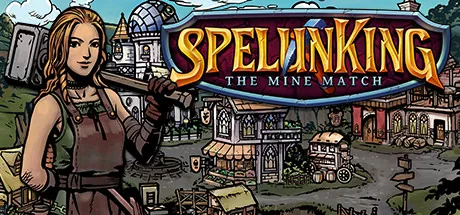
SpelunKing: The Mine Match
6 / 10
- Developer
- Playcademy
- Publisher
- GC Games
- Released
- 4 April 2020
- Platforms
- Windows, macOS, Linux
- Genre
- Casual
- Monetisation
- Premium, no in-app purchases
- Players
- Single-player
The short version
SpelunKing: The Mine Match takes the most tired genre on Steam and gives it one real idea — matching tiles doesn't just clear a board, it drags your lantern deeper into a mine you're physically exploring. That idea is worth the price of admission for the first dozen levels. Whether it's worth it for the other thirteen depends entirely on how much repetition you can absorb, because the game never introduces a second idea to sit alongside the first one.
It's a small, single-developer-adjacent studio's fourth outing in this exact format, and it shows in both the competence and the caution: nothing here is broken, and nothing here is a surprise after level fifteen.
Biggest strengths
- The lantern-and-camera exploration hook makes matching feel like it's going somewhere, not just clearing a grid
- Town-rebuilding meta-layer gives resources gathered in the mine an actual destination
- No IAPs, no energy timers, no monetisation tricks bolted onto a premium price
Biggest weaknesses
- Level length balloons hard around the mid-game; several reviewers report hour-plus single levels with no way to save mid-puzzle
- Hint supply is capped and doesn't regenerate fast enough for the "match-all" cave puzzles that gate late-game progress
- Content and mechanics established in the first hour are essentially everything the game does
Who it's for: Fans of Playcademy's earlier Runefall games, or anyone who wants match-3 with a sense of place rather than a static grid. Not for players who bounce off long single-session puzzle levels.
Our recommendation: Worth it on a sale if you like the genre; try the free demo mentality of watching a video of the mid-game puzzles before paying full price.
6 / 10
The pitch: match-3 that goes somewhere
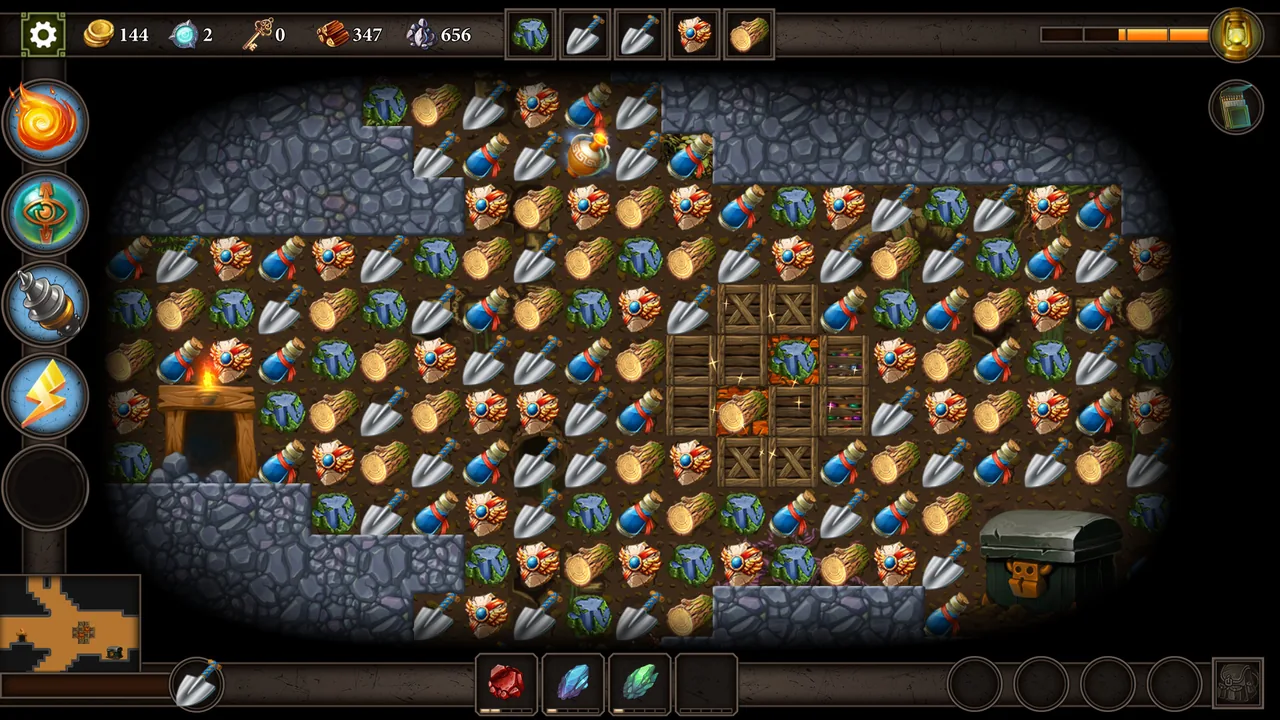
Most match-3 games are a grid, a score counter and a reason to keep the grid open one more level. SpelunKing: The Mine Match, from New Zealand-based developer Playcademy and publisher GC Games, tries something structurally different: the mine you're excavating is a single continuous, scrollable space, and your matches are what move the camera through it. Line up ore and stone and the view creeps toward unexplored sections; certain tile types refill a lantern meter that governs how far you can see, and running it dry stops progress cold until you match your way back to more light.
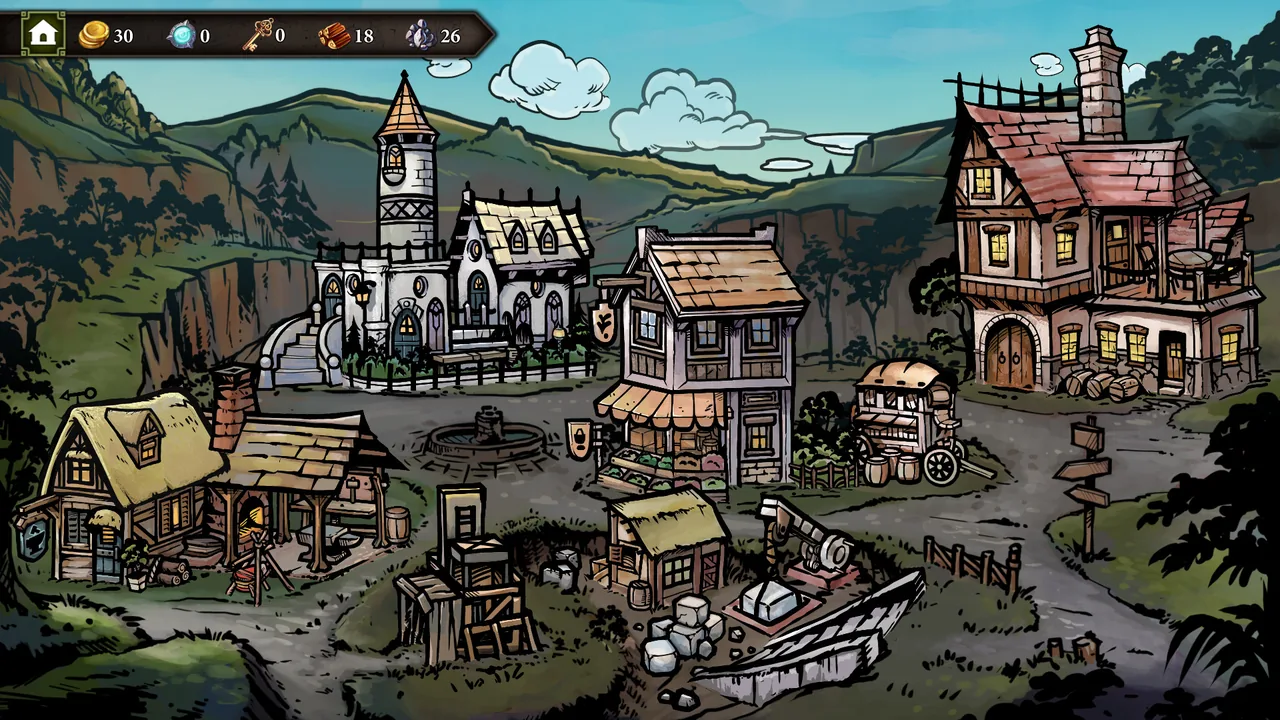
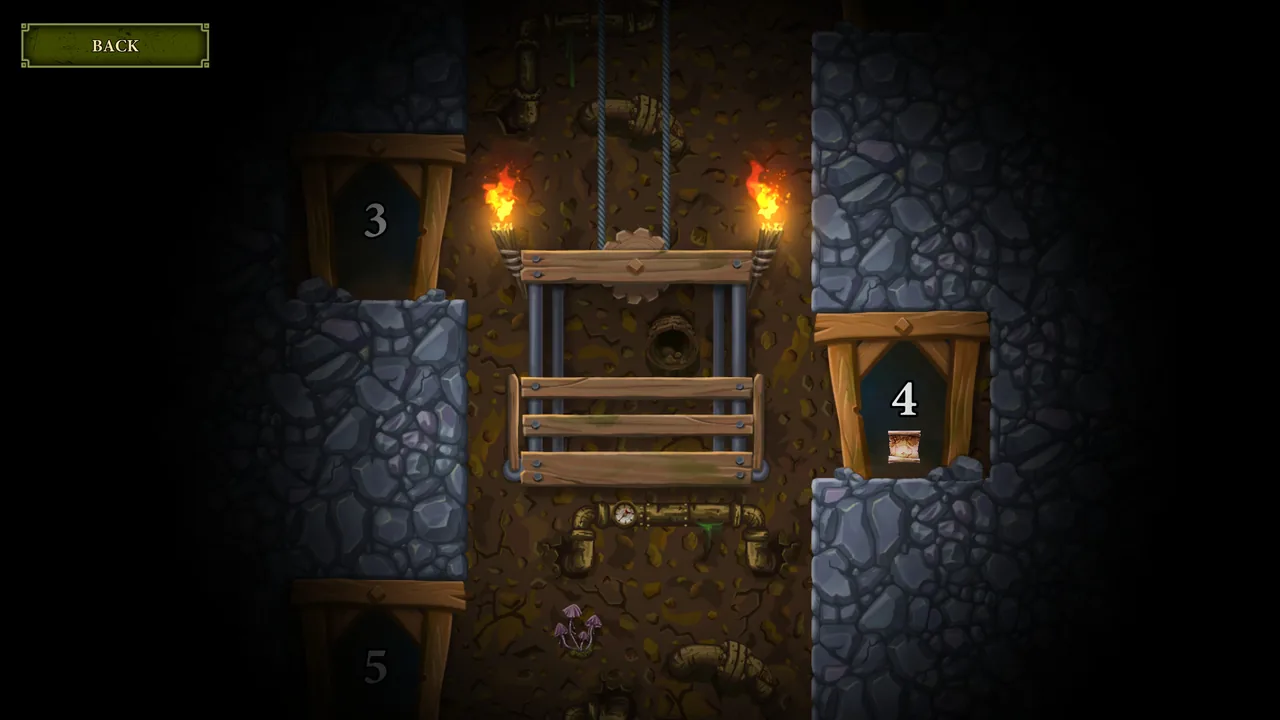
It's framed as a search for a missing grandfather's lost belongings, narrated with full voice acting that's rare for a game at this budget and genre. Between mine runs, resources you've dug — wood, stone, gems — feed into rebuilding the town of Farnsbury, giving the loot a home rather than just a sell button. Twenty-five mine areas and more than ninety "cave challenge rooms" (extra match puzzles gating side content and talismans) make up the stated scope.
This is Playcademy's fourth game in essentially this format, following two entries in their Runefall series, and several of the more detailed Steam reviews are explicitly comparisons against those earlier titles rather than reviews of SpelunKing on its own terms — a small studio iterating on a formula it already knows works, for an audience that already knows what it's buying.
Where the idea earns its keep
The exploration hook is the thing to actually credit here, because it solves match-3's oldest problem: the sense that nothing you do in one level connects to anything else. Tying camera movement to specific tile types means a good player is making two decisions at once — which match clears the most tiles, and which match moves the lantern toward the section of the map that still has secrets in it. Reviewers who stuck with the game describe genuinely strategic sessions early on, weighing whether to spend a turn refilling light versus pushing toward unexplored ground before time or resources run out.
The town layer gives the loop a second gear. Wood and stone you dig go toward upgrading buildings in Farnsbury, shields build up a kind of puzzle-solving resource pool, and shovels let you warp to different dug-out sections rather than backtracking manually. None of it reinvents town-building, but it means "collect resources" has a visible payoff beyond a number going up, and several positive reviews single that structure out as the reason SpelunKing feels more purposeful than a typical entry in the genre.
Where it runs out of ideas
The trouble is that everything above is established inside the first hour, and the game spends the next fifteen to twenty hours running the same loop at increasing length rather than increasing complexity. Multiple reviewers — including several who ultimately recommended the game — put the turn around level twelve to fifteen, where puzzles stop introducing anything new and start simply taking longer: one detailed review clocks the mid-to-late levels at "almost or more than an hour" each, with no mid-level save. A crash during one such level cost one player ten hours of progress outright, after the game reportedly refused to relaunch until the save was deleted entirely — the single most damaging complaint in the review set, not because it's common, but because a single-file loss at that length is exactly the failure mode a puzzle game with hour-long levels can't afford.
The late-game "cave challenge rooms" — match-all puzzles that gate talismans and full completion — draw the sharpest criticism. Hints are capped rather than freely regenerating, and several players describe getting mathematically stuck: not enough hints left, a six-plus-move solution required, and no way to progress without either grinding the lantern-light economy back up or looking up a solution on YouTube, which more than one reviewer admits to doing. That's a rough place for a game billed under Steam's "Casual" genre tag and marketed with a "relaxed mode" to land — one review puts it bluntly: the relaxed mode "is nowhere near relaxed."
Steam's global achievement data backs up where the drop-off happens. The two easiest achievements sit at 59% and 56% of owners — a normal early-game completion curve. By the final unlocks, only about 12% of players have "Hidden Depths" and a mere 4.3% have "Shiny," the game's presumed completion or collection achievement. That's a steeper cliff than genre norms, and it lines up precisely with what the negative reviews describe: a strong opening that a meaningful share of buyers simply stop pushing through.
The verdict
SpelunKing: The Mine Match is a competently made, single-idea puzzle game that doesn't pretend to be more than that. The lantern-and-camera exploration mechanic is worth experiencing if you like match-3 at all — it's a genuinely different feeling from a static grid, and the town-rebuilding frame gives your matches somewhere to go. But the game never builds a second mechanic on top of the first one, level length grows faster than the puzzle design does, and the late-game hint economy turns what should be a relaxing pick-up-and-play title into, in one reviewer's words, something that made them want to "drill a hole in my head." There are 35 reviews on the game's Steam page as of this writing — a small enough sample that I read every negative one — and "tedious" is the word that recurs across nearly all of them, positive and negative alike.
At full price this is a hard sell against a genre stacked with better-paced alternatives. On a sale, for players who already know they like Playcademy's earlier Runefall games or want match-3 with a sense of place, the first act is worth the ticket even if you never see the bottom of the mine.
Category scores
Gameplay: 6.5/10 — the exploration hook is a genuine idea, undercut by pacing that never evolves past it.
Visuals: 6.5/10 — pleasant, clean casual-game art with a fully voiced framing story, if not much animation.
Progression: 6/10 — the town-building meta gives resources purpose, but the late-game hint economy turns progression into a bottleneck rather than a reward.
Originality: 7/10 — camera-driven mine exploration through match-3 is a real twist on a genre that rarely bothers to have one.
Replayability: 4.5/10 — once the mine is cleared there's little reason to return; the format is front-loaded.
Value: 5.5/10 — reasonable at its list price for genre fans, a much easier recommendation once discounted.
Pros and cons
Pros
- The lantern-and-camera exploration hook makes matching feel like it's going somewhere, not just clearing a grid
- Town-rebuilding meta-layer gives resources gathered in the mine an actual destination
- No IAPs, no energy timers, no monetisation tricks bolted onto a premium price
- Full voice-acted framing story, which is more than most games in this genre bother with
Cons
- Level length balloons hard around the mid-game; several reviewers report hour-plus single levels with no way to save mid-puzzle
- Hint supply is capped and doesn't regenerate fast enough for the "match-all" cave puzzles that gate late-game progress
- Content and mechanics established in the first hour are essentially everything the game does
- At least one uninstall-and-reinstall-losing-a-save bug reported on a crash-on-exit
Screenshots
-
SpelunKing: The Mine MatchImage: GC Games via Steam -
SpelunKing: The Mine MatchImage: GC Games via Steam -
SpelunKing: The Mine MatchImage: GC Games via Steam -
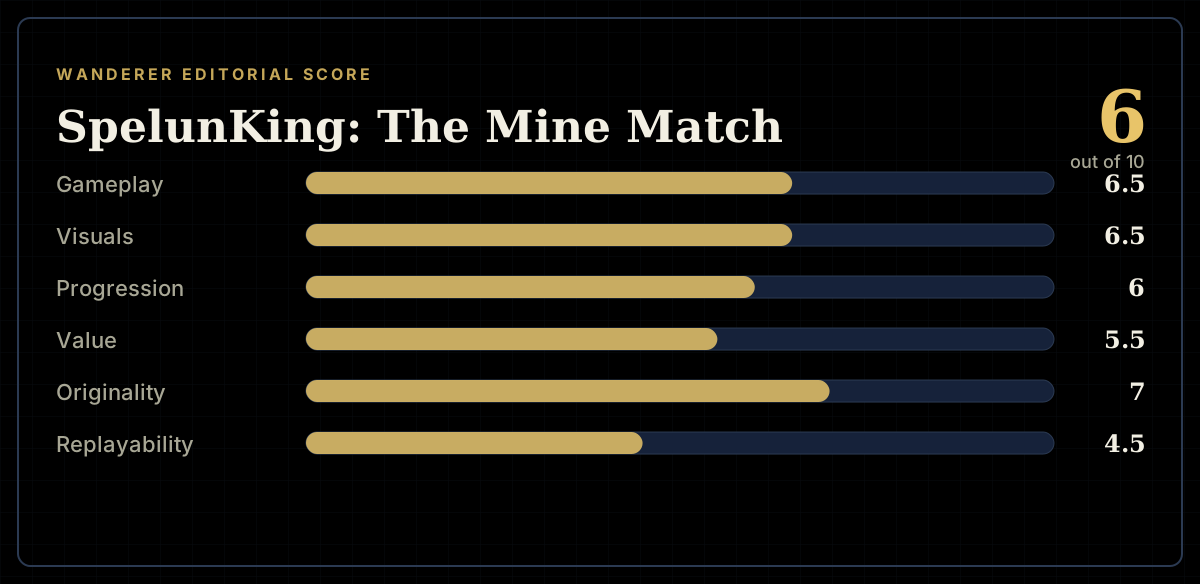
Wanderer's category scores for SpelunKing: The Mine Match. -
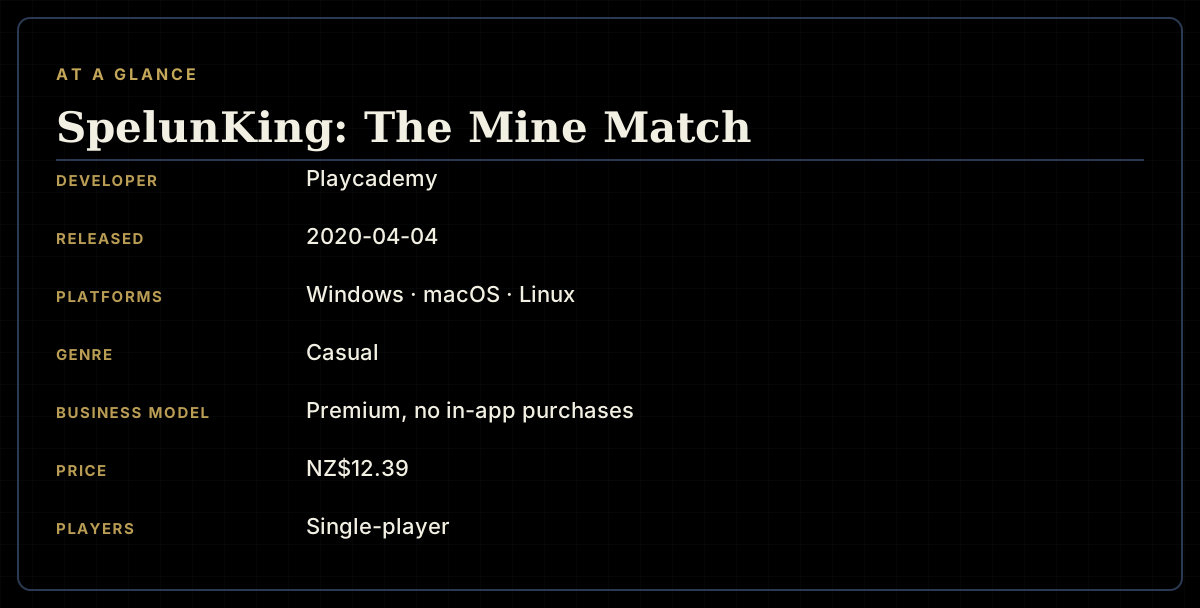
The essentials, at a glance. -
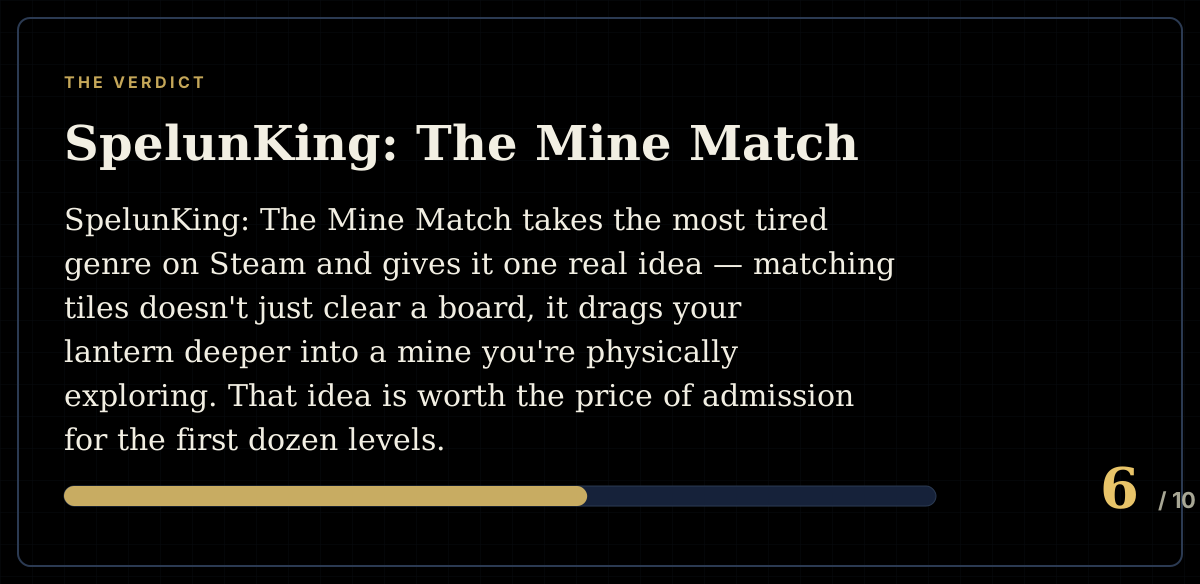
Wanderer's verdict on SpelunKing: The Mine Match.