Game review
Snake Pass
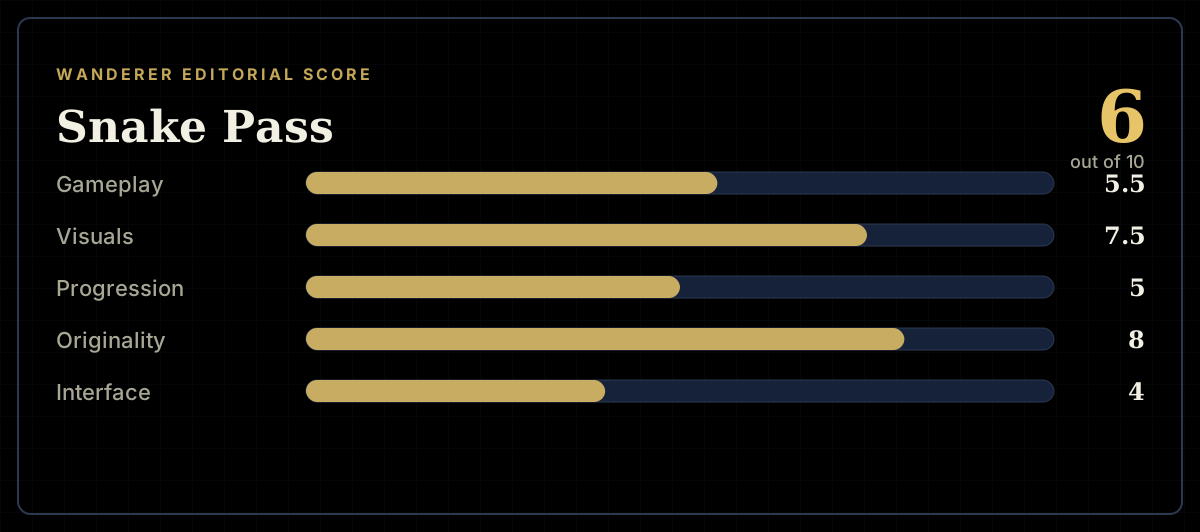
6 / 10
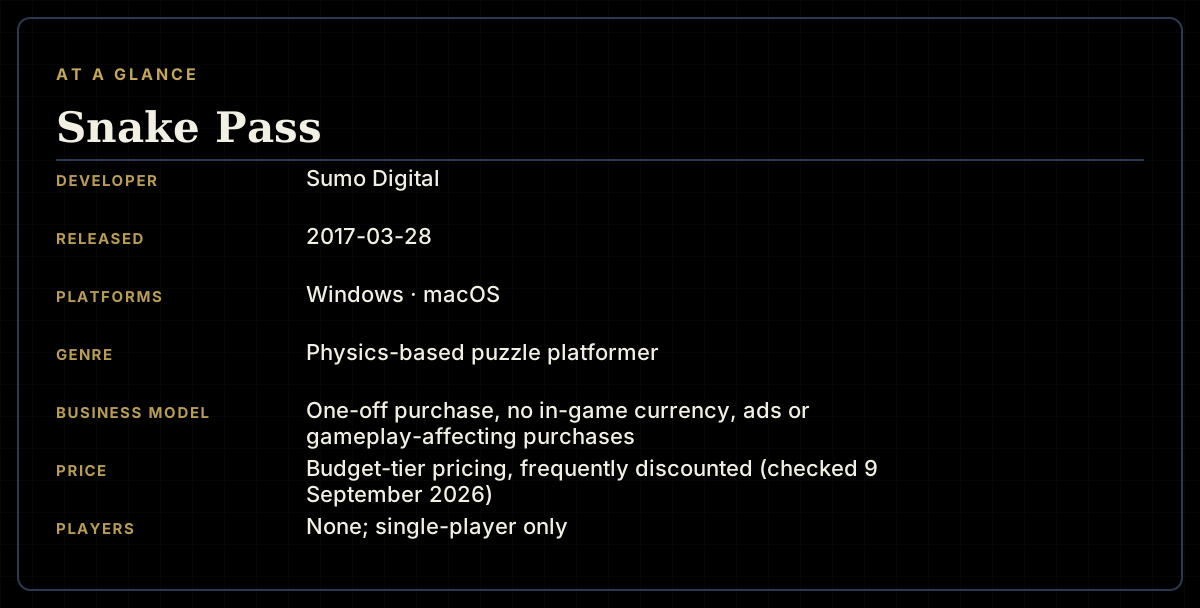
- Developer
- Sumo Digital
- Publisher
- Secret Mode
- Released
- 28 March 2017
- Platforms
- Windows, macOS
- Genre
- Physics-based puzzle platformer
- Monetisation
- One-off purchase, no in-game currency, ads or gameplay-affecting purchases
- Players
- None; single-player only
The short version
Snake Pass's core idea, born from an internal Sumo Digital game jam, is as distinctive as physics-platforming gets: no legs, no jump, just a slithering body that has to coil, climb, and balance its way through fifteen puzzle levels, scored by a genuinely lovely soundtrack from Donkey Kong Country composer David Wise. Reviewers across nearly a decade agree the concept is brilliant and unlike anything else in the genre. What an equally large and specific share of the same review sample agrees on is that the physics simulation meant to bring that concept to life never became precise enough to fully support it — the snake "slips" in ways multiple independent reviewers describe as unpredictable even from secure positions, keyboard controls in particular draw sustained frustration, and the game's difficulty curve steepens sharply enough, backed directly by achievement data, that a large share of buyers never see its harder levels through. A real, substantial Arcade Mode update arrived on the game's first anniversary, but it added a new way to play rather than resolving the core control complaints still being raised in reviews written years afterward.
Biggest strengths
- A genuinely one-of-a-kind physics-based movement system that reviewers across years consistently describe as unlike anything else they've played, before or since
- A charming, family-friendly tone and visual style with real broad appeal, including for younger or more casual players according to several reviewers
- An excellent, distinctive soundtrack from David Wise, composer of the Donkey Kong Country series, that draws specific praise even from critical reviews
Biggest weaknesses
- Multiple independent, detailed reviewers describe the core snake-movement physics as unpredictable, reporting the character "slips" and falls even from what feels like a secure position, undermining trust in the exact system the whole game is built around
- Keyboard and mouse controls draw specific, sustained criticism as significantly harder to execute than the same mechanics on a controller, with several reviewers actively warning keyboard players away from the game entirely
- Achievement data shows a steep difficulty cliff past the early levels, with most late-game achievements sitting under 5% of the playerbase, consistent with widespread reviewer reports of the difficulty curve spiking sharply
Who it's for: Players charmed by genuinely inventive physics puzzle concepts who are willing to practice an unusual control scheme, ideally with a controller in hand. Less suited to anyone wanting precise, predictable platforming, or players who get frustrated by trial-and-error physics puzzles with punishing checkpoint placement.
Our recommendation: Worth trying at its usual discount specifically for the originality of the idea — play it with a controller, expect a real adjustment period, and don't be surprised if the later levels ask more precision of the controls than they're consistently able to deliver.
6 / 10
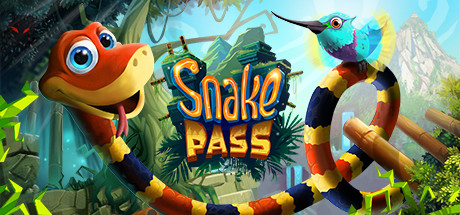
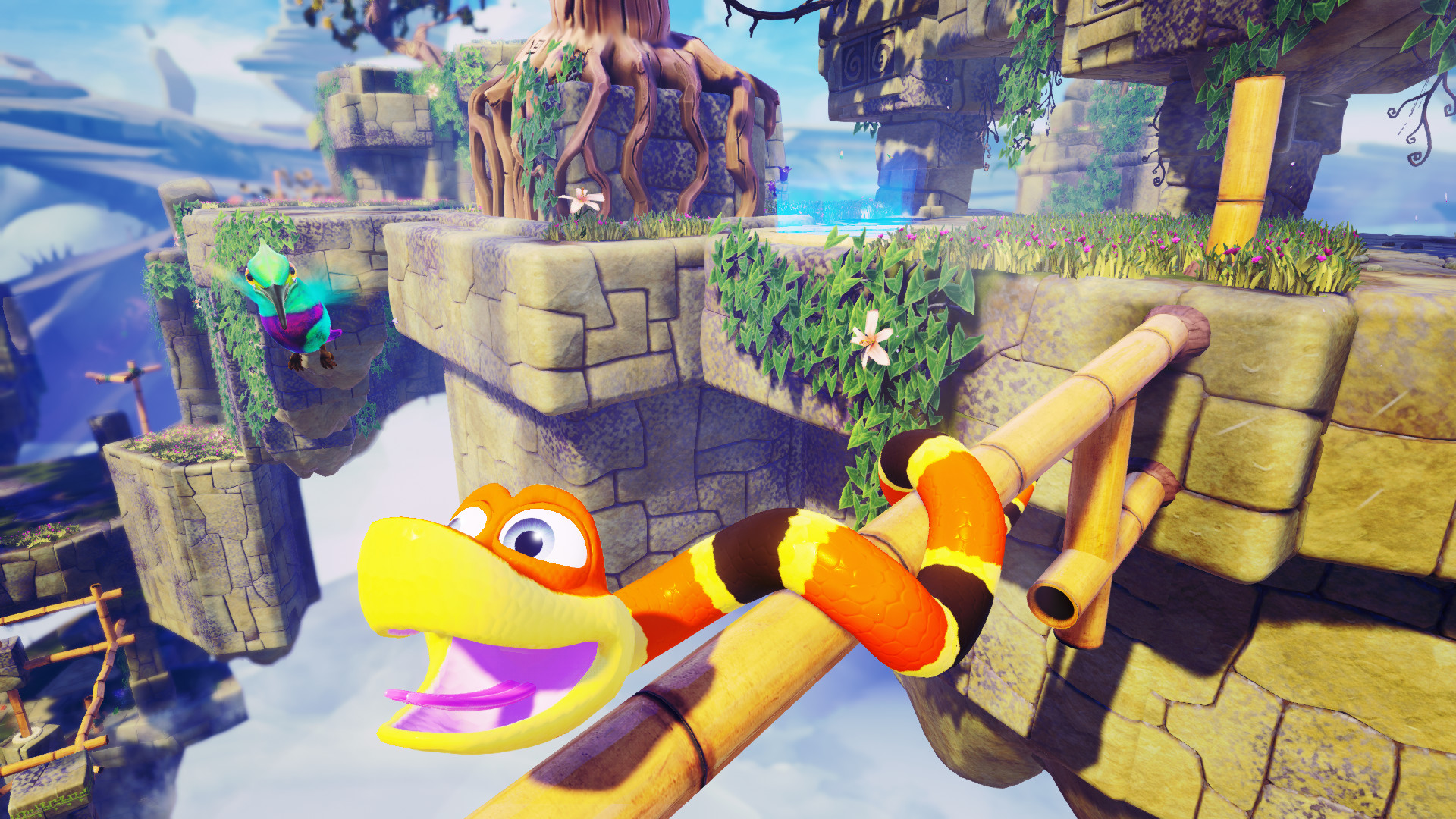
Snake Pass asks players to control Noodle, a snake with no legs and no jump button, as he coils around bamboo, slithers through long grass, and climbs precarious structures to restore the mythical power of Haven Tor. The idea began as the winning entry in Sumo Digital's internal game jam — a personal project from developer Seb Liese inspired by his childhood pet snake — before growing into a full commercial release in March 2017. Nearly a decade and 896 English reviews later (87% positive, Very Positive), the game's reputation has settled into something unusually consistent: near-universal agreement that the central idea is genuinely brilliant, paired with an equally consistent, specific chorus of complaints that the physics built to support it never quite got precise enough.
An idea reviewers still call unlike anything else
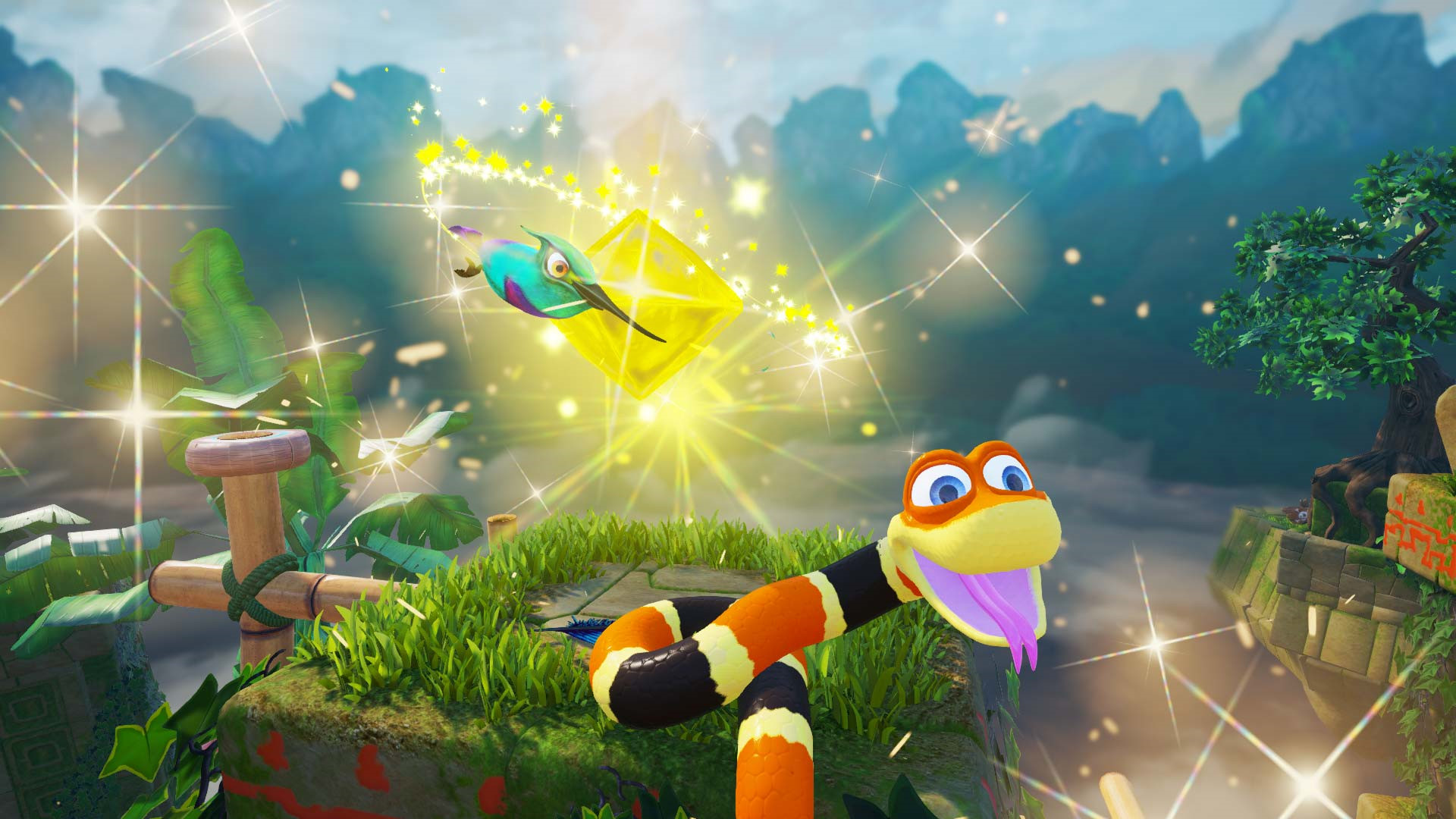
The praise for Snake Pass's core concept holds up remarkably well across nearly a decade of reviews. One detailed account calls the programming behind the snake "masterful — unlike anything I've seen before or since this game came out," adding that "whatever movements you imagine a sentient cartoon snake pulling off, you can do it here." Another reviewer, more measured but equally positive, calls it simply "the best snake simulator" they've encountered. The tone and presentation earn similarly broad praise: a family-friendly story, charming visuals, and a soundtrack composed by David Wise — best known for the Donkey Kong Country series — that multiple reviewers single out as a highlight independent of how they feel about the moment-to-moment gameplay.
A physics system that doesn't always keep its promises
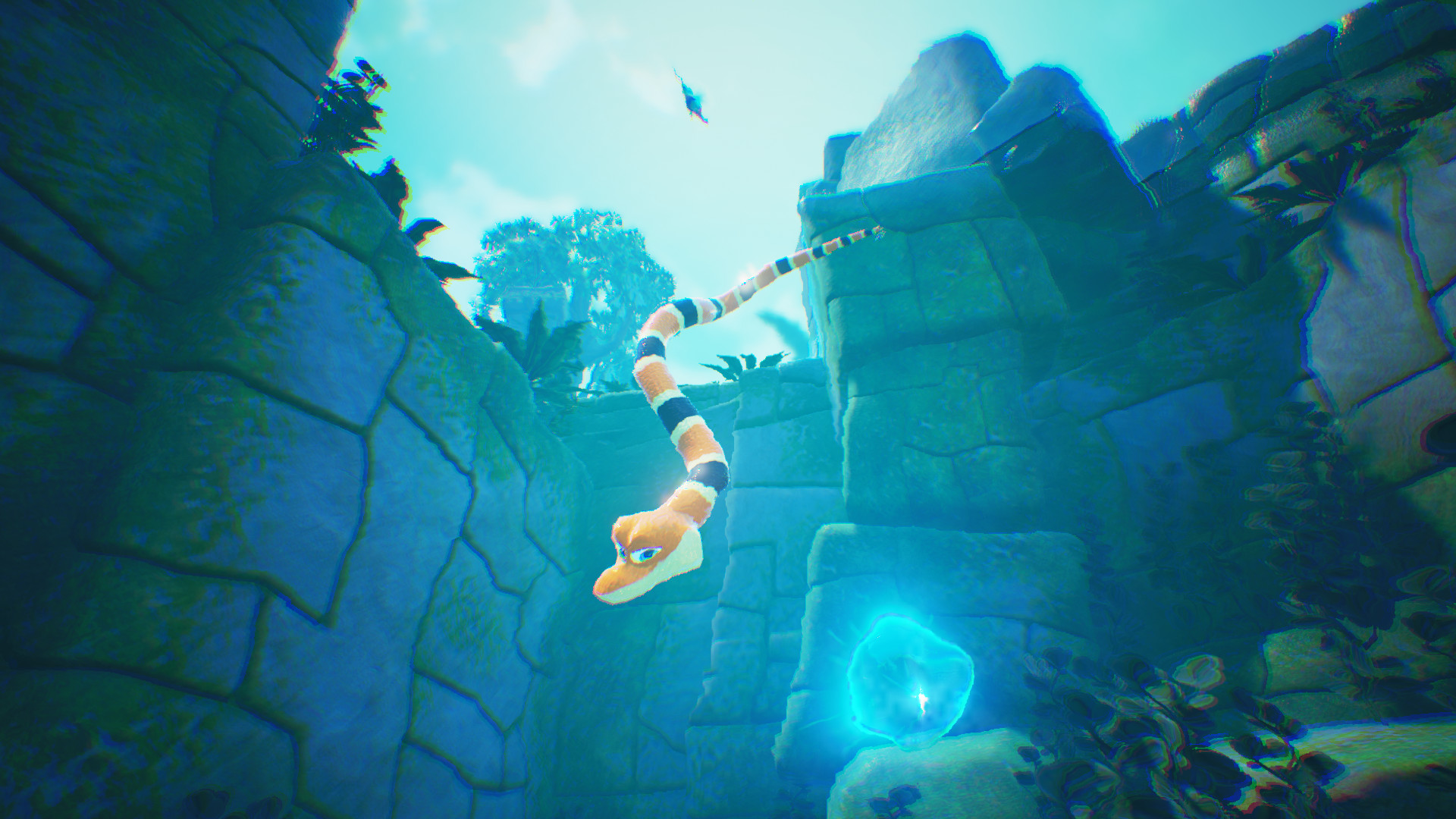
Set against that praise is an unusually specific, unusually consistent technical complaint. One detailed reviewer describes the exact frustration: "I would often know what I wanted to do, and be unable to execute it, because the snake slips. Which is odd. I'll be in a very secure position, but the snake's body is always subtly moving." A second reviewer frames the same issue from the control scheme's perspective: "Something conceptually simple like 'coil around that stick' is a nightmare to execute. You literally need to be doing 4 things with your hands at the same time." A third delivers the practical verdict bluntly: "Extremely hard on a mouse and keyboard, would definitely recommend using a controller if you have one, otherwise stay away from this game." That's three independent, specific, technically-detailed complaints converging on the same underlying issue — not a matter of taste about difficulty, but a repeated account that the physics simulation itself behaves less predictably than the puzzles built on top of it require.
What the achievement data confirms
Global achievement data backs up the difficulty complaints concretely. The first major progress milestone sits at a healthy 58% of the playerbase, but the curve steepens sharply after that — most achievements tied to later levels and harder challenges sit in the single digits, several under 3%. That's a much steeper decline than the smooth tapers seen elsewhere in this research window, consistent with reviewers' specific reports that the difficulty spikes noticeably in the back half of the game's fifteen levels, and that punishing checkpoint placement compounds the frustration once the physics stops cooperating.
Modest, real support that didn't target the core complaint
The game's own partner-events history shows two substantive content updates across its life: a mid-2017 patch and, exactly one year after launch, a free Arcade Mode update the developers introduced with evident pride, calling it a way to "bridge the generational divide" for players raised on retro platformers. That's genuine, continued investment rather than a launch-and-abandon release, and it deserves credit as such. What it didn't do, based on reviews written well after both updates shipped, is address the specific control-precision complaints already well established by that point — Arcade Mode added a new way to engage with the game rather than making the underlying snake physics more predictable, and the same category of complaint continued to appear in reviews for years afterward.
A game that lands differently depending on who's playing
One thread worth separating from the general difficulty conversation: several reviewers specifically frame Snake Pass as working well for a younger or more casual audience despite the control complaints raised elsewhere. One reviewer describes playing through it via Steam Family Sharing over roughly 24 hours and calls the controls "extremely funny and challenging" rather than frustrating, framing the same friction other reviewers describe as a negative as part of the charm for a slower, more exploratory playstyle. This isn't a contradiction so much as a genuine difference in what different players want from the same physics system — reviewers looking for tight, competitive platforming precision report real frustration, while reviewers approaching it as a relaxed, family-friendly exploration game describe the same slipping, imprecise movement as part of the fun rather than an obstacle to it. Knowing which kind of player you are going in is a reasonable predictor of which camp you'll land in.
Verdict
Snake Pass is a genuine rarity: a physics-puzzle concept nobody else has quite replicated, built with real craft and an excellent soundtrack, let down specifically and consistently by the exact system its whole identity depends on. Reviewers across nearly a decade agree on both halves of that assessment with unusual clarity. Play it with a controller, expect the later levels to test your patience as much as your understanding of the puzzles, and appreciate the idea for how singular it remains even years after other developers might have been expected to copy it.
Sources: Steam store page and appdetails API (release date, pricing, platform data); Steam's aggregate review data (query_summary totals, English-language sample); individually read user reviews, both positive and negative, sorted by helpfulness and recency; Steam's global achievement statistics API; Sumo Digital/Secret Mode's own partner-events history, from pre-launch dev diaries in 2017 through Steam Deck verification confirmed in 2024.
Pros and cons
Pros
- A genuinely one-of-a-kind physics-based movement system that reviewers across years consistently describe as unlike anything else they've played, before or since
- A charming, family-friendly tone and visual style with real broad appeal, including for younger or more casual players according to several reviewers
- An excellent, distinctive soundtrack from David Wise, composer of the Donkey Kong Country series, that draws specific praise even from critical reviews
- A substantial, free Arcade Mode update released exactly one year after launch shows genuine, if infrequent, continued investment in the game
- Achievement data confirms real engagement with the early-to-mid game, with over half the playerbase clearing the first meaningful progress gate
Cons
- Multiple independent, detailed reviewers describe the core snake-movement physics as unpredictable, reporting the character "slips" and falls even from what feels like a secure position, undermining trust in the exact system the whole game is built around
- Keyboard and mouse controls draw specific, sustained criticism as significantly harder to execute than the same mechanics on a controller, with several reviewers actively warning keyboard players away from the game entirely
- Achievement data shows a steep difficulty cliff past the early levels, with most late-game achievements sitting under 5% of the playerbase, consistent with widespread reviewer reports of the difficulty curve spiking sharply
- Controller button remapping is not supported even though keyboard remapping is, a specific and avoidable gap for players whose preferred layout differs from the default
- Only two substantive content updates were ever released across the game's post-launch life, and neither specifically targeted the core control-precision complaints still being raised in reviews written years after both had shipped
Screenshots
-
Snake PassImage: Secret Mode via Steam -
Snake PassImage: Secret Mode via Steam -
Snake PassImage: Secret Mode via Steam -
How the review scores each part of the gameWanderer Editorial -
The specsWanderer Editorial -
The short versionWanderer Editorial