
Game review
Slime Must Grow
4.5 / 10
- Developer
- Red Ball Markets Global
- Publisher
- Red Ball Markets Global
- Released
- 27 March 2026
- Platforms
- Windows
- Genre
- Casual, Indie, Simulation, Strategy
- Monetisation
- One-time purchase, no in-game purchases listed
- Players
- Single-player
The short version
Slime Must Grow, released 27 March 2026 by Red Ball Markets Global, is a short, relaxing incremental game about absorbing enemies, unlocking upgrades and gradually consuming the entire screen as a growing slime. It sits Mixed with a small sample of 30 reviews, split almost evenly between recommend and not-recommend, and reading through the full range shows two distinct clusters of complaint sitting alongside genuine, if modest, charm. Multiple reviewers describe the core loop as relaxing and well-paced enough to lose track of time in, praising the music and overall polish added since an earlier public demo. Set against this, a significant number of reviewers report specific technical problems, including a severe memory leak consuming up to 15GB of RAM shortly after launch, stuttering severe enough to crash a PC, and an idle mode that stops granting experience if the player tabs out of the game window. Separately, several reviewers describe core upgrade mechanics as unclear or unexplained, with visuals some reviewers compare unfavourably to early-access placeholder art, and at least one detailed reviewer speculates the game's visuals and balancing show signs of AI involvement, a claim this review has not verified.
Biggest strengths
- Multiple reviewers describe the core absorb-and-grow loop as genuinely relaxing and well-paced, with more than one reporting losing track of time during a session despite the game's short overall length
- The soundtrack draws specific, repeated praise, with reviewers describing it as a highlight that complements the low-pressure, meditative pace of the gameplay
- Multiple reviewers who followed the game from an earlier public demo report real, visible improvement by the time of full release, crediting the developer with adding new music, art and gameplay refinements based on community feedback
Biggest weaknesses
- Multiple reviewers report a severe memory leak, with one detailed account describing RAM usage climbing to roughly 15GB shortly after opening the game, a serious technical problem for a small-scope incremental title
- Separate reviewers report stuttering severe enough to crash their PC entirely, and specifically note the game's idle mode — a core feature for the genre — stops granting experience if the player tabs out of the game window, undermining the "leave it running in the background" functionality idle games are typically built around
- Several reviewers describe core upgrade mechanics as unclear or entirely unexplained, reporting that some upgrades appear to have little discernible impact and that the interface, including sliders and bars, is confusingly similar in appearance across functions that behave differently
Who it's for: Fans of very short, low-pressure incremental games looking for a relaxing hour or two, who are prepared to tolerate real technical rough edges including a reported memory leak.
Our recommendation: Wait for further patches before buying, given the specific, reproducible technical complaints in this sample; if you do buy, monitor memory usage during play and be aware idle mode reportedly stops working correctly when the game window isn't focused.
4.5 / 10
Introduction
Slime Must Grow, released 27 March 2026 by Red Ball Markets Global, is a short, relaxing incremental game: absorb enemies, unlock upgrades, and gradually grow a slime large enough to consume the entire screen. It's the kind of pitch that lives or dies on execution rather than ambition, and this review's research found a genuinely split verdict on exactly that question. It sits Mixed with a small sample of 30 reviews, split almost evenly between recommend and not-recommend, and reading through the full range reveals genuine, if modest, charm sitting alongside two distinct clusters of specific, reproducible complaints.
A relaxing core loop, genuinely enjoyed by some
The praise in this sample is real, if measured. Multiple reviewers describe the core absorb-and-grow loop as relaxing and well-paced, with more than one reporting losing track of time during a session despite the game's overall short length. The soundtrack draws specific, repeated appreciation as a genuine highlight complementing the low-pressure pace. Several reviewers who followed the game through an earlier public demo report real, visible improvement by full release, crediting the developer with adding new music, art and gameplay refinements in response to community feedback — and at least one reviewer specifically reports switching their own review from negative to positive after the developer lowered the price and added further content post-launch.
A severe memory leak and a broken idle mode
Set against that modest charm, this review found specific, reproducible technical complaints from a significant share of this sample. Multiple reviewers report a severe memory leak, with one detailed account describing RAM usage climbing to roughly 15GB shortly after opening the game — a serious technical failure for a game of this modest scope. Separately, reviewers report stuttering severe enough to crash their entire PC, and specifically note that idle mode, a core feature this genre is typically built around, stops granting experience if the player tabs out of the game window, directly undermining the "leave it running in the background" functionality the genre depends on.
Unclear upgrades and rough presentation
Beyond the technical bugs, several reviewers describe core upgrade mechanics as unclear or entirely unexplained, with some upgrades reported to have little discernible practical impact and an interface reviewers describe as confusingly similar in appearance across functions that behave differently from one another. Visuals draw their own specific criticism, with more than one reviewer comparing the overall presentation unfavourably to placeholder art typically associated with early-access or demo builds rather than a finished, released product.
An unverified AI-involvement suspicion
At least one detailed reviewer goes further, speculating that the game's visuals and numerical balancing show signs of AI involvement, specifically citing a difficulty curve they describe as reasonable for the first thirty minutes before deteriorating sharply, which they attribute to a lack of proper human playtesting. This review has not investigated the game's development process and reports this only as one reviewer's stated, unconfirmed suspicion rather than an established fact.
A resource sink that some reviewers say doesn't pay off
A more specific, mechanically-minded complaint concerns one particular system: essence farming. One detailed reviewer reports investing significantly more time and resources into this mechanic than they ever recouped over the course of a full playthrough, describing it as a largely pointless resource sink that exists without a clear payoff proportional to the effort it demands. That same reviewer acknowledges the system does technically allow players to extend their session length if they choose to engage with it, but frames this as a hollow form of added playtime rather than genuinely additional content — padding the clock without padding the experience. This is a useful, specific complaint distinct from the broader "too short" observations elsewhere in this sample, since it points to a system that actively works against the game's own stated relaxing, low-effort pitch by demanding disproportionate grinding for underwhelming returns.
Variety among the game's creatures, for those who look
It's worth balancing the technical and mechanical complaints above with one more specific point of genuine praise this review found in its research. Multiple reviewers highlight real variety among the different slime types and enemies the player encounters and eventually absorbs, with one detailed reviewer specifically enjoying the challenge of tracking down rarer "ring slimes" for their associated rewards. This suggests the underlying content, when it does work as intended, has more specific texture and incentive to explore than the broader "shallow and unclear" complaints might suggest on their own — the problem for a meaningful share of this sample isn't a total absence of interesting content, but inconsistent delivery of it alongside real, concrete technical failures.
Final Verdict
Taken together, this review reads Slime Must Grow as a small, promising concept still catching up to its own ambitions — a developer visibly iterating in the right direction, but not yet fast enough to outpace the specific bugs and unclear systems documented above.
Slime Must Grow offers a genuinely relaxing, if modest, core loop that some reviewers clearly enjoy, backed by a soundtrack drawing specific praise and real, visible improvement since its public demo. What holds this score down is a cluster of specific, reproducible technical problems — a severe memory leak, crash-inducing stuttering, and an idle mode that stops working correctly when the game window loses focus — compounded by unclear upgrade mechanics and rough, placeholder-like presentation. Worth revisiting once the memory leak and idle-mode bugs are confirmed fixed; in its current state, this review cannot recommend it without those specific reservations front and centre.
Pros and cons
Pros
- Multiple reviewers describe the core absorb-and-grow loop as genuinely relaxing and well-paced, with more than one reporting losing track of time during a session despite the game's short overall length
- The soundtrack draws specific, repeated praise, with reviewers describing it as a highlight that complements the low-pressure, meditative pace of the gameplay
- Multiple reviewers who followed the game from an earlier public demo report real, visible improvement by the time of full release, crediting the developer with adding new music, art and gameplay refinements based on community feedback
- At least one reviewer specifically reports switching their review from negative to positive after the developer lowered the price and added more content post-launch, describing this as a responsive, good-faith update
Cons
- Multiple reviewers report a severe memory leak, with one detailed account describing RAM usage climbing to roughly 15GB shortly after opening the game, a serious technical problem for a small-scope incremental title
- Separate reviewers report stuttering severe enough to crash their PC entirely, and specifically note the game's idle mode — a core feature for the genre — stops granting experience if the player tabs out of the game window, undermining the "leave it running in the background" functionality idle games are typically built around
- Several reviewers describe core upgrade mechanics as unclear or entirely unexplained, reporting that some upgrades appear to have little discernible impact and that the interface, including sliders and bars, is confusingly similar in appearance across functions that behave differently
- Multiple reviewers describe the visuals as rough, comparing them unfavourably to placeholder art typically seen in early-access or demo builds rather than a finished commercial release
- At least one detailed reviewer specifically speculates the game's visuals and numerical balancing show signs of AI involvement, citing a balance curve that reportedly works reasonably for the first thirty minutes before deteriorating sharply; this review has not independently verified this claim and reports it only as one reviewer's stated, unconfirmed suspicion
Screenshots
-

Slime Must GrowImage: Red Ball Markets Global via Steam -

Slime Must GrowImage: Red Ball Markets Global via Steam -
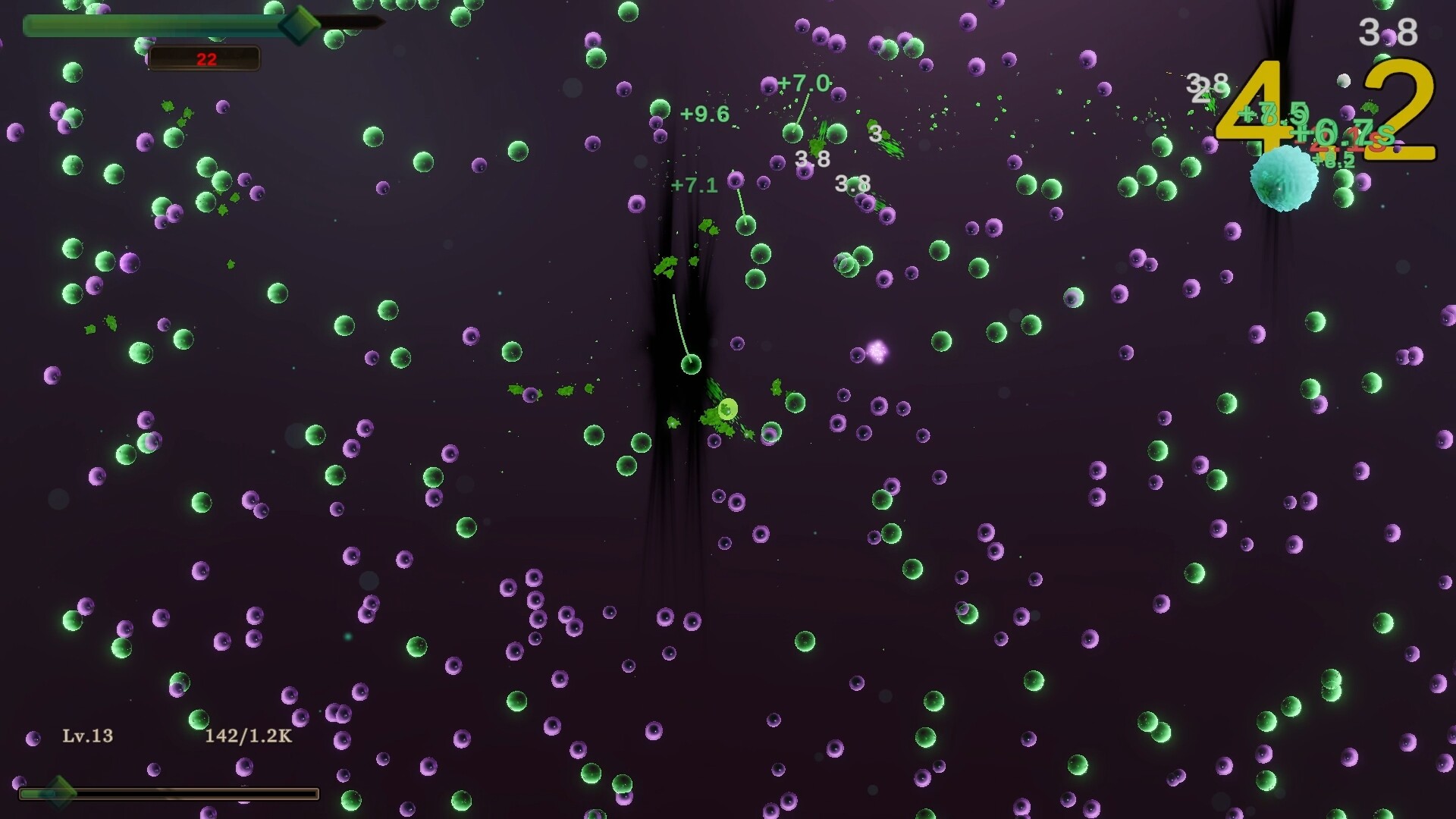
Slime Must GrowImage: Red Ball Markets Global via Steam -
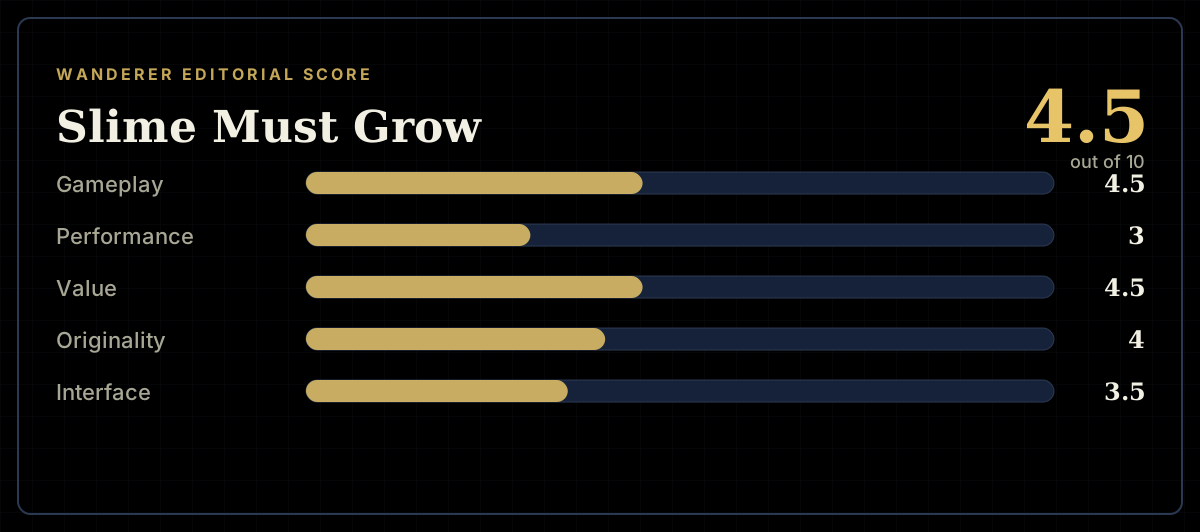
How the review scores each part of the gameWanderer Editorial -

The essentials at a glanceWanderer Editorial -
The short versionWanderer Editorial