
Game review
Silicon Path Review
7 / 10
- Developer
- Neblue
- Publisher
- Neblue
- Released
- 28 August 2026
- Platforms
- ["Windows"]
- Genre
- Action
A Round, Cartoonish Art Style Hiding a Brutal Precision Platformer
Silicon Path's premise is a strange and specific one: you play an unrecorded silicon atom sent into the body of a carbon-based lifeform, jumping and dashing through a living landscape of heartbeats, immune cells, and neural signals. It's a setting few platformers have touched, and reviewers repeatedly note how well the game hides its real difficulty behind that concept's cute, rounded visual presentation. One reviewer puts it directly: "SiliconPath hides its brutal difficulty behind that cute cartoon art style. Don't let the visuals fool you. It's a fast-paced 2D side-scrolling parkour game that punishes even the smallest mistake." Another reviewer, writing in Chinese, describes the effect the art style has on new players: its "round, healing, cartoon style looks like a relaxed casual game, but it's actually hardcore stealth-and-platforming," noting the friendly presentation "easily lowers your guard" before the difficulty curve tightens.
The core toolkit is deliberately minimal — jump and dash carry the entire game, with full eight-directional dashing (including diagonals) giving players real freedom to shape their movement through each stage. A Korean-language reviewer singles out the dash's flexibility as a standout, and compares the wall-jump behavior favorably to genre norms, noting that instead of being flung hard in the opposite direction like many platformers, Silicon Path launches the player nearly straight up off a wall, which several reviewers found made control noticeably easier to manage under pressure.
Tuned Movement Feel, Praised Difficulty Curve, and a Genuine Fourth-Wall Twist
Where Silicon Path earns its strongest praise is in the feel of its core movement systems. One detailed Chinese-language review breaks this down carefully, praising the weight and hang-time of jumps as "very comfortable," the input responsiveness as tight, and the coyote-time window (the brief grace period after leaving a platform edge where a jump still registers) as generously sized rather than punishingly strict — all details that add up, in that reviewer's words, to a jump feel that lets "quite a few operational mistakes be forgiven" without making the game feel easy. The same reviewer praises fast, low-friction respawns after death, with quick returns to checkpoints and rapid hazard resets that keep the trial-and-error loop from ever feeling like a chore.
Several reviewers also highlight a smooth, well-paced difficulty curve that ramps gradually rather than spiking suddenly, letting players absorb new mechanics stage by stage. A specific highlight mentioned by multiple reviewers is a second-level gimmick built around a pulsing in-body heartbeat that requires the player to read and time their movement against — one review calls this "a very original idea," while another names it as one of the game's most memorable design beats. Underneath all of this, several reviewers describe a genuine emotional payoff: a late-game, fourth-wall-breaking narrative turn that caught them off guard. "I could tell the game was building toward breaking the fourth wall, but when that moment actually came, it still gave me goosebumps," one English-language reviewer writes, calling the overall idea and execution "great."
Real Friction Points: Localization, Camera, and Missing Quality-of-Life Options
Not every account is glowing. The lone negative review in the pool, written in Japanese, describes real frustration with the game's difficulty balance and its execution of the precision-platformer genre specifically: the reviewer notes the core moveset (double jump, air dash, and an air-dash recovery mechanic reminiscent of Celeste) is present and functional, but feels the stage design leans too heavily toward raw difficulty at the expense of a sense of accomplishment, and reports finding the Japanese localization patchy enough in places to make NPC dialogue genuinely hard to follow. That reviewer also flags smaller interface friction: the d-pad has no assigned function on gamepad, and jump is bound to a button placement they found unintuitive by default (though remappable).
A separate, more positive Chinese-language review raises its own specific quality-of-life complaints worth flagging for prospective buyers: performing a dash-jump along flat ground can cause the double jump to disappear entirely, which becomes a real problem during the game's climactic chase sequence; a brief period of forced float after respawning prevents an immediate second jump, subtly hurting the moment-to-moment feel; and the silicon protagonist's fall speed can outrun the camera in places, making fast-falling sections hard to react to. The same review notes there's no stage-select option once the game is completed, and requests a quicker manual restart key for players who fall and want to reset immediately rather than walk back. None of these are described as game-breaking, but they're specific, credible friction points raised independently by more than one player.
A Short, Replayable Run for Genre Fans Willing to Die Often
Length estimates vary by skill level but cluster in a similar range: one English-language reviewer reports finishing in around 60 minutes with roughly 200 deaths along the way, describing the difficulty as "fairly balanced" for platforming veterans, while a Chinese-language reviewer reports a first clear closer to four hours. Either way, this is a short, focused platformer built to be replayed and mastered rather than a lengthy campaign, and multiple reviewers explicitly frame the appeal around that "one more try" pull after every death rather than around content volume. The English-language store description undersells just how much precision the game demands; reviewers across every language in the pool agree this is a hard game first and a narrative curiosity second, even as most of them end up recommending it.
At $7.99, reviewers broadly treat the asking price as fair for a tightly scoped, single-idea platformer, particularly given the free demo that let many buyers sample the difficulty and control feel before committing. With only 16 total reviews at the time of writing and just three in English, this is a genuinely under-the-radar release — worth flagging clearly for anyone weighing a purchase, even though the substance of the reviews across languages paints a fairly consistent picture.
Verdict
Silicon Path pairs an unusually specific setting — navigating the internals of a living body as an unrecorded silicon atom — with a tight, minimal jump-and-dash toolkit and a difficulty curve that reviewers across several languages describe as smooth, demanding, and ultimately rewarding, culminating in a fourth-wall narrative beat that lands well for players who make it that far. Its cute, rounded art style is doing real work to mask just how unforgiving the platforming underneath actually is, and that contrast is clearly part of the appeal for the players who've found it. Real friction points exist — a double-jump bug tied to ground dashing, a camera that can lag behind fast falls, missing quality-of-life options like stage select, and at least one account of a rough Japanese localization — but none of them derail the consistently positive reception. This is a small, focused precision platformer worth a look for genre fans with patience for repeated failure, best sampled via its free demo before committing.
Pros:
- A distinctive, rarely-explored setting inside a living body, paired with tight, minimal jump-and-dash controls
- Widely praised movement feel, including generous coyote time and fast, low-friction respawns
- A smooth, well-paced difficulty curve building toward a genuinely surprising fourth-wall narrative moment
- Full eight-directional dashing and a forgiving wall-jump that several reviewers single out as well designed
- Fairly priced at $7.99, with a free demo available to sample the difficulty first
Cons:
- A specific bug where ground dash-jumping can strip the double jump, notably affecting the late-game chase sequence
- Camera can struggle to keep pace with the protagonist's fall speed in fast-falling sections
- No stage-select option after completing the game, and no quick-restart key for immediate retries
- At least one account describes patchy Japanese localization that muddies NPC dialogue
- A very small review pool, just 16 total reviews and only 3 in English, at the time of writing
Screenshots
-

The game opens on an in-fiction terminal boot sequence, setting up its silicon-atom-inside-a-body premiseImage: Neblue via Steam -
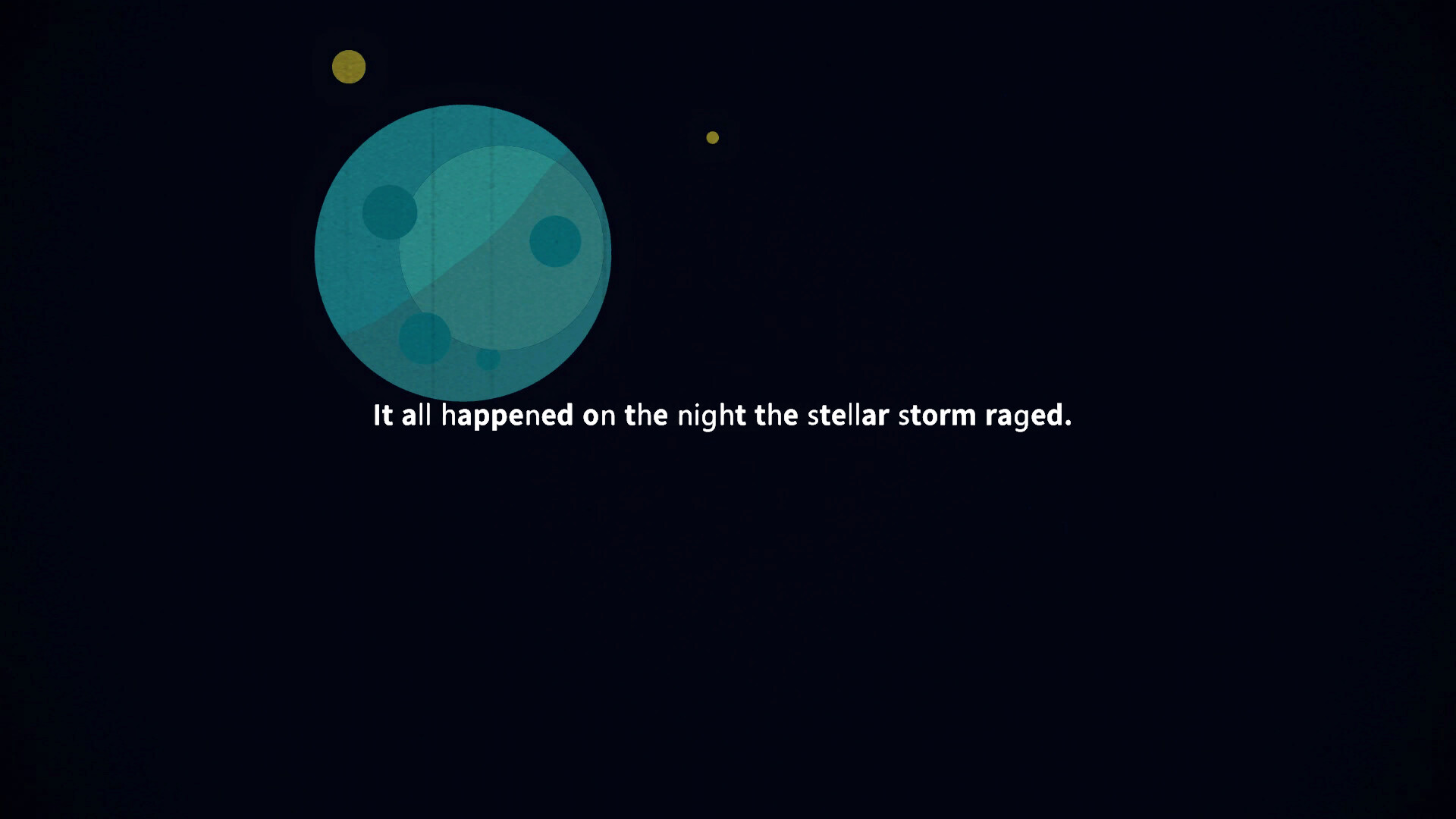
Narrative beats are delivered through simple, illustrated story screens between stagesImage: Neblue via Steam -
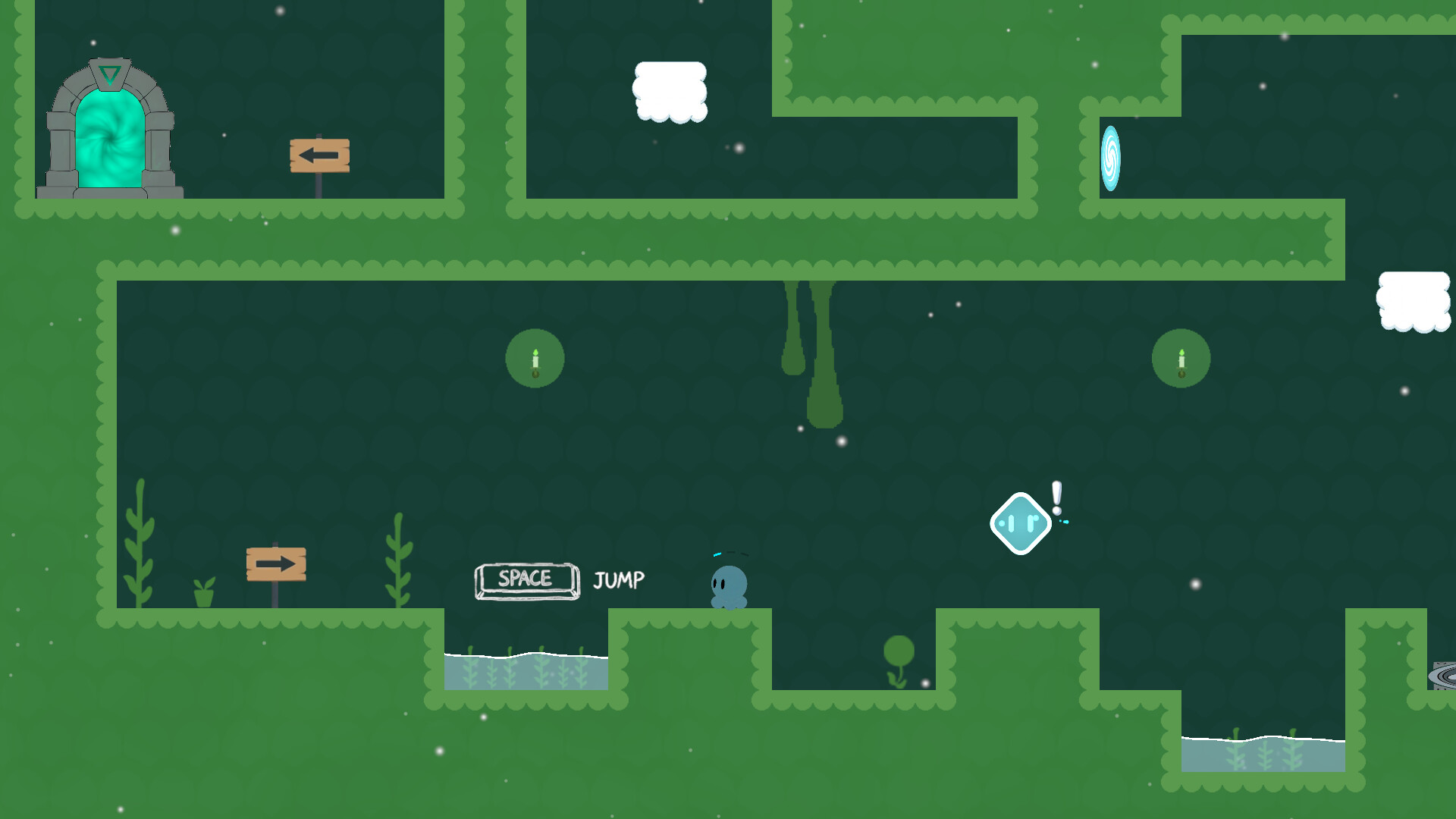
The core platforming loop unfolds across cute, rounded stage art that masks a demanding difficulty curveImage: Neblue via Steam -
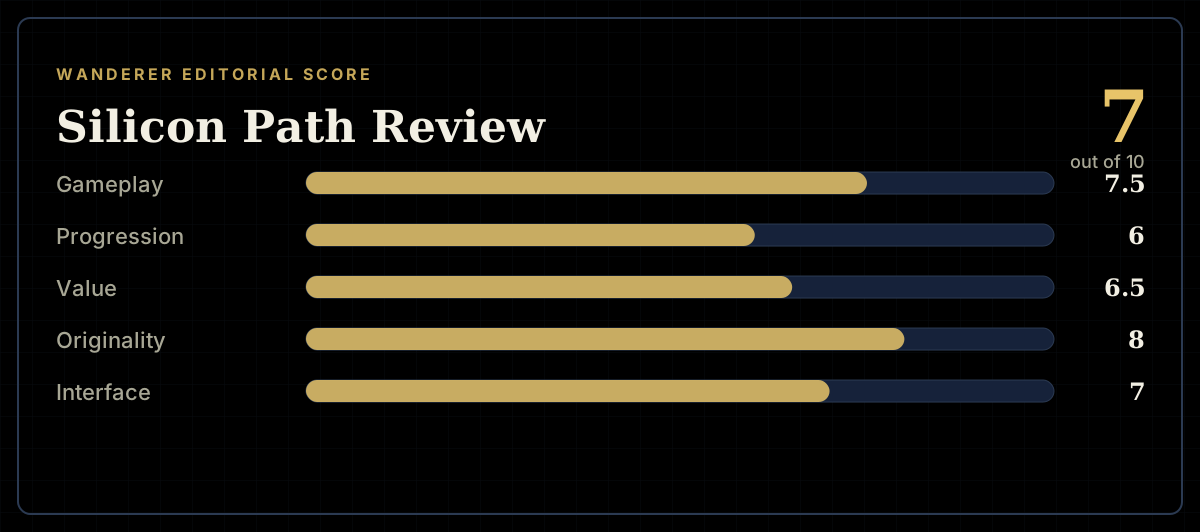
How the review scores each part of the gameWanderer Editorial -
The short versionWanderer Editorial