Game review
Rollin' Ravioli Review
6.7 / 10
- Developer
- Spark Labs Gaming
- Publisher
- Spark Labs Gaming
- Released
- 21 August 2026
- Platforms
- ["Windows"]
- Genre
- Action
A Can With a Grudge Against Physics
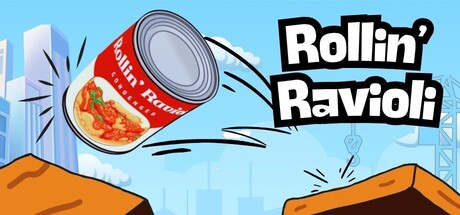
Rollin' Ravioli is a physics-based rage-platformer from two-person studio Spark Labs Gaming, built entirely around a single joke taken completely seriously: you are a heavy metal can of ravioli, freshly rolled off a factory line, trying to reach a dining table across several hostile, kitchen-scaled environments. The pitch is a direct, openly acknowledged nod to an "iconic early 2000s ravioli commercial," and the game leans into that nostalgia rather than hiding it — the can doesn't jump so much as it lurches, requiring players to build momentum and charge a launch before physics decides, usually unkindly, what happens next. It's a small, cheap, tightly scoped release at $4.99, following a public demo period that ran from March through August 2026 with the developers visibly iterating on feedback (difficulty modes, an unstuck mechanic, mechanics reworks) well before the full 1.0 launch, which is a notably more transparent lead-up than most games this size get.
An Overwhelmingly Positive Reception From a Small, Genuine Audience
Rollin' Ravioli launched to 45 reviews and a 98% positive score, and the review pool is unusually clean for this discovery pipeline: 40 of those 45 reviews are in English, giving this review a solid, representative base rather than a thin sliver. Reading through it, one detail is worth flagging directly — the very first review in the pool is written by one of the developers themselves, thanking players for their support, which this review notes for transparency rather than treating as a red flag; the remaining reviews read as genuine player reactions, many describing discovering the game through TikTok clips referencing the original commercial. The tone across the pool is consistently warm and a little self-deprecating about the genre: reviewers repeatedly describe getting angry at the can's physics and enjoying every second of it, with several specifically praising how approachable the difficulty curve feels for players who don't normally seek out "foddian" rage games.
Momentum, Charge Jumps, and a Difficulty Mode That Actually Works
The core loop reviewers describe is straightforward on paper and difficult in practice: build momentum by rolling, charge a jump at the right moment, and try to survive the landing without tumbling back down a level you'd already cleared. Multiple reviewers single out the game's checkpoint spacing and an optional difficulty toggle as the reason the format doesn't tip into pure frustration — one reviewer, self-described as not usually a fan of "foddian games or rage platformers," calls Rollin' Ravioli "really fair" specifically because checkpoints are generous and can be adjusted, distinguishing it from genre entries that lean on cheap, unrecoverable falls for difficulty. Free cosmetic unlocks for the can are mentioned repeatedly as a likeable, low-stakes incentive to keep pushing forward — purely decorative, as the store page itself jokes ("they won't help, but you'll suffer in style"), but reviewers clearly enjoy collecting them anyway. Completion times cited in reviews cluster around ninety minutes to two hours for a first full run, with a leaderboard and speedrun-adjacent design giving it some replay value beyond that single sitting, at a price several reviewers explicitly call fair relative to pricier games in the same rage-platformer space. A handful of reviewers also single out the soundtrack unprompted, comparing its tone to Octodad's mix of slapstick and sincerity, and several mention spotting small visual references and puns scattered through the levels that reward players who slow down between falls rather than rushing straight for the next checkpoint.
Player-developer interaction comes up more often in this pool than in most reviews this review encounters: several buyers describe the developers personally showing up in Twitch chat during their playthroughs, fixing a stuck-camera or clipping bug live within minutes of it being reported, and one reviewer mentions being sold on a second Spark Labs Gaming title, Squawky, purely off the back of that responsiveness. It's a small detail, but it recurs often enough across independent reviewers to read as a genuine pattern rather than a one-off anecdote, and it likely explains some of the goodwill baked into the review score beyond the moment-to-moment platforming itself.
A Genre Pick With Real Rough Edges: GPU Load and Controller Precision
The review pool isn't entirely without complaints, even with only a single explicitly negative review in the full sample. That one negative review, written in Russian, describes performance as "absolutely disgusting," reporting the game pushing a GPU to 100% load even on minimum settings without holding a stable 30 frames per second, alongside blurry anti-aliasing — and this lines up with at least one English-language review joking that the game "will run your GPU to the ground," warning virtual streamers using 2D avatars to be careful about the load. Separately, more than one reviewer flags that precision platforming input feels noticeably worse on a controller than on keyboard, with one recommending newcomers stick to keyboard controls if they want the tightest handling during the game's more demanding momentum-based jumps. Neither issue looks severe enough to have meaningfully dented the overall reception, but both are worth knowing about before buying: this is a small-team release, and its performance profile and control feel aren't as universally polished as its review score alone would suggest.
Verdict
Rollin' Ravioli takes a single, well-worn commercial-nostalgia joke and builds a genuinely well-received, tightly scoped rage-platformer around it, backed by a developer that visibly iterated through a long public demo period and stayed responsive to feedback — including live bug fixes during player livestreams, according to several reviewers — right through to launch. Its ninety-minute-to-two-hour runtime, forgiving and adjustable checkpoint system, and purely cosmetic unlocks make it an easy, low-stakes pickup for players who enjoy physics-based frustration without punishing unfairness, and the 98% positive score from a genuinely sized English-majority review pool backs that reception up. Just go in aware of two smaller catches flagged by actual buyers: it can be surprisingly demanding on a GPU even at minimum settings, and its precision platforming reportedly feels better on keyboard than controller. At $4.99, it's a confident, well-received novelty rather than a landmark platformer, and it delivers exactly what its ravioli-can premise promises.
Screenshots
-
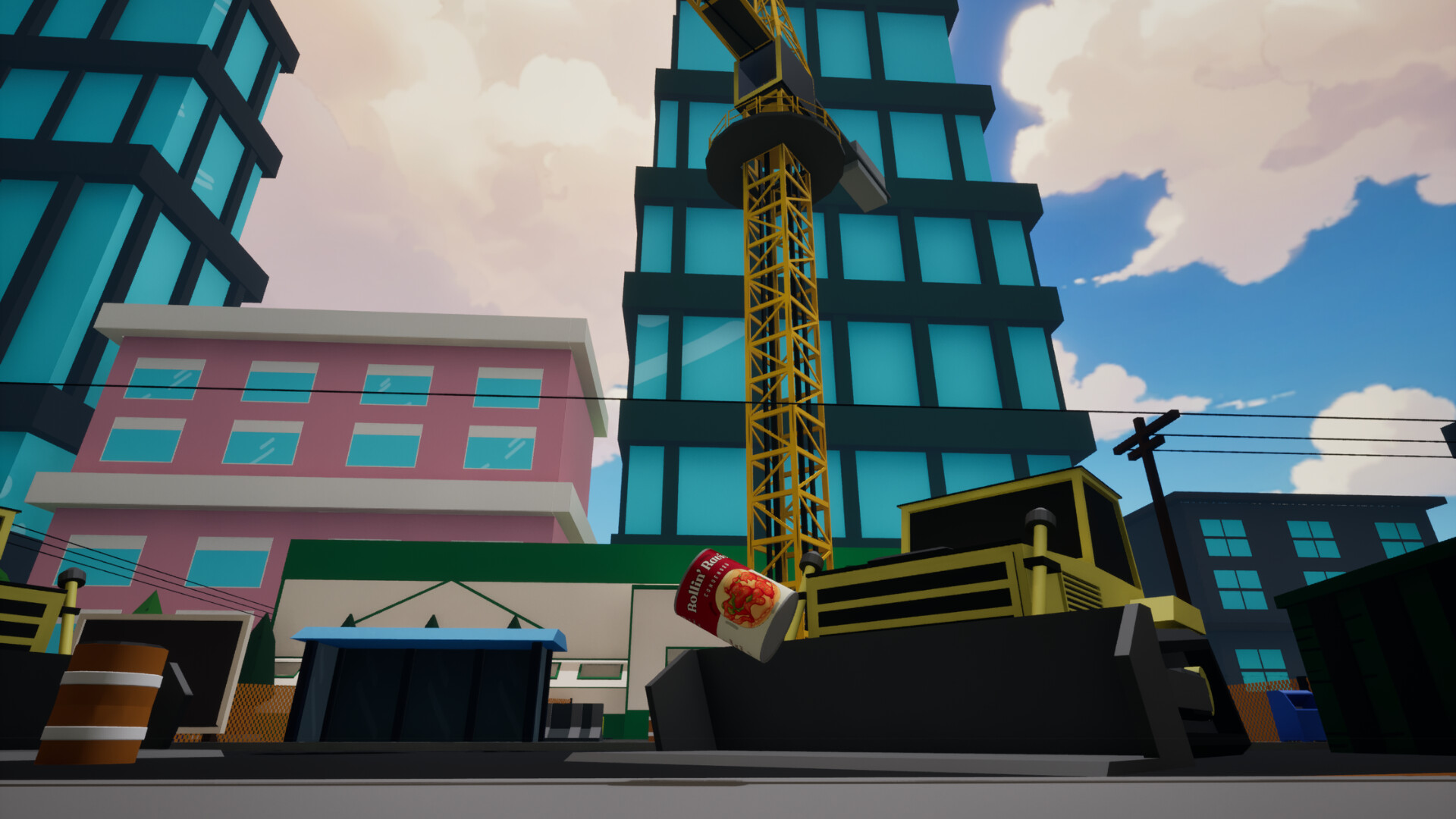
Mid-fall between skyscrapers, one of many unforgiving drops on the way to the dining tableImage: Spark Labs Gaming via Steam -
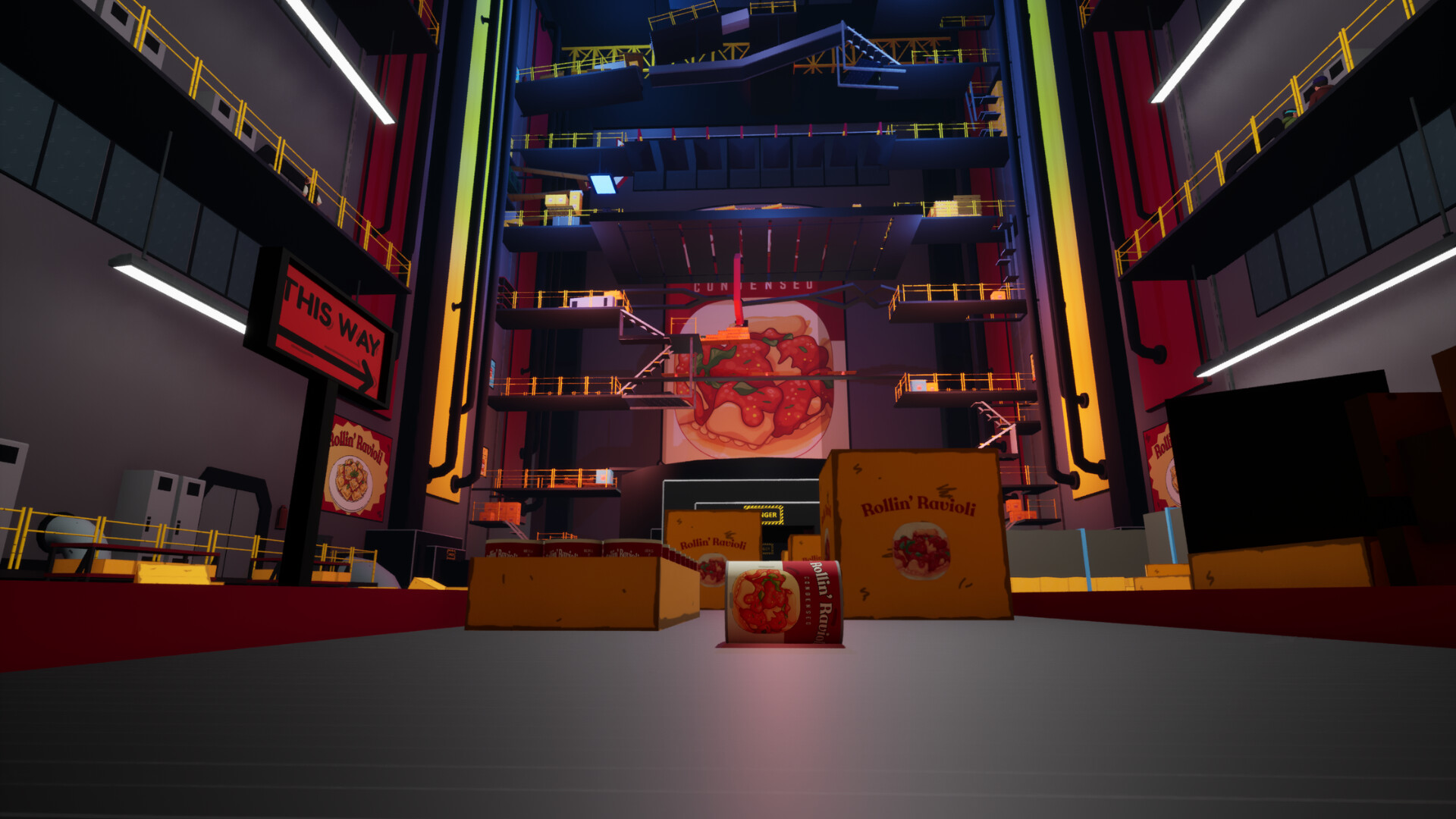
Starting the journey inside the factory, surrounded by stacked crates bearing the game's own ravioli brandingImage: Spark Labs Gaming via Steam -
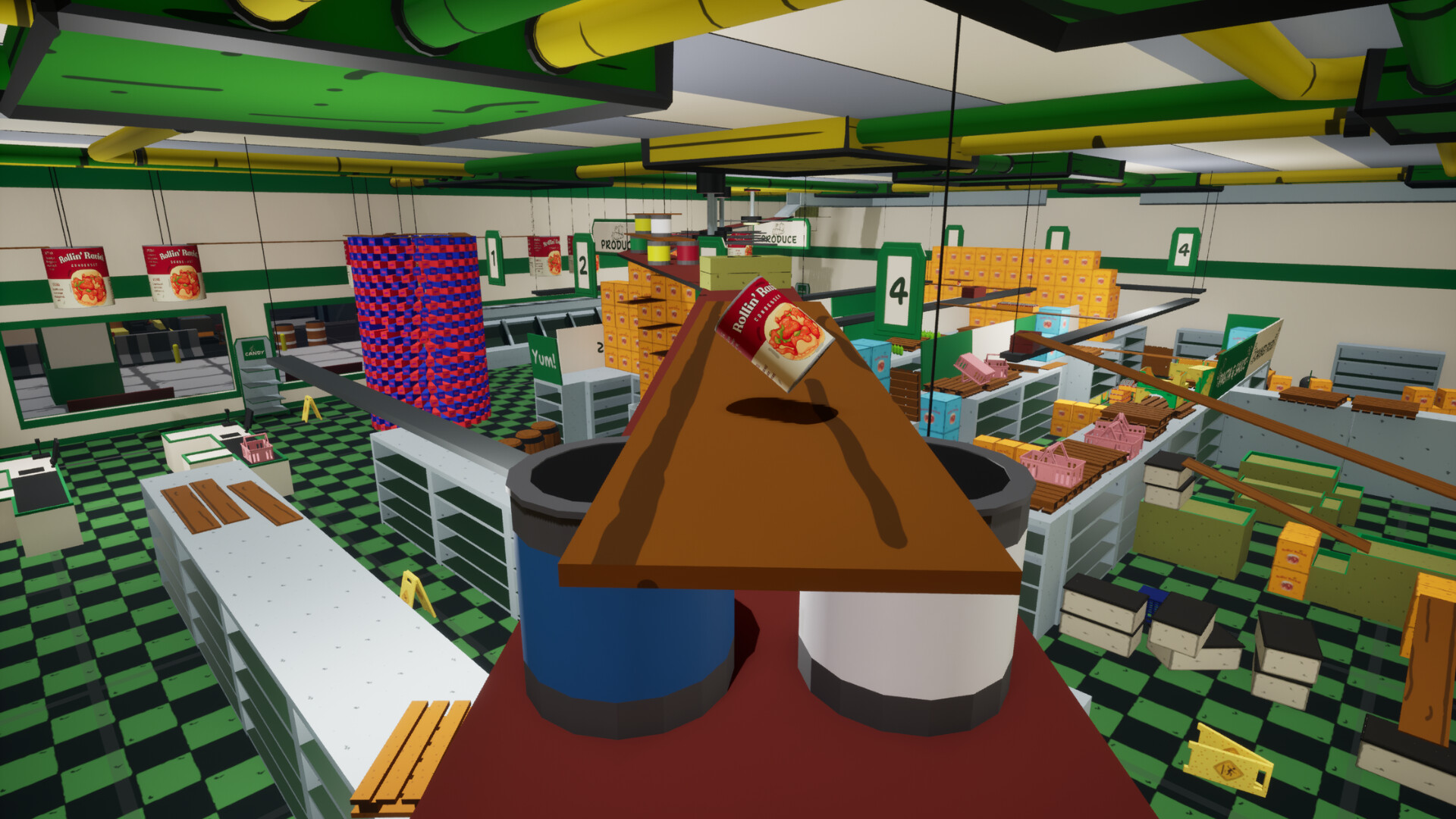
Balancing on a makeshift ramp inside a supermarket level, with a fall into the bins below just one bad roll awayImage: Spark Labs Gaming via Steam