
Game review
Pole Vault Review: A Stretchy Newt's Climb Divides Its Own Fans
6.4 / 10
- Developer
- Mike Jensen, Brian May, Tyler Walters
- Publisher
- Mike Jensen, Brian May, Tyler Walters
- Released
- 7 February 2025
- Platforms
- ["PC"]
- Genre
- Adventure / Sports
- Monetisation
- Paid
- Players
- false
The short version
Pole Vault is a budget-priced 'foddian' climbing game that reworks the genre's usual grappling-hook or pickaxe mechanic into a pole-vaulting newt, and reviewers split fairly cleanly between those who master the unusual mouse-driven pole physics and find real satisfaction in the climb, and those who find the same physics too inconsistent to ever feel fair.
Biggest strengths
- Multiple reviewers describe a genuinely satisfying skill curve, with one specifically noting how frustrating early sections later became easy once the pole's mechanics finally clicked
- The vibrant visual style and stretchy newt character design draw consistent, specific praise, with reviewers calling the environment 'stunning' and the art style a highlight
- The tower's circular level design means falling doesn't erase large amounts of progress, which one detailed review specifically credits as a thoughtful, player-friendly structural choice
Biggest weaknesses
- Two critical reviews specifically describe the pole's physics as inconsistent or unpredictable, with one calling it unusable and unable to understand its own movement logic
- Multiple reviewers separately criticize the repetitive background music, especially during long stretches spent near the bottom of the tower after falling
- One reviewer reports the game cannot currently be paused, causing lost progress on more than one occasion when they had to step away mid-climb
Who it's for: Fans of difficult, single-mechanic climbing games like Getting Over It who enjoy a steep, physics-based learning curve, rather than players wanting an intuitive or forgiving control scheme.
Our recommendation: Worth its low price for patient players willing to fight through an awkward first hour, but a real risk for anyone who bounces off unpredictable physics quickly.
6.4 / 10
Pole Vault is a budget-priced 'foddian' climbing game, the genre popularized by Getting Over It, that swaps the usual pickaxe or grappling hook for a stretchy newt wielding a mouse-controlled vaulting pole. It sits at 84% positive across a small pool of 13 Steam reviews, and a sample of 10 English-language reviews spanning its February 2025 launch through early 2026 shows a genuine, fairly even split between players who master the pole and players who never quite trust it.
A Skill Curve That Rewards Patience
Several reviewers describe a real sense of mastery once the pole mechanic finally clicks. One detailed review lays out the system precisely: players move with WASD while controlling the pole's angle with the mouse, with pole angle determining jump direction and momentum determining height and distance, allowing skilled players to "chain a lot of jumps together" once they understand it. A shorter review echoes the same arc in miniature, admitting the game is "a bit frustrating at first, but something about it is so addictive that I just wanted to keep going," eventually becoming "decently good" at it. Another reviewer who beat the game after 5.4 hours describes struggling at first, then "later find[ing] yourself breezing through the same parts with ease, which is very satisfying."
When the Pole Doesn't Cooperate
Set against that praise, two of the sample's negative reviews focus on the exact same system for the opposite reason. One writes plainly that "the pole is weird. It has its own movement logic which I cannot understand," concluding that "slapping a difficult tag with something that doesn't make sense isn't good gameplay logic." A second negative review is even more direct: "the pole would not work in any consistent way and was just unusable," arguing that with the pole as the only way to get around, inconsistent physics undermine everything else the game does well, regardless of how the visuals look. A third reviewer, who ultimately recommends the game, still voices a version of the same complaint, noting players "might just Pogo jump around" rather than genuinely pole vault, and that "the devs really need to balance the difficulty" around platform spacing.
Visuals and Sound Draw a Mixed but Specific Response
The art style earns consistent, specific praise across nearly the entire sample. One reviewer calls the environment "stunning," noting the game "runs flawlessly" alongside it, while another highlights "vibrant neon colors" as a highlight despite otherwise mixed feelings about the level design. The soundtrack fares worse: multiple separate reviewers flag the music as "repetitive" and something that "gets annoying really quick," particularly during long stretches spent recovering near the bottom of the tower after a fall, a specific, repeated complaint that suggests it's a genuine rough edge rather than one reviewer's taste.
Level Design: Functional but Basic
Reviewers who engage with the level design in detail describe it as serviceable rather than inspired. One review's most detailed account describes the platforms as "either square, circle, or triangle" without "intuitive teaching methods through the design," though the same reviewer credits the tower's circular, repeating structure for limiting how much progress a fall actually costs. Another reviewer separately calls the map's overall design "pretty basic," a assessment that lines up with the more detailed critique despite coming from an otherwise positive review.
A Missing Pause Button
A smaller but concrete complaint from one reviewer is the apparent lack of a pause function, which they say has cost them progress "multiple times" when they needed to step away mid-climb. For a genre built around fall recovery and incremental progress, an inability to safely pause is a specific, fixable quality-of-life gap rather than a matter of taste, and it's worth flagging for anyone planning a longer session.
A Small Team's Debut, Judged Accordingly by Some
Several reviewers frame their recommendation around the game's status as a small indie project rather than a polished commercial release. One writes they're "giving a positive review because this game is very unique and beautiful, small indie team deserves the support," despite going on to list several specific frustrations with the core mechanic in the same review. That tension, rating generously on goodwill while still cataloguing real complaints, runs through a few reviews in the sample and is worth reading past the star rating to understand.
Price and Value in a Crowded Genre
At NZ$5.99, Pole Vault sits well below most of its foddian peers, and several reviewers specifically call out the price as a reason to give it a try despite its rough edges. One reviewer who beat the game after 5.4 hours describes it as "pretty affordable" in the same breath as flagging the missing pause function and repetitive music, and another simply writes "its good for what it is," a phrase that sums up much of the sample's tone. For a genre where the genuine test of a purchase is whether the core mechanic holds a player's attention for more than an hour, a low buy-in price meaningfully lowers the risk of trying it, even for players who ultimately bounce off the pole physics.
Final Verdict
Pole Vault takes a real risk by building its entire identity around one unusual mechanic, and the reviews bear out both sides of that bet: players who click with the pole's physics describe a genuinely satisfying, if difficult, climb, wrapped in a distinctive art style, while players who never quite trust the controls find the whole experience frustrating rather than difficult in a fair sense. At its low price, it's a reasonable gamble for foddian fans looking for something visually distinct, but anyone who bounces off unpredictable physics quickly should treat the negative reviews here as a genuine warning rather than an outlier opinion.
Pros and cons
Pros
- Multiple reviewers describe a genuinely satisfying skill curve, with one specifically noting how frustrating early sections later became easy once the pole's mechanics finally clicked
- The vibrant visual style and stretchy newt character design draw consistent, specific praise, with reviewers calling the environment 'stunning' and the art style a highlight
- The tower's circular level design means falling doesn't erase large amounts of progress, which one detailed review specifically credits as a thoughtful, player-friendly structural choice
Cons
- Two critical reviews specifically describe the pole's physics as inconsistent or unpredictable, with one calling it unusable and unable to understand its own movement logic
- Multiple reviewers separately criticize the repetitive background music, especially during long stretches spent near the bottom of the tower after falling
- One reviewer reports the game cannot currently be paused, causing lost progress on more than one occasion when they had to step away mid-climb
Screenshots
-
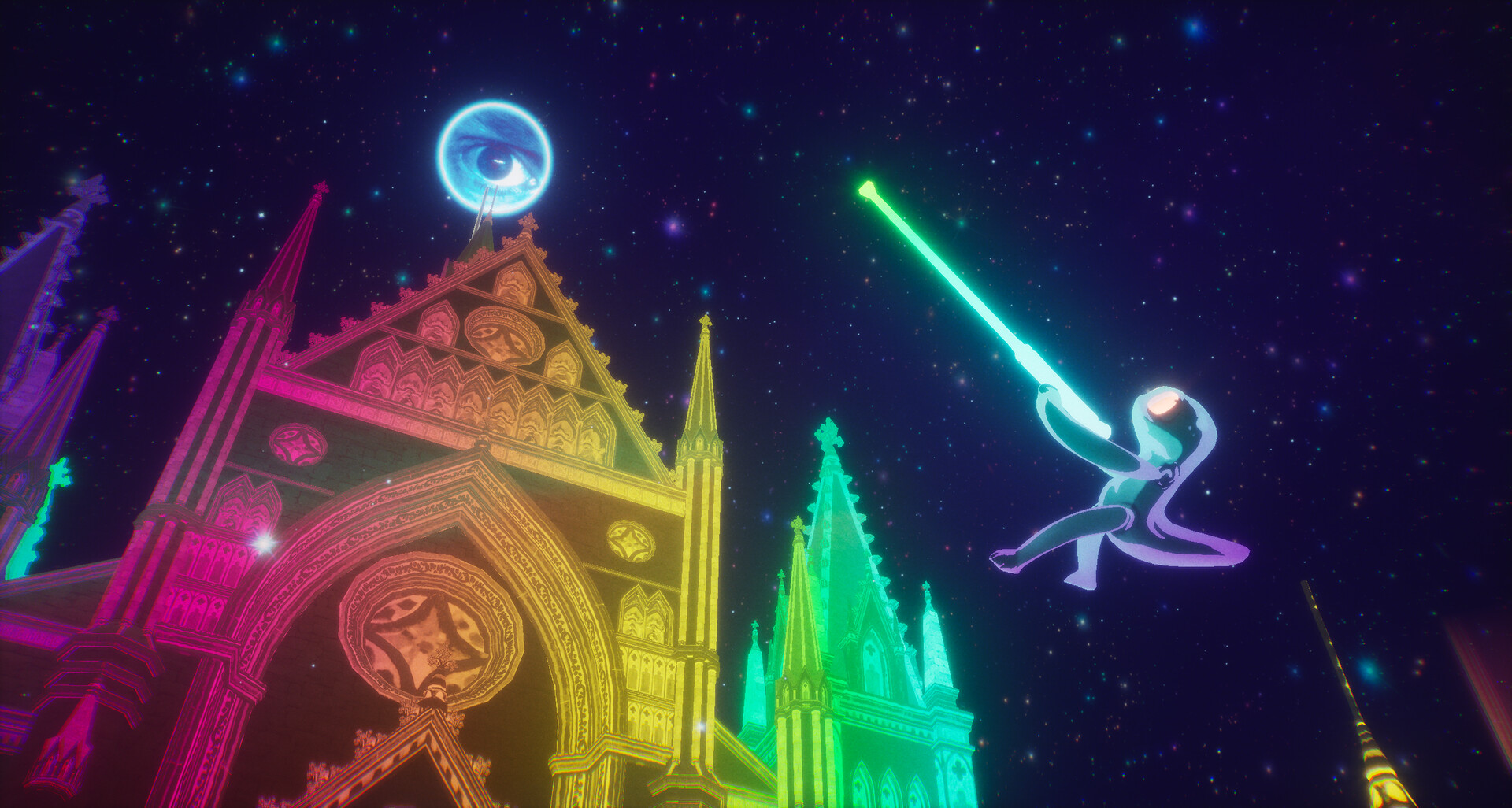
Momentum from the pole vault sends the newt arcing past the tower's neon spiresMay B Entertainment -
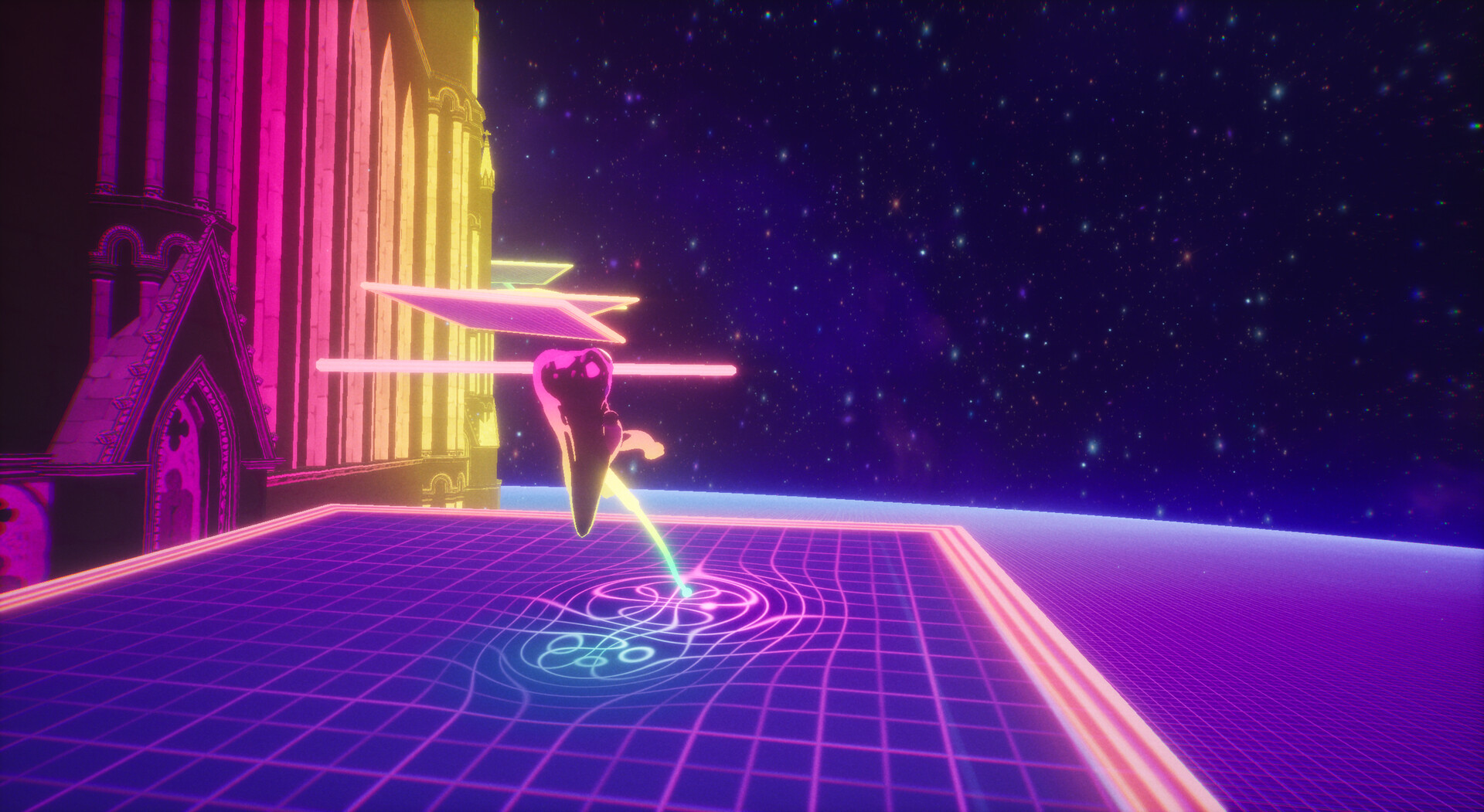
Falling doesn't erase much progress thanks to the tower's repeating circular platformsMay B Entertainment -

Platform shapes stay simple, favouring the pole mechanic over intricate level designMay B Entertainment -
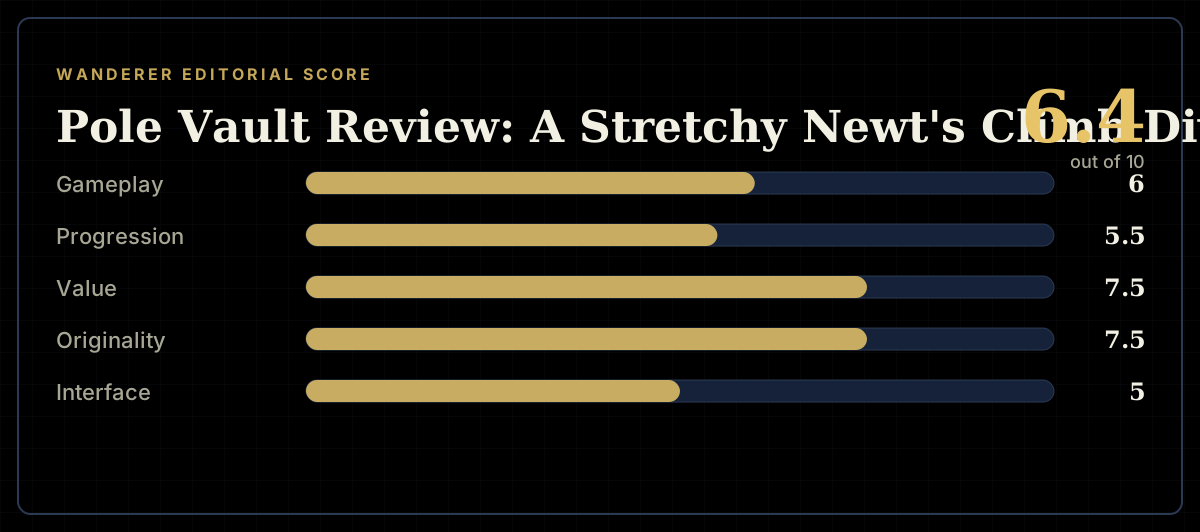
How the review scores each part of the gameWanderer Editorial -
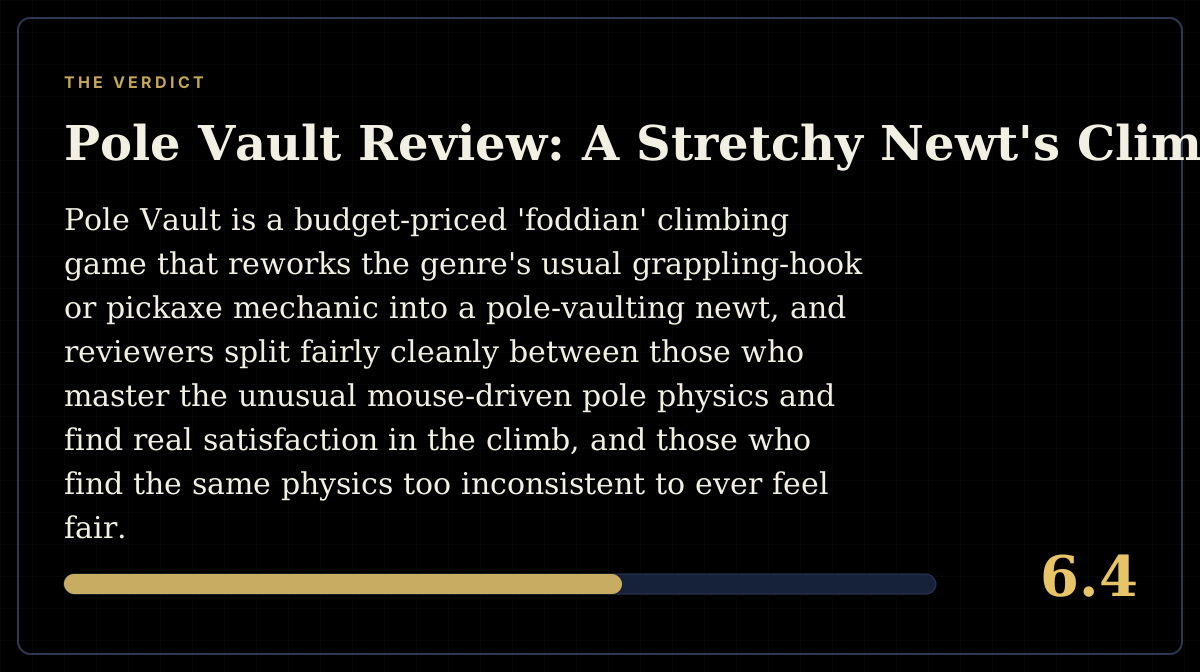
The short versionWanderer Editorial