Game review
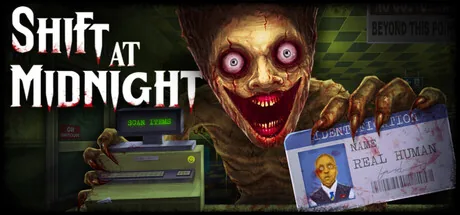
Shift At Midnight
8.5 / 10
- Developer
- Bun Muen
- Publisher
- Kwalee
- Released
- 22 July 2026
- Platforms
- Windows, Xbox Series X|S
- Genre
- Co-op Horror
- Monetisation
- Premium, one-off purchase; Endless Mode (Beta) planned as a free update Q4 2026
- Players
- Up to 3-player online co-op with proximity chat, plus a single-player mode
The short version
Shift At Midnight takes the "spot the impostor" premise that's powered a dozen party games and gives it real physical stakes: get the call wrong on a customer and you're either executing someone innocent or barricading a door against something that isn't. Stocking shelves and checking IDs has never carried this much weight.
A solo developer built something that plays like a studio picked the exact right two genres to weld together, and the 13 randomly generated shifts genuinely don't repeat their tricks.
Biggest strengths
- The doppelganger-detection mechanic — IDs, cross-checked records, behavioural tells — makes every customer interaction a real decision with consequences either way
- Getting a call wrong doesn't end the shift; it escalates into barricading, trap-setting and evasion, so mistakes become their own mini-crisis rather than a fail state
- Thirteen randomly generated shifts avoid repeating the same specific tricks twice
Biggest weaknesses
- Solo play exists but is clearly the secondary mode — most of the design's tension depends on having people to second-guess and coordinate with
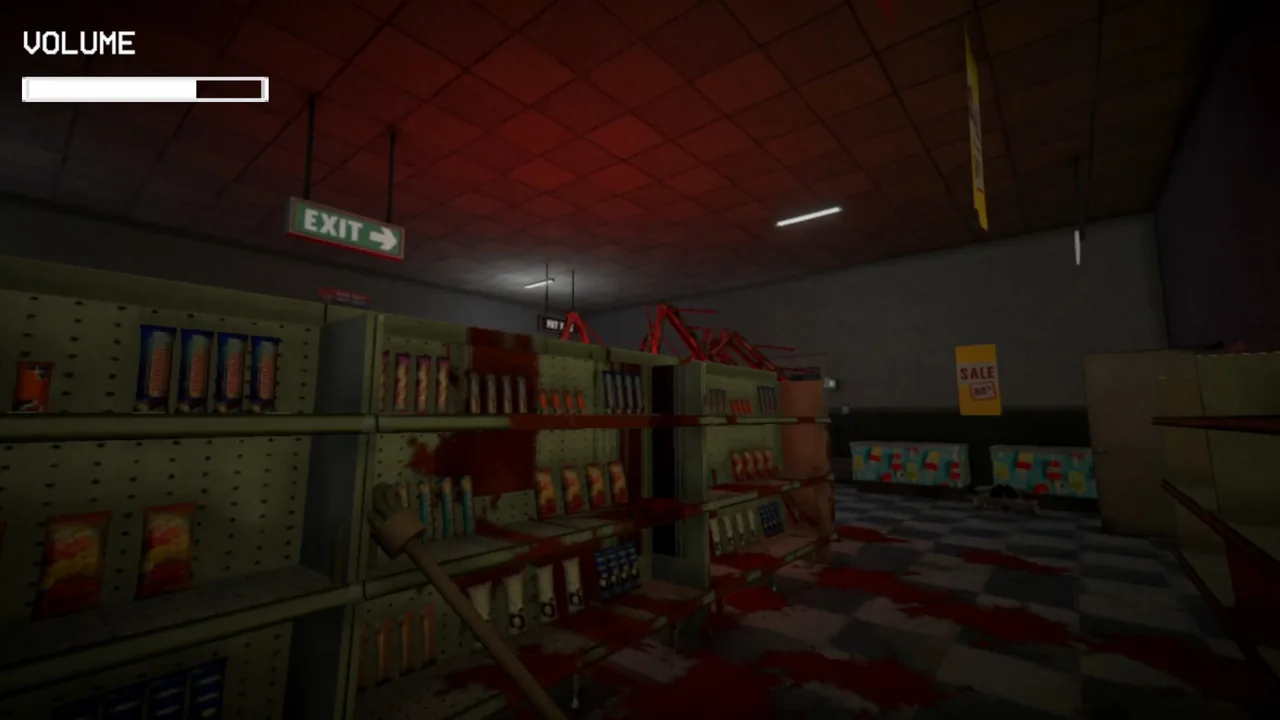
- The 1990s gas-station aesthetic is functional rather than visually striking; this is a game that wins on mechanics and tension, not presentation
- Endless Mode, likely to be where long-term replayability really lives, isn't out yet and is still a Q4 2026 beta promise rather than a shipped feature
Who it's for: Co-op horror fans who want tension built from decisions rather than jump scares, and anyone who liked the moral weight of games like Papers, Please translated into three-player survival horror.
Our recommendation: One of the stronger co-op horror releases of the year at a genuinely low price — buy it with two friends, or try the multiplayer demo first if you want to know exactly what you're signing up for.
8.5 / 10
The graveyard shift at a gas station is already a small, specific kind of dread even without monsters involved — the fluorescent lights, the empty forecourt, whoever walks through the door next. Shift At Midnight takes that dread and gives it a mechanic: some of the people walking through that door aren't people, and it's your job to figure out which, using nothing but IDs, computer records and your own read on how someone's acting. Get it right and you've kept the station running. Get it wrong, in either direction, and the night gets considerably worse.
Restocking shelves is the easy part
The job itself — stocking, taking deliveries, keeping the place clean, hitting nightly quotas — is ordinary simulation-game busywork, and it's meant to be. That ordinariness is the whole point: it's the texture the actual game sits inside, and it means every customer interaction arrives against a backdrop of mundane routine rather than constant telegraphed threat. When someone walks up to the counter and something about their answers doesn't line up, the shift from "normal night" to "is this a person" happens in your head, not on screen, which is exactly where a game like this needs that shift to happen.
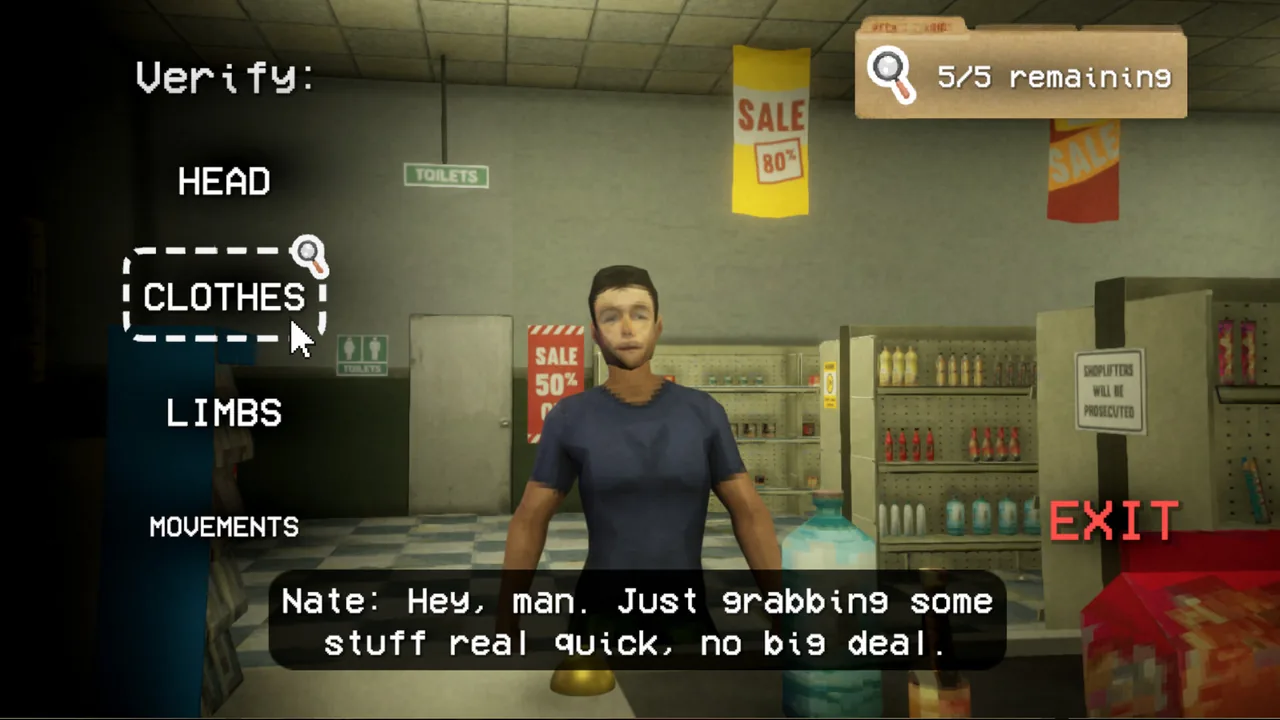
The detective layer is genuinely well built. Cross-check an ID against the computer, watch how someone answers a question they shouldn't need to think about, decide whether the hesitation means something or means nothing. "Execute on site if you think they're not human" is the game's own blunt framing of the stakes, and it commits to those stakes both ways — a wrong call against an innocent customer and a missed doppelganger both have consequences, and neither is treated as a minor inconvenience.
When you're wrong
Failing an identification doesn't just cost you points. The creature you missed comes back, and suddenly the gas-station-sim half of the game is gone entirely, replaced by boarding up windows, setting traps and trying to survive whatever you let in. That escalation is the design's best idea: the horror half of the game isn't a separate mode you switch into, it's the direct consequence of a mistake you made during the calm half, which makes every earlier decision retroactively feel heavier the moment it goes wrong.
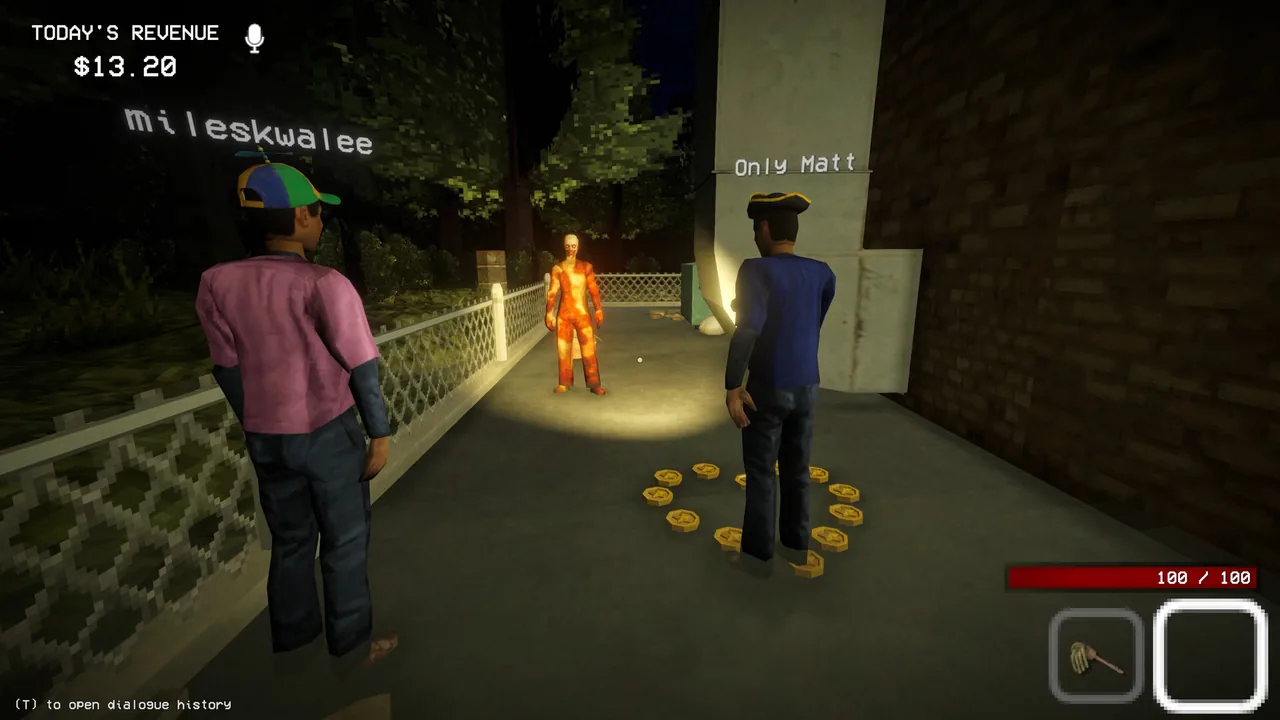
Thirteen randomly generated shifts, built so no two play out identically, keep that tension from going stale across a playthrough. This is clearly designed as a three-player co-op experience — proximity chat turns "I think that guy's off" into an actual group negotiation under pressure, and the game's rhythm of routine-then-crisis lands hardest with people to share both halves with. Solo play works, but it's playing a supporting role to a game that was built around a table of three.
What's still coming
The 1990s aesthetic is plain rather than atmospheric in any showy sense — this isn't a game selling itself on visual horror, and it doesn't need to given how well the mechanical tension carries the experience. The bigger open question is Endless Mode, teased for a Q4 2026 beta update, which sounds like where the game's long-term replay value is ultimately meant to live. It isn't out yet, so judge this review on the thirteen-shift experience that exists today, not the promise of what's coming.
Final verdict
For a solo developer's release, Shift At Midnight plays with the confidence of a much larger team that picked exactly the right two genres to weld together. The doppelganger-detection mechanic gives ordinary customer service real stakes, the escalation from mistake to survival horror is the smartest structural idea in the game, and thirteen shifts of genuine variety back it all up. Reception at launch — Overwhelmingly Positive across a large early sample — matches what's actually here.
It settles just short of a perfect score because it's clearly built around three-player co-op first, and Endless Mode, the feature most likely to give it real staying power, is still a promise rather than a shipped thing. As it stands today, it's still one of the better co-op horror releases of the year, and a genuinely low price for what it delivers.
Price checked 30 July 2026.
If you'd rather your paranoia came from wondering what's over the next hill than who's at the counter, Wanderer keeps its dangers out in the open.
Pros and cons
Pros
- The doppelganger-detection mechanic — IDs, cross-checked records, behavioural tells — makes every customer interaction a real decision with consequences either way
- Getting a call wrong doesn't end the shift; it escalates into barricading, trap-setting and evasion, so mistakes become their own mini-crisis rather than a fail state
- Thirteen randomly generated shifts avoid repeating the same specific tricks twice
- Three-player co-op with proximity chat is clearly the mode this was designed around, and it shows in how well pressure and paranoia move between players
- A genuinely low price for the amount of tension and replay variety on offer
- Overwhelmingly Positive reception at launch, with a large early review sample backing it up
Cons
- Solo play exists but is clearly the secondary mode — most of the design's tension depends on having people to second-guess and coordinate with
- The 1990s gas-station aesthetic is functional rather than visually striking; this is a game that wins on mechanics and tension, not presentation
- Endless Mode, likely to be where long-term replayability really lives, isn't out yet and is still a Q4 2026 beta promise rather than a shipped feature
Screenshots
-
Shift At MidnightImage: Kwalee via Steam -
Shift At MidnightImage: Kwalee via Steam -
Shift At MidnightImage: Kwalee via Steam -
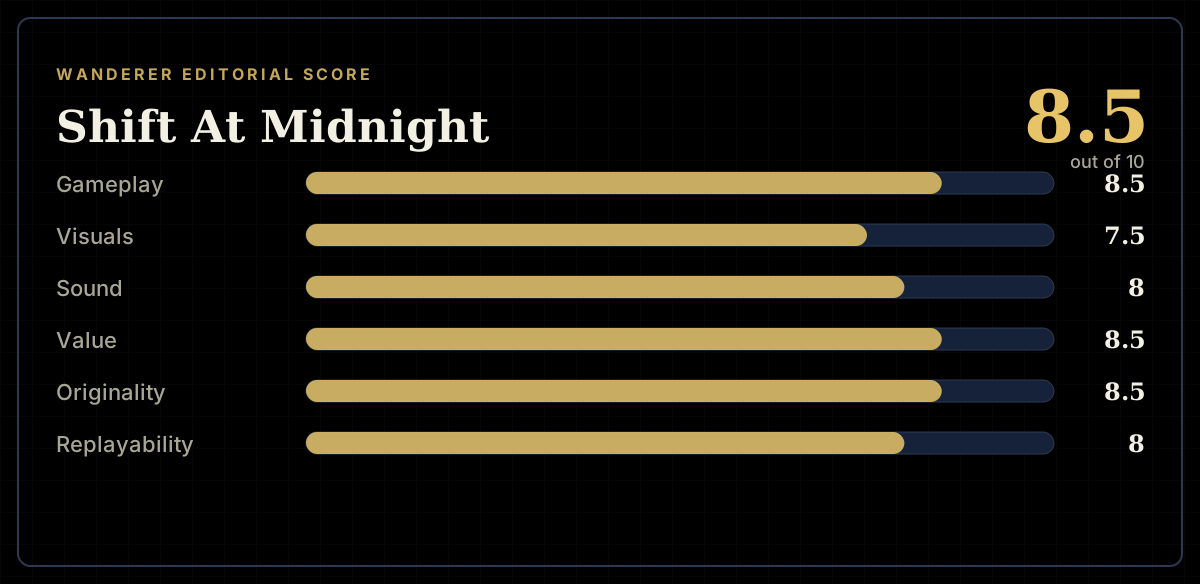
How the review scores each part of the gameWanderer Editorial -
The short versionWanderer Editorial