
Game review
Scrap Snap Review
6.3 / 10
- Developer
- BinkyGames
- Publisher
- BinkyGames
- Released
- 29 August 2026
- Platforms
- ["Windows"]
- Genre
- Casual
Two Screens, One Loop: Fighting on Top, Scrapping Below
Scrap Snap's pitch is a genuinely unusual one for the incremental genre: the screen is split in half, with an android companion fighting for you in the upper half while you personally dismantle scavenged resources in the lower half. It's a premise built around a simple but clever tension — the longer your android survives up top, the more breathing room you get to disassemble down below, and the resources you scrap in turn fund the upgrades that keep your android alive longer. One reviewer, self-identified as an "Idle & Incremental Lover," calls the split-screen structure "an enjoyable creative take," while flagging that the idea "is a bit slow and obscure at first, but it really becomes interesting afterwards thanks to 3 layers of progression."
That word — obscure — comes up repeatedly, and it's the single biggest fault line running through Scrap Snap's small but genuinely divided review pool. The core hook, blending active twitch-adjacent combat with idle-style resource accumulation, is well liked by the players who stick with it long enough to parse how the two halves of the screen actually interact. The problem is that a meaningful share of players don't make it that far.
A Confusing Onboarding That Loses Some Players Before the Hook Lands
Several reviews describe genuine difficulty figuring out what the game wants from them in its opening stretch, and not in the "give it time, it clicks" sense that idle-game fans often extend generously to slow-burn titles. One reviewer writes bluntly: "I don't really have a clue whats going on to be honest. I thought the top was disassembly even though it also looks like I am attacking. But the upgrades that increase its size do nothing," going on to describe hitting a scrap limit that a single kill immediately exceeds, then unlocking upgrades that seem to serve no clear purpose. That reviewer's conclusion is candid rather than hostile: "I dunno, I feel like nothing was explained and I'm just hovering over something till it breaks."
Not every critical reviewer is that measured — one review dismisses the game outright as "complete slop," pointing to specific progression math that doesn't hold together, including an upgrade gated behind reaching level 22 on a system that reviewer says caps out at level 17, and no way to disable the game's music. That's a short, sharp complaint, but it's a concrete and verifiable one rather than vague dissatisfaction, and it points at the same underlying issue the more measured critical reviews raise: systems that are only partially explained and, in at least one case, may not be internally consistent.
When It Clicks, Reviewers Genuinely Like What's Underneath
Set against that friction, the players who push past the confusing opening are consistently positive about what they find. One review calls it a "neat little game combining two different types of incrementals into one," while acknowledging "the execution is a bit rough at places" — a fair summary of the whole review pool's tone. Another reviewer frames the android-and-player interdependence as the game's best idea: "there's kind of a neat reliance on the android protecting you as you scrap, and you provide resources for each other's upgrades," describing a loop where neither half of the split screen works without the other pulling its weight.
The most enthusiastic review in the pool goes further, calling Scrap Snap a "hidden gem" while self-identifying as "an incremental addict" — the kind of endorsement that carries real weight from someone who's played enough of the genre to know a fresh idea when they see one, while also noting the game is short, around three hours to see through. A more lukewarm but still positive review lands in the middle of the pool's range: "Its okay I guess, nothing special, kinda grindy from times to times," while still judging it "maybe worth your bucks" at the asking price.
A Single Post-Launch Patch, and a Short, Grindy Runtime
Scrap Snap's Steam news history shows exactly one update since release, a 1.0.1 patch addressing a bug that prevented certain disassembly upgrades from functioning and fixing overlapping background-music tracks — a fix that directly targets the kind of broken-upgrade complaint voiced in the review pool, even if it doesn't appear to resolve every progression issue reviewers have flagged. There's no sign here of an abandoned launch, but there's also no sign yet of the kind of sustained, rapid patch cadence that can turn a rough-edged debut into a polished one; one update in the weeks since launch is a modest start rather than a track record.
At $4.99 for what multiple reviewers peg at around three hours of content, the value proposition is reasonable rather than generous, and it leans heavily on whether a given player finds the split-screen concept worth pushing through an unclear opening for. The review pool itself is tiny — just seven English-language reviews out of 26 total at the time of writing — split five positive to two negative, which is a genuinely thin sample to draw firm conclusions from. Treat any score here as a read on a promising but unevenly explained small game, not a verdict backed by hundreds of data points.
Verdict
Scrap Snap has a real idea at its core — an android fighting up top while you scrap for resources down below, each system feeding the other — and the reviewers who get past its confusing opening stretch consistently describe it as a clever, worthwhile short incremental. But that opening stretch is a real barrier, with multiple reviewers describing upgrades that don't behave as described, unclear system interactions, and at least one specific progression bug that a single post-launch patch doesn't appear to have fully resolved. With only a handful of English-language reviews to go on and a roughly three-hour runtime, this reads as a small, imperfect experiment worth a look for genre fans with patience for some early confusion, rather than a confident recommendation for anyone wanting a smooth, well-explained incremental from the first minute.
Pros:
- A genuinely distinctive split-screen idea blending active combat with idle-style disassembly
- Reviewers who get past the opening consistently praise the interdependence between its two systems
- Called a "hidden gem" by at least one genre veteran despite its rough edges
- Reasonably priced at $4.99 for a short but distinct experience
Cons:
- A confusing, under-explained opening stretch that loses some players before the core loop clicks
- Specific reported bugs, including upgrades that don't function as described and a scrap-limit inconsistency
- No option to disable the in-game music, according to at least one reviewer
- Only one post-launch patch so far, addressing some but not all reported issues
- A very small review pool, just seven English-language reviews at time of writing, limits how much weight any score can carry
Screenshots
-
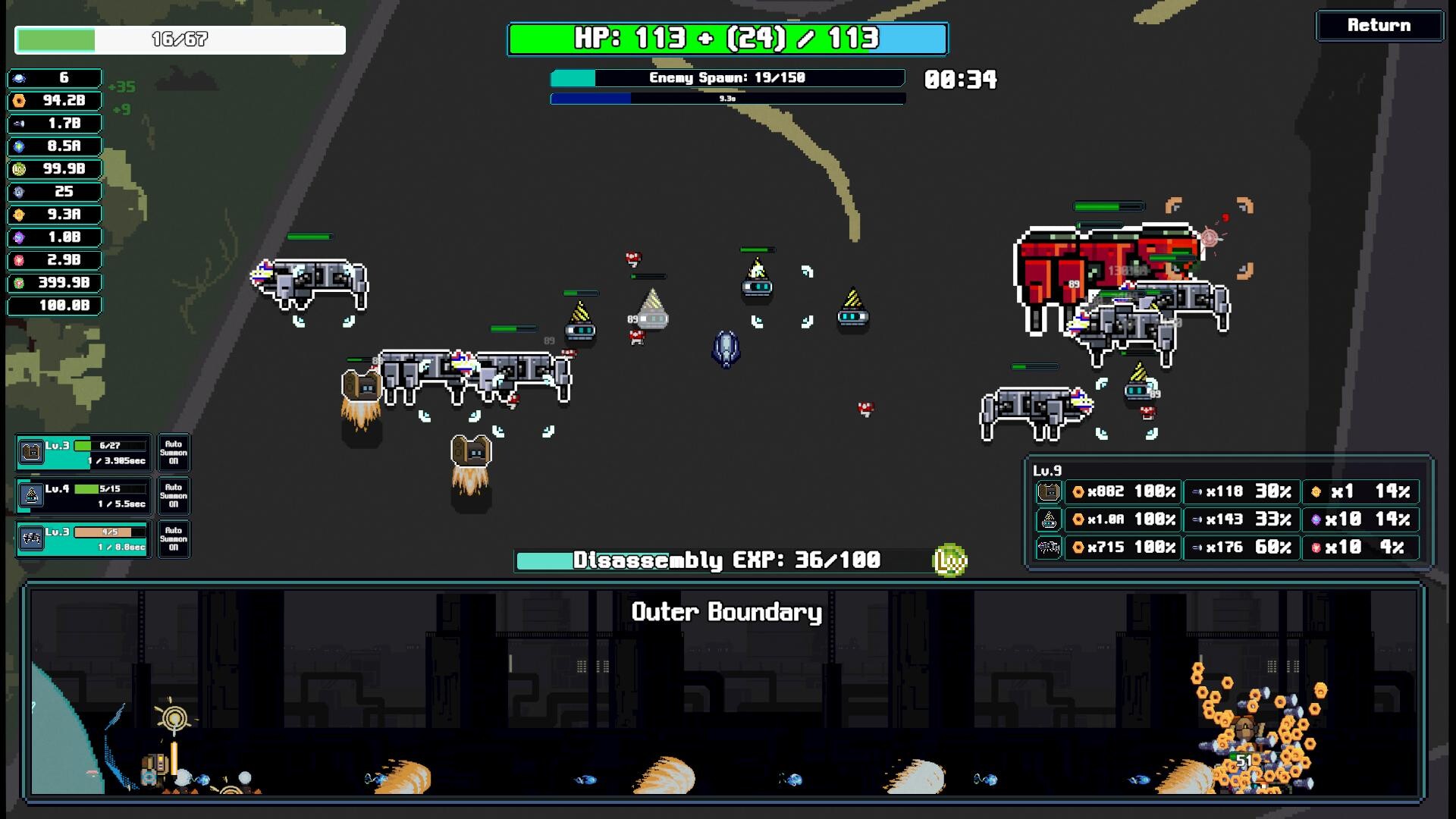
The top half of the screen handles active combat while the bottom half tracks resource disassembly, the two systems feeding each otherImage: BinkyGames via Steam -
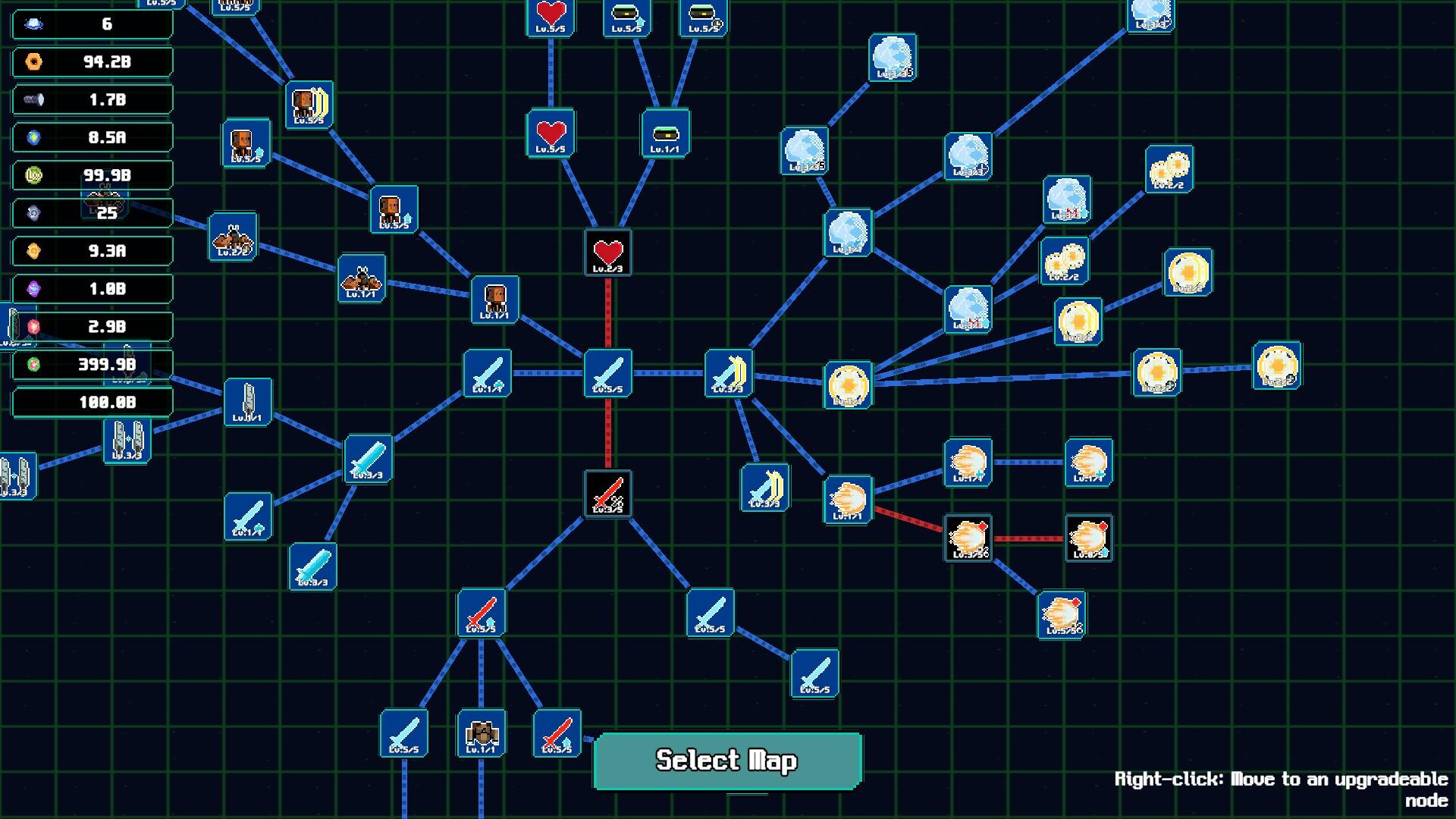
Progression branches out across a dense, sprawling upgrade tree, one of the game's three layers of systemsImage: BinkyGames via Steam -
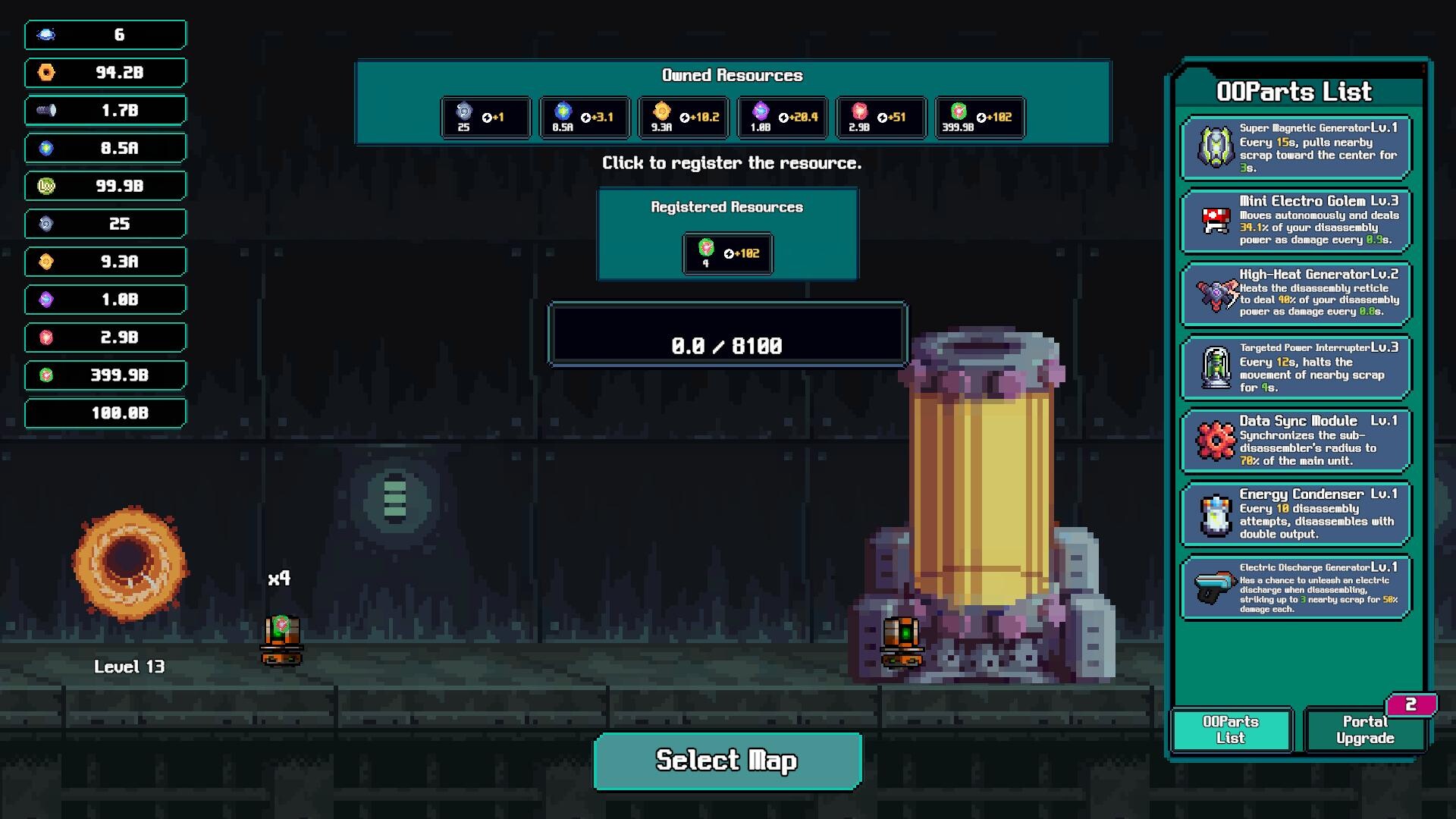
The disassembly side of the loop layers on its own set of passive OOParts upgradesImage: BinkyGames via Steam -
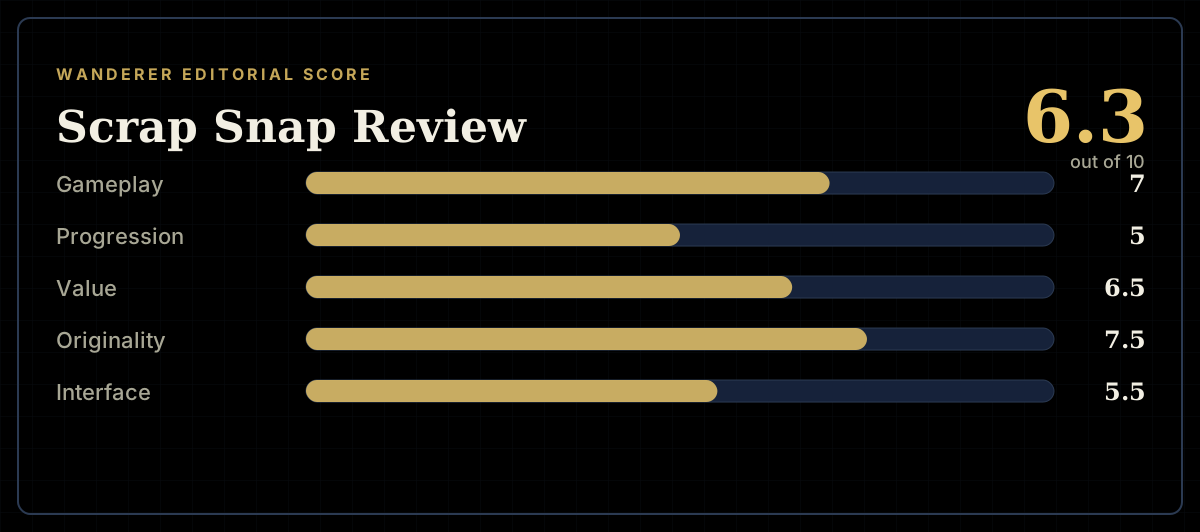
How the review scores each part of the gameWanderer Editorial -
The short versionWanderer Editorial