
Game review
School Teacher Simulator
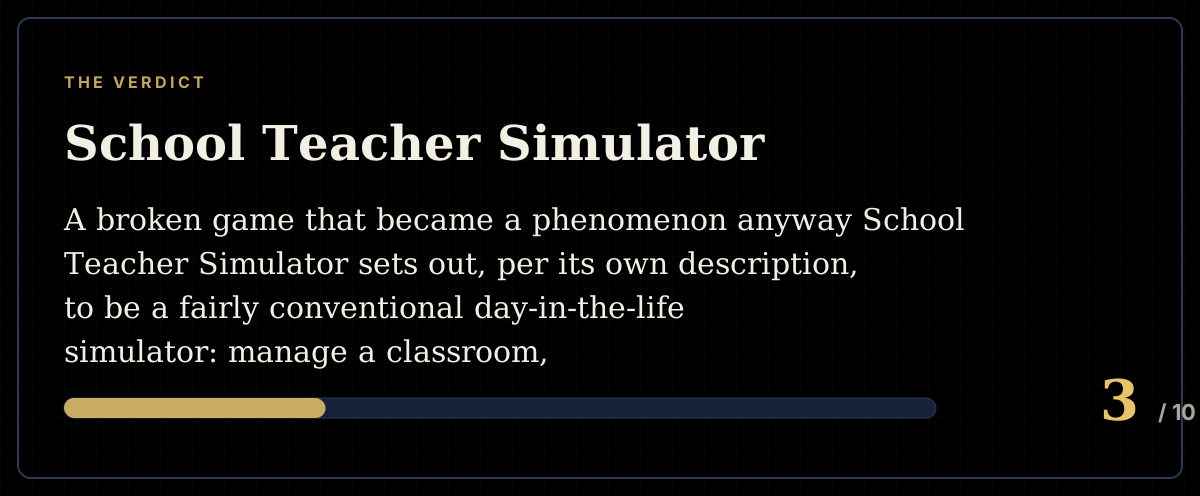
3 / 10
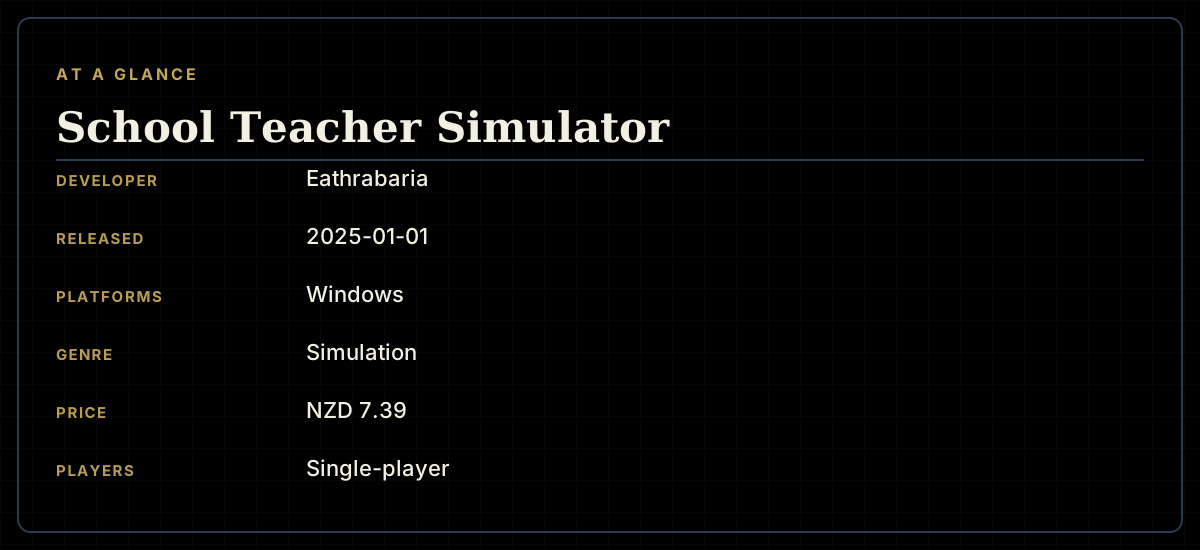
- Developer
- Eathrabaria
- Publisher
- Eathrabaria
- Released
- 1 January 2025
- Platforms
- Windows
- Genre
- Simulation
- Players
- Single-player
The short version
Biggest strengths
- A specific NPC character, referred to by players as "Jeremy the Delinquent," has generated a genuine, large, and sincere cult following independent of the game's broken mechanics
- At least one reviewer describes the game's portrayal of alcoholism through Jeremy's storyline as having a real, personally meaningful emotional impact on them
- The absurdist, unpredictable event structure is, by design or accident, distinctive enough that no other game in the genre resembles it
Biggest weaknesses
- Genuinely broken quest logic, including a fire-alarm evacuation sequence whose objective marker doesn't update until the player leaves the designated safety meeting point, undermining the one task that should be simple
- A bizarre, unbuilt-up scripted event has a menacing bear defeated instantly by a random stick, described by reviewers as emblematic of the game's overall lack of coherent design
- Poor narrator voice work, with multiple reviewers specifically criticizing the English quality and delivery
3 / 10
A broken game that became a phenomenon anyway
School Teacher Simulator sets out, per its own description, to be a fairly conventional day-in-the-life simulator: manage a classroom, keep students focused, react to misbehaviour, and navigate a school full of characters each with their own personality. What it's actually become, by the overwhelming evidence of its own review base, is something closer to a cult meme object — a game beloved not for functioning well but for a single unforgettable NPC and a cascade of bizarre, broken sequences that have taken on a life of their own online. "This is the greatest game ever made. From the banner, to Jeremy's story, to the random Cola guy, to the weird out of nowhere horror segment, to the drinking, masterpiece," reads one of the most-upvoted reviews on the store page — a review that is, on its face, glowing, but that reads as sincere enthusiasm for the game's chaos rather than its craft.
That distinction matters for this review's score. The character at the centre of the phenomenon, a delinquent student nicknamed "Jeremy" by the community, draws remarkable, genuinely sincere emotional responses distinct from the ironic enjoyment surrounding the rest of the game. One reviewer, self-identifying as someone in recovery from alcoholism, writes: "Jeremy's storyline was so sad. It made me (an alcoholic) realize I cannot put my future child through that life. This game is changing my ways and I'm going to get the help that I need." That's a genuinely striking, unsolicited piece of testimony, and it deserves to be taken at face value as one real person's account of how a small, unpolished indie game's writing affected them, regardless of anything else in this review.
Judged as a functioning game, it largely isn't one
Separating the meme appeal from actual mechanical quality, the detailed critical reviews describe a game riddled with basic, function-breaking problems. One of the most thorough negative reviews walks through a specific sequence step by step: "A fire alarm prompts you to go outside to the meeting spot on the sports field. You get out to the sports field and find a lot of people congregated there, but nothing happens. The directions only updated when I went outside of the sports field to where the principal was standing." That's not a difficulty complaint, it's a broken objective marker actively working against the one straightforward task the game presents in that moment.
The same review goes on to describe an even stranger sequence: "There is a section in the woods, where a bear is menacing a student. Supposedly a random stick puts down this massive bear with one shot." No buildup, no mechanical weight, just an absurd resolution to a scene that seems designed to be tense. The reviewer's verdict on the narration compounds the picture: "the narrator is painfully bad with poor English and the tasks are so random it's amazing," before describing an unrelated finale sequence — an extended, seemingly endless keyboard-mashing rhythm minigame at a year-end dance — as similarly overstaying whatever joke or mechanic it was meant to deliver.
Other reviewers report more conventional technical failures on top of the design oddities: "you can fall off the map pretty easily and there are buildings that you can't enter cos you pass through the entrance stairs," one reviewer notes, describing broken collision in multiple specific locations. Several shorter reviews simply register blunt dissatisfaction — "worst game ever, so boring" and "this game is crap... waste of time and money" — without much elaboration, but consistent in tone with the more detailed accounts.
Two very different kinds of five-star review
It's worth being explicit about what's actually driving this game's Very Positive rating, because a reader skimming the aggregate score alone would get a misleading picture. A meaningful share of the positive reviews are openly, self-consciously about the meme rather than the mechanics: "PEAK GAME Jeremy The Delinquent was my favourite ever, he was an absolute legend. A suicidal one. better than any other story game I have ever played including Life is Strange," one reviewer writes, a comparison clearly made in a spirit of gleeful hyperbole rather than sober critical comparison. Another reviewer's entire review is a link to a speedrun completed before the refund window closed — a form of engagement that says a great deal about how this community actually plays the game, and very little about whether the underlying simulation works as intended.
That's a legitimate, real form of enjoyment, and this review isn't in a position to tell a community what should or shouldn't make them happy. But it's a meaningfully different thing from a game recommendation grounded in functional design, and conflating the two would mislead a reader deciding whether to spend money expecting either a competent simulator or a polished comedy game.
Where this leaves it
School Teacher Simulator is, by the detailed account of its more critical reviewers, a broken, technically rough game with quest logic that fails at basic tasks, bizarre unearned narrative beats, and poor production values throughout. It has also, almost accidentally, produced a genuinely beloved character and at least one documented case of real emotional resonance that this review has no basis to dismiss. Scored as a functioning simulator, it falls well short; approached instead as a cheap, absurdist curiosity already embraced by an online community that knows exactly what it's laughing at, it may deliver precisely the experience its most enthusiastic fans describe. Buy it for the meme and the story of Jeremy, not for a competently built teaching simulation — that game does not currently exist here.
Pros and cons
Pros
- A specific NPC character, referred to by players as "Jeremy the Delinquent," has generated a genuine, large, and sincere cult following independent of the game's broken mechanics
- At least one reviewer describes the game's portrayal of alcoholism through Jeremy's storyline as having a real, personally meaningful emotional impact on them
- The absurdist, unpredictable event structure is, by design or accident, distinctive enough that no other game in the genre resembles it
Cons
- Genuinely broken quest logic, including a fire-alarm evacuation sequence whose objective marker doesn't update until the player leaves the designated safety meeting point, undermining the one task that should be simple
- A bizarre, unbuilt-up scripted event has a menacing bear defeated instantly by a random stick, described by reviewers as emblematic of the game's overall lack of coherent design
- Poor narrator voice work, with multiple reviewers specifically criticizing the English quality and delivery
- An extended, unskippable keyboard-mashing rhythm sequence at a year-end dance party that several reviewers say goes on far longer than the joke or the mechanic can sustain
- Reported broken collision and map boundaries, including falling through the world and buildings that appear enterable but aren't
Screenshots
-
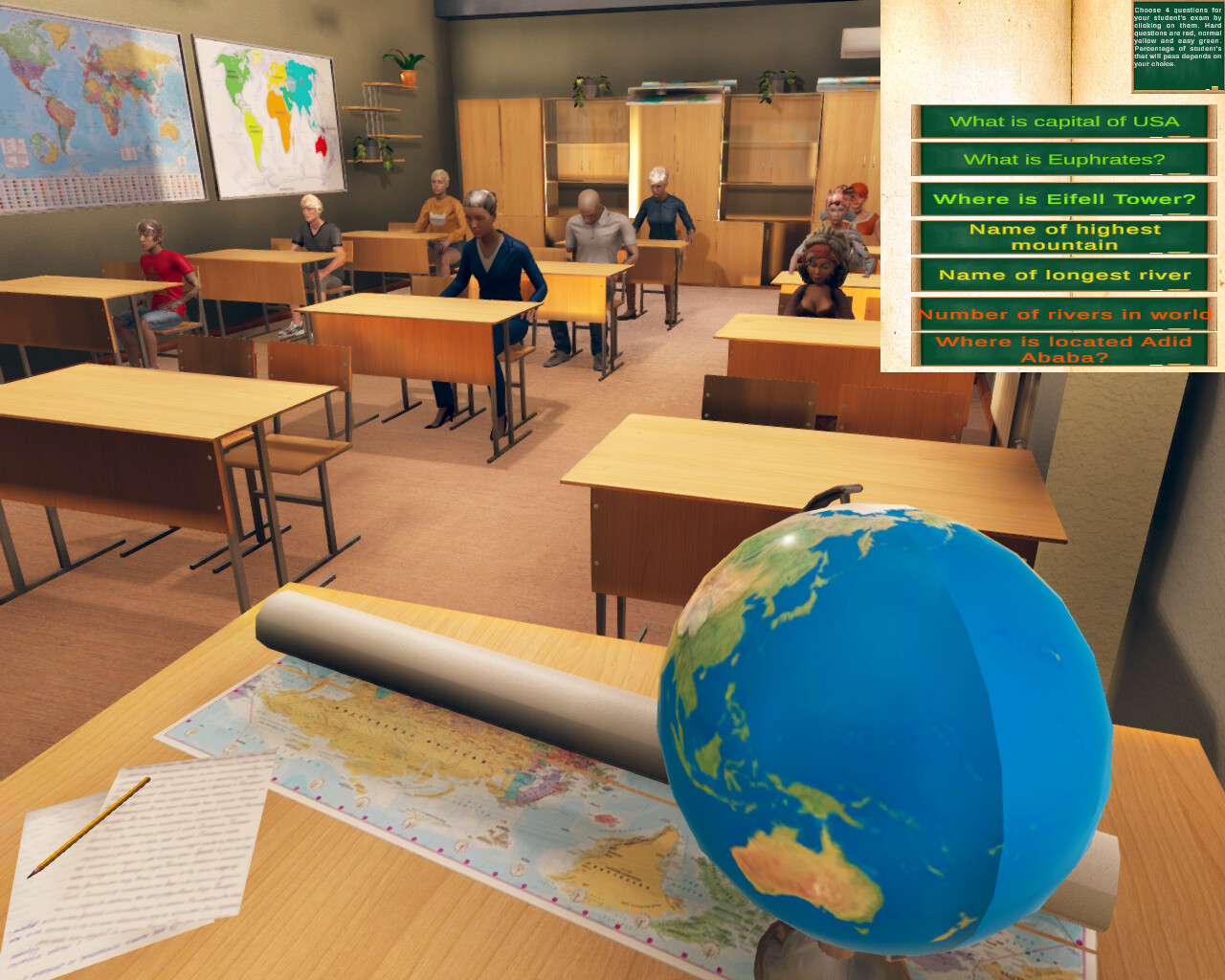
School Teacher SimulatorImage: Eathrabaria via Steam -
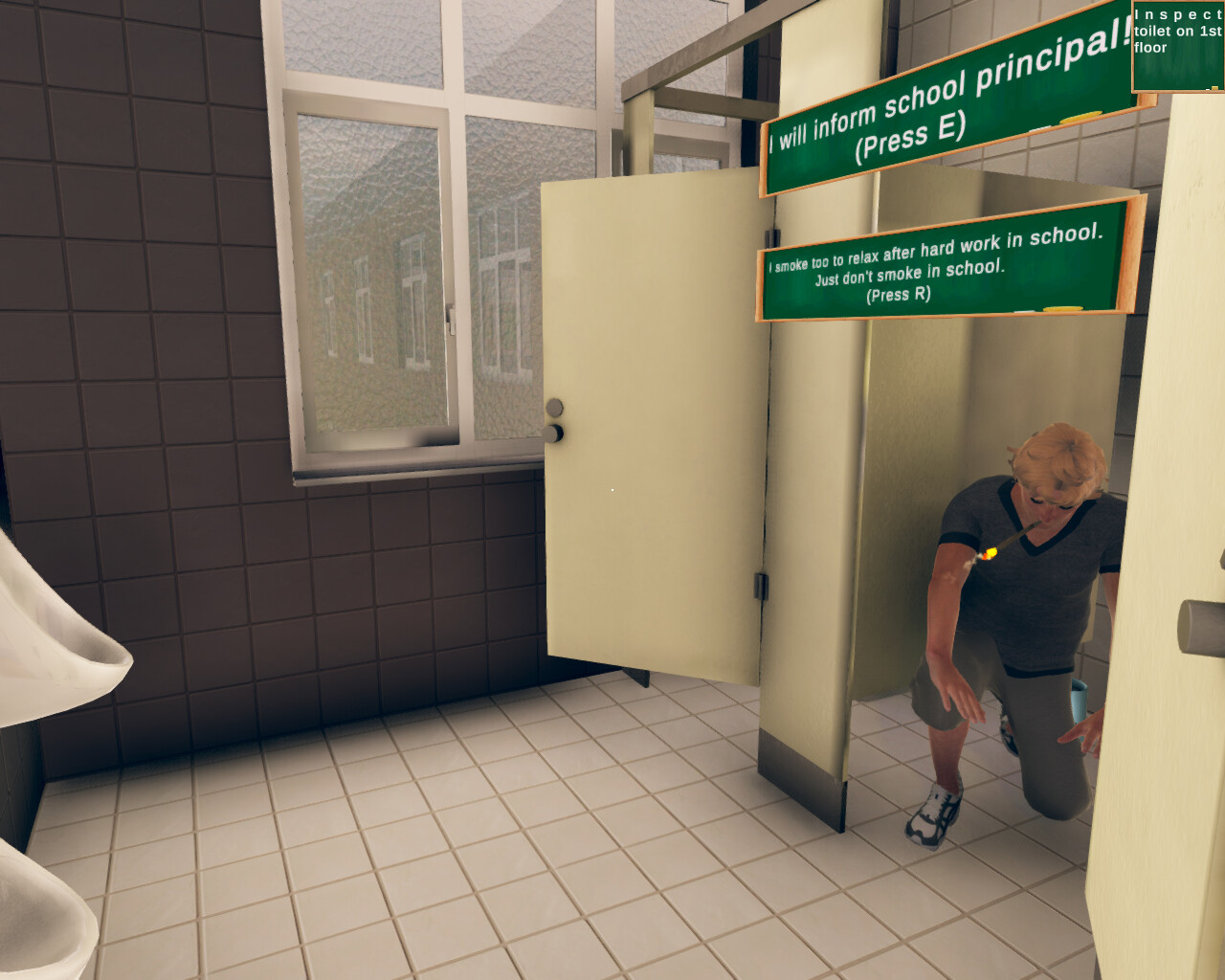
School Teacher SimulatorImage: Eathrabaria via Steam -
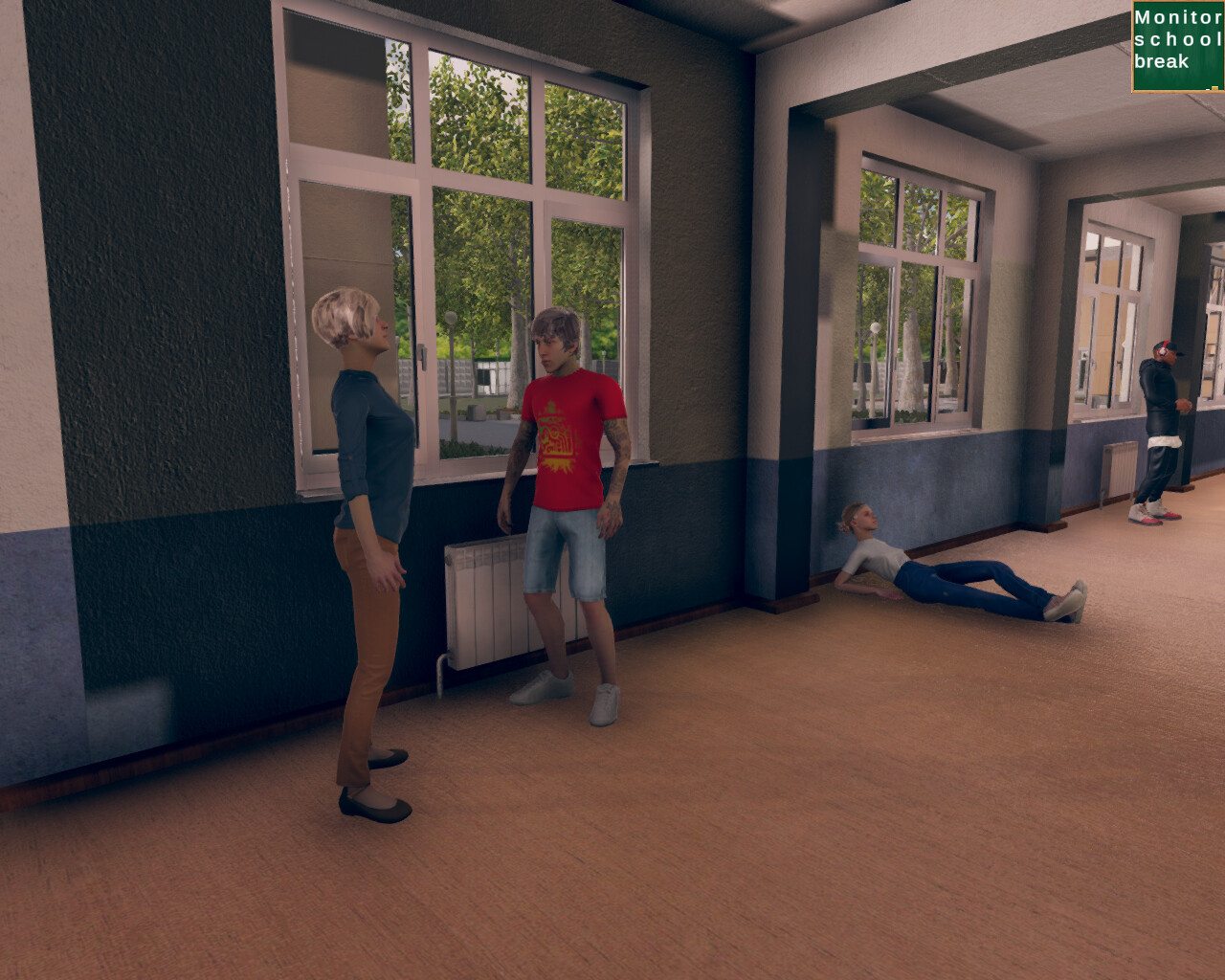
School Teacher SimulatorImage: Eathrabaria via Steam -
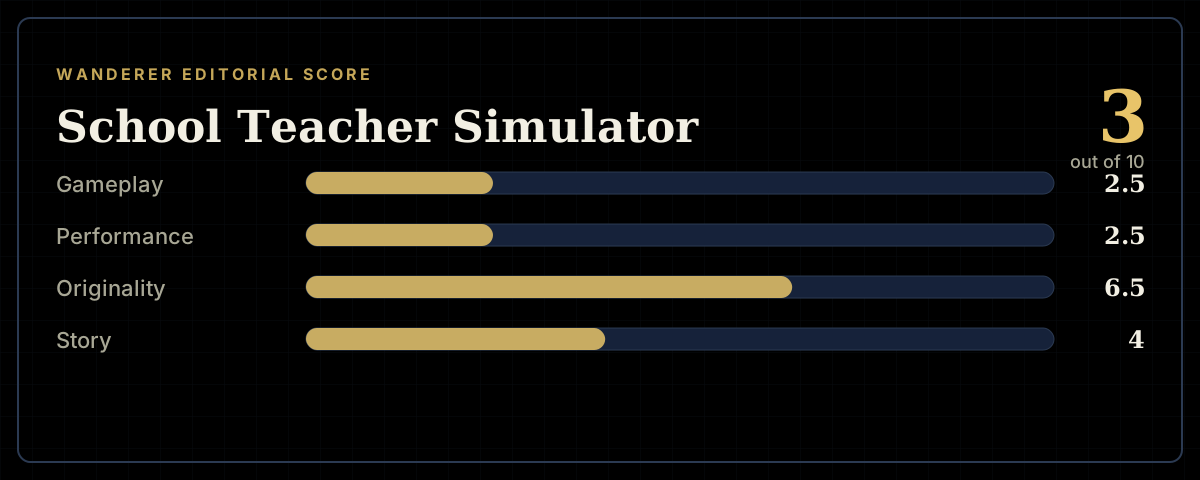
How the review scores each part of the gameWanderer Editorial -
At a glanceWanderer Editorial -
The short versionWanderer Editorial