
Game review
Schedule Store Simulator Review
5.7 / 10
- Developer
- Alkame Games
- Publisher
- Alkame Games
- Released
- 14 September 2026
- Platforms
- ["Windows"]
- Genre
- Simulation
Tokyo's Underworld, Run Like a Small Business
Schedule Store Simulator is a first-person narcotics-empire management sim from solo Tokyo-set developer Alkame Games, pitched squarely at fans of last year's breakout hit Schedule I but relocated from a generic American suburb to a neon-lit Tokyo underworld. The pitch is straightforward: start as a small-time dealer, manufacture and package product, hire and manage a crew of workers, buy and upgrade properties, and expand distribution across the city while staying a step ahead of the police, all rendered in a scrappy first-person business-sim loop of shopping runs, production lines, and storefront management. It entered Steam Early Access on September 14, 2026 at $14.99, arriving into a genre its own reviewers freely admit is already crowded with imitators chasing the same template.
A Small but Enthusiastic Early Access Launch
Schedule Store Simulator launched to 29 reviews, 26 of them positive, for a striking 90% "Very Positive" score on Steam — an unusually strong debut for a title reviewers openly compare to a specific, still-dominant genre leader. The pool skews mostly English, with a handful of German, Turkish, Simplified Chinese, and French reviews mixed in, and reads as a classic small-launch pattern: a wave of short, enthusiastic recommendations from players enjoying the core loop, offset by a smaller number of longer, more critical reviews — including the single most-upvoted review in the pool — cataloguing exactly where the Early Access rough edges show. Both camps broadly agree on what the game is; they disagree on whether it's currently worth the asking price given how directly it invites comparison to its inspiration.
A Surprisingly Sticky Loop, With Tokyo as the Real Selling Point
The reviewers who recommend Schedule Store Simulator describe a game that's more than the sum of its obvious influences. One writes plainly that it offers "an enjoyable gameplay loop with a nice variety of mechanics," while another admits, "I started just messing around with the store and ended up spending way more time than I expected" — exactly the kind of unplanned time-sink praise that matters most for a management sim still finding its feet. The setting draws specific, repeated praise: "I REALLLY like the Tokyo setting, it gives the game a different atmosphere," one reviewer writes, a sentiment echoed by others who single out the city backdrop as the thing that actually differentiates this from its many genre siblings rather than just reskinning them. Several reviewers also praise the pacing of unlocks and upgrades as satisfying rather than grindy, describing a real sense of momentum as properties, staff, and product lines expand. The game's most unexpectedly popular element, though, turns out to be its NPCs: multiple unrelated reviewers single out the chaotic, unpredictable behavior of customers and street NPCs as a genuine highlight rather than a side effect, with one writing, "I came for the business simulator and somehow ended up watching NPCs do the dumbest things imaginable," another noting, "bro, I swear the NPCs have their own agenda," and a third reporting that "giving them different drugs and seeing how they start acting is honestly hilarious." For a game this early in development, that's a surprisingly strong secondary hook working in its favor, even among reviewers otherwise reserving judgment on the rest of the package.
Bugs, an "Asset Flip" Reputation, and Worker AI That Can't Carry Two Items at Once
The pool's most-upvoted review, sitting well above everything else at 31 votes, is a negative one, and it's unusually specific rather than a blanket dismissal. It opens by arguing early access games "should still be held to a standard," then lists concrete complaints: the game is "buggy," carries "asset flip vibes," and reads as a "shameless Schedule 1 wannabe"; NPC and especially police behavior "needs overhaul"; unlock pacing is "unbalanced" despite other reviewers praising it; and menus and UI are "ugly and tedious to use." That same review still concedes real pros — it "scratches the Schedule 1 itch, at least a bit" and is "relatively cheap" — and ends with the reviewer admitting they'd missed the refund window and would keep playing regardless, a telling ambivalence that recurs across several of the game's other critical write-ups. A second detailed negative review, from a player who tried a free version before buying, zeroes in on worker AI specifically: employees "carry items one by one" rather than in batches, so packaging staff sit idle waiting on suppliers who only fetch a single unit at a time, forcing the player to manually cancel and reissue tasks to keep production moving — a workflow-breaking inefficiency rather than a cosmetic complaint. That same reviewer also reports missing the refund window after running into the bugs, echoing the top review's timing frustration. A smaller but recurring complaint across several reviews is the inability to rebind key bindings at all, a basic accessibility gap for a game that otherwise leans on fairly involved first-person interaction. None of these complaints individually sound fatal, but together they paint a picture of a management sim whose systems — worker logistics, police response, and UI — are still meaningfully behind the strength of its core loop and setting.
Verdict
Schedule Store Simulator wears its inspiration from Schedule I openly, and its own most dedicated critics call it exactly that — but underneath the comparison sits a genuinely engaging production-and-distribution loop, a Tokyo setting that gives it real visual and atmospheric identity within a crowded genre, and, unexpectedly, some of the more entertaining emergent NPC chaos in any game like it this year. Its 90% "Very Positive" launch score is well-earned by players enjoying that loop, but it's built on a small pool that also contains real, specific, and consistent complaints: worker AI that can't manage basic multi-item logistics, police and NPC behavior reviewers say needs a rework, an interface several call tedious, and no ability to rebind controls. At $14.99, this is a promising but clearly unfinished foundation — worth a look for genre fans drawn specifically to its Tokyo setting and willing to tolerate Early Access rough edges, but not yet the finished, standout alternative to its inspiration that its best moments suggest it could become.
Screenshots
-
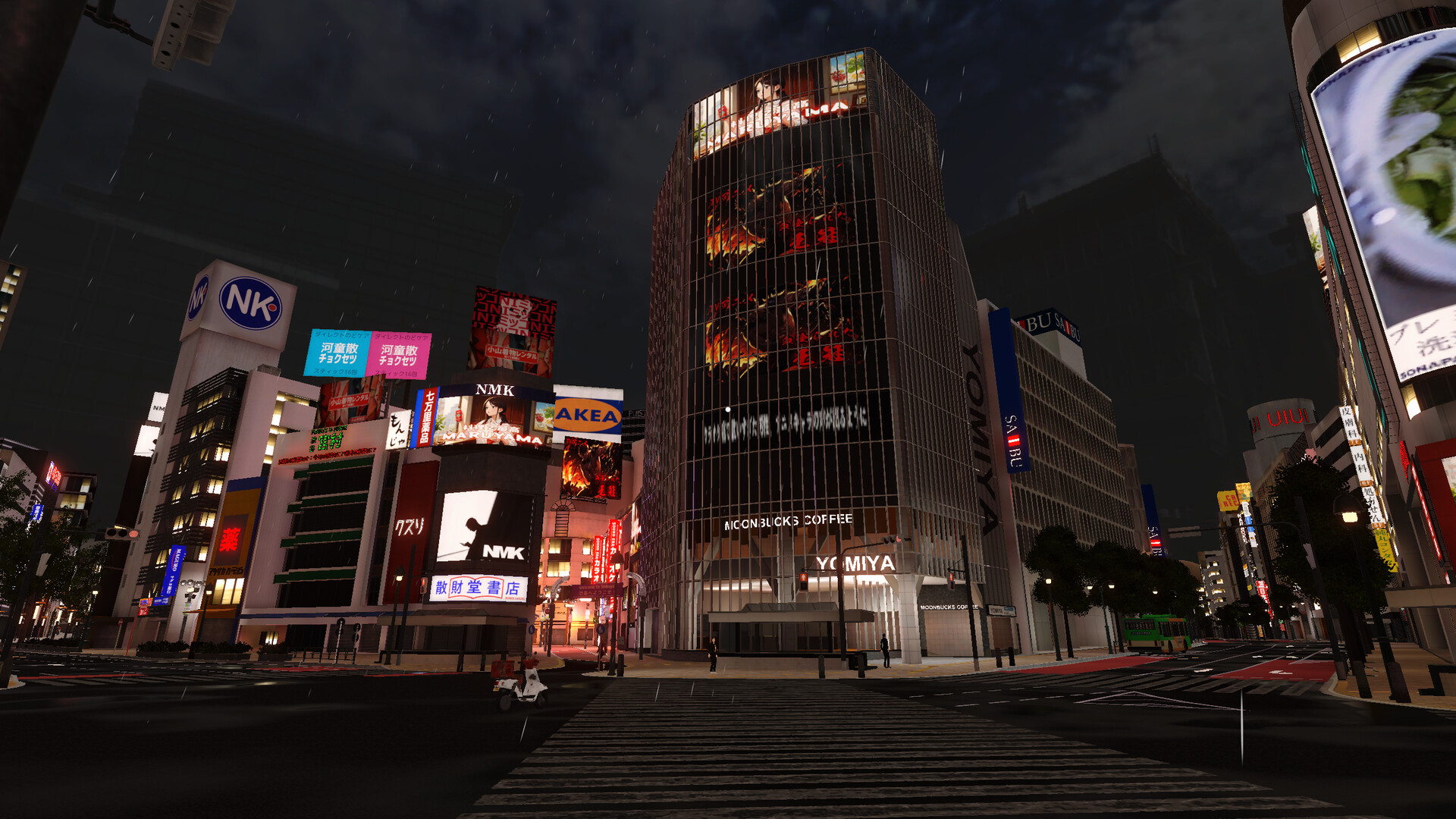
The game's neon-lit Tokyo setting is one of its most consistently praised featuresImage: Alkame Games via Steam -

A converted warehouse grow operation, one of the properties players expand into as their empire growsImage: Alkame Games via Steam -
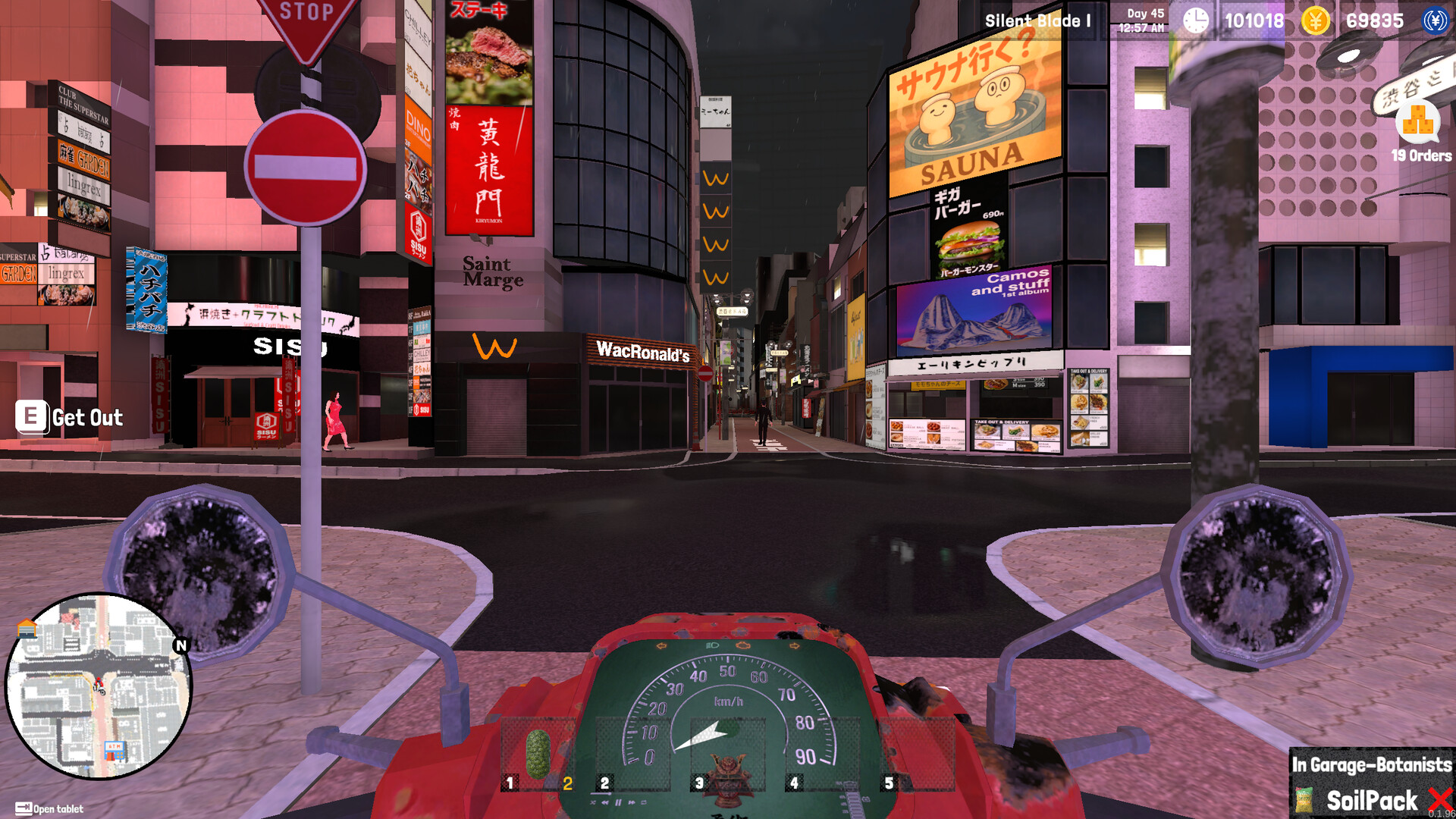
Delivery runs by moped take players through busy, sign-covered Tokyo streets between ordersImage: Alkame Games via Steam