Game review
SandTable War: Three Kingdoms
7.2 / 10
- Developer
- Guwan Studio
- Publisher
- Guwan Studio
- Released
- 23 April 2026
- Platforms
- [Windows]
- Genre
- Strategy
- Monetisation
- $7.99
- Players
- false
The short version
SandTable War: Three Kingdoms is an impressively deep, cheaply-priced Three Kingdoms grand strategy sandbox from what appears to be a very small team, one that hooks its mostly Chinese-language audience early with real strategic freedom, before wearing them down with repetitive mid-game micromanagement, a weak AI, and an interface that never quite catches up to the scale of its own systems.
Biggest strengths
- Real strategic depth for a $7.99 game: distinct factions, historically-grounded starting positions, a diplomacy system, and enough systems interplay that reviewers report replaying the same scenario two or three times over
- A genuinely addictive early game, especially when starting as a small faction, that many reviewers describe losing entire nights to
- A large, actively-engaged player base treats it as an affordable, playable alternative to Koei's Romance of the Three Kingdoms series and Total War: Three Kingdoms
Biggest weaknesses
- The mid-game turns into a repetitive, tedious slog once a player controls more than a handful of cities, with reviewers describing endless back-and-forth border skirmishes and no clear new systems to keep pace with the map's growth
- Heavy, unautomated micromanagement dominates play at scale: manually transporting food between cities, manually checking each city's available reservists, and no way to issue policy changes across multiple cities at once
- A weak AI that reviewers describe as failing to use its own troop advantages effectively, undermining the strategic tension the game's systems are otherwise built around
Who it's for: Fans of Koei's Romance of the Three Kingdoms series and Total War-style sandboxes looking for a cheap, systems-dense alternative, who can tolerate rough UI and a mid-game slog in exchange for genuine strategic depth.
Our recommendation: Buy it
7.2 / 10
A cheap, deep alternative to the genre's giants
SandTable War: Three Kingdoms is a grand strategy sandbox set during China's Three Kingdoms period, developed and published by the small Chinese studio Guwan Studio. Released April 23, 2026 at a budget $7.99, it landed to a Very Positive reception (335 reviews, roughly 84% positive) built almost entirely on word of mouth from a Chinese-language player base that repeatedly frames it as an affordable, playable stand-in for Koei's long-running Romance of the Three Kingdoms series and Total War: Three Kingdoms. That framing is the single most consistent thread across the review sample, and it tells you most of what you need to know about who this game is for.
Strategic depth that earns the comparisons
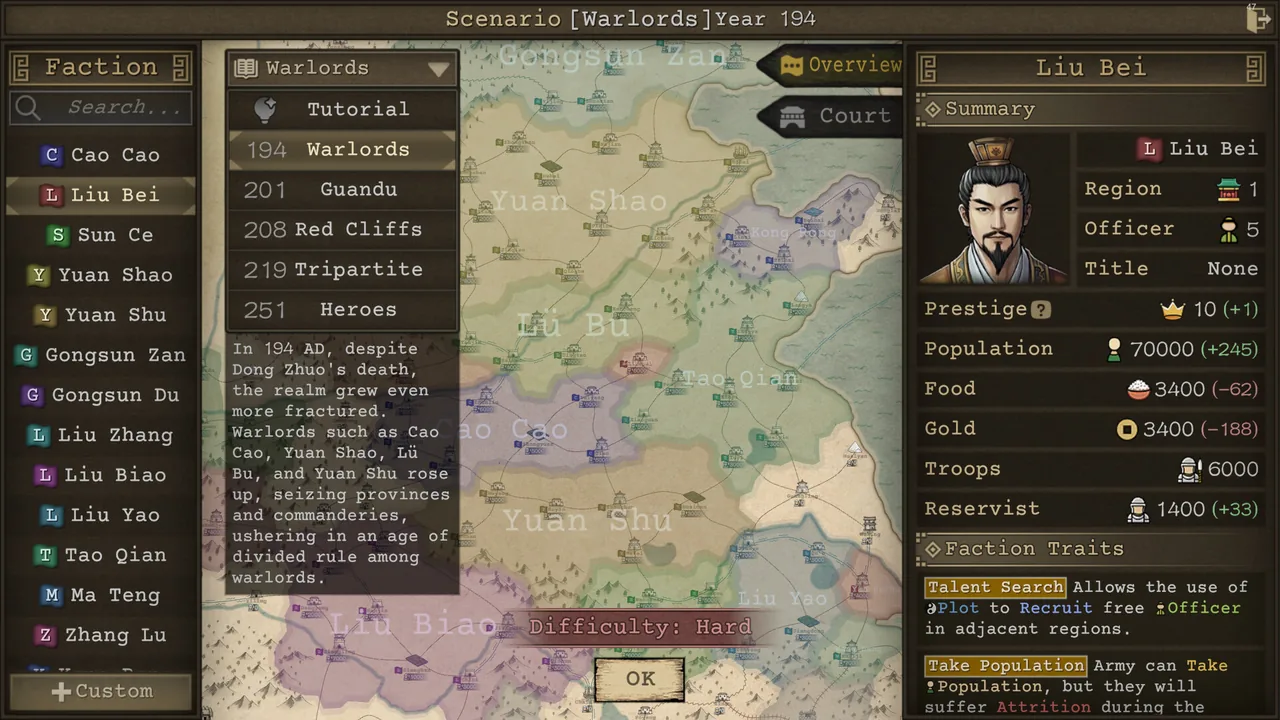
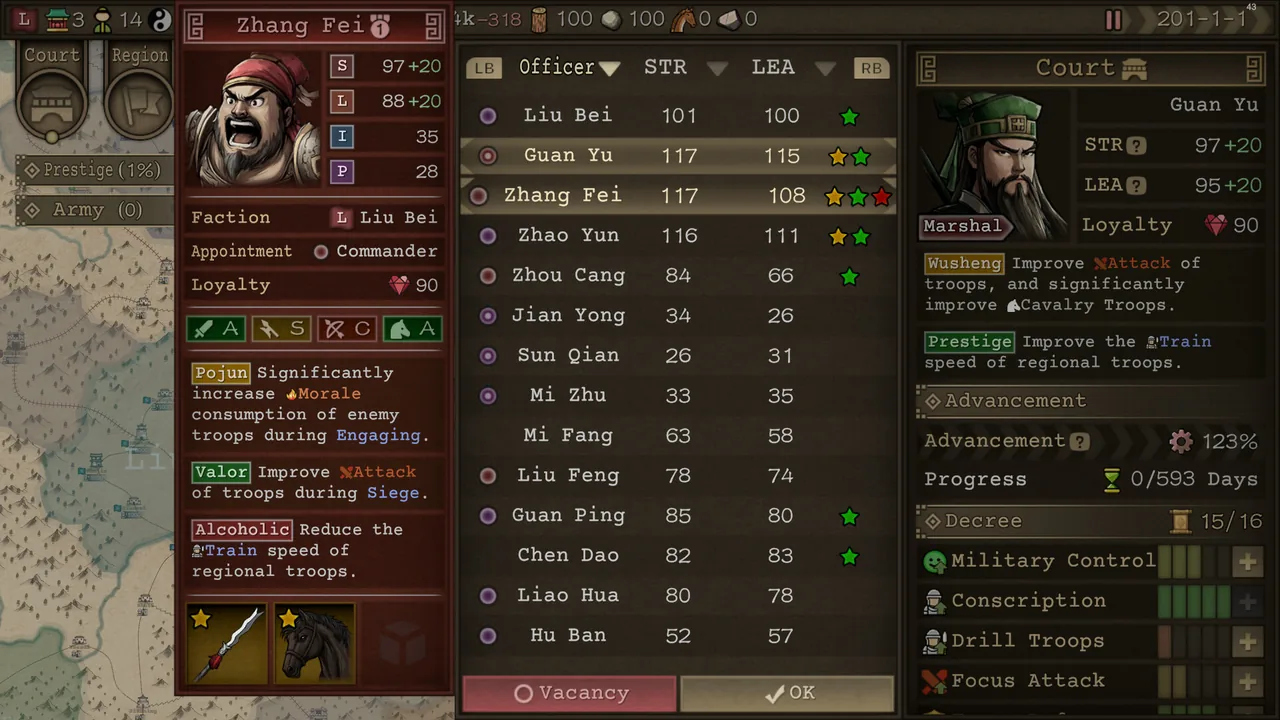
Reviewers describe a genuinely deep systems sandbox: distinct factions with historically-grounded starting territories, a functioning diplomacy layer, a tech tree, general recruitment and traits, and terrain that meaningfully affects movement and combat (mountain roads slow armies, river crossings matter, frontier provinces near "barbarian" factions play very differently from core territories). Several reviewers specifically call out how rare it is for a game in this genre to earn a second or third full playthrough, and credit the variety of starting positions and faction traits for that replay value. One reviewer who unified the map from a single starting city as a weak faction in the game's hardest scenario described the achievement with real pride, and a long-time strategy fan compared the early game favorably to Koei's earlier, leaner entries in the genre before the series became more elaborate.
The mid-game grind
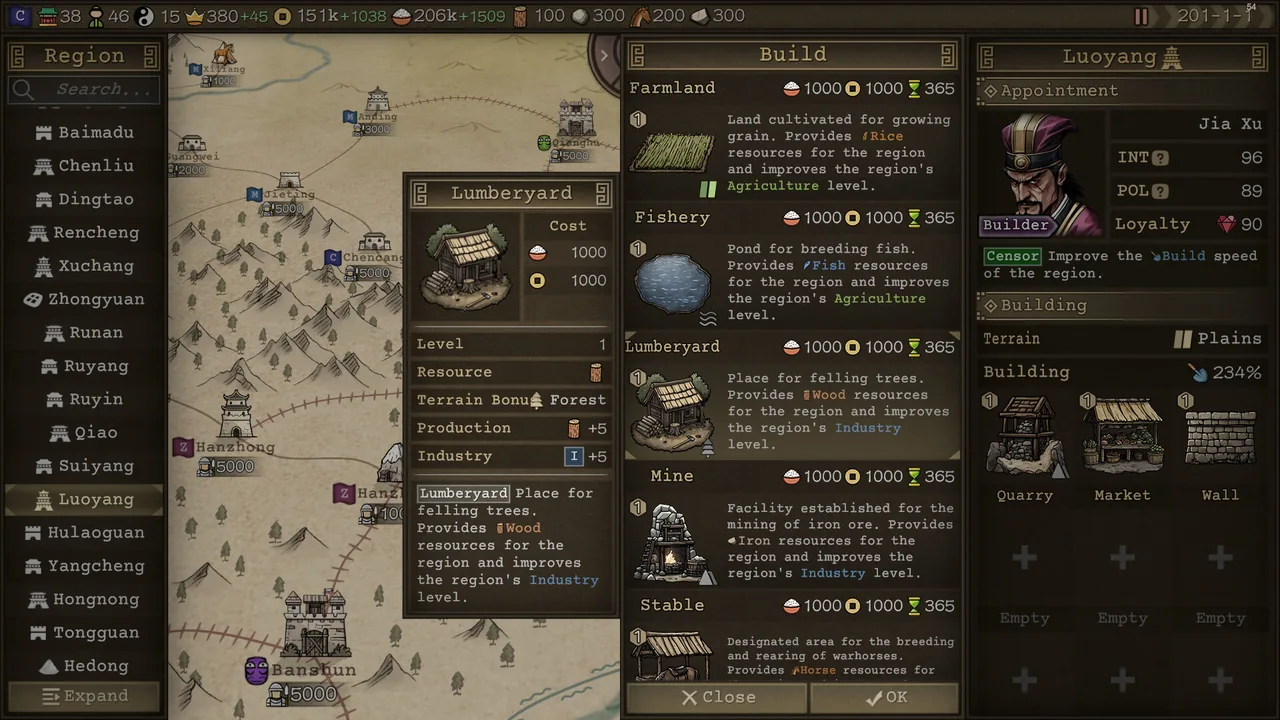
Where the review sample turns sharply is the mid-game. Multiple reviewers, independently and in different words, describe the same arc: an excellent, tense opening when managing a small handful of cities, followed by a steep drop in engagement once a faction expands past roughly a dozen territories. At that point, play becomes dominated by manually checking each city's reserve troop levels, manually transporting food between cities with food deficits and surpluses, and manually adjusting tax policy city-by-city with no way to issue a blanket policy change across an entire kingdom. One reviewer bluntly compared the mid-game experience to a desk job rather than a game. Another, more charitable reviewer who put over 100 hours into the game still flagged the identical issue, suggesting the developer add a legion or corps-style delegation system so players could hand routine city management off to subordinate generals rather than personally clicking through every settlement each turn.
A weak AI undercuts the tension
A recurring, specific complaint is that the AI fails to press its own advantages. Several reviewers describe scenarios where the AI amasses large armies but fails to actually commit them effectively, or conversely throws small forces at overwhelming defenses without adapting. One reviewer noted the AI would gather tens of thousands of troops without deploying them meaningfully, undercutting the sense of real strategic contest that the game's traits, loyalty, and combat systems are clearly built to support. This doesn't ruin the sandbox-building appeal for most reviewers, but it's consistently cited as the systemic weak point holding the game back from genre-leading status.
Interface friction and small irritations
Beyond the core micromanagement complaints, reviewers flag an interface that requires constant switching between views just to see basic information side by side, like food stores and troop counts. A shortage of general portraits and character variety at the roughly 600-general mark is called limiting for a game this systems-dense, and the English-language sample specifically flags the map's muted, sand-toned color palette as visually monotonous over long sessions. In a smaller but very consistently repeated complaint, several reviewers across languages ask for the game's background music to be changed, with more than one comparing it unfavorably to funeral music.
A small team, actively supported
What comes through clearly, and what seems to soften most of the above complaints for the existing player base, is that this reads as the work of a very small team, plausibly one or two people, and reviewers extend real goodwill on that basis. The recent addition of an observer/spectator mode drew specific praise from returning players, and reviewers reference an active post-launch patch cadence and scenario additions, including community requests for new eras (the Warring States period and the Chu-Han contention are both requested repeatedly) and calls for Steam Workshop support to let players share custom portraits and scenarios. A minority of reviewers, including one who called the game "半成品" (half-finished), describe more serious structural gaps: overlapping UI panels showing redundant data, no clear visual distinction between civil and military officers, and no automation options anywhere in the supply chain. This appears to be a genuine minority view rather than the sample's center of gravity, but it's worth flagging for anyone considering the game expecting a fully polished release at this price point.
Who should mobilize
SandTable War: Three Kingdoms is easiest to recommend to strategy fans already fluent in the Three Kingdoms genre's conventions, who want a cheap, systems-rich sandbox and are willing to tolerate real UI friction and a mid-game that runs out of new ideas. It's a much tougher sell for players who want a polished, automation-friendly experience out of the box, or who bounce off historical Chinese strategy games' density to begin with. Given the price, the depth on offer, and the developer's visible ongoing investment in the game, it's an easy recommendation for the right audience even with its rough edges.
The verdict
For $7.99, SandTable War: Three Kingdoms offers a surprising amount of genuine strategic depth and a genuinely addictive opening stretch, backed by a small developer whose active post-launch support has earned real trust from its player base. But the mid-game's unautomated micromanagement, a weak AI that doesn't press its advantages, and an interface that hasn't scaled with the game's own systems keep it from being more than a promising, budget-priced alternative to the genre's bigger names rather than a genuine rival to them.
Pros and cons
Pros
- Real strategic depth for a $7.99 game: distinct factions, historically-grounded starting positions, a diplomacy system, and enough systems interplay that reviewers report replaying the same scenario two or three times over
- A genuinely addictive early game, especially when starting as a small faction, that many reviewers describe losing entire nights to
- A large, actively-engaged player base treats it as an affordable, playable alternative to Koei's Romance of the Three Kingdoms series and Total War: Three Kingdoms
- Ongoing post-launch support, including a newly-added observer/spectator mode and ongoing scenario updates, that reviewers specifically credit and welcome
Cons
- The mid-game turns into a repetitive, tedious slog once a player controls more than a handful of cities, with reviewers describing endless back-and-forth border skirmishes and no clear new systems to keep pace with the map's growth
- Heavy, unautomated micromanagement dominates play at scale: manually transporting food between cities, manually checking each city's available reservists, and no way to issue policy changes across multiple cities at once
- A weak AI that reviewers describe as failing to use its own troop advantages effectively, undermining the strategic tension the game's systems are otherwise built around
- An interface that requires constant view-switching to see basic resource and troop information, plus specific irritations like a background music track multiple reviewers compare to a funeral dirge
Screenshots
-
SandTable War: Three KingdomsImage: 古玩工作室 via Steam -
SandTable War: Three KingdomsImage: 古玩工作室 via Steam -
SandTable War: Three KingdomsImage: 古玩工作室 via Steam -
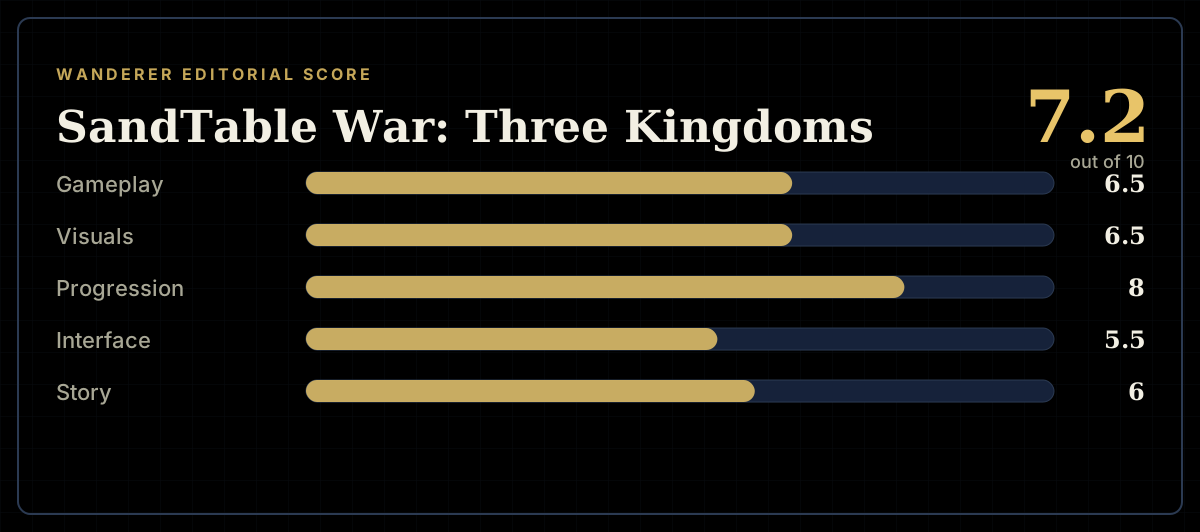
How the review scores each part of the gameWanderer Editorial -
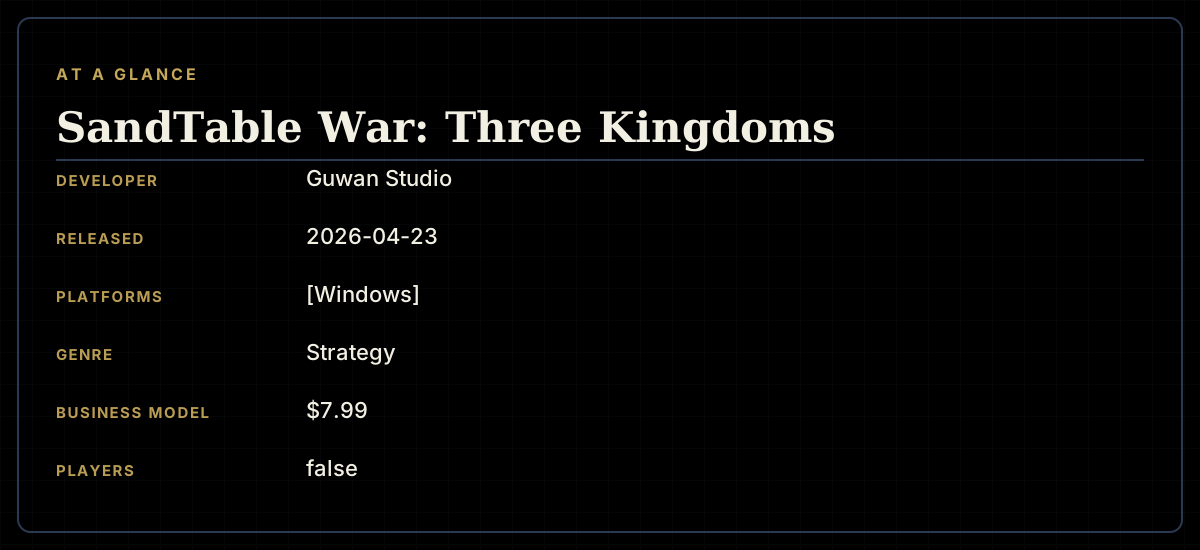
Key facts at a glanceWanderer Editorial -
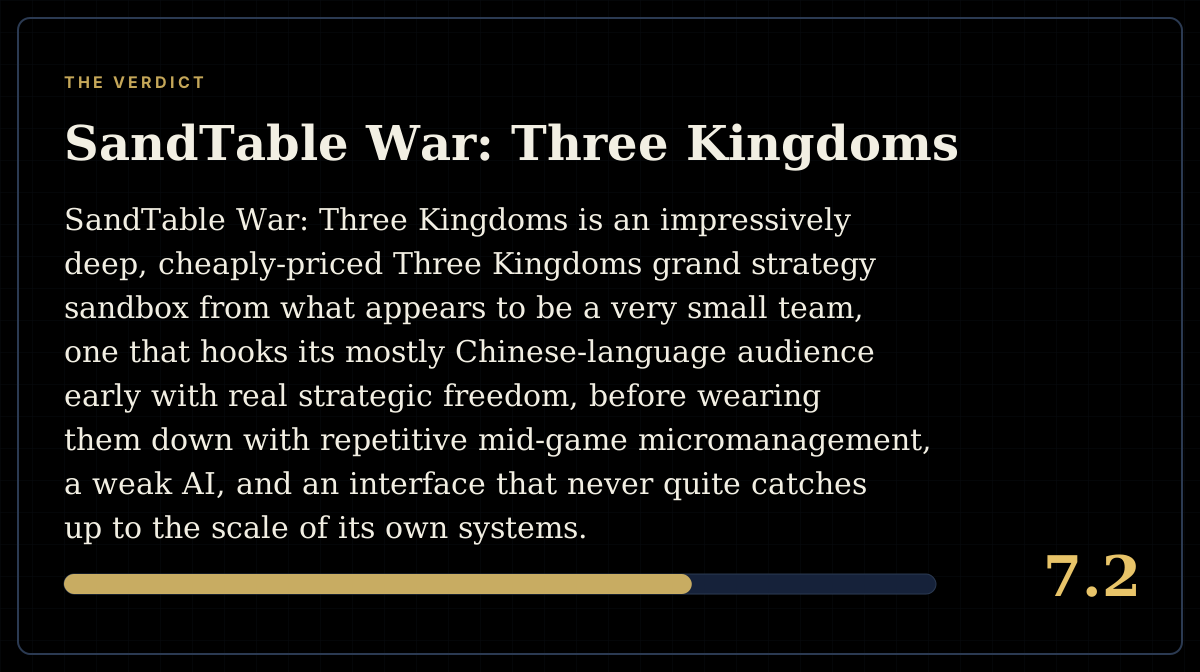
The short versionWanderer Editorial