
Game review
Salvation: Echoes of War Review
6.2 / 10
- Developer
- Infinite Entropy
- Publisher
- Infinite Entropy
- Released
- 1 September 2026
- Platforms
- ["Windows"]
- Genre
- Adventure
A War Pilot's Purgatory, Told Through a Dog
Salvation: Echoes of War opens with a WWI-era pilot named James getting shot down over enemy territory, ejecting, and drowning — only to wake up somewhere stranger: a surreal purgatory built from fragments of his own memory, populated by creatures born from human suffering and fear. It's a third-person adventure that deliberately avoids being a shooter, leaning instead on stealth, environmental puzzles, and a loyal dog companion named Max who helps with navigation and sneaking past the game's light- and sound-sensitive enemies.
The reception has been strong for a debut release from what reviewers repeatedly describe as a two-person team: 18 of 20 English-language reviews are positive, and the broader all-language pool sits at 18 out of 21. "It's interesting that... the team that made the game was only two people," one reviewer wrote. "Now that I've played it, it's even more amazing to me how they were able to create these amazing environments." Developer and publisher Infinite Entropy priced the game at $19.99, a meaningfully bigger ask than most solo or two-person indie debuts, and the review pool suggests that bet has mostly paid off on atmosphere and ambition, if not always on polish.
Stealth, Puzzles, and a Plane, All in One Short Campaign
What reviewers praise most consistently is the sheer variety packed into a single playthrough. The opening stage has players flying a bomber through enemy fire before the crash sequence; later sections shift into third-person stealth, sneaking past enemies who hunt by light and sound; other stretches slow down into environmental puzzle-solving built directly into the game's dreamlike setting. "For sure it's a very unpredictable game, and that works pretty good with the whole setting," one reviewer wrote, describing the mix of "third person stealth action, puzzle and even flying a plane."
That variety comes with an acknowledged cost in polish. Several reviewers flagged stiff movement and clunky controls, minor bugs, and collision issues in specific areas, with more than one recommending a controller over keyboard and mouse. "Some of the mechanics aren't super polished, which is pretty much what I'd expect from a small indie game," one wrote, "but there's a surprising amount of variety and they're usually used in interesting ways." The puzzles themselves draw praise less for difficulty than for how tightly they're woven into the story — one reviewer noted they "often feel connected to the story or the environment instead of just being random obstacles."
An Atmosphere Built on Art, Music, and Extensive AI Production
Nearly every review leads with the same observation: Salvation: Echoes of War looks and sounds far more expensive than its team size would suggest, blending realistic and surreal environments into what one reviewer called "poetry about war." The game runs on Unreal Engine 5 with Nanite geometry and Lumen lighting, and ships with full English voice acting alongside subtitles in eight additional languages.
Worth flagging plainly for prospective buyers: a substantial share of reviewers specifically call out the studio's heavy use of generative AI across the game's cutscenes, voice acting, music, and promotional stills. One reviewer described the game as likely to be "polarizing" for exactly this reason, writing that it's "a bold (and dare I say, ambitious?) choice to rely so heavily on AI for one's first release, particularly at a time when anti-AI sentiment is so strong," while judging the actual results as "mostly yes, and sometimes no" on quality. Another reviewer was more skeptical of the payoff, noting "the first impression will probably push away anyone who is not a fan of AI generated content," though they ultimately still recommended the game. A few reviewers wished the AI-generated cutscenes had instead been rendered in-engine like the rest of the presentation. This is squarely a case of a small studio disclosing and leaning into AI tooling as part of its stated production process rather than concealing it — reviewers discuss it openly rather than treating it as a hidden discovery — but it's a real dividing line in the review pool and worth knowing before buying.
Two Developers, a Public Demo, and Fast Post-Launch Patching
Infinite Entropy's rollout shows real discipline for a two-person team charging a premium indie price. A public demo went up in June 2026 as part of Steam Next Fest, and the developers followed up afterward with a dedicated thank-you post promising to read "every single piece of feedback." One reviewer who'd followed the project for months confirmed the payoff: "the game was much cleaner than the demo, and some of the demo's bugs didn't occur at all in the game." Launch itself came with day-one Windows support for NVIDIA DLSS 4.5, full multi-language subtitle support, and a patch shipped just two days after release fixing a specific checkpoint-related cutscene bug.
That kind of rapid post-launch attention matters here, because the review pool consistently describes the game as promising but unfinished at the edges — limited video settings (several reviewers were frustrated to find themselves locked to 60fps with heavy motion blur they couldn't disable), sound design that "requires some work," and mechanics that work but don't always feel tight. "A rough but promising attempt... worth supporting," as one reviewer put it.
Verdict
Salvation: Echoes of War is an ambitious, visually striking debut that swaps combat-driven horror for something stranger and more contemplative — a soldier's purgatory built from stealth, puzzles, and a genuinely well-liked dog companion. The variety of gameplay across its short campaign is a real strength, and the atmosphere, art direction, and central metaphor land for most of the people who've played it. But the mechanical polish hasn't fully caught up to the ambition, the video and control options are limited at launch, and the studio's heavy reliance on generative AI for cutscenes, voices, and music will be a hard line for some players regardless of how transparently it's presented. At $19.99 from a two-person team, it's a reasonable bet for players drawn to atmosphere-first indie adventures who can look past some rough edges — less so for anyone who wants a tightly polished experience or who specifically wants to avoid AI-assisted production.
Screenshots
-
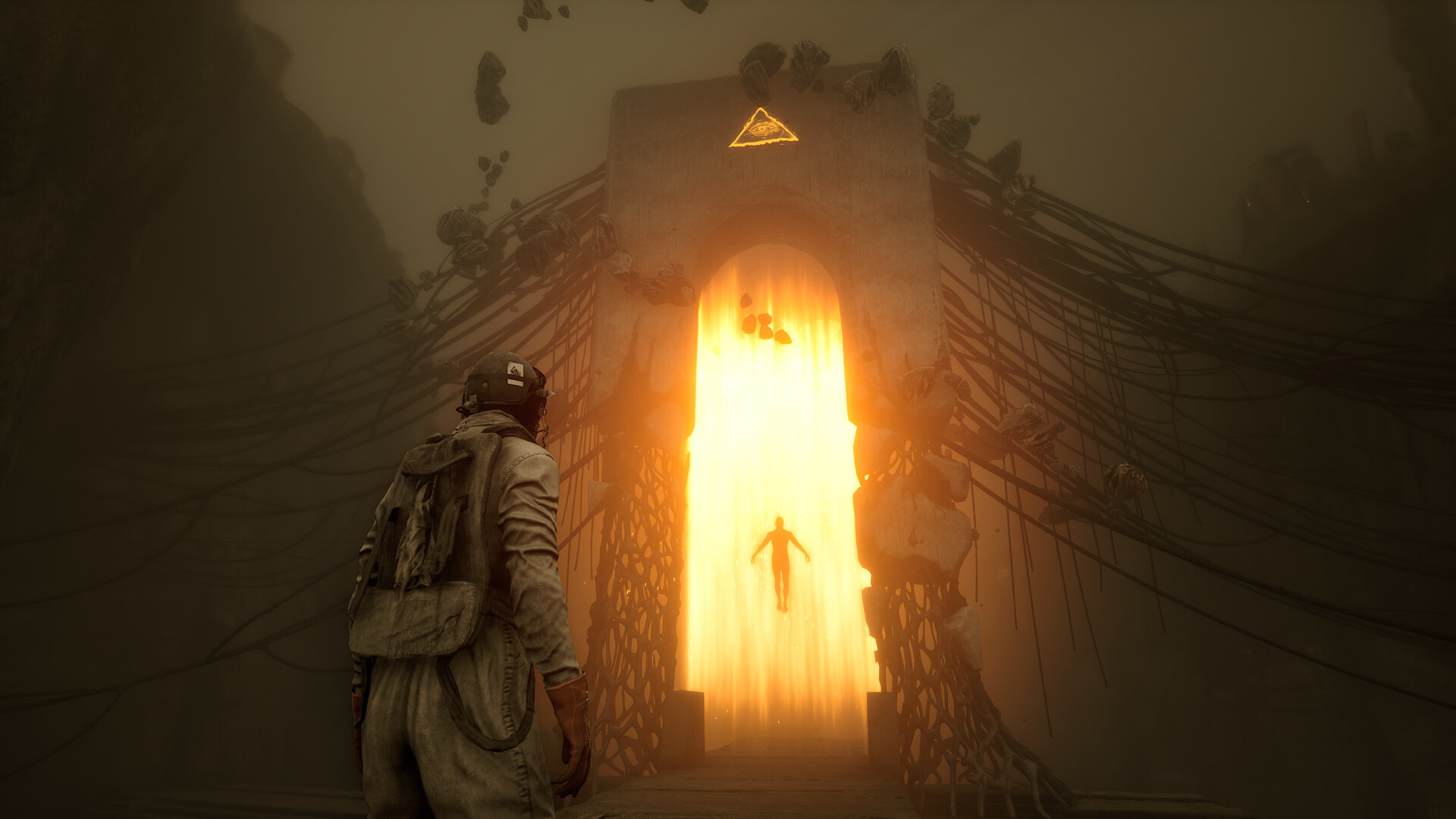
Purgatory reveals itself through surreal stone gateways like this one, marked with an all-seeing eye and framing a floating silhouette.Image: Infinite Entropy via Steam -
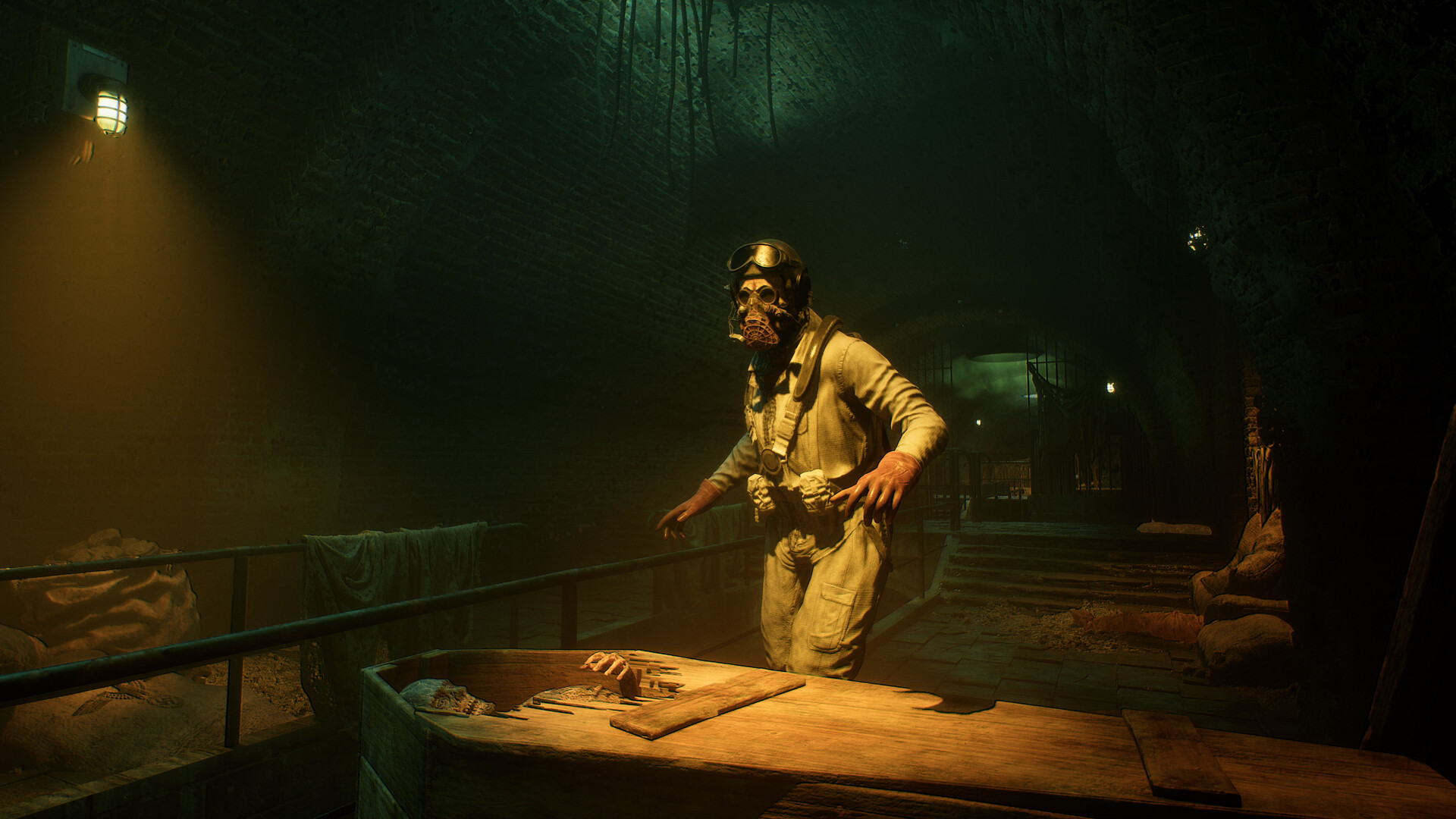
Much of the game plays out in claustrophobic, lantern-lit tunnels, where James pieces his past together from what he finds.Image: Infinite Entropy via Steam -
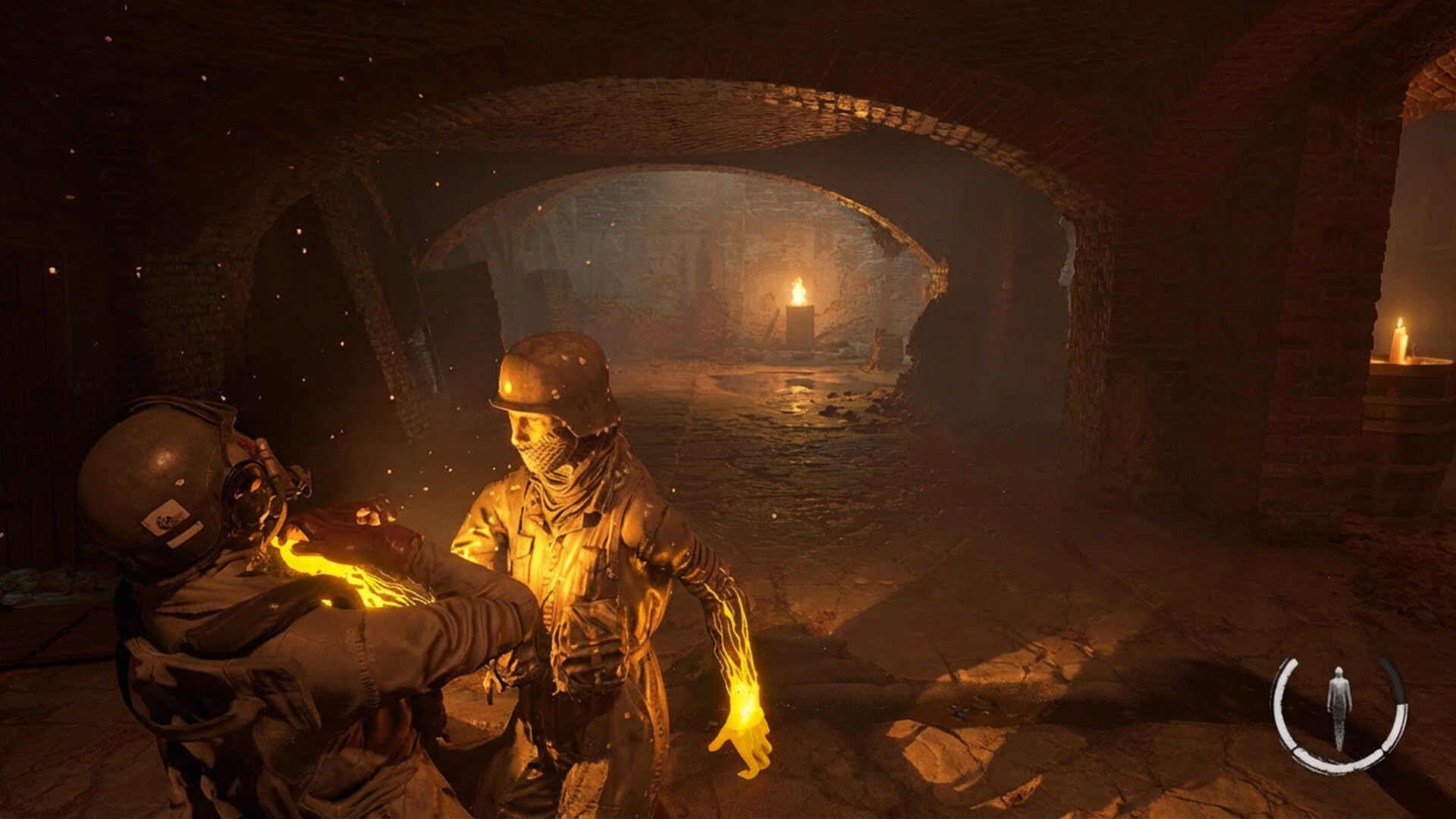
Enemies like this glowing, decayed soldier hunt by light and sound, with a detection meter tracking how exposed the player is.Image: Infinite Entropy via Steam