Game review
Tales of Fear - Episode Zero Review
7.1 / 10
- Developer
- MediaTale
- Publisher
- MediaTale
- Released
- 1 September 2026
- Platforms
- ["Windows"]
- Genre
- Adventure
Three True-or-False Horror Stories, For Free
Tales of Fear - Episode Zero is a first-person horror anthology built around a simple, sticky hook: three short, self-contained stories, and at the end of each one, a question. Was that based on something real, or did MediaTale make it up entirely? The reveal comes as a short documentary-style narration explaining the true inspiration (or lack of one) behind each case, and it is, by a wide margin, the thing every review of this game leads with. It is also, remarkably, completely free.
That combination has landed extremely well. The English-language pool sits at 175 positive out of 183 reviews (Very Positive), and the broader all-language total climbs to 365 positive out of 379 — a 96 percent approval rate that would be strong for a paid release, let alone a free debut anthology from a small studio releasing its first game. MediaTale developed and published the game itself, and reviewers have been almost uniformly stunned that something this polished costs nothing: "How is this game completely free?!" and "I can't believe this was free" are refrains that show up across dozens of the write-ups.
Three Cases, Three Very Different Fears
The anthology structure is the game's clearest strength. Case 01, "Enfield Encounter," puts players in the role of Patrick McKelvy, whose quiet evening turns into a confrontation with something that "does not exist in any history book." Case 02, "Alice and Bob," swaps haunted-house horror for tech-workplace dread: a night-shift employee is left alone with an AI experiment at a large tech company after his colleague has an emergency, and things go, in the game's own words, "well, too well." Case 03, "Doai Station," follows freelance journalist Kaito on the last train home, building toward a phone call with his brother that cuts out at exactly the wrong moment, drawing on the real-world urban legend surrounding Japan's actual Doai Station.
Reviewers consistently praised the variety across the three cases as much as any individual story. "Each of the three stories has its own distinct, polished environment," one wrote, while another called the third case "the standout... it could support an entire standalone game." The stories run roughly 30 minutes apiece, giving the whole anthology a total runtime under two hours — short by most standards, but tightly focused rather than padded.
A Guessing Game Built Into the Credits
The true-or-false conceit is doing real work here, and it's consistently the detail reviewers single out as fresh: "the whole concept of playing a story and trying to figure out if its true or not at the end," as one put it, comparing the format favorably to TV shows like Beyond Belief: Fact or Fiction and The X-Files. Several reviewers explicitly said they'd have paid money for the experience regardless of the free price tag.
Where the anthology draws more mixed reactions is on the scares themselves. A meaningful minority of reviewers found the horror thin rather than effective: "not scary in the slightest," "the same jumpscare over and over," and "more of a simulator than a horror game" all appear among the negative write-ups, alongside complaints about janky movement, menu navigation that can't be backed out of, and a flashlight bug that reportedly tanked one player's frame rate. Worth noting for prospective players: a handful of English-language reviewers raised suspicions about AI-generated voice work in the anthology, with one calling it "kinda ironic" given that Case 02 is itself a cautionary tale about losing control of an AI system, and another simply hoping "the dev doesn't use AI voices in the next episode." MediaTale hasn't addressed the claim directly in its own patch notes, and the overwhelming majority of reviewers instead praised the voice acting as a highlight of the presentation — but the complaint surfaced often enough across the review pool to be worth flagging here rather than glossing over.
Short, Polished, and Already Plotting a Sequel
MediaTale's own development history backs up the sense of a small team punching above its weight. A demo went up in January 2026, followed by two livestreamed demo sessions during Steam Next Fest in February and March, where the developers fielded questions directly from prospective players. A June devlog confirmed Case 02 was complete and Case 03 was in progress, and the studio spent the two weeks before the September 1 launch in what it described as a dedicated "fine-tuning and bug hunting" phase. That care continued after release: a font-rendering patch went out the very next day, fixing a memory issue that corrupted Chinese and Japanese text during extended play.
Most tellingly, MediaTale used its own launch-week news post not to promote the game further, but to announce what comes next: "Tales of Fear - Episode One is coming 2027," explicitly thanking players who left "an honest review" for shaping that decision. For an anthology whose entire premise depends on repeat visits and trust built over multiple episodes, that kind of direct, immediate engagement with the review pool is a promising sign for where the series goes from here.
Verdict
Tales of Fear - Episode Zero is a confident, well-produced horror anthology that gets more mileage out of its true-or-false framing device than most full-priced horror games get out of an entire campaign. The three cases are visually distinct and full of small, considered details, and giving the whole thing away for free is a genuinely disarming pitch from a first-time studio. It isn't consistently scary — plenty of reviewers found the jump scares repetitive and the overall runtime slight — and the scattered suspicion around AI-generated voice work is worth knowing about going in, even though most players praised the performances outright. But as a free, two-hour proof of concept for a promised 2027 sequel, it's very hard to argue with the price, and even harder to argue with a 96 percent approval rating built almost entirely on word of mouth.
Screenshots
-
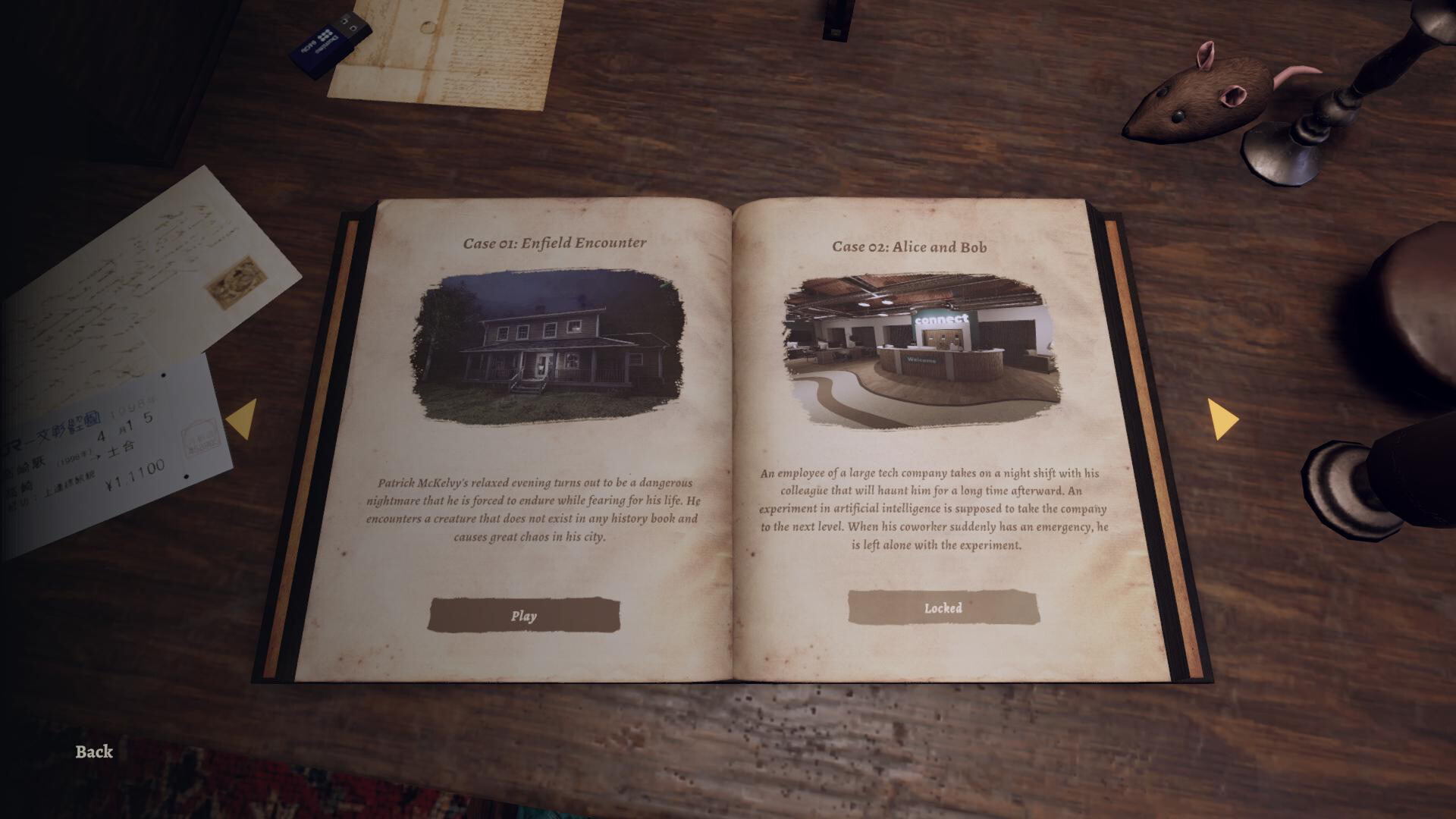
The case-select menu frames each story as a page in a desk-bound storybook, with Case 02 locked until Case 01 is finished.Image: MediaTale via Steam -
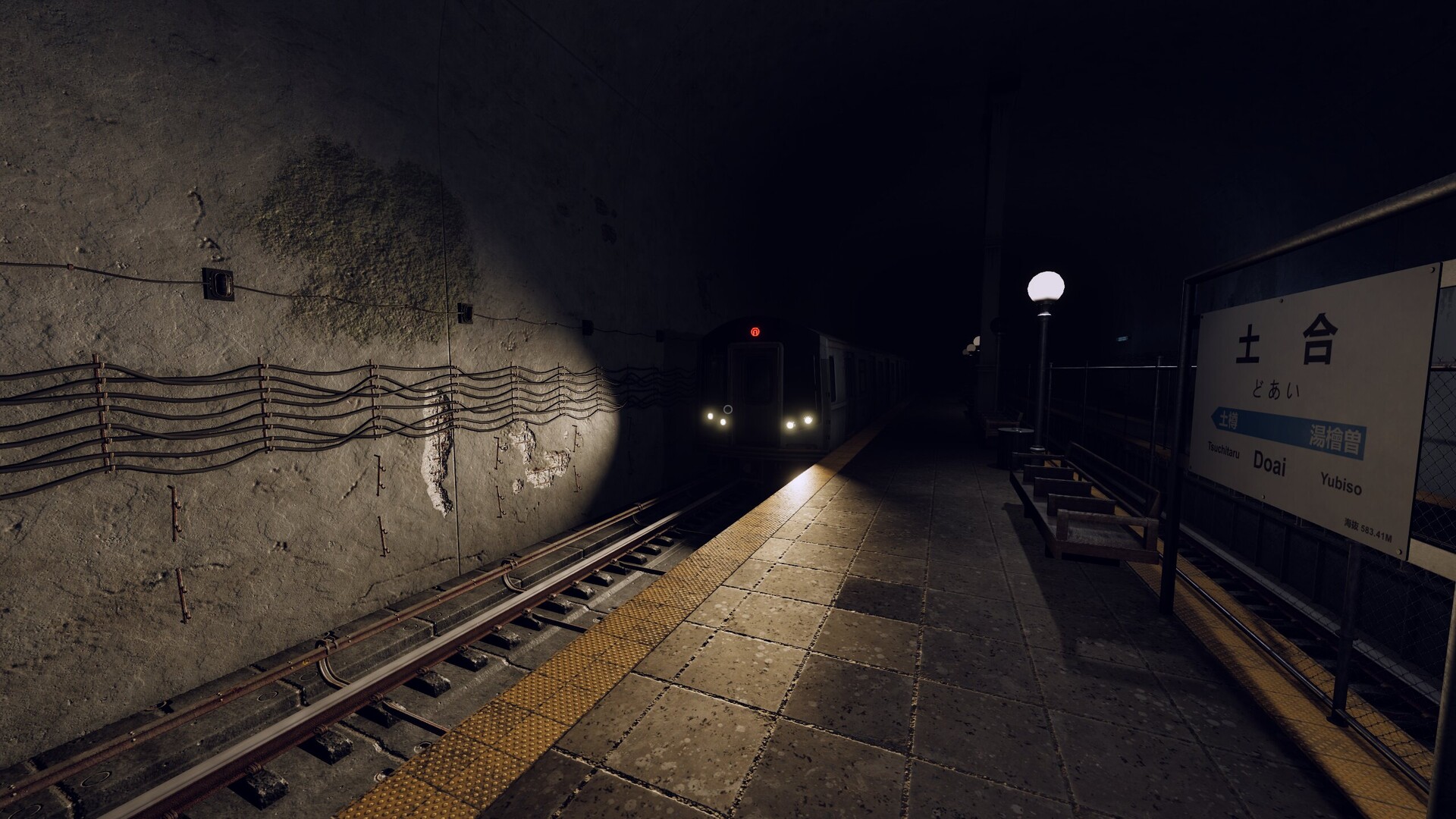
Case 03 recreates the real Doai Station in Japan, the setting for freelance journalist Kaito's late-night disappearance.Image: MediaTale via Steam -
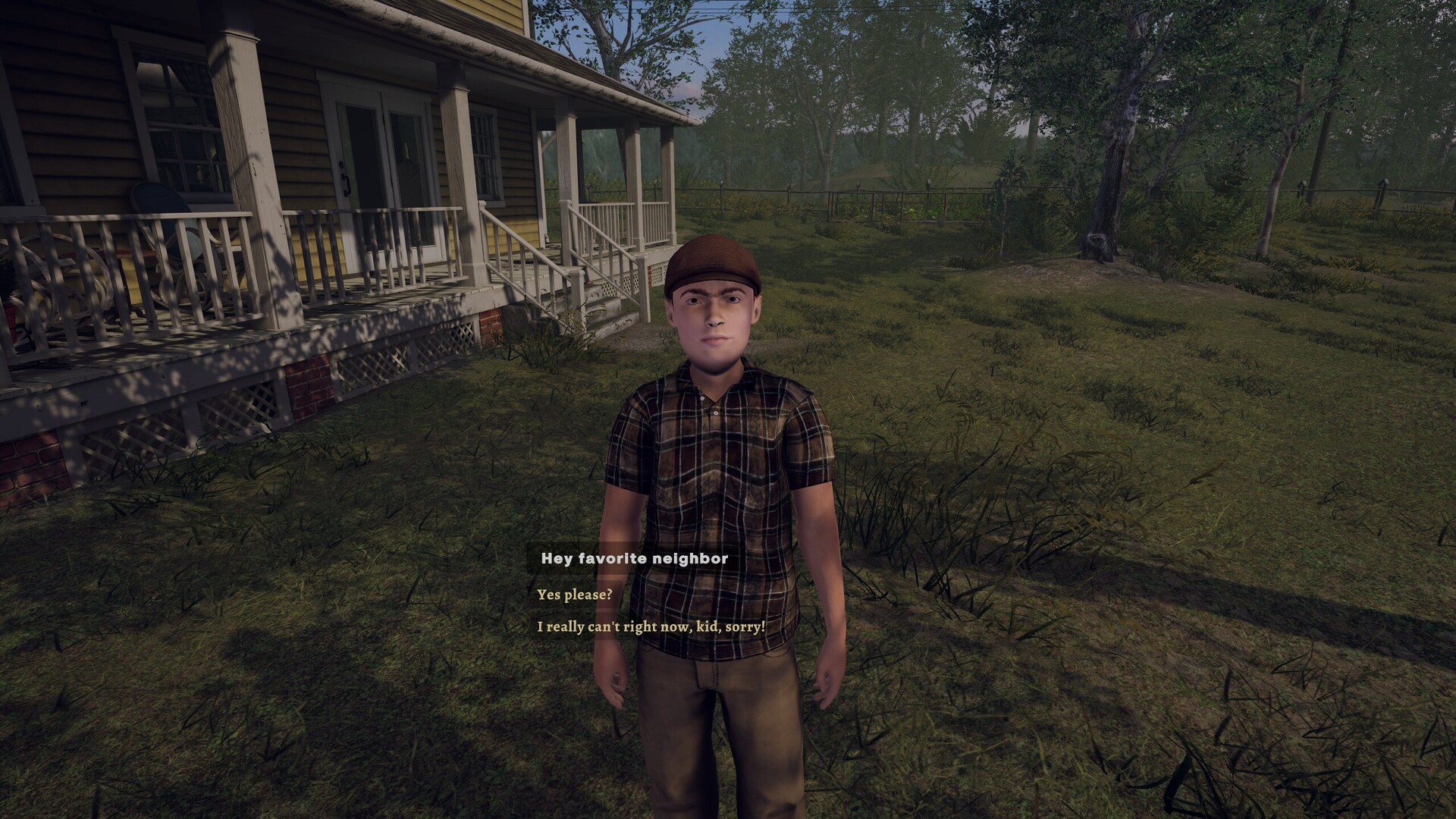
Case 01's Enfield Encounter opens in ordinary daylight, well before its "relaxed evening" turns into a nightmare.Image: MediaTale via Steam