Game review
Rustbound Review
4.5 / 10
- Developer
- Wylde Wisp Games
- Publisher
- Wylde Wisp Games
- Released
- 16 July 2026
- Platforms
- ["Windows"]
- Genre
- Simulation
A Hopeful Premise for the Post-Apocalypse
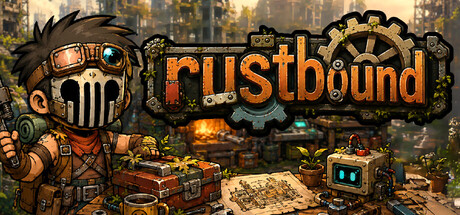
Rustbound asks players to rebuild rather than just survive: scavenge a forgotten ruin, turn it into a working settlement, and grow a shop-and-crafting economy out of scrap and salvage. It's a $14.99 management RPG from Wylde Wisp Games that blends colony-sim base building with a shopkeeper loop, and its review sample so far is small and leaning negative — three positive reviews against four negative, with the negative reviews consistently pointing at specific, reproducible problems rather than vague dissatisfaction. That's a useful signal on its own: this isn't a game splitting opinion on taste, it's a game where a promising concept keeps running into concrete execution issues.
The Core Loop Works, When Nothing Gets in Its Way
At its best, reviewers describe a genuinely satisfying rhythm: craft gear, set your own shop prices, sell to customers passing through, then send a hero out to gather more resources so you can craft something better and start the cycle again. One reviewer calls it "really fun," singling out the pull of constantly upgrading the town and unlocking new stations as a classic "just one more run" hook. Another, who's logged over 44 hours, praises the balance specifically — the game lets you lean into an easier, more casual pace with simpler quests, or keep pushing toward harder goals, and calls the small rush of finding new equipment or unlocking a crafting station a reliable source of momentum throughout.
A Stat-Tracking Bug Undermines the Whole Crafting System
The sample's most serious complaint shows up independently in two separate reviews, which lends it real weight: items that state they boost one stat actually apply their bonus to a different stat entirely. One reviewer frames this as a dealbreaker significant enough to refund over, pointing out that since stats are the backbone of the entire crafting and equipping loop, this single bug makes it impossible to trust any item you make or find. A second reviewer independently confirms the same category of problem in less detail, adding that the mastery list also fails to update correctly alongside it. For a game built entirely around gearing up characters through crafted equipment, a bug at that specific layer isn't a minor annoyance — it strikes at the system the rest of the game depends on.
Missing Tools Make a Confusing System Worse
Compounding the stat bug, one detailed negative review points out there's no master list of items to browse or sort through anywhere in the game, forcing players to click through multiple separate windows just to hunt down a piece of gear that might help a specific character — a search made pointless, the reviewer notes, by the fact that the displayed stats on those items may not even be correct in the first place. It's a case where a missing quality-of-life feature and an active bug compound each other rather than existing as separate complaints.
Progression Feels Uneven, and Rushed in Places
Beyond the specific bugs, more than one reviewer describes the overall pacing as the game's weaker half. One reviewer who put in nearly 15 hours says the outline for a good game is clearly present, but progression currently isn't smooth. Another reviewer who finished the game in just over 11 hours calls the underlying concept solid while describing the execution as "probably rushed," a sentiment echoed by the game's short completion time relative to the depth of systems it's advertising — a settlement-building economy game that some players are finishing in half a work day suggests the content simply hasn't caught up to the framework yet.
A Real Technical Complaint on Display Scaling
One reviewer who refunded the game specifically flags a "terrible" resolution scaling issue as a major flaw sitting alongside the game's other problems, describing it in enough detail to read as a genuine, reproducible display bug rather than a personal hardware quirk. Paired with the interface friction already noted around item browsing, it points at a build that could use a broader pass on basic usability before its deeper systems get fair evaluation.
Small Sample, but a Consistent Story
With only seven reviews total, this is a genuinely thin sample to draw firm conclusions from, and it's worth noting the positive reviews aren't outliers making excuses — they're describing a real, well-considered loop that clearly can be fun when it's working as intended. But the negative reviews aren't scattered complaints about different things either; they consistently circle back to the same handful of issues — broken item stats, missing list tools, rushed-feeling progression, and a resolution bug — which is a pattern that should carry more weight than the raw review count might suggest. One of the negative reviewers even opens with a lengthy disclaimer about their own reviewing habits, stressing that a short playtime doesn't automatically mean a bad game, which makes their decision to refund after less than two hours read as a genuinely considered judgment rather than an impulsive one.
Verdict
Rustbound has a genuinely appealing hook — building a shop-and-crafting economy out of post-apocalyptic scrap, with real balance between a relaxed pace and a harder push — and when the systems cooperate, reviewers describe exactly the kind of "just one more run" satisfaction the genre promises. Right now, though, a stat-tracking bug at the heart of its crafting loop, a missing item-browsing tool, and reports of rushed pacing and a resolution scaling issue add up to a launch that needs real patching before it's ready to be judged on its concept alone. Worth watching for genre fans, but better to wait for a patch or two before buying in at full price.
Screenshots
-
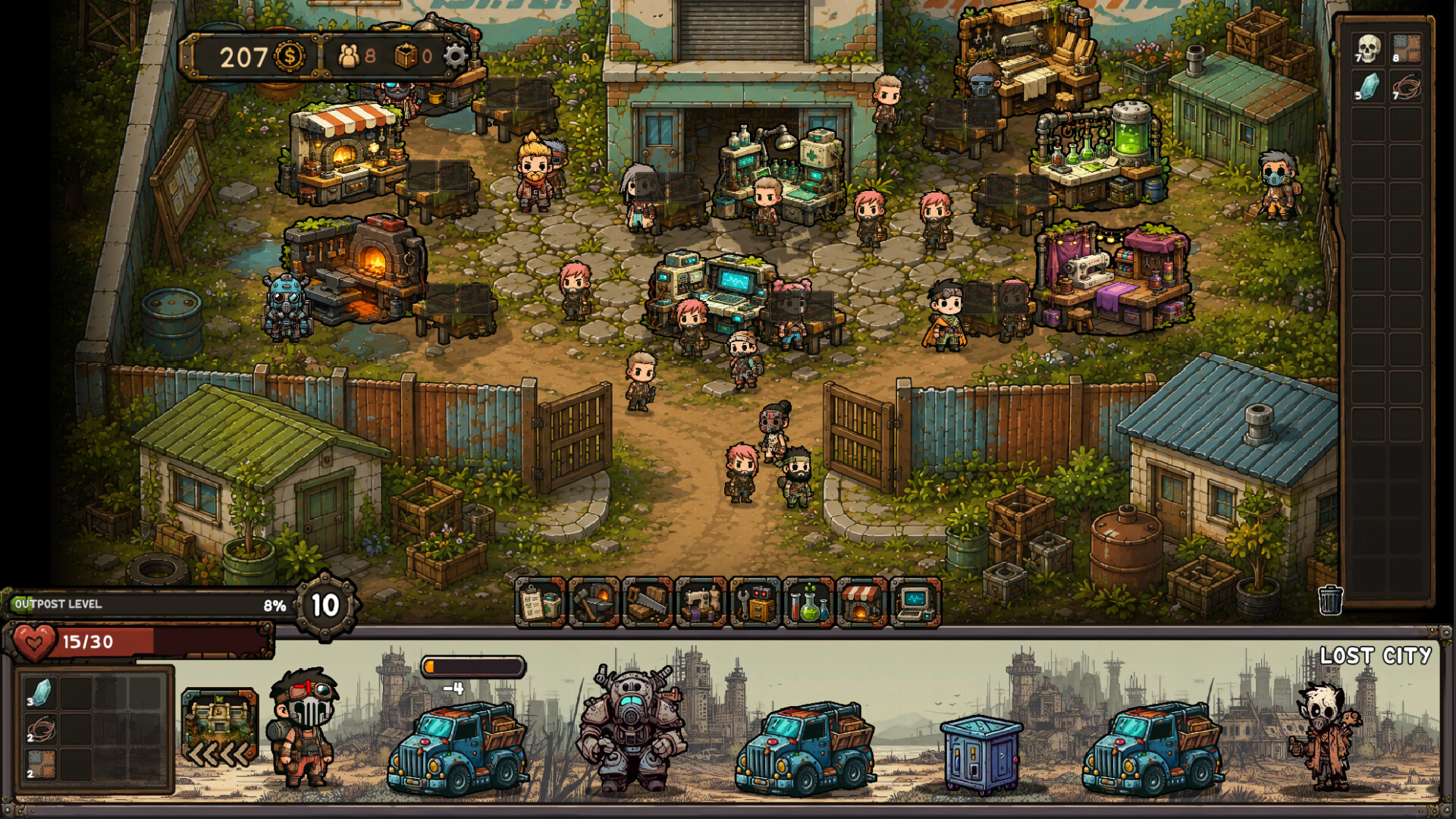
The settlement fills up with specialized workshops fast, one half of the two-sided crafting-and-shopkeeping loop reviewers praised.Image: Wylde Wisp Games via Steam -
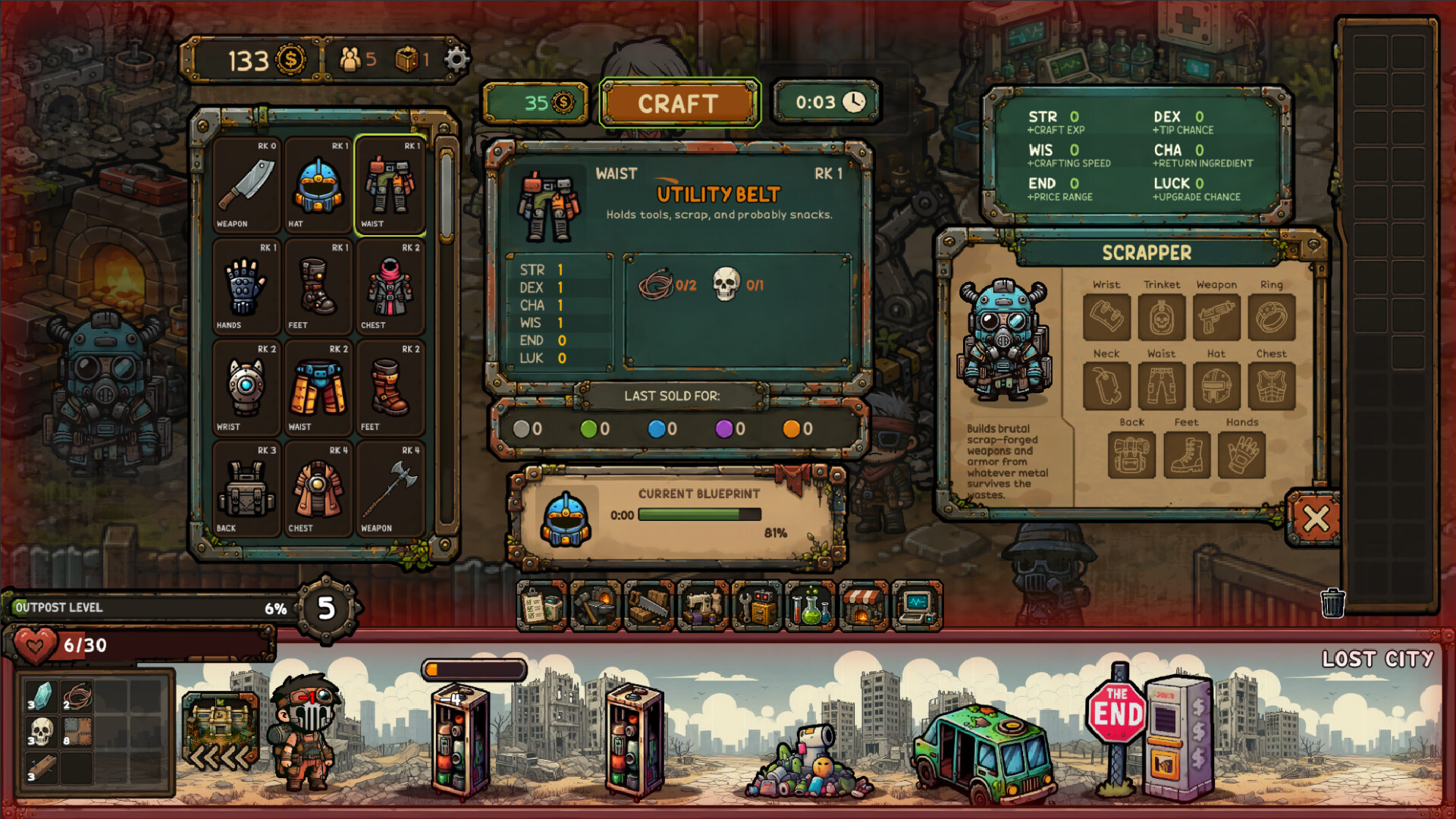
This is the crafting screen where reviewers report an item's listed stat bonus doesn't always match what the character actually receives.Image: Wylde Wisp Games via Steam -
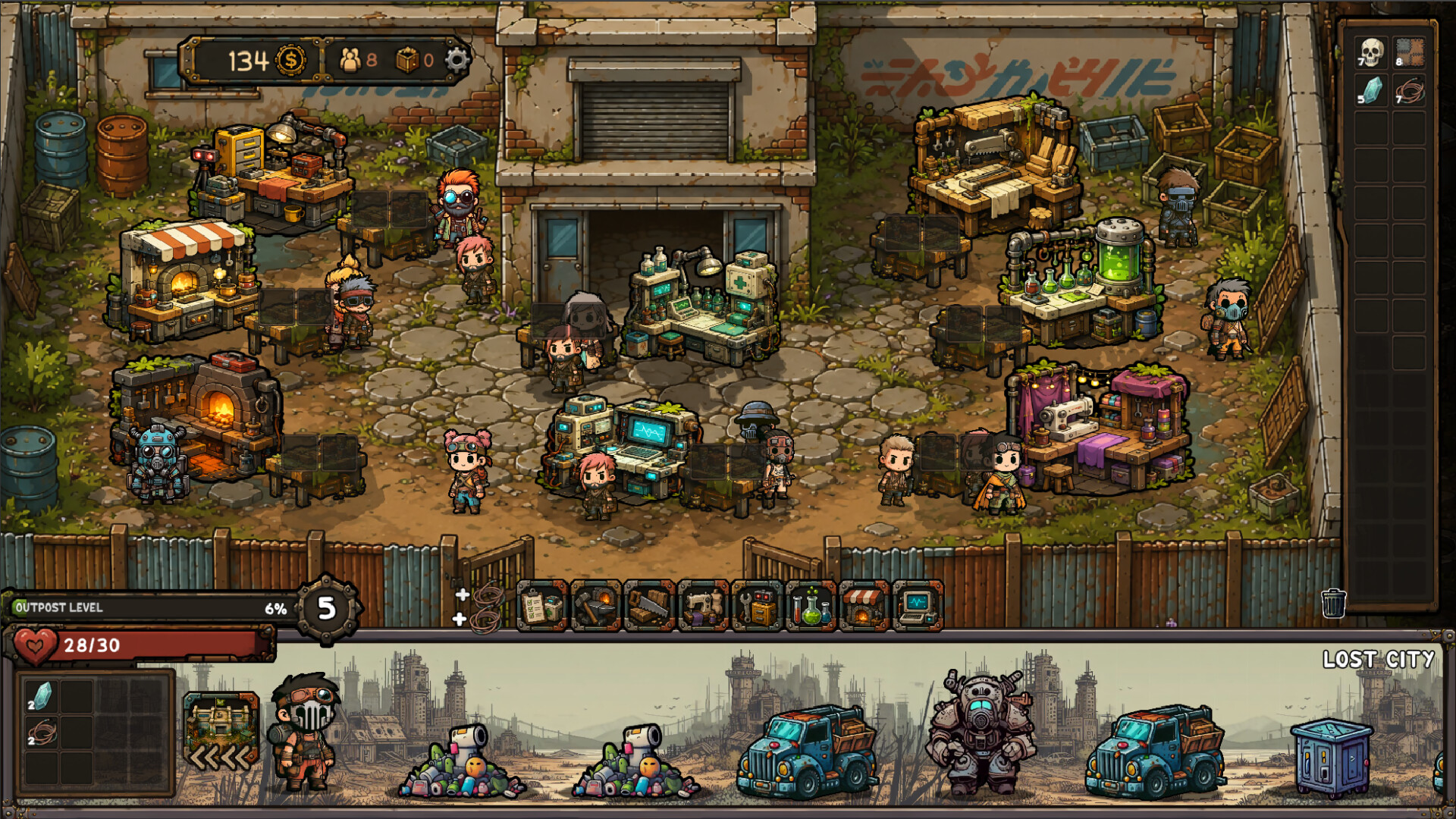
Recruiting more survivors keeps every workshop staffed, one of the town-upgrade hooks reviewers say drives the loop forward.Image: Wylde Wisp Games via Steam