
Game review
Petunia's Purgatory Review
8 / 10
- Developer
- Dead Possum Games
- Publisher
- Level Up Gaming
- Released
- 16 July 2026
- Platforms
- ["Windows"]
- Genre
- Simulation
A Farming Idler That Lives on Your Taskbar, Not Your Screen
The desktop-companion idler has become a small, crowded genre since games like Rusty's Retirement proved that people will happily let a tiny farm sit at the bottom of their monitor while they work. Petunia's Purgatory takes that exact template and grafts a Lovecraftian horror story onto it: you tend cursed crops, feed an Elder God living in the barn, and manage a sanity meter that determines whether your desktop stays calm or starts cracking apart. It's a small, cheap game from a small studio, and the review sample — every single one of its 57 reviews positive — suggests it has found precisely the audience it was built for.
The Cute-and-Creepy Contrast Is the Whole Pitch, and It Lands
Reviewers repeatedly describe the same experience: soft pixel art and a cozy farming loop lure you in, and then the game reveals what you actually signed up for. Crops require blood to grow, sacrifices go to a barn-dwelling deity, and letting the sanity meter drop triggers screen cracks, black tendrils, and doppelganger effects that bleed out past the game's own window onto the rest of your desktop. Multiple reviewers call this the best part of the game specifically because it's unexpected — you boot up what looks like a Stardew-adjacent farm sim and end up startled by your own cursor acting strange mid-spreadsheet. The tonal whiplash between "adorable" and "unsettling" is mentioned constantly, and it's consistently framed as a strength rather than a gimmick that wears thin.
The Sanity System Gives an Idler an Actual Decision to Make
Most desktop idlers are pure background noise — plant, wait, collect, repeat. Petunia's Purgatory adds a real tension to that loop: cursed, high-value crops drain sanity, while flowers and décor restore it, and a low sanity meter doesn't just look cool, it changes what's happening on your farm. Several reviewers single this out as the mechanic that elevates the game above its genre peers, comparing it favorably to Rusty's Retirement while noting this one gives you an actual push-and-pull to think about rather than a purely passive loop. A few admit to deliberately tanking their own sanity just to see what happens, which is a strong sign the systems are inviting experimentation rather than punishing it.
Not Every Idler Wants This Much Interaction
The one recurring critique in an otherwise glowing sample is that the game asks more of the player than a typical idle game usually does. There's no way to fully automate seed planting early on, so players who want to leave the game running untouched for hours report having to check back in more often than they'd like, at least until upgrades and Sprite helpers unlock later. One reviewer explicitly changed their habits around the game because of this, noting it interfered with using it as pure background noise while working. It's a real design tension: the same interactivity that makes the sanity system compelling also means this isn't quite the "fire and forget" idler some buyers are shopping for, and the game does offer a slower-paced Focus Mode as a partial answer.
Genuinely Cheap for What's Here
At $6.99, value comes up unprompted and overwhelmingly favorably. Reviewers repeatedly call it an "absolute steal" given the amount of content to unlock — multiple farm scenarios, dozens of achievements, unlockable Sprite automations, and a full progression system layered under the idle-game surface. Several note they expected a much thinner experience for the price and were surprised by how much there was to manage and optimize. For a niche, low-price genre where many entries are essentially one mechanic repeated, reviewers consistently frame this one as punching above its price point.
Presentation Reviewers Keep Praising by Name
Music and art come up in nearly every review, which is unusual density for a small idle game. The lo-fi soundtrack is called "chill," "cozy," and "perfect productivity music" by reviewers who specifically use the game while working, streaming, or half-watching TV — the exact use case the desktop-companion format is built for. The pixel art for individual crops and Sprite helpers gets specific, affectionate call-outs (the water-spitting slime is a favorite), and more than one reviewer notes the soundtrack loop is short enough to notice after extended play, the only presentation complaint that surfaces more than once.
A Small Community Has Already Formed Around It
Worth noting for a game barely two months old: reviewers already refer to themselves as "tunies," reference in-jokes about the Elder God and blood sacrifices, and describe checking the game's Steam page for updates and livestreams. That kind of self-organizing community fandom is a strong secondary signal for a niche release, on top of the review scores themselves, and suggests the developer's post-launch cadence (a content-complete automation update landed in September) is keeping the existing audience actively engaged rather than letting the game go quiet after release.
Verdict
Petunia's Purgatory takes a genre that's easy to phone in — sit a farm at the bottom of your screen and call it a day — and gives it a genuine hook with its sanity system and cosmic-horror flavor, all wrapped in charming pixel art and a soundtrack reviewers keep specifically praising by name. It asks a little more attention than the most hands-off idlers in its category, which will matter to buyers looking for pure background noise, but at seven dollars with a surprising amount of content to unlock, it's an easy recommendation for anyone who wants their cozy farm sim with a side of eldritch dread.
Screenshots
-
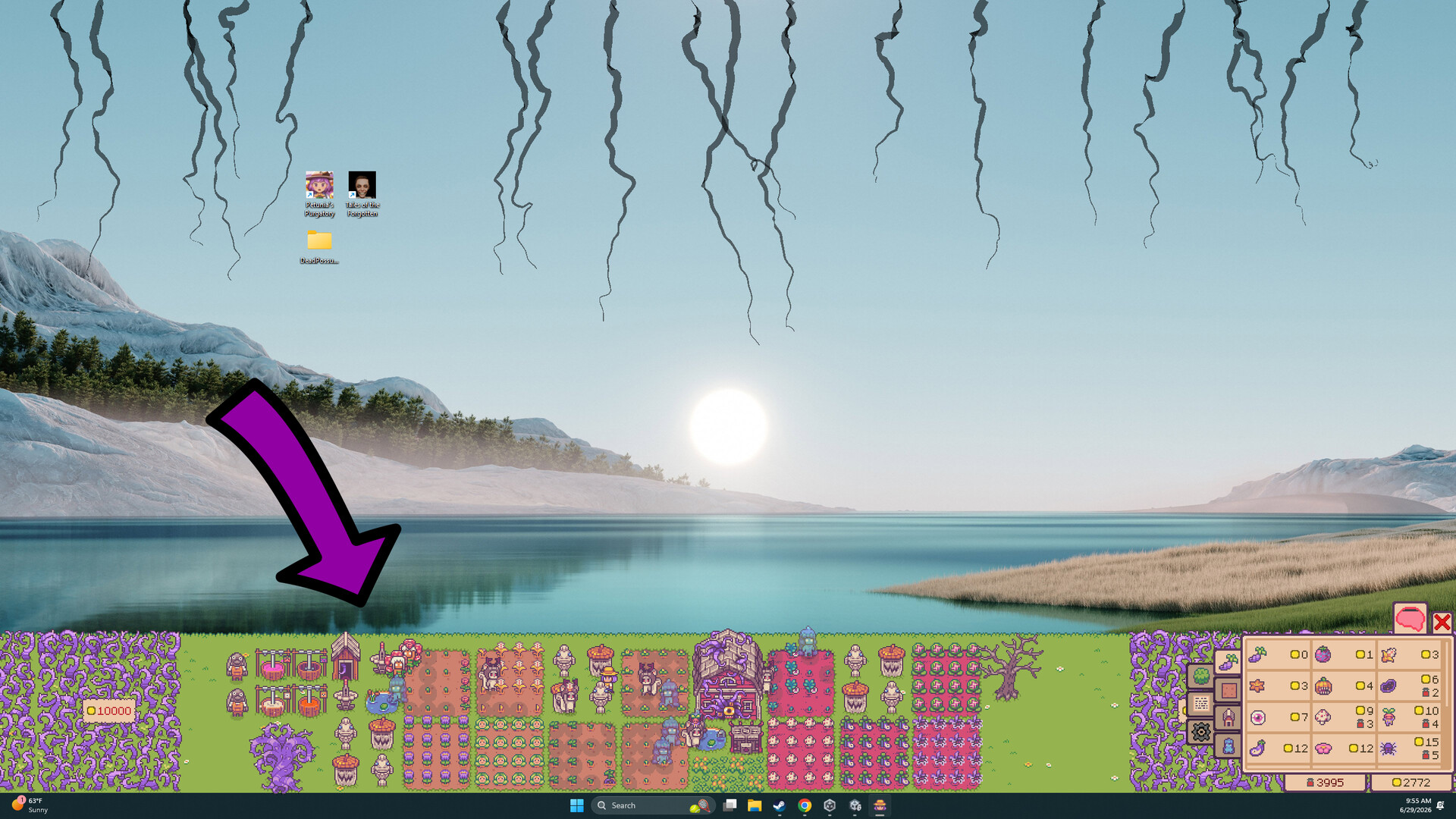
The farm docks to the bottom of the desktop rather than taking over the screen, and low sanity starts cracking the display itself, tendrils and all.Image: Dead Possum Games via Steam -
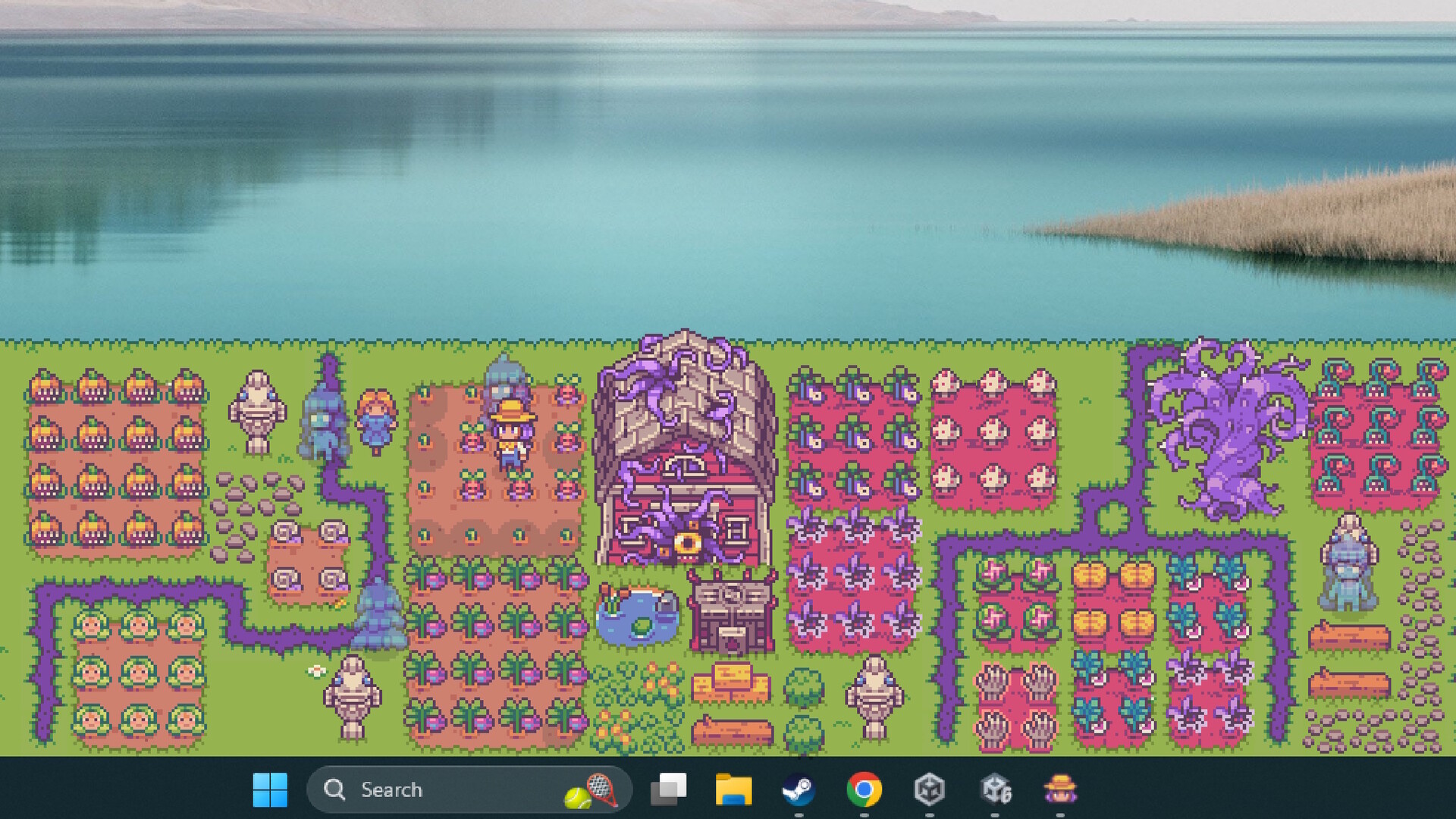
The barn where offerings go to the Elder God sits at the center of the farm, tentacles and all, flanked by crop plots and Sprite helpers.Image: Dead Possum Games via Steam -
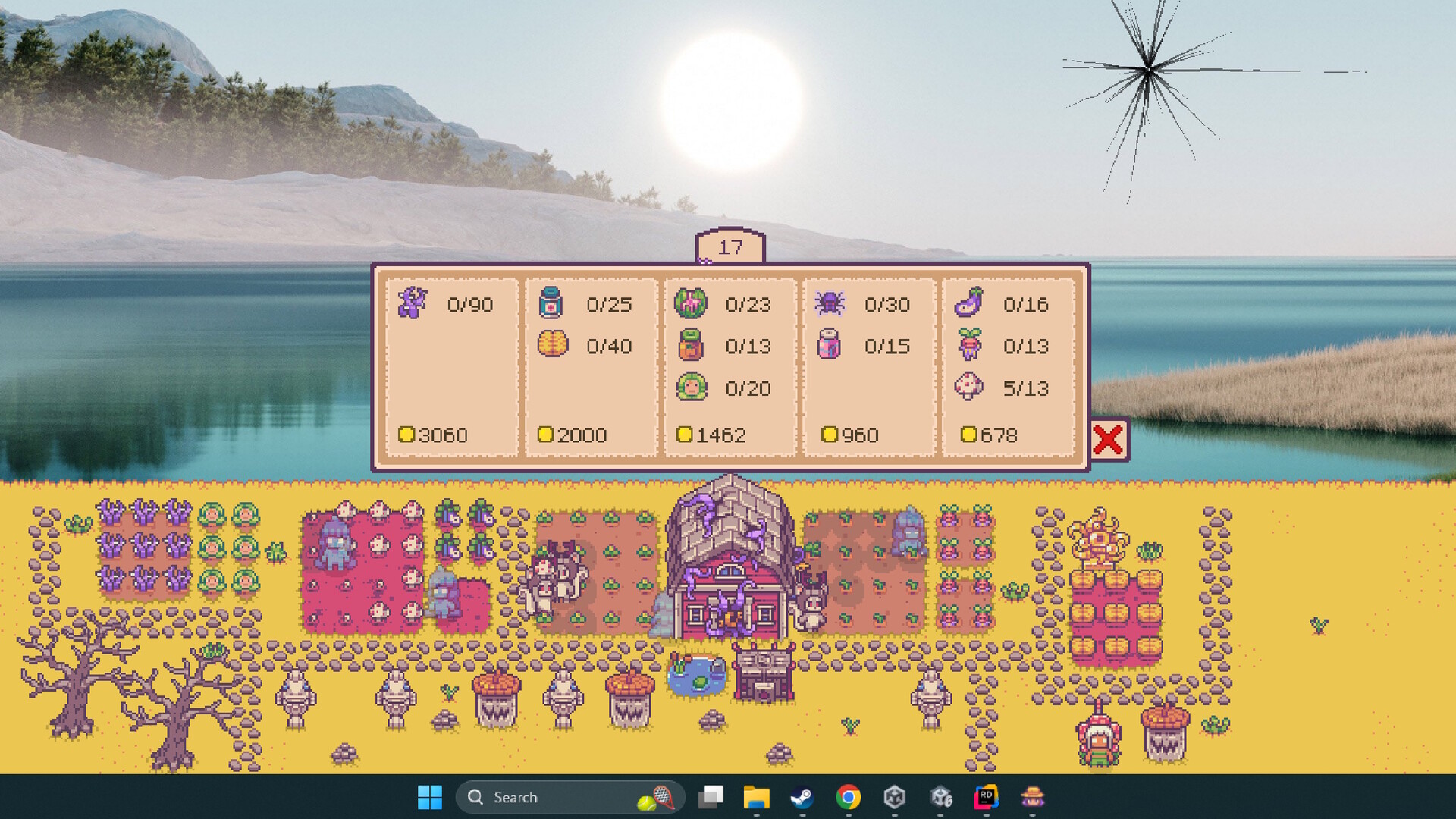
Fulfilling quota requests is one of several systems layered under the idle surface, alongside unlocks, upgrades, and Sprite automation.Image: Dead Possum Games via Steam