Game review
Rune Log
6.5 / 10
- Developer
- Carlo Freiria
- Publisher
- Carlo Freiria
- Released
- 4 August 2026
- Platforms
- Windows
- Genre
- Cryptogram puzzle with detective narrative framing
- Monetisation
- One-time purchase, no DLC, no in-game purchases, no Steam achievements
- Players
- Single-player only, no multiplayer or co-op modes of any kind
The short version
Rune Log decodes short runic scriptures using letter frequency, repeated symbols and context clues, then asks you to type your own conclusion about what actually happened. The decoding half is tightly tuned and genuinely satisfying. The interpreting half, sold as the game's emotional payoff, turns out thinner in practice than the pitch suggests, and a rough, keyboard-unfriendly interface adds friction the cipher work doesn't need. A fair, cheap puzzle game from a single developer, held back from a stronger score by its own second half and a near-total absence of other players to check your impressions against.
Biggest strengths
- Each cryptogram is genuinely well tuned, leaning on letter frequency, repeated symbols and short anchor words rather than brute-force guessing
- The bundled Rune Generator tool builds a custom cipher alphabet and exports blank puzzle sheets and answer sheets as PNGs for pen-and-paper play
- Solo developer Carlo Freiria shipped a text-size option one day after launch, a good early sign for ongoing support
Biggest weaknesses
- The "type what it means" half rarely poses a real riddle — the fullest public account of playing it says the intended meaning is always obvious once the cipher is broken
- Word boundaries in the runic scripture are marked only by faint underscores, and several runes are similar enough to mix up at a glance
- No dedicated way to move through the cipher grid by keyboard, only an unofficial workaround through the interface's Tab order
Who it's for: Cryptogram and substitution-cipher fans who like solving with pencil-and-paper logic, and anyone who enjoyed the decoding half of Chants of Sennaar and wanted more of exactly that, minus the exploration.
Our recommendation: At NZ$6.31 the price matches the scope honestly, and the case-by-case structure suits short sessions well. Go in expecting a cryptogram game with a detective-story wrapper rather than a detective game, and budget patience for a UI that hasn't fully caught up to the puzzles it's presenting.
6.5 / 10
Rune Log asks you to be two things at once: a cryptographer and a village confessor. Every case hands you a short scripture written in an invented runic alphabet, and the actual puzzle is standard substitution-cipher work — letter frequency, repeated symbols, short anchor words like THE and AND, filled in against the context of who's asking and why. That part of the game is sharp. What happens after you've broken the cipher, when you're supposed to type out what the decoded words actually mean for the grieving widow or the frightened child standing in front of you, is where Rune Log's reach exceeds its grip.
Decoding is the real game
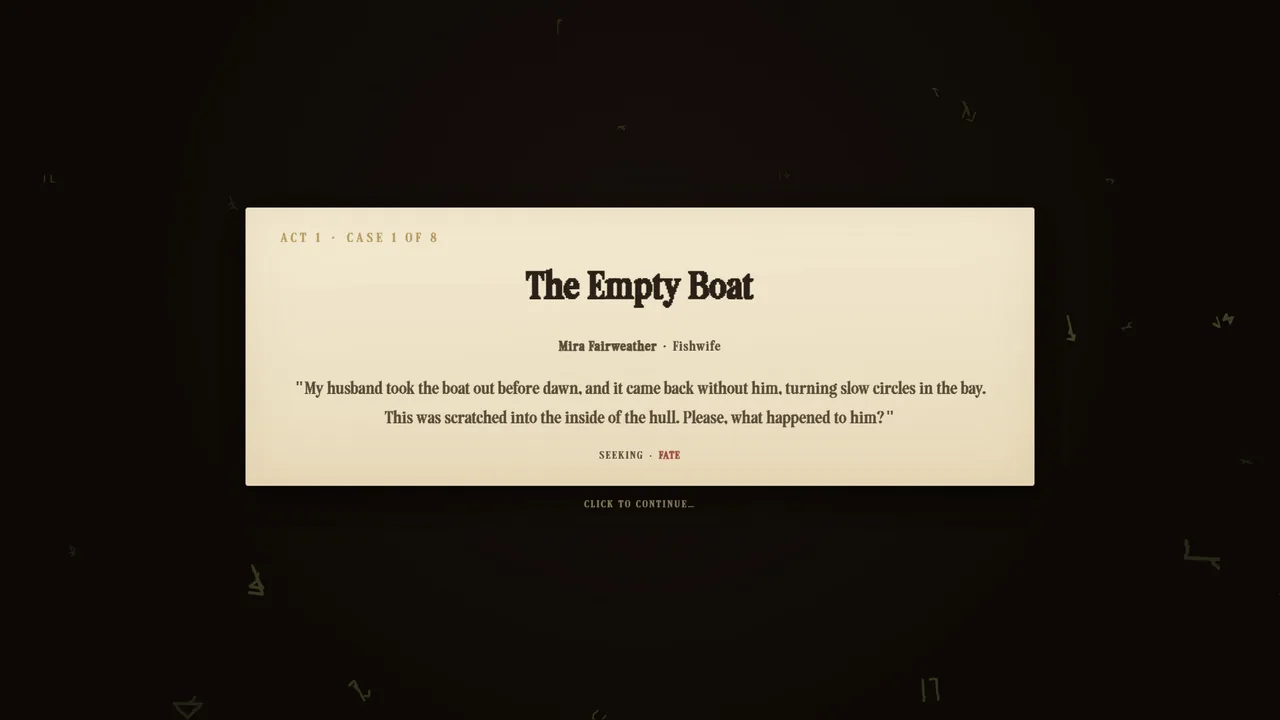
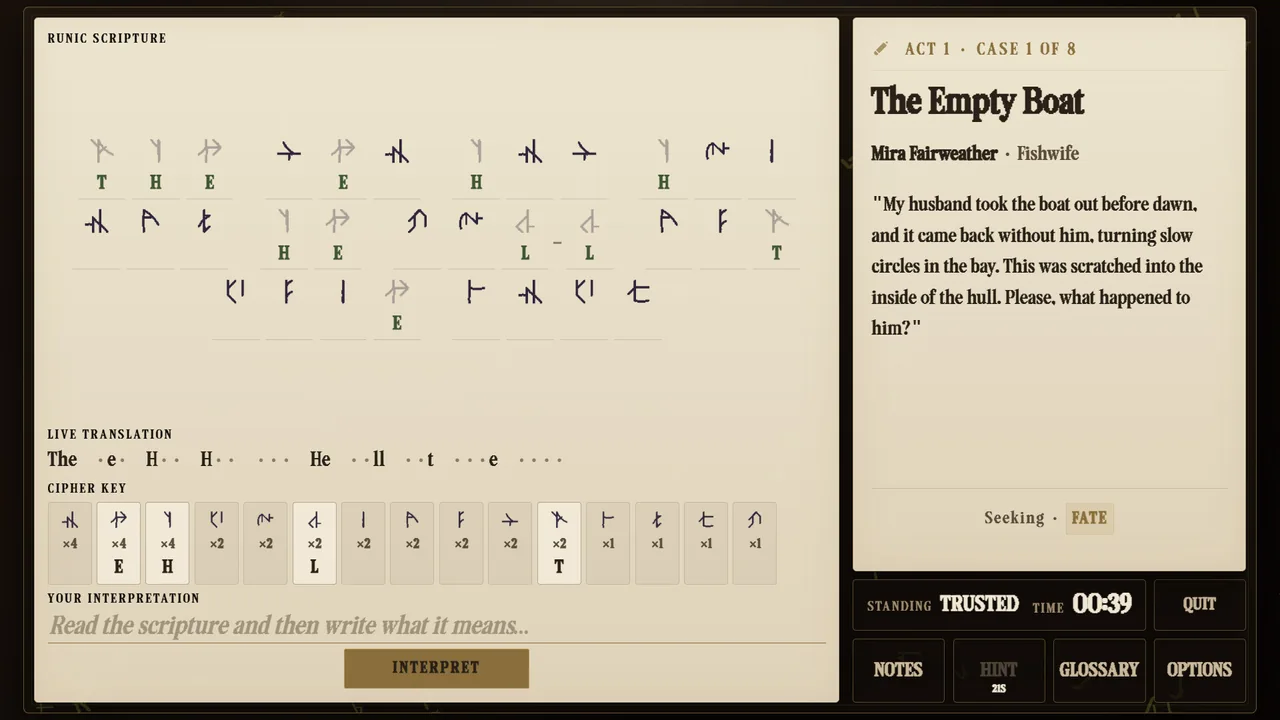
The core loop is a case, a scripture, and a blank interpretation box. A fishwife brings you a plank scratched with runes pulled from her husband's boat, which returned empty and circling the bay. A magistrate needs to know if a deed bearing a guild-master's seal is genuine or forged. You break the cipher one symbol at a time, watching a live translation fill in below the runes as letters resolve, with a cipher key panel tracking which symbol maps to which letter and how many times each has appeared. A hint button reveals a random letter but sits behind a cooldown timer rather than being free, which keeps it from trivialising a puzzle that's already tuned to be solvable without one.
That tuning is the strongest thing about Rune Log, and it isn't just marketing copy — it's corroborated by the one detailed account from someone who's actually played it, posted to Steam the day after launch. That reviewer singles out exactly the design the store page promises: short texts without obvious letter patterns force you to lean on context rather than pure frequency tables, so a case description that mentions a marriage should make you go looking for MAN and WIFE-shaped clusters before you've cracked a single symbol through statistics alone. It's the kind of puzzle design that rewards actually reading the case, not just running a mental frequency chart, and on the evidence available it's landed close to its own pitch: hard enough to feel earned, rarely hard enough to stall.
The interpretation half undersells itself
Where Rune Log's own marketing draws a sharper line than the game apparently delivers is the second half of each case. The pitch is that the decoded phrase is "rarely a plain answer," that it can be "poetic, evasive, legalistic, or strange," and that you have to type your own conclusion in your own words rather than pick from a menu, with the game judging how close you got to the truth. It's a good idea for a detective game built on cryptography rather than clue-boards. But the same detailed review that praised the decoding was blunt about this half specifically: there isn't really a second puzzle here. The answer, once you've broken the cipher, is described as always obvious, with no actual riddle left to solve in the interpretation step itself. You're not deducing a hidden meaning so much as transcribing what you already decoded into your own words and pressing a button.
That's a real gap between the sales pitch and what one careful player reports experiencing, and it matters because the interpretation step is doing narrative work too — a standing meter that runs from Trusted through Clouded to Unwelcome, visible on the case screen throughout Story Mode, tracks how the village receives you based on how you answer. The idea of the truth not always being kindness is a good one for a small occult mystery game to build around. Whether it lands depends on the interpretation step carrying real weight, and right now the only outside account of playing it says that step is where the game coasts.
Five villages, one family, and a mode that plays by different rules
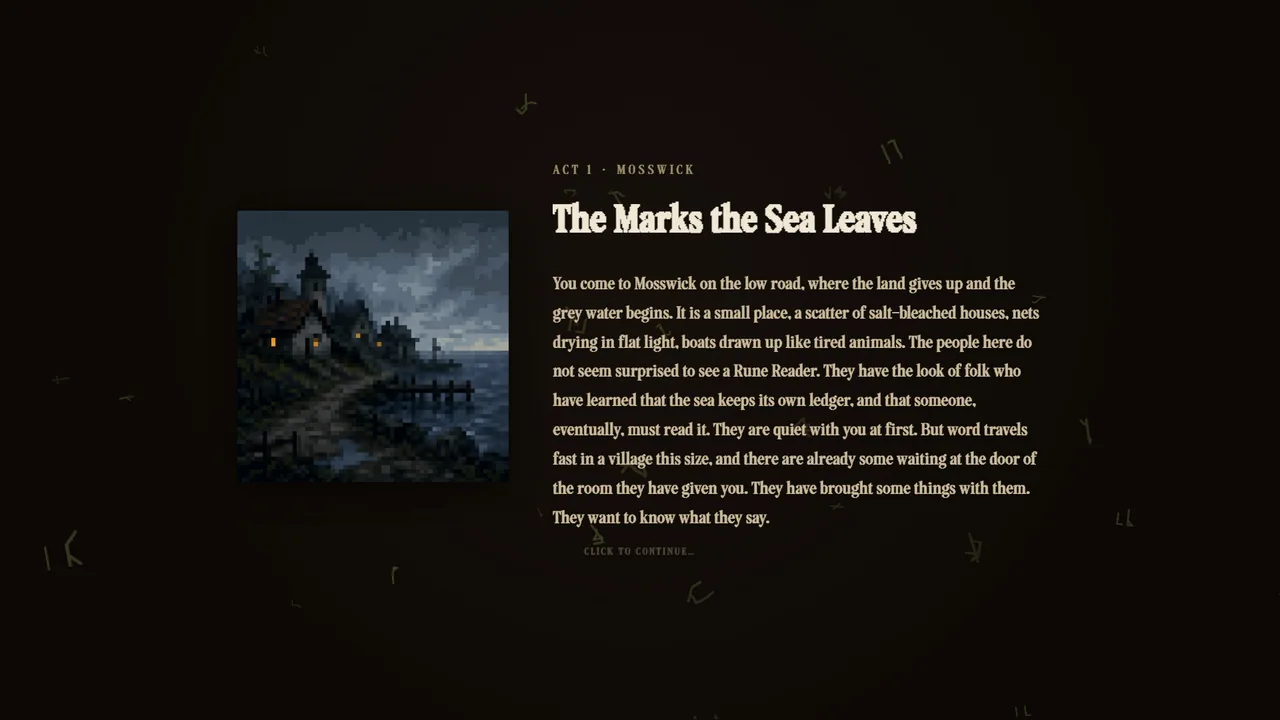
Story Mode runs across five settings — a salt-worn fishing village called Mosswick where the game opens, a market town, a plague-struck fen, a highland of standing stones, and finally the player character's own home, where the last set of scriptures concern their own family rather than a stranger's. Act 1 alone runs eight cases deep going by the case-select screen, which suggests a reasonably substantial campaign for a solo-developed puzzle game rather than a proof-of-concept stretched thin.
Endless Mode is a genuinely different animal rather than a reskin of the same cases with no ending. Where Story Mode tracks your reputation with a Trusted-to-Unwelcome standing meter and a simple elapsed timer, Endless Mode's screen shows a running score, a strike counter capped at three, and a countdown clock, structured as an arcade-style attempt to see how many procedurally generated cases — described as fates, frauds, imposters, animal culprits, debts and hauntings — you can clear before you run out of lives. Pairing a slow, narrative-driven mode with a scored, timed one is a smart way to get two different kinds of replay value out of one cipher engine, and it's a more considered structure than "Story Mode plus an endless case generator" implies on its own.
The game also ships a genuinely useful bonus tool, the Rune Generator: type any text, generate a custom rune alphabet for it, and export a blank puzzle sheet or an answer sheet as a PNG. It's built for printing and sharing cryptograms outside the game entirely, and it's the kind of feature that turns a single-player puzzle game into something a puzzle-hunt group or a classroom could actually use, at no extra cost.
An interface that needs sanding down
The friction in Rune Log isn't the puzzles, it's using the tool built to solve them. The same reviewer who praised the decoding design flagged specific, concrete interface problems rather than a vague "the UI could be better": word boundaries in the scripture are marked only by small underscores beneath each rune rather than any visual gap, several runes are similar enough in shape to be misread at a glance, and there's no deliberate way to navigate between letters using only the keyboard. Tab and Shift-Tab do move between letters, but that reviewer's own read is that this is an accident of the engine's general UI focus order rather than a feature anyone actually built. For a game whose entire premise is precise symbol-by-symbol reading, that's not a cosmetic complaint.
There's a positive data point sitting right next to it, though: the game's only news post, published one day after launch, adds a text size option to the settings menu. A solo developer responding that quickly to a legibility complaint is a good sign for whether the rest of this list gets addressed too, even if it hasn't happened yet as of this review.
Accessibility more broadly is thin rather than actively hostile. The Steam listing shows English as the only supported language, with no audio track at all, meaning there's nothing to caption because there's nothing to hear — this is a fully text-based game in the most literal sense. There's no controller support of any kind, on any platform, so this is a keyboard-and-mouse game exclusively. None of that is unusual for a small text-heavy puzzle title, but it's worth knowing before buying if any of it matters to you.
A cheap, thin data point
Rune Log is three days old at the time of this review, and its public track record reflects that: exactly two Steam reviews exist, both positive, both in English, and both worth reading in full precisely because there are only two. One is a few sentences of enthusiasm. The other is the detailed, specific account this review has leaned on throughout, from a player who logged roughly four and a half hours — enough to have gotten well into the case structure rather than bouncing off the tutorial. Steam tracks no achievements for this game at all, so there's no completion curve to check that account against, and no larger sample to say whether later acts smooth out the interface issues or compound them. That's not a criticism of the game itself, just an honest limit on how much outside confirmation exists for anything beyond the opening hours.
Final verdict
Rune Log's central idea, a cryptogram engine tuned to reward context over brute force, wrapped in a quiet occult detective story, is a good one, and the execution of the actual cipher-breaking backs that up. Where it falls short of its own pitch is the half it leans on hardest for emotional weight: interpreting what the decoded scripture means turns out to be closer to transcription than deduction, and the interface asks more patience than a game this text-dependent should. A single developer who patched a legibility complaint within a day of launch deserves credit for the trajectory, but this review can only score what's live now. At NZ$6.31 for five story settings and a genuinely different Endless Mode, plus a real puzzle-generator tool thrown in, it's a fair deal for cryptogram fans specifically — just don't go in expecting the interpreting half to carry the weight the marketing puts on it.
Pros and cons
Pros
- Each cryptogram is genuinely well tuned, leaning on letter frequency, repeated symbols and short anchor words rather than brute-force guessing
- The bundled Rune Generator tool builds a custom cipher alphabet and exports blank puzzle sheets and answer sheets as PNGs for pen-and-paper play
- Solo developer Carlo Freiria shipped a text-size option one day after launch, a good early sign for ongoing support
- Story Mode's five settings and a separately structured Endless Mode of procedural cases give the format real legs beyond one sitting
- A short-session structure that respects the time it asks for, most cases solvable in a few minutes
Cons
- The "type what it means" half rarely poses a real riddle — the fullest public account of playing it says the intended meaning is always obvious once the cipher is broken
- Word boundaries in the runic scripture are marked only by faint underscores, and several runes are similar enough to mix up at a glance
- No dedicated way to move through the cipher grid by keyboard, only an unofficial workaround through the interface's Tab order
- Ships with no Steam achievements, no controller support, and English-only text with no audio at all, a thin accessibility footprint for a game built entirely around reading
- Exactly two Steam reviews exist at time of writing, so there's no outside track record yet for how the later acts or Endless Mode hold up over time
Screenshots
-
Rune LogImage: Carlo Freiria via Steam -
Rune LogImage: Carlo Freiria via Steam -
Rune LogImage: Carlo Freiria via Steam -
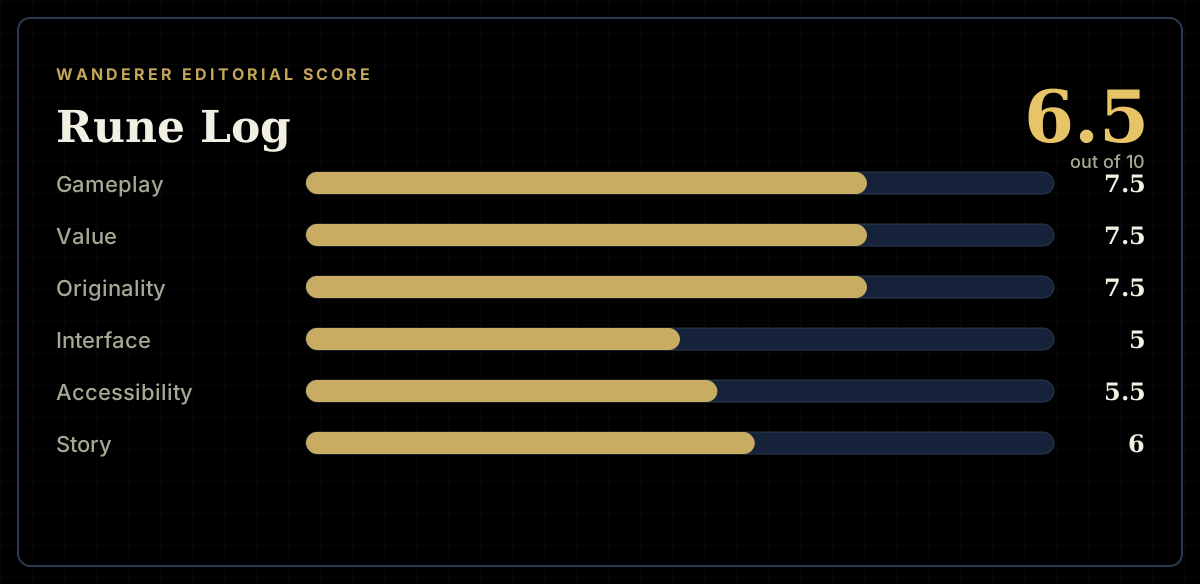
How the review scores each part of the gameWanderer Editorial -
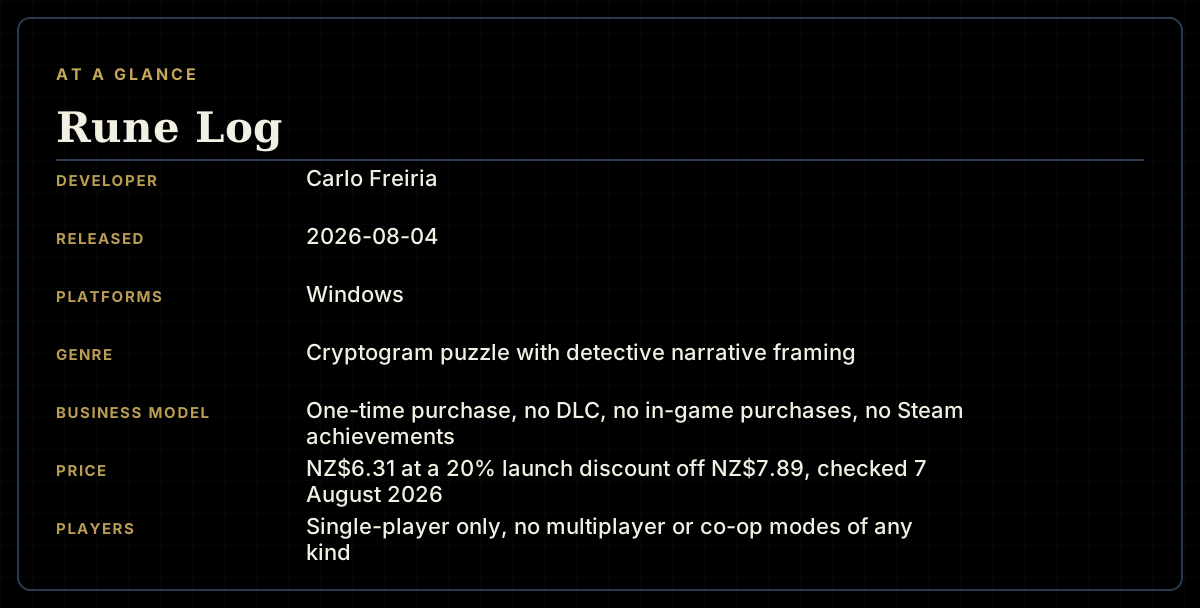
The game at a glanceWanderer Editorial -
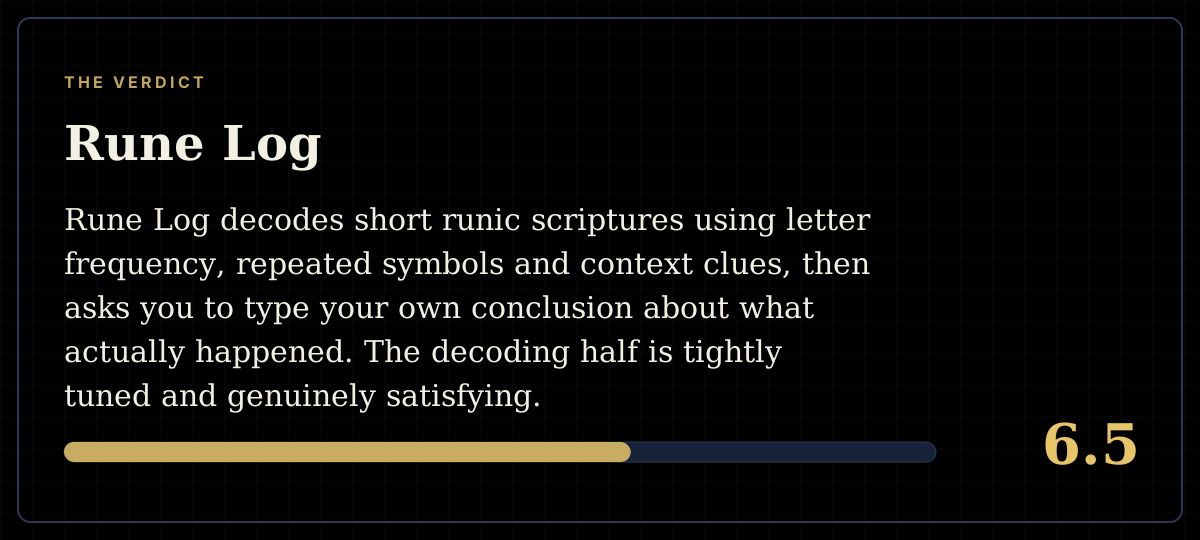
The short versionWanderer Editorial