
Game review
Rune Factory: Guardians of Azuma
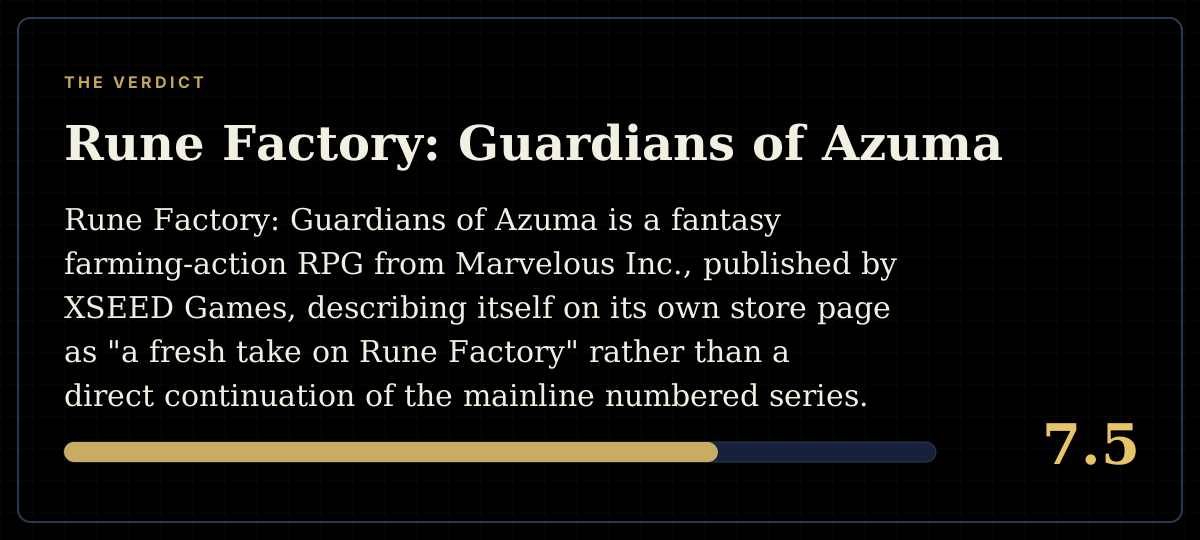
7.5 / 10
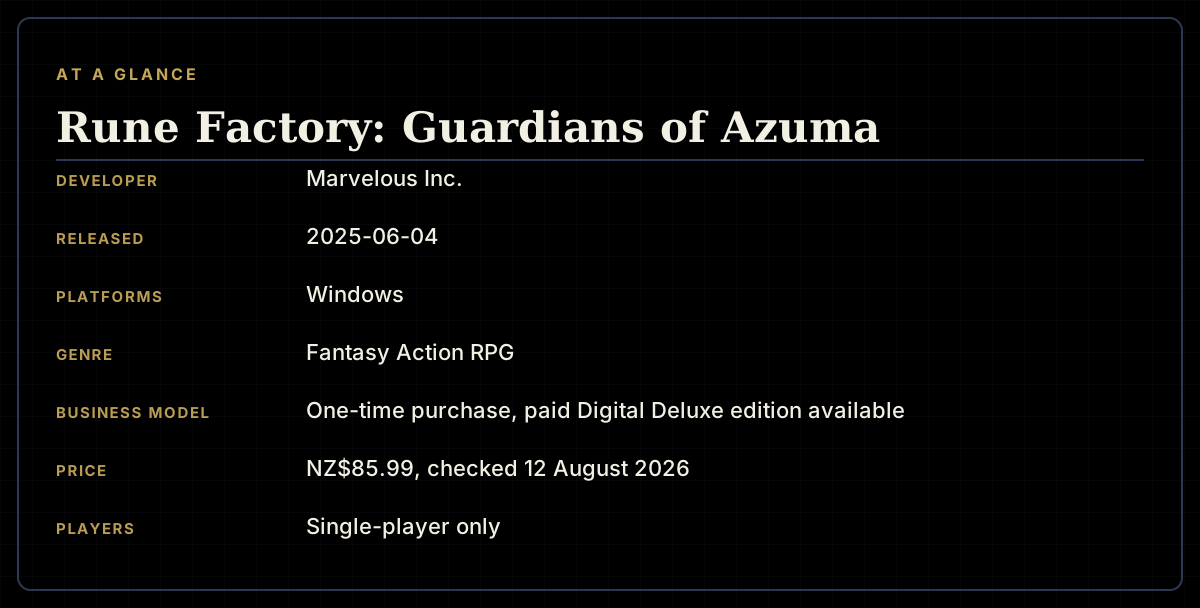
- Developer
- Marvelous Inc.
- Publisher
- XSEED Games
- Released
- 4 June 2025
- Platforms
- Windows
- Genre
- Fantasy Action RPG
- Monetisation
- One-time purchase, paid Digital Deluxe edition available
- Players
- Single-player only
The short version
Rune Factory: Guardians of Azuma is a fantasy farming-action RPG from Marvelous Inc., published by XSEED Games, describing itself on its own store page as "a fresh take on Rune Factory" rather than a direct continuation of the mainline numbered series. Released 4 June 2025 alongside the Switch 2 launch window, it sold well and holds a large, healthy review base — 91.4% positive across 1,675 English-language Steam reviews and 88.4% across 3,623 all-language reviews, both comfortably Very Positive. This review reads the 100 most-relevant English negative reviews and finds a genre-familiar pattern running through most of them: a clear majority identify themselves as having played every prior Rune Factory entry, and their core complaint isn't that the game is broken, but that farming, skill progression and seasonal variety have all been meaningfully simplified from what longtime series fans expect. A smaller but real minority — newcomers to the series specifically — report enjoying exactly the same systems that veterans call thin.
Biggest strengths
- Presentation draws consistently strong praise — visuals, music and voice acting are singled out favourably even by reviewers who mark the game not recommended overall
- A well-received Day 1 PC release, explicitly contrasted by several reviewers against Rune Factory 5's rockier Switch performance, with no comparable performance complaints in this review's negative sample
- Newcomers to the series report a genuinely enjoyable, accessible entry point, with the highest-voted review in the whole corpus (578 votes) framed specifically as reassurance for new players against a wave of veteran-focused criticism
Biggest weaknesses
- This review's negative sample is dominated by longtime series fans, and their specific, repeated complaint is that core systems — individual skill leveling, farming timing, seasonal variety — have been simplified rather than refined, with one reviewer able to instantly water and harvest crops that previously required a managed routine
- Static, per-village seasons in place of the series' traditional changing seasons draw repeated, specific criticism from reviewers who call it a step back from a beloved genre convention rather than a neutral change
- A meaningful cluster of reviews — 17 of the 100 read for this piece — describe the post-story endgame as empty or repetitive, with one reviewer who "binged" the game noting everything felt "very very very empty" once the relatively short main story concluded
Who it's for: Newcomers to the Rune Factory series, or fans of casual fantasy farming-life-sims looking for something accessible and good-looking; a tougher sell for longtime series veterans who want the depth of the numbered mainline entries rather than a streamlined spinoff.
Our recommendation: A well-made, good-looking entry point to farming-fantasy RPGs that succeeds on its own stated terms as "a fresh take," but existing series fans should read its own community's reviews carefully before assuming it plays like the games that came before it.
7.5 / 10
Introduction
Rune Factory: Guardians of Azuma casts the player as an Earth Dancer, restoring corrupted land, rebuilding seasonal farms and villages, and forming bonds with the people and gods of the eastern nation of Azuma. Developed by Marvelous Inc. and published by XSEED Games, it released 4 June 2025, timed alongside the Nintendo Switch 2 launch window, and the game's own store page is upfront about what it is: "a fresh take on Rune Factory," language that positions it as a variant rather than a direct successor to the mainline numbered series. It sold well and built a large, healthy Steam review base — 91.4% positive across 1,675 English-language reviews, 88.4% across 3,623 all-language reviews, both comfortably Very Positive. This review reads the 100 most-relevant of that English negative sample and finds a very familiar shape for a long-running series' latest entry: most of the harshest critics are the series' own biggest fans, and their argument is remarkably consistent.
What longtime fans say got lost
Read the negative sample in volume and one thing becomes clear almost immediately: this is not a broken or poorly made game, by its critics' own account. It's a game whose systems have been deliberately streamlined, and a clear majority of the reviewers unhappy about that streamlining identify themselves explicitly as having played every prior Rune Factory entry. "I've pretty much played every Rune Factory game," reads one representative 191-vote review. "The 5th was disappointing and I was hoping for things to change here, but this wasn't very good either." The specific mechanical complaints recur with real consistency: 21 of the 100 negatives use words like "shallow," "simplified" or "barebones" to describe systems that used to require more player management. One reviewer points to the leveling system specifically, noting individual skill training has been replaced with something far less granular. Another describes being able to "immediately water and harvest all your crops" the moment they're planted — removing the timing and routine that farming sections of earlier games were built around.
The most specific, most repeated version of this complaint concerns seasons. Ten of the 100 negatives raise it directly: rather than each village or farm cycling through spring, summer, autumn and winter as in previous entries, each location in Guardians of Azuma is locked to a single, static season. "I like my farming games with changing seasons," reads one 106-vote review. "Having multiple villages all with a static season doesn't feel right." For a series whose farming-sim half leans heavily on seasonal rhythm as a core structural device, several reviewers treat this as more than a cosmetic change — it's read as removing a genre convention the whole loop used to be built around.
Not empty, but shorter than expected
A second, related complaint cluster concerns pacing and length. Seventeen of the 100 negatives describe the post-story portion of the game as empty or repetitive, following what several reviewers call a comparatively short main campaign. "I binged this game," reads one 59-vote review, "and after you beat the story... everything feels very very very empty. You wake up, go to each static season zone..." That's a specific, structural complaint distinct from the systems-simplification argument above — it's less about individual mechanics being thinner and more about the game running out of things to offer once its central story concludes. It's worth noting this isn't universal even among critical reviewers: several who otherwise praise the game's early hours specifically flag the back half as where their enthusiasm dropped off, rather than describing the whole experience as thin.
Newcomers are having a different experience
Set against all of this, a real and vocal minority of this review's own sample describes a genuinely positive experience specifically because they lack the point of comparison veterans bring. The single highest-voted review in the entire corpus — 578 votes, among both positive and negative reviews combined — opens by addressing this split directly: "For new players: this game is pretty high quality. The visuals, music, voice acting, and plot all feel good. The combat isn't complex..." and goes on to frame the negative reviews as coming overwhelmingly from a specific, invested subgroup rather than reflecting the experience a first-time player should expect. Another positive review, from someone who explicitly says they aren't a series veteran, calls the game "pretty high quality" and wishes Steam had a genuine "mixed" option rather than a binary thumbs-up-or-down, because their feelings sit closer to the middle than either choice suggests. Presentation earns consistent praise across both camps — visuals, music and voice acting are complimented even inside reviews marked not recommended — and the game's healthy achievement completion curve (a 97.9% top rate and 40.4% median across 81 achievements) suggests most buyers who start it see a genuine amount of content through, rather than bouncing off early in frustration.
Final Verdict
Rune Factory: Guardians of Azuma succeeds convincingly on the terms its own store page sets: a fresh, accessible take on the series' farming-fantasy-action formula, well presented and genuinely enjoyed by players coming to it without deep attachment to what came before. Where this review's sample finds real, substantive friction is specifically among the series' most invested audience, who identify concrete, consistent losses — individual skill progression, meaningful seasonal rhythm, farming routines with real timing — rather than vague nostalgia. Both readings are honest accounts of the same game, and which one applies to a given reader depends heavily on how much history they're bringing to it. A newcomer drawn in by the presentation and the fantasy farming-sim premise is likely to find exactly what the game's highest-voted review promises. A longtime fan hoping for the numbered series' depth, delivered with a fresh coat of paint, is the reader most likely to end up writing one of the veteran-focused negative reviews this corpus is full of.
Pros and cons
Pros
- Presentation draws consistently strong praise — visuals, music and voice acting are singled out favourably even by reviewers who mark the game not recommended overall
- A well-received Day 1 PC release, explicitly contrasted by several reviewers against Rune Factory 5's rockier Switch performance, with no comparable performance complaints in this review's negative sample
- Newcomers to the series report a genuinely enjoyable, accessible entry point, with the highest-voted review in the whole corpus (578 votes) framed specifically as reassurance for new players against a wave of veteran-focused criticism
- A healthy completion curve backs up the presentation praise: Steam's achievement data shows a top rate of 97.9% and a median of 40.4% across 81 achievements, indicating most buyers who start the game see a meaningful amount of it through to reasonable progress
Cons
- This review's negative sample is dominated by longtime series fans, and their specific, repeated complaint is that core systems — individual skill leveling, farming timing, seasonal variety — have been simplified rather than refined, with one reviewer able to instantly water and harvest crops that previously required a managed routine
- Static, per-village seasons in place of the series' traditional changing seasons draw repeated, specific criticism from reviewers who call it a step back from a beloved genre convention rather than a neutral change
- A meaningful cluster of reviews — 17 of the 100 read for this piece — describe the post-story endgame as empty or repetitive, with one reviewer who "binged" the game noting everything felt "very very very empty" once the relatively short main story concluded
- A paid Digital Deluxe edition is raised as a specific value complaint by at least one detailed, highly-voted review, on top of an already premium NZ$85.99 base price
Screenshots
-
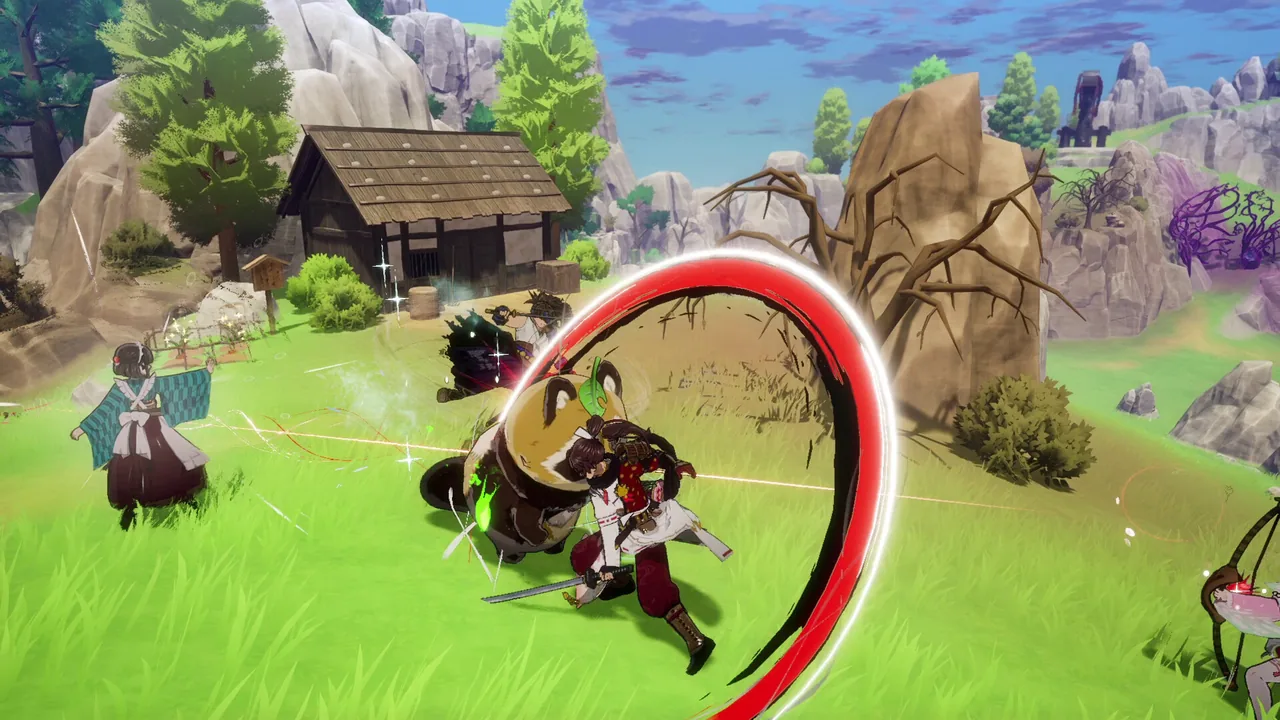
Rune Factory: Guardians of AzumaImage: XSEED Games via Steam -
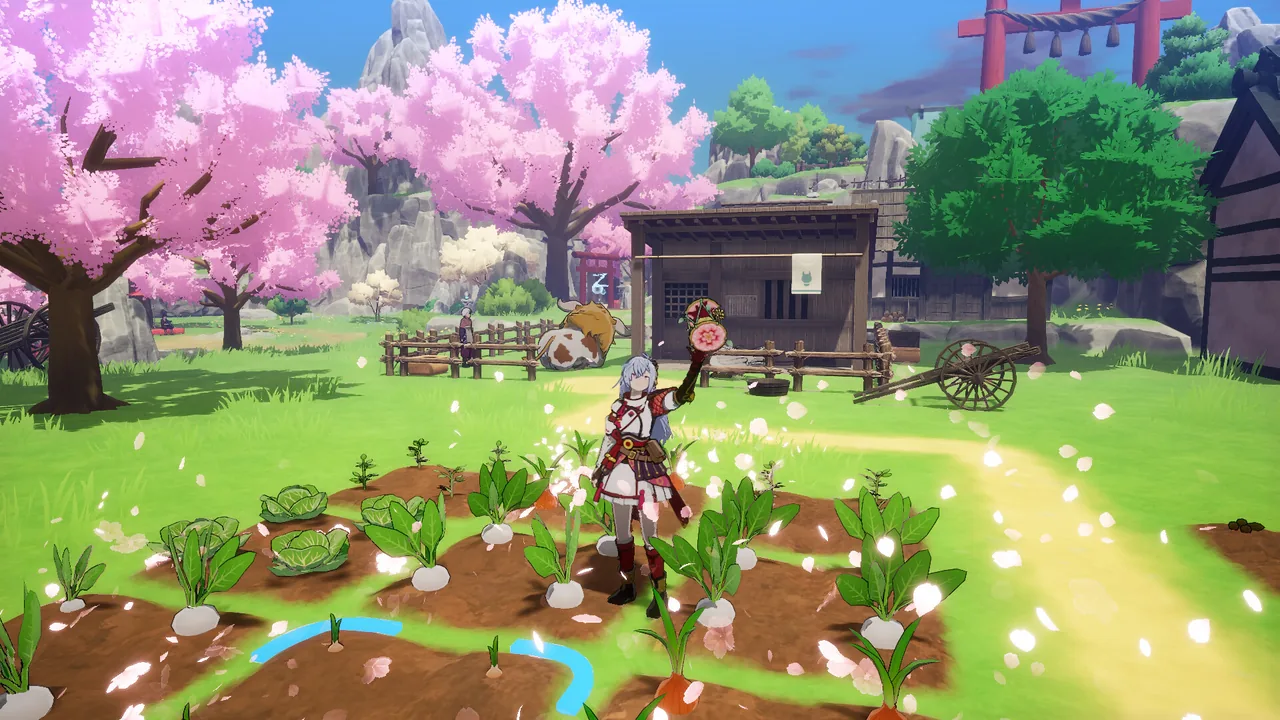
Rune Factory: Guardians of AzumaImage: XSEED Games via Steam -
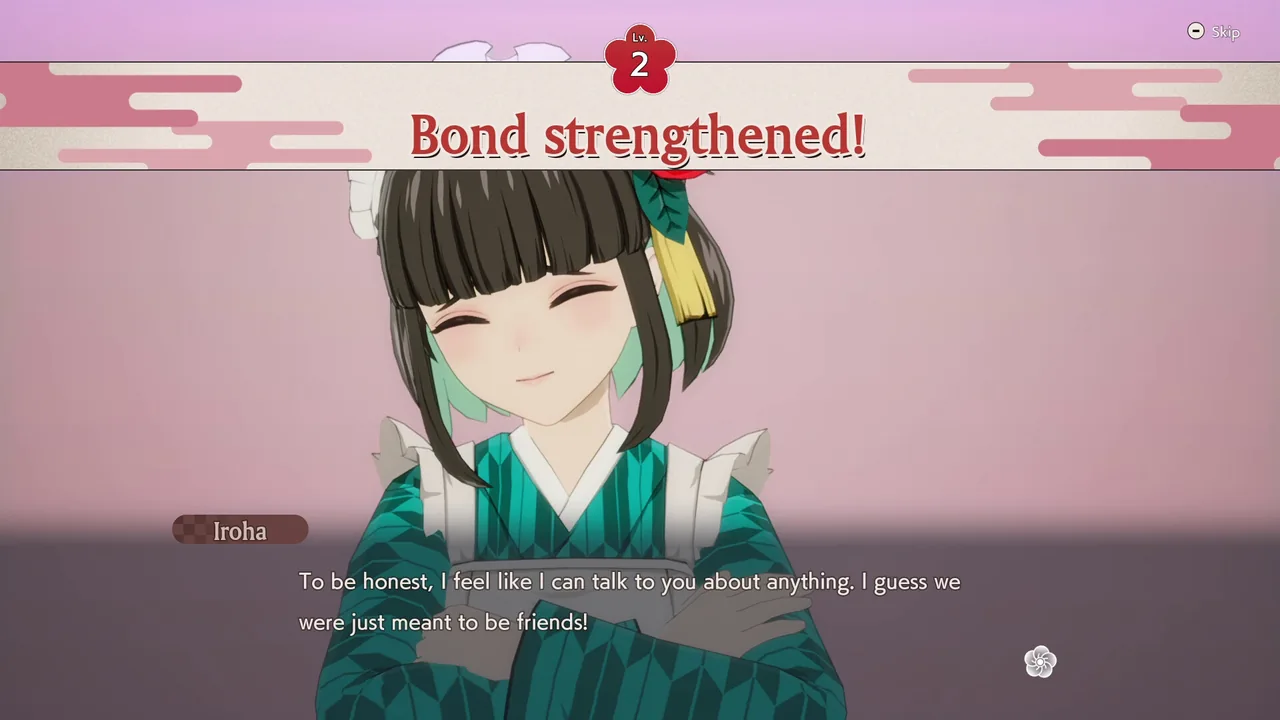
Rune Factory: Guardians of AzumaImage: XSEED Games via Steam -
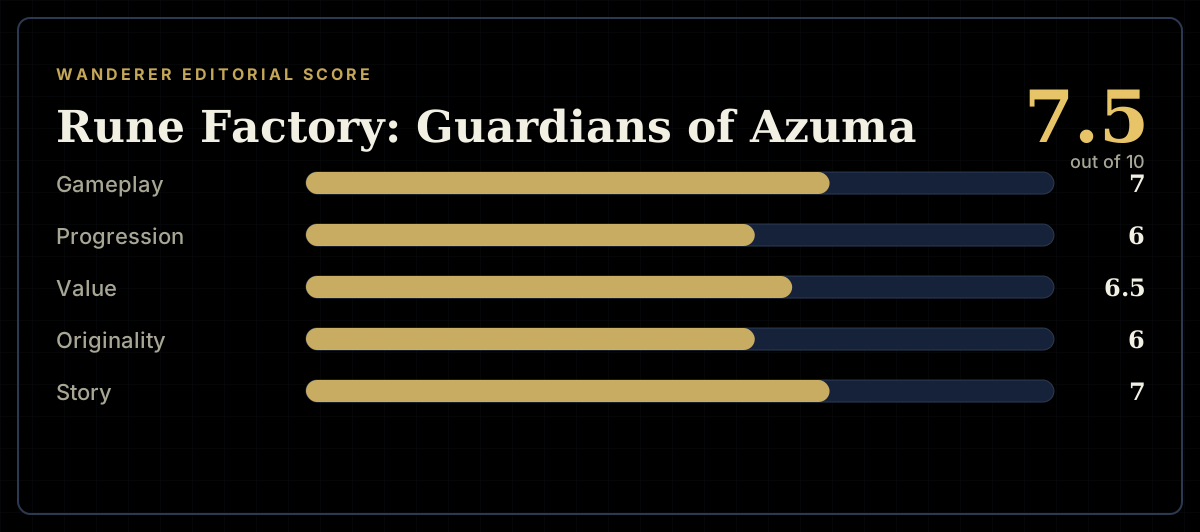
How the review scores each part of the gameWanderer Editorial -
The essentials at a glanceWanderer Editorial -
The short versionWanderer Editorial