Game review
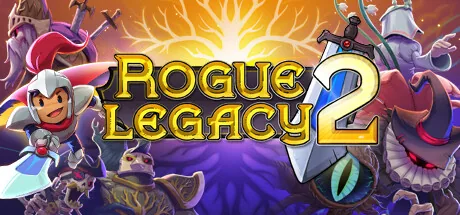
Rogue Legacy 2
8 / 10
- Developer
- Cellar Door Games
- Publisher
- Cellar Door Games
- Released
- 28 April 2022
- Platforms
- Windows, macOS, Linux
- Genre
- Roguelite Metroidvania
- Monetisation
- One-time purchase at NZ$35.99. No DLC, no microtransactions. Checked 4 August 2026.
- Players
- Single-player only
The short version
Rogue Legacy 2 takes the 2013 original's structure — die, inherit, spend, repeat — and rebuilds every part of it properly. Combat is fluid and demanding, the world is a real metroidvania with persistent unlocks, and the single best fix is that negative traits now pay you more gold, turning a joke into an actual decision. Recent sentiment is 92% and the median player has 36 hours. The complaint that survives is unexpected: in balancing the classes, Cellar Door made them similar, so runs converge. It solved its predecessor's worst problem and inherited a milder version of the opposite one.
Biggest strengths
- Combat and movement are excellent — responsive, weighty and demanding enough to reward mastery
- Negative traits now grant bonus gold, which converts them from random annoyance into a genuine risk-reward choice
- A real metroidvania world with persistent unlocks that change where you can go, not just how hard you hit
Biggest weaknesses
- Class balance has flattened the differences, and reviewers report runs converging on the same approach regardless of who you inherit
- It's an iteration rather than a leap, described by one reviewer as "a sequel from 2014" arriving in 2022
- The true ending requires completing the game many times over, which several players consider disrespectful of their time
Who it's for: Anyone who wants a roguelite platformer with excellent combat and a long mastery curve, and players of the original who want the version that works. Not for people chasing novelty, and not for anyone unwilling to beat a game repeatedly for its real ending.
Our recommendation: This is the one to buy if you're choosing between the two — better combat, better structure, better traits, and a far healthier current review picture. Play on a lower House Rules difficulty if the platforming frustrates you; the game supports adjusting it and doesn't punish you for it. And decide early whether you care about the "true" ending, because reaching it means finishing the game repeatedly and the game is honest about that being a long road.
8 / 10
I reviewed the 2013 original earlier today and told readers that if they only wanted one, this was the one to buy. Having now read this game's corpus, that advice holds — and it comes with a wrinkle I didn't expect.
Rogue Legacy 2 fixed the original's problems. Its most thoughtful critics are annoyed about how.
What got fixed
Traits pay now. This is the single best change and it repairs the original's most-cited flaw. In 2013, inheriting vertigo or colourblindness was a joke you endured. Here, negative traits grant a gold bonus, scaled to how much they inconvenience you. Suddenly the heir screen is a real decision: take the safe knight, or take the one who can't see properly and earn forty per cent more from the run. A recent reviewer names this specifically as what makes the sequel work.
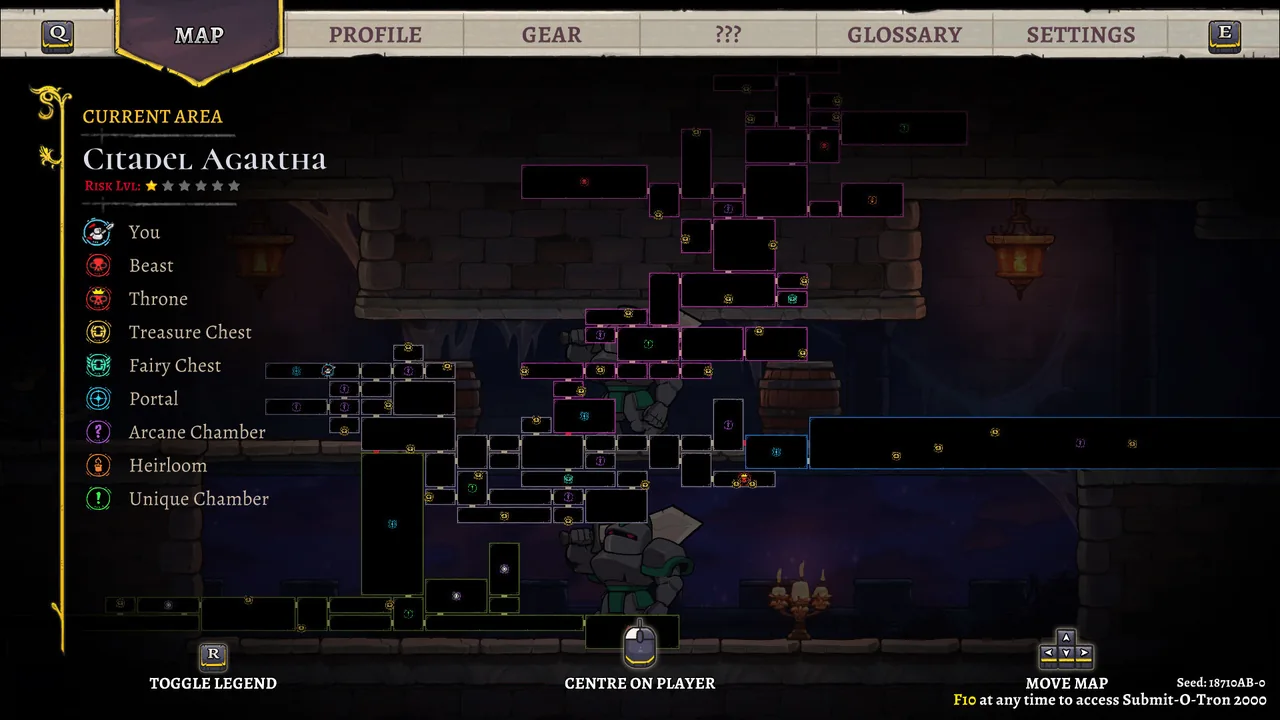
The world is a real metroidvania. Persistent unlocks change where you can go — a dash that crosses gaps, a lantern that lights the dark — so progress is spatial as well as numerical. The original's castle was a wall of stats; this one has geography you gradually earn access to.
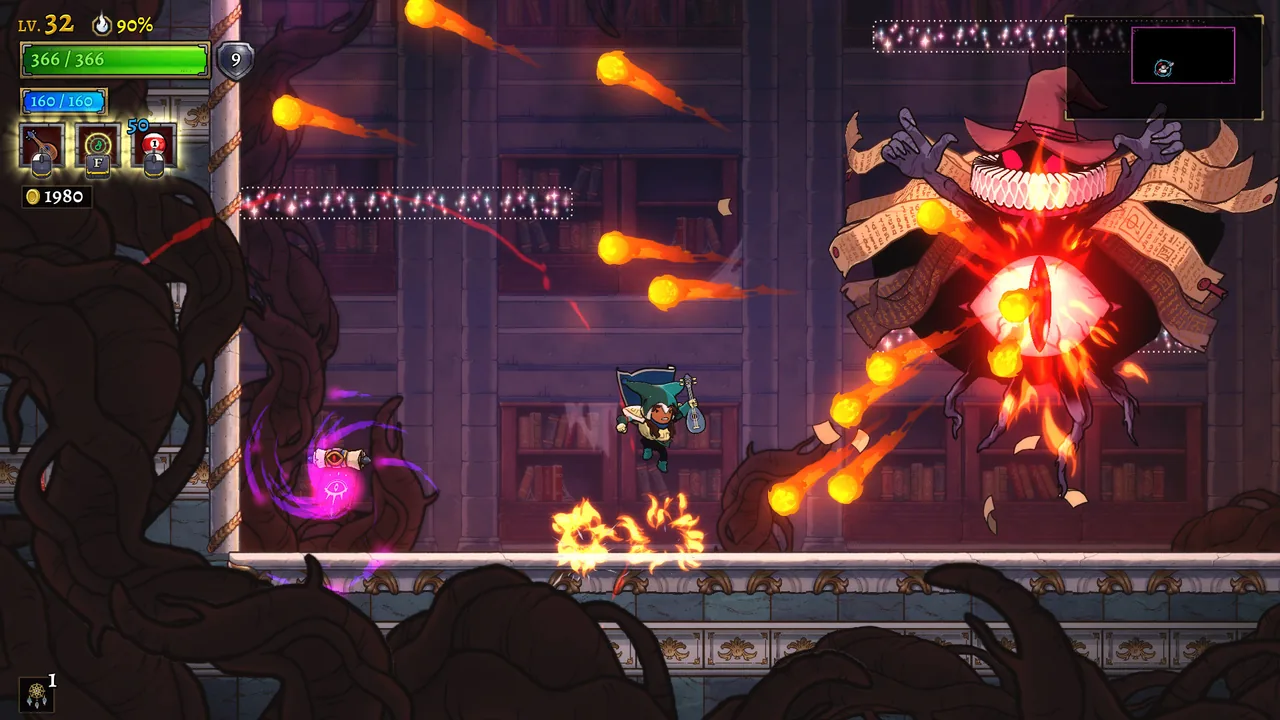
Combat is properly good. Fifteen classes with genuinely different weapons — a chef with a frying pan, an astromancer, a boxer with a dash-punch — and movement responsive enough to demand skill. Even reviewers who dislike the game concede this part; "mechanically almost perfect" opens the most-upvoted negative.
And difficulty is adjustable. House Rules let you tune the challenge rather than bounce off it, which is a quietly excellent accessibility decision for a genre that usually treats difficulty as sacred.
The reception reflects all this. Negative reviews peaked at the 1.0 release in 2022 and have almost vanished since — nine in 2023, seven in 2024, five in 2025, three so far this year. Recent sentiment is 92%, and the median recent player has 36 hours.
What the fixing cost
Here's the wrinkle, and it's the most interesting criticism of the game.
The most-upvoted negative, from a player with 64 hours, opens by calling the game mechanically almost perfect and then says it feels too balanced: the classes are relatively similar, with only minor variation, so runs become consistent and you end up playing every one the same way.
Put that next to the original, whose defining class complaint was the opposite — that most classes were worthless and a run's quality depended on being handed one of the few strong ones. Cellar Door heard that, balanced the roster, and produced a game where no class is bad and, according to its sharpest reviewers, none is transformative either.
That's a real design trade and not an obvious mistake. Wild imbalance produces memorable runs and frustrating ones; even balance produces reliable runs and samey ones. The genre's best answer is usually to make classes asymmetric rather than equal — different problems rather than different numbers — and Rogue Legacy 2 lands closer to equal.
The related charge is that it's an iteration rather than a leap. A reviewer with 34 hours calls it "a sequel from 2014" arriving in 2022, noting that nine years of roguelites happened in between. Another with 27 hours suggests Rogue Legacy 2.0 would be a fairer name — not a sequel so much as the version the first game should have been — and that how much you enjoy it depends heavily on how much of the original you already played.
The eight endings problem
One warning worth passing on. Reaching the game's true ending requires completing it many times over. A player with 104 hours calls that a failure to value the player's time, and a positive reviewer with an enormous logged playtime puts it more cheerfully: "who plays a game like this till they beat it eight times? I think I'm up to five or six."
The boss achievement curve shows the shape of it — 56% of players beat the first boss, 23% the sixth — so the long tail is real and most people stop well before the end of the road.
That's fine if you treat the credits as the finish line. It's worth knowing before you set out chasing the actual conclusion.
8.0 out of 10. Rated 8.0 out of 10.
Rogue Legacy 2 is the better game and the correct purchase, half a point above the original in this library. The combat is excellent, the trait economy is a genuinely smart fix, the metroidvania structure gives the grind somewhere to go, and the collapse in negative reviews since 2022 tells you the version being sold now is in good shape.
It stops short of higher marks because it refines rather than reinvents — arriving into a genre it helped create and no longer leading it — and because the balance pass that solved its predecessor's worst problem quietly introduced a milder version of the opposite one. Buy it, play it on the difficulty you enjoy, and stop when the credits roll unless you genuinely want another six runs.
Pros and cons
Pros
- Combat and movement are excellent — responsive, weighty and demanding enough to reward mastery
- Negative traits now grant bonus gold, which converts them from random annoyance into a genuine risk-reward choice
- A real metroidvania world with persistent unlocks that change where you can go, not just how hard you hit
- Fifteen classes with distinct weapons and talents, a considerable expansion on the original
- Adjustable difficulty settings let players tune the challenge without abandoning the run
- Negative reviews have collapsed since 2022 and recent sentiment sits at 92%
Cons
- Class balance has flattened the differences, and reviewers report runs converging on the same approach regardless of who you inherit
- It's an iteration rather than a leap, described by one reviewer as "a sequel from 2014" arriving in 2022
- The true ending requires completing the game many times over, which several players consider disrespectful of their time
- The grind that defined the original is reduced but not gone
- Early Access brought castle resets on updates and EA-exclusive content, which shaped its early reputation
- At NZ$35.99 it's priced well above the original for a refinement of it
Screenshots
-
Rogue Legacy 2Image: Cellar Door Games via Steam -
Rogue Legacy 2Image: Cellar Door Games via Steam -
Rogue Legacy 2Image: Cellar Door Games via Steam -
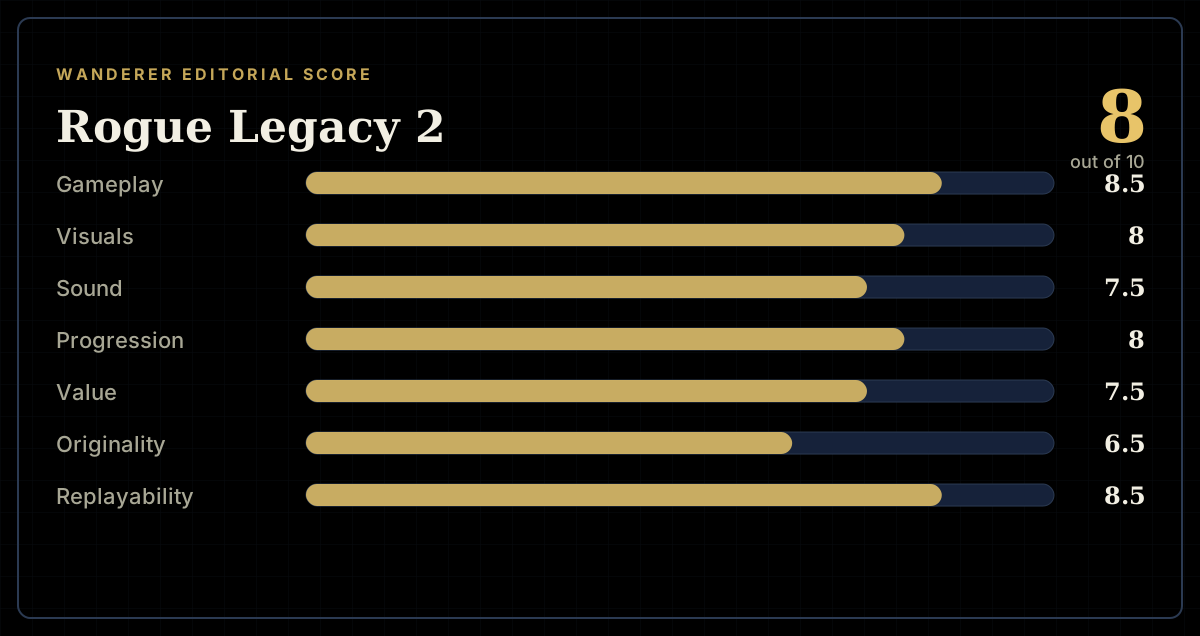
How the review scores each part of the gameWanderer Editorial -
The short versionWanderer Editorial