Game review
Rocket Engineer Review
6.5 / 10
- Developer
- Xavier B.
- Publisher
- Xavier B.
- Released
- 28 August 2026
- Platforms
- ["Windows"]
- Genre
- Simulation
One Developer, One Solar System
Rocket Engineer is a solo-developed 2D orbital mechanics sandbox from Xavier B., who took the game from a 2024 progress-update blog through more than a year of playtests before launching it into Early Access on Steam on August 28, 2026, priced at $9.99. The pitch sits squarely at the intersection of two beloved but very different genres: the trial-and-error rocket assembly of Kerbal Space Program, flattened into two dimensions, and the resource-management demands of a colony sim, where landing on a planet is only the first step toward keeping a workforce fed, watered, and productive enough to actually build something once they get there. Reviewers reach for the same handful of comparisons constantly, Kerbal Space Program and Spaceflight Simulator above all, but the pool of sixteen English reviews, 87% positive on Steam, is remarkably consistent in treating those comparisons as compliments rather than as evidence Rocket Engineer is redundant.
Building The Rocket Is The Easy Part
Reviewers who've spent real time with the assembly system describe a part catalog that's already surprisingly deep for a three-week-old Early Access release, from assembly storage and launchpads down to reaction wheels and colony founders, each with properties that matter for the specific job at hand. One reviewer with over fifty hours logged called it "the best space game out there since you can finally do something better than flying with no goal," praising specifically the ability to establish a colony on another planet and build a rocket there rather than shuttling every part up from Earth's gravity well. Another reviewer with nearly twenty-three hours put the comparison to Spaceflight Simulator most precisely: "It's like if Spaceflight Simulator had actual progression, colonies, resource management... Absolutely recommended." That's the throughline across almost every positive review in the pool, that Rocket Engineer's individual systems, part design, physics, colonies, aren't wildly novel on their own, but stacking a genuine colony-management loop underneath a physics-driven rocket builder is a combination reviewers say they haven't gotten from genre peers.
The Physics Are The Point, And The Problem
A fully simulated 2D solar system is the game's advertised centerpiece, and reviewers back up that it delivers on both the fun and the frustration that promise implies. "The game is very buggy as hell and gravity works in space, I even started a colony inside mars and went an infinity speed," wrote one reviewer, in the same breath praising the tanker tool for letting players "make complex shapes like nose cones or just make a planet of my own and launch it." That's a genuinely odd but telling combination, a physics engine loose enough to produce an "infinity speed" bug from a colony placed inside a planet, sitting next to praise for how expressive the same physics-driven part system is when things go right. A second reviewer flagged bugs with parachute staging and a map view that "sometimes starts randomly zooming in and out," while still landing on "yes" when asked whether they'd recommend it. Across the pool, bugs are treated less as a betrayal and more as an expected toll for playing a specific-genre sim three weeks into Early Access.
No Tutorial, Steep Learning Curve
The single most consistent complaint in the pool isn't a bug at all, it's the total absence of an in-game tutorial. One negative review lays it out bluntly: "There is no in-game tutorial at the time of me playing it. The tutorial is a YouTube video you have to leave the game to watch to learn the game," adding that the economy "isn't usable at the moment" and that there's no mission or quest system yet, concluding the current build reads as "a sandbox that shows a proof of concept for a game idea" rather than a finished experience. That reviewer disclosed receiving the game free from the developer while still voting the review down, a useful signal that the criticism isn't a freebie-hunter's complaint. A positive reviewer echoes the same gap from the other side: "i think the dev should add a tutorial on how to play as this game is quite hard to understand for the first 30m or so." For a game built around 2D orbital mechanics, a genre that's inherently unintuitive even to players who've done it before in three dimensions, shipping without any in-engine onboarding is a real, immediate liability that both camps of this small review pool agree on.
A Colony Sim Bolted Onto A Rocket Sim
The resource-management half of the pitch gets less individual attention than the physics, but the reviewers who do dig into it describe genuine depth rather than a bolted-on gimmick. Colonies extract and process local resources for building rockets away from Earth, but require a constant food and water supply to keep the workforce conscious and productive, a real logistics puzzle layered on top of the orbital-mechanics puzzle. One reviewer called out ISRU (in-situ resource utilization) mechanics specifically as fun, while noting that planetary transfers still require "a lot of trial and error, just feeling out the right angle," a fair description of a game that hasn't yet built the maneuver-planning tools that veteran KSP players lean on. Another reviewer, self-identifying as a "KSP FEEN," offered the pool's most substantive wishlist: better second-stage separation reliability, a harder climb to orbit, more planets, more granular engine specifics like ISP and thrust-to-weight ratios, and eventually EVA and a tech tree, features that would push Rocket Engineer from a promising proof of concept toward genre-defining depth.
A Developer Reviewers Trust To Keep Going
What repeatedly tips reviewers from "buggy and unfinished" to "worth recommending anyway" is direct, personal contact with the sole developer. Multiple reviewers mention emailing bug reports and getting quick personal responses, one wrote "if you find one you can just email the dev and he usually responds quickly," another said "if you need help with planets dev, you know who to call." That kind of hands-on responsiveness from a one-person team, backed up by the visible cadence of patch notes rolling out within days of the Early Access launch (three separate point releases in the first two and a half weeks), is doing real work to keep a rough, feature-thin build's review score in "Positive" territory rather than "Mixed." It's also, inherently, a fragile asset: a solo developer's personal attentiveness doesn't scale the way a team's roadmap does, and the current review pool is small enough that it may be measuring goodwill toward the person as much as satisfaction with the product.
Verdict
Rocket Engineer is a promising, distinctly rough three-week-old Early Access sim that fuses Kerbal Space Program-style rocket building with a real colony-management layer, and its sixteen-review pool is unusually candid about both halves of that equation, the fun of a deep part catalog and expressive physics sandbox, and the frustration of a totally missing in-game tutorial, an unpolished economy, and bugs that range from cosmetic to run-breaking. At $9.99 with a sole developer visibly responding to bug reports and shipping patches within days, it's a fair bet for players who already know the genre and can tolerate teaching themselves the ropes via an external YouTube video, but it is not yet the finished, self-explanatory experience that would earn a recommendation from someone unfamiliar with orbital mechanics sims. Watch this one's patch notes before buying if a tutorial and a stable economy are dealbreakers, but the foundation reviewers describe is a genuinely sound one for a solo project this young.
Screenshots
-
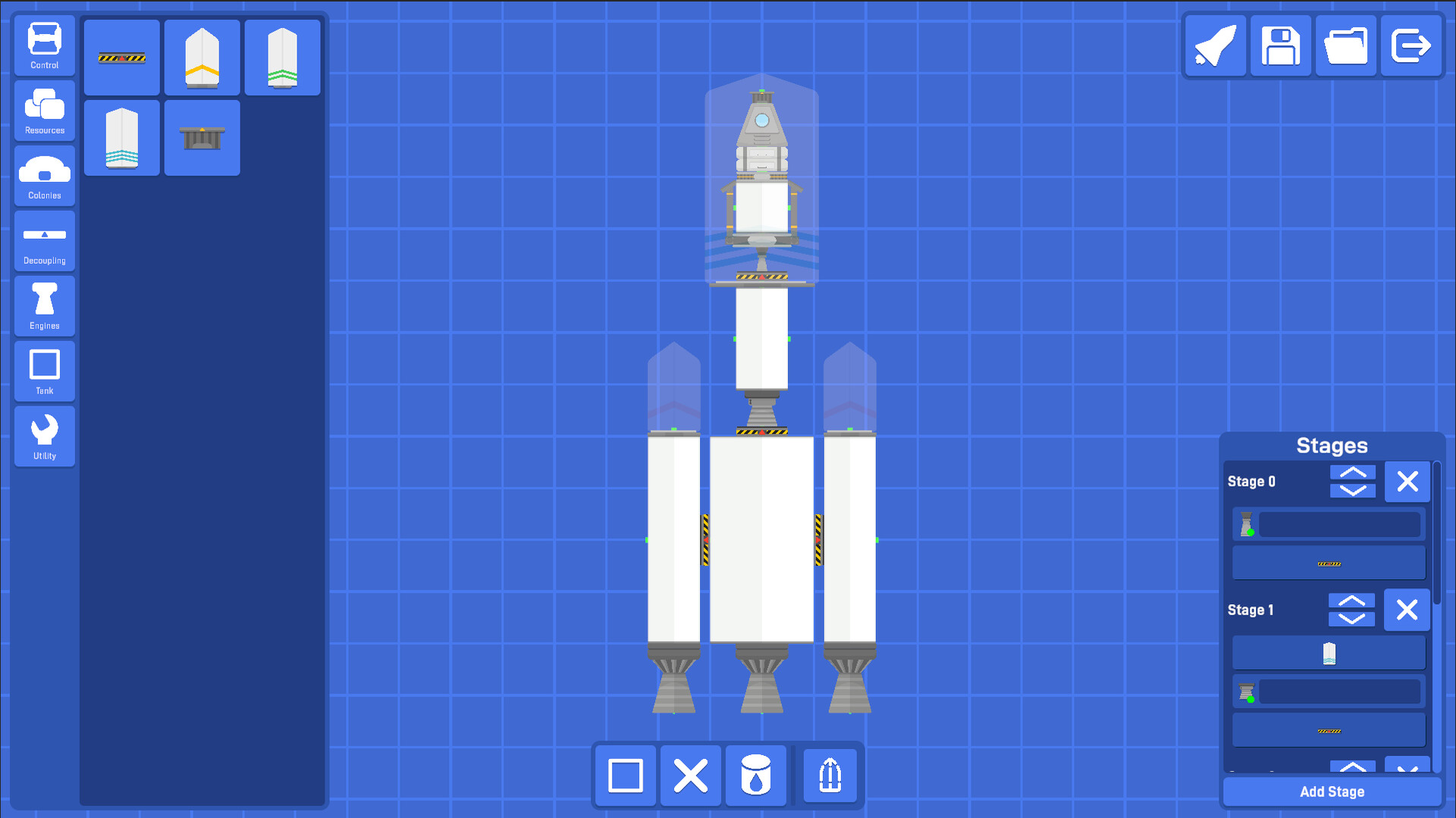
The editor's part palette spans colonies, resources, decoupling, engines, tanks, and utility, staged here into a three-booster launcher.Image: Xavier B. via Steam -
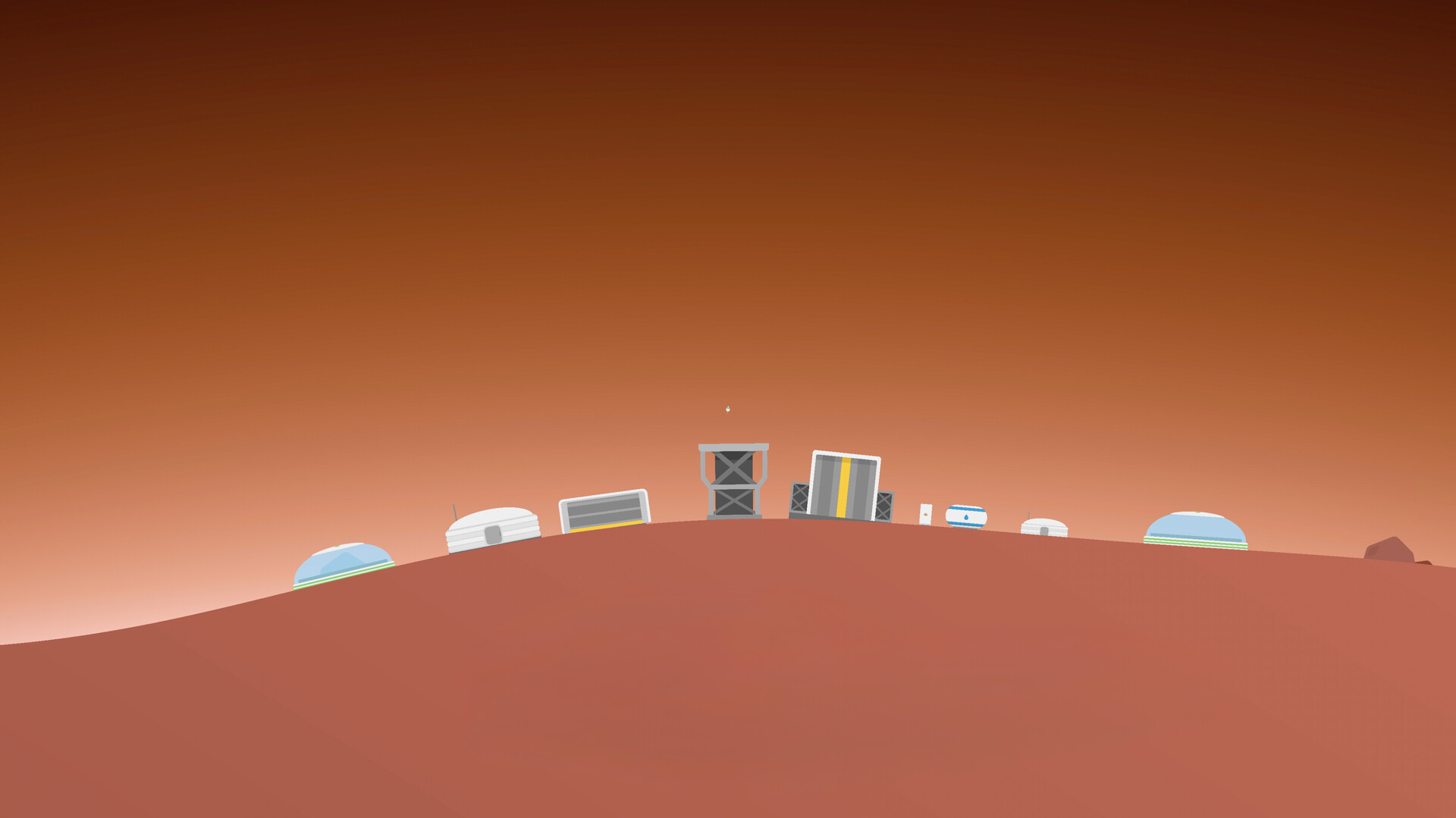
A young colony strung along a Martian ridge, the kind of outpost that needs a steady food and water supply to keep working.Image: Xavier B. via Steam -
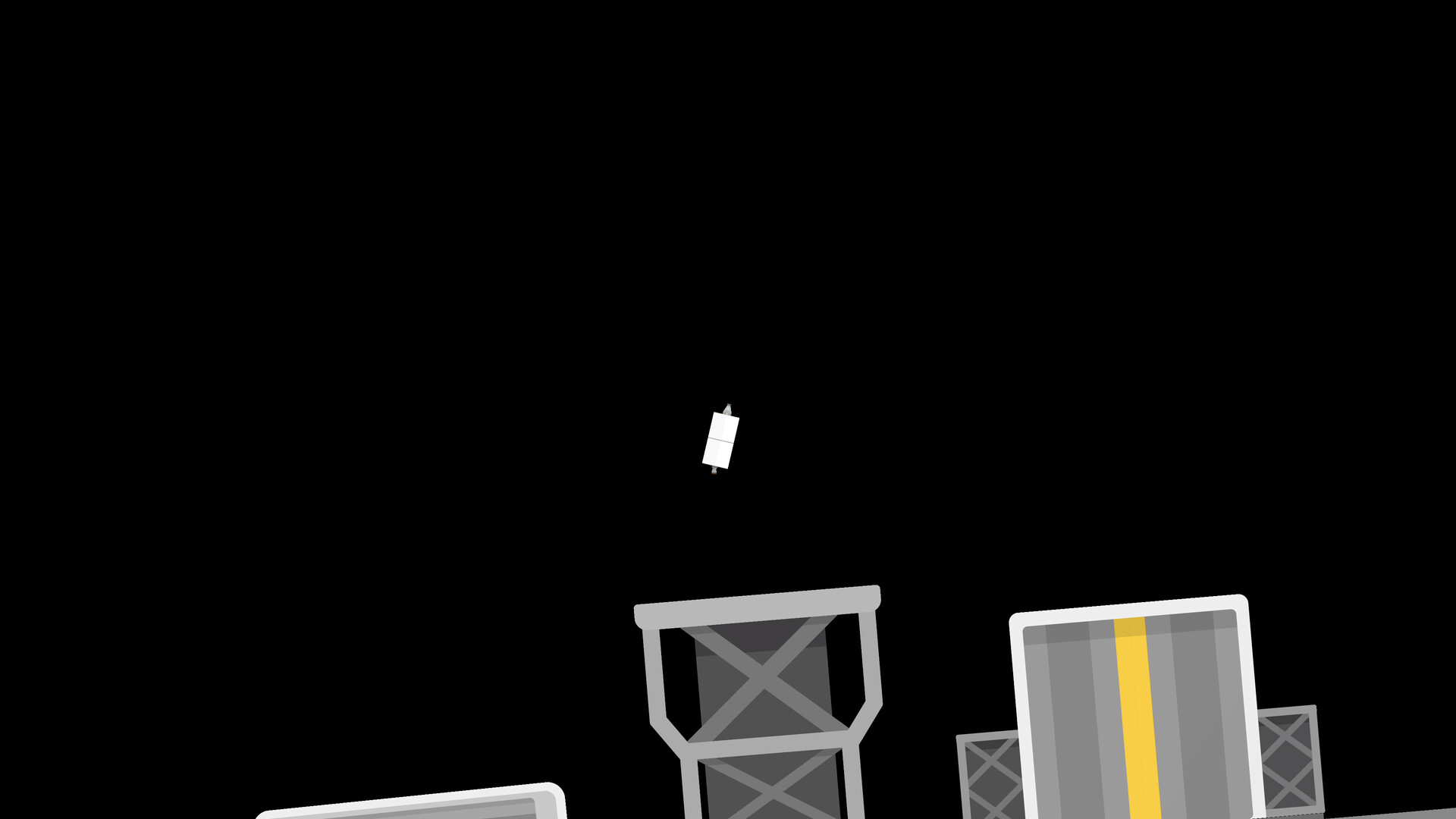
A night launch climbs away from its towers, the physics-driven ascent players either praise for its feel or curse for its bugs.Image: Xavier B. via Steam