
Game review
ReStory: Chill Electronics Repairs
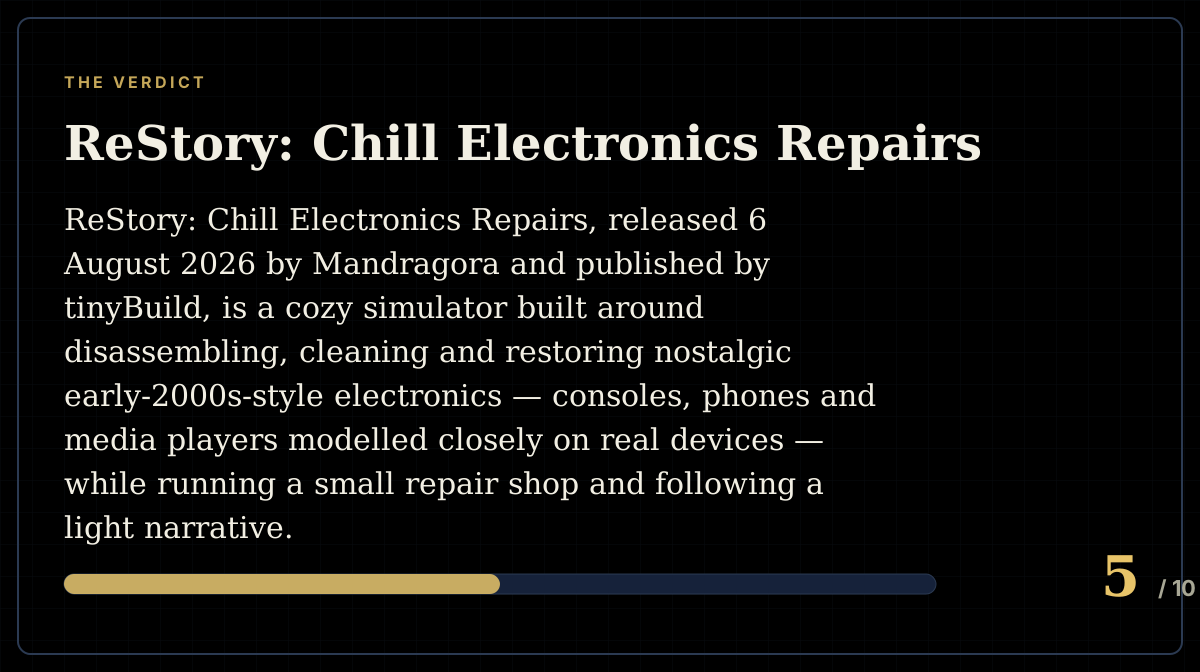
5 / 10
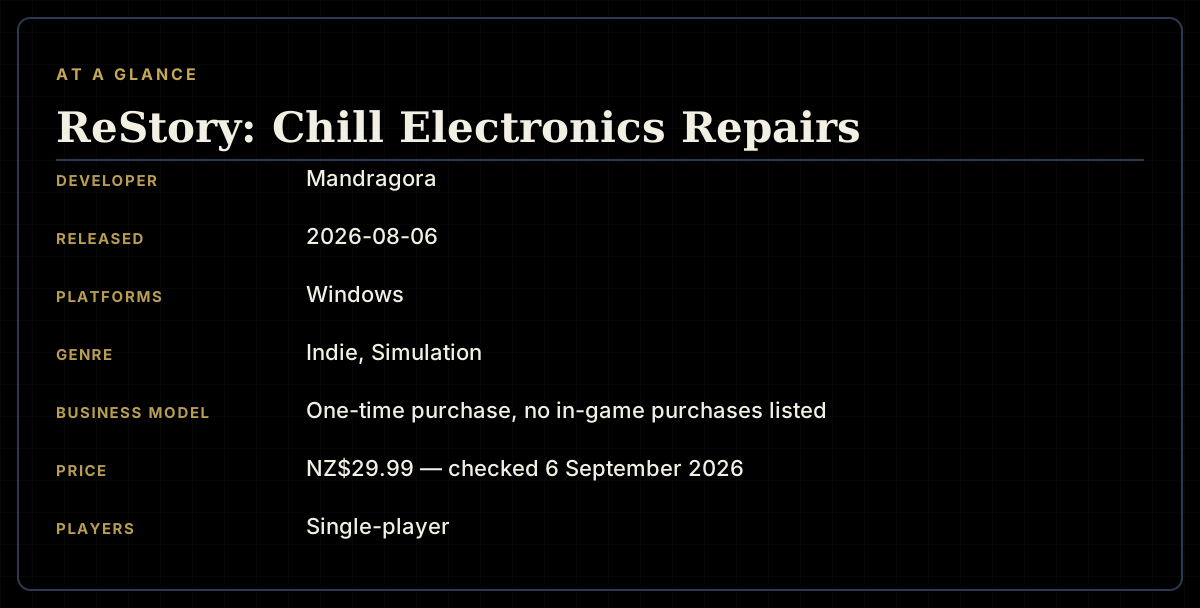
- Developer
- Mandragora
- Publisher
- tinyBuild
- Released
- 6 August 2026
- Platforms
- Windows
- Genre
- Indie, Simulation
- Monetisation
- One-time purchase, no in-game purchases listed
- Players
- Single-player
The short version
ReStory: Chill Electronics Repairs, released 6 August 2026 by Mandragora and published by tinyBuild, is a cozy simulator built around disassembling, cleaning and restoring nostalgic early-2000s-style electronics — consoles, phones and media players modelled closely on real devices — while running a small repair shop and following a light narrative. It sits Overwhelmingly Positive with a very large sample of over 8,600 reviews, and the gameplay itself draws genuine, specific praise, including from reviewers who work in real electronics repair and IT hardware roles crediting the device layouts as accurate replicas. That praise sits alongside an unusually large, detailed and well-corroborated community dispute: a large number of reviewers independently report specific visual evidence of undisclosed generative AI in the game's art and marketing — including repeated, garbled Japanese text and inconsistent concept art across official channels — following public developer denials that a substantial number of reviewers say were later contradicted by the developer's own patch notes acknowledging third-party AI usage. A separate, smaller but repeated concern involves the game's data-collection privacy policy, which multiple reviewers describe as alarmingly broad for a single-player cozy game.
Biggest strengths
- The core repair and restoration loop draws specific, credible praise from reviewers who work in real electronics repair, IT hardware and CNC fields, who describe device layouts as accurate replicas of the real consoles and players they're modelled on
- Multiple reviewers describe genuine, effective nostalgia value, citing specific childhood devices — Nokia phones, PSPs, Game Boys, N64 controllers — recreated in enough detail to evoke real memories of disassembling or repairing the originals
- The sound design, art style and overall "chill" pacing draw consistent praise as sitting in a deliberately tuned sweet spot between overly realistic difficulty and mindless busywork, according to multiple detailed reviewers
Biggest weaknesses
- A large number of reviewers independently report specific visual evidence pointing to undisclosed generative AI use in the game's art and promotional material, including duplicated or garbled Japanese text in signage, inconsistent character concept art across official sources, and anatomical errors reviewers say a human illustrator would have caught; a substantial number of reviewers state the developer initially denied AI usage before later patch notes reportedly acknowledged AI content sourced through a third party
- The game's data-collection privacy policy draws separate, repeated concern, with multiple reviewers describing the scope of what can reportedly be collected — including IP address, hardware information and gameplay recording — as unusually broad and poorly explained for a single-player cozy title
- Multiple reviewers report physical discomfort from control design, specifically needing to hold the mouse button continuously through cleaning and repair actions, with more than one citing hand or wrist strain serious enough to limit play sessions to well under half an hour
Who it's for: Nostalgic tinkerers and cozy-game fans who want a relaxing, detail-accurate electronics repair loop and are comfortable setting aside the specific AI-disclosure and data-collection concerns a large portion of the game's own review base has raised.
Our recommendation: Approach with the AI-disclosure and privacy-policy concerns in mind before buying; the underlying repair gameplay is genuinely well-crafted and nostalgic for those it isn't a dealbreaker for, but this review cannot in good conscience recommend it without naming those concerns directly and first.
5 / 10
Introduction
ReStory: Chill Electronics Repairs, released 6 August 2026 by Mandragora and published by tinyBuild, invites players to disassemble, clean and restore nostalgic early-2000s-style electronics — game consoles, phones, portable media players — modelled closely on real hardware, while running a small shop and following a light story. It sits Overwhelmingly Positive with a very large sample of over 8,600 reviews, and reading widely across that sample turns up two very different, equally well-documented stories: a genuinely well-crafted, nostalgic repair game, and one of the most detailed, specific community disputes over undisclosed AI usage and data collection this review has encountered.
A repair loop that real technicians vouch for
Taken purely as a gameplay experience, this review found consistent, credible praise. Multiple reviewers who describe working in real electronics repair, IT hardware support and even CNC machining specifically vouch for the accuracy of the game's device layouts, with one detailed review noting the recreated portable media player matches the screws-and-all internal layout of the real PSP it's clearly modelled on. Nostalgia is the other consistent throughline: reviewers specifically name childhood devices — Nokia phones, Razr flip phones, PSPs, Game Boys, N64 controllers — recreated in enough fidelity to genuinely evoke memories of taking the originals apart. Several reviewers specifically praise the game's pacing as sitting in a deliberately tuned middle ground between unforgivingly realistic repair difficulty and mindless busywork, and more than one notes the flexibility to ignore story progression entirely and just repair items at a personal, unhurried pace.
A large, specific, well-documented AI-disclosure dispute
Where this review's research diverges sharply from a typical cozy-game writeup is the scale and specificity of a dispute over undisclosed generative AI. This is not a single reviewer's passing suspicion — a large number of independent reviewers report the same specific visual evidence, methodically laid out. Multiple detailed reviews point to garbled or duplicated Japanese text in in-game signage that a native speaker or professional artist would have caught, inconsistent concept art for the same character across different official sources, and anatomical errors like extra or malformed fingers in promotional material. Several reviewers report the developer publicly and repeatedly denied using AI when directly questioned, and a substantial number specifically state that a later patch, reportedly numbered 1.0.009r, contained release notes acknowledging AI content sourced through an unnamed third-party contributor and describing efforts to remove it — which those same reviewers read as a direct contradiction of the earlier denials. This review has not independently verified the disputed patch notes or conducted its own forensic analysis of the game's assets, and reports all of this specifically as reviewers' documented, attributed claims rather than an established fact — but the sheer volume of reviewers independently converging on the same specific evidence, plus the reported existence of an actual patch note on the subject, makes this a meaningfully more corroborated dispute than the single-reviewer speculation this review more commonly encounters elsewhere.
A separate, specific privacy concern
Distinct from the AI dispute, a smaller but still repeated cluster of reviewers raises concern about the game's data-collection privacy policy. Multiple reviewers describe the policy's stated scope — including IP address, hardware information, and potentially recorded gameplay — as unusually broad and poorly justified for a single-player cozy game with no obvious need for that level of telemetry, with more than one reviewer explicitly comparing the policy's language to spyware-adjacent practices they'd expect from a very different kind of software. This review has not analysed the policy's actual text directly and reports this as reviewers' stated concern rather than a confirmed technical assessment.
Physical discomfort and small mechanical gripes
Independent of the larger disputes above, this review found a specific and repeated accessibility complaint: several reviewers report real physical discomfort from needing to hold the mouse button continuously through cleaning and repair actions, with more than one citing hand or wrist strain serious enough to cap individual play sessions well under thirty minutes and specifically request an accessibility option to reduce the need for sustained input. A smaller, more minor complaint concerns the cleaning mechanic itself, where items register as fully complete at 90% cleaned — several reviewers describe this as an oddly unsatisfying design choice for a game whose core fantasy is thorough, careful restoration.
Why this dispute reads differently from the usual speculation
It's worth being explicit about what separates this case from the more common, single-reviewer AI speculation this review encounters across many other titles. In most cases, a lone reviewer flags a vague stylistic suspicion with no supporting detail, and this review reports it as exactly that — an isolated, unverified aside. Here, by contrast, a large number of independent reviewers converge on the same specific, checkable claims: the same garbled Japanese text, the same inconsistent concept art, the same alleged sequence of public denial followed by a patch note reviewers say amounts to a partial admission. That pattern of independent convergence on specific, describable evidence — not simply a shared feeling that something looks "off" — is what elevates this from a passing footnote to a central concern this review centres directly rather than treats as background noise. This review still has not independently verified the disputed patch notes or examined the game's asset files directly, and continues to report all of it as reviewers' documented claims rather than established fact, but the difference in evidentiary weight compared to a typical single-reviewer suspicion is real and worth naming plainly.
The gameplay reviewers still recommend around all of this
It bears repeating that a very large number of the same reviewers raising these concerns still land on a positive recommendation overall, and several go out of their way to separate the two questions explicitly: whether the core repair loop is well made, and whether the studio behind it has been honest about how it was made. One detailed reviewer states this distinction directly, calling the gameplay itself "relatively fun" while urging anyone who specifically objects to undisclosed AI use or developer dishonesty to avoid buying regardless of how enjoyable the mechanics are. This review finds that framing useful for readers deciding how to weigh the two halves of this review against each other, since they clearly are not mutually exclusive in how this game's own audience experienced it.
Final Verdict
ReStory's actual repair-and-restoration gameplay earns real, specific credibility from reviewers who do this kind of work professionally, and its nostalgia-driven presentation clearly resonates with a very large audience. What this review cannot set aside is the scale and specificity of this same audience's documented concern about undisclosed AI usage, compounded by a separate, repeated worry about the game's data-collection practices — concerns detailed and corroborated enough, including an alleged developer acknowledgment in later patch notes, that they belong at the centre of this review rather than a footnote. This review declines to recommend the game without first naming those concerns plainly; players for whom they aren't a dealbreaker will likely find a genuinely well-made, nostalgic repair sim underneath them.
Pros and cons
Pros
- The core repair and restoration loop draws specific, credible praise from reviewers who work in real electronics repair, IT hardware and CNC fields, who describe device layouts as accurate replicas of the real consoles and players they're modelled on
- Multiple reviewers describe genuine, effective nostalgia value, citing specific childhood devices — Nokia phones, PSPs, Game Boys, N64 controllers — recreated in enough detail to evoke real memories of disassembling or repairing the originals
- The sound design, art style and overall "chill" pacing draw consistent praise as sitting in a deliberately tuned sweet spot between overly realistic difficulty and mindless busywork, according to multiple detailed reviewers
- The game supports flexible pacing, letting players ignore story progression entirely and simply repair items at their own leisure, which several reviewers specifically credit for the game's relaxing feel
Cons
- A large number of reviewers independently report specific visual evidence pointing to undisclosed generative AI use in the game's art and promotional material, including duplicated or garbled Japanese text in signage, inconsistent character concept art across official sources, and anatomical errors reviewers say a human illustrator would have caught; a substantial number of reviewers state the developer initially denied AI usage before later patch notes reportedly acknowledged AI content sourced through a third party
- The game's data-collection privacy policy draws separate, repeated concern, with multiple reviewers describing the scope of what can reportedly be collected — including IP address, hardware information and gameplay recording — as unusually broad and poorly explained for a single-player cozy title
- Multiple reviewers report physical discomfort from control design, specifically needing to hold the mouse button continuously through cleaning and repair actions, with more than one citing hand or wrist strain serious enough to limit play sessions to well under half an hour
- A specific gameplay complaint recurs around cleaning mechanics: items are marked fully complete at 90% cleaned, which multiple reviewers say undercuts the satisfaction of a job clearly meant to reward full completion
- Some reviewers report the full release feels notably more hectic than the earlier public demo, with the player character sometimes already appearing to know the fault of a device before it's been opened, reducing the trial-and-error diagnosis some players specifically wanted more of
Screenshots
-
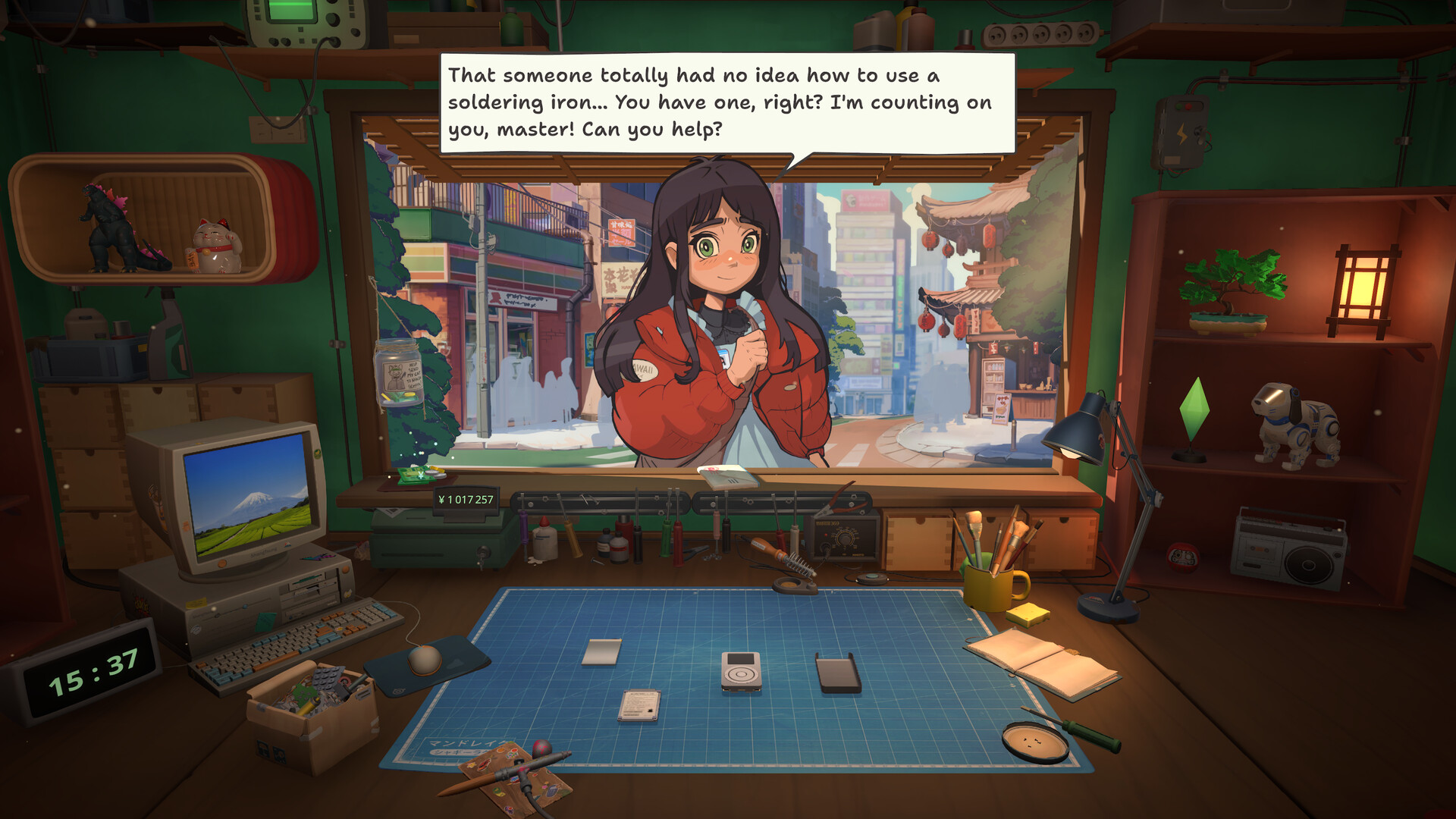
ReStory Chill Electronics RepairsImage: tinyBuild via Steam -
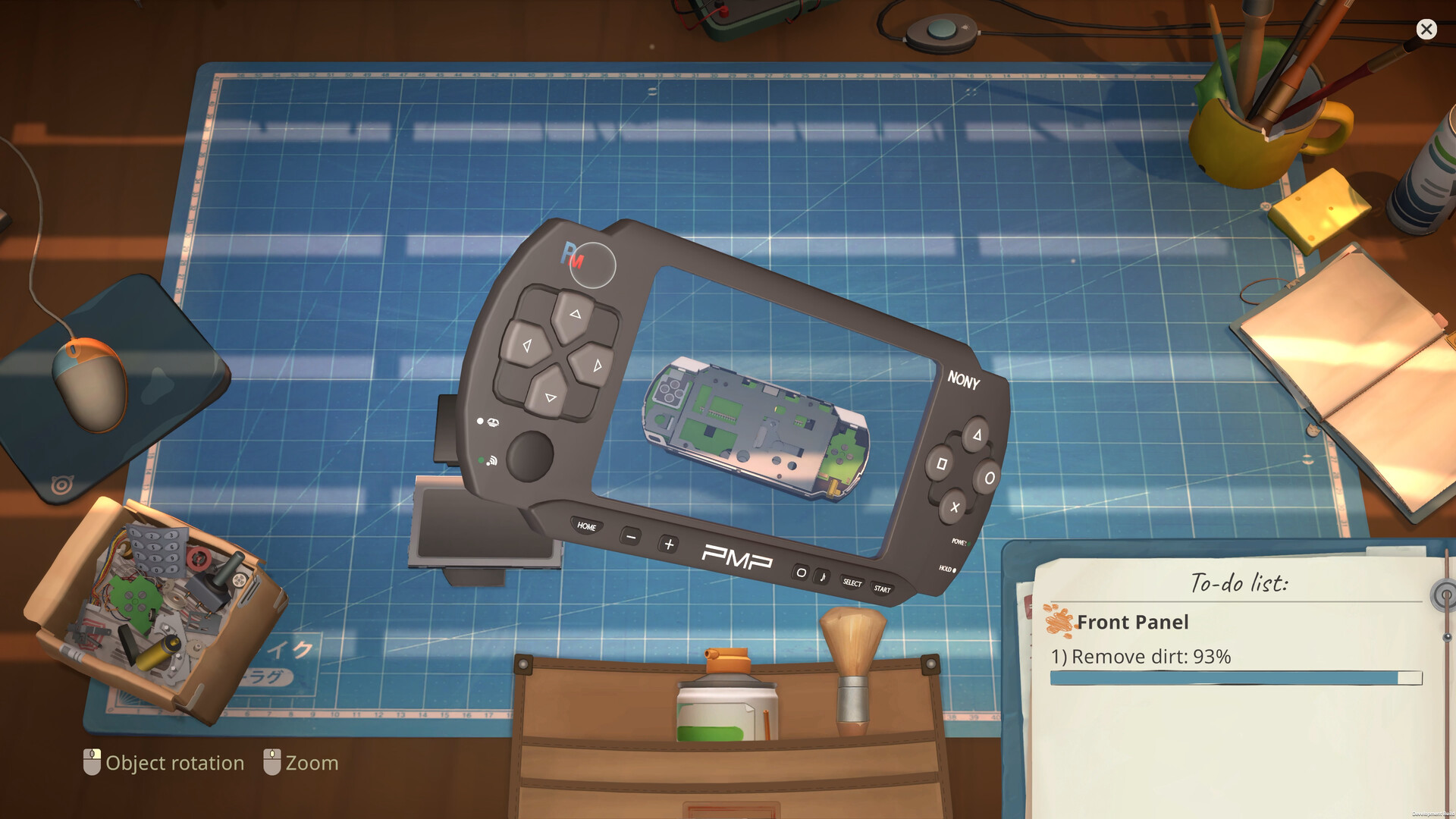
ReStory Chill Electronics RepairsImage: tinyBuild via Steam -
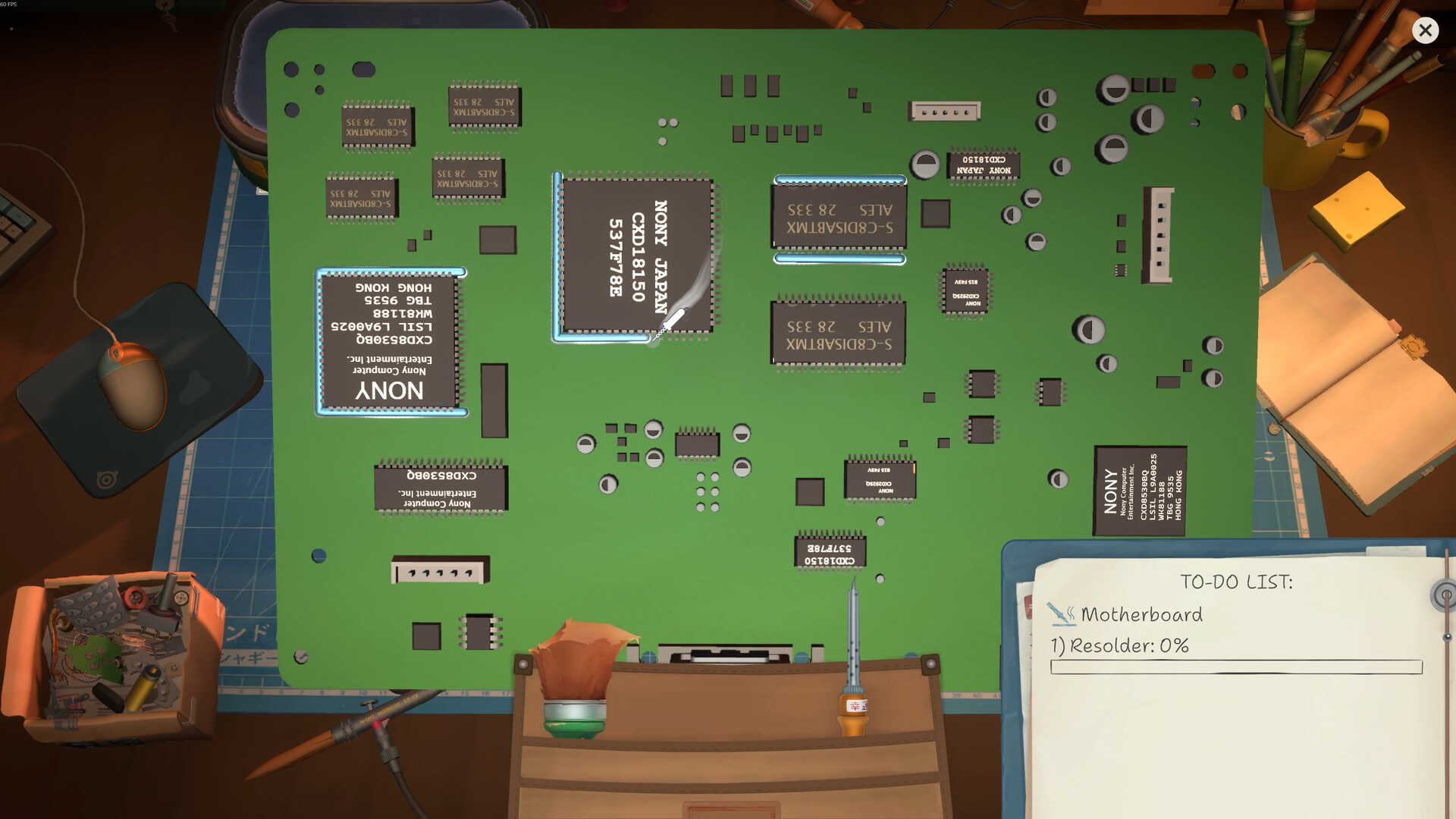
ReStory Chill Electronics RepairsImage: tinyBuild via Steam -
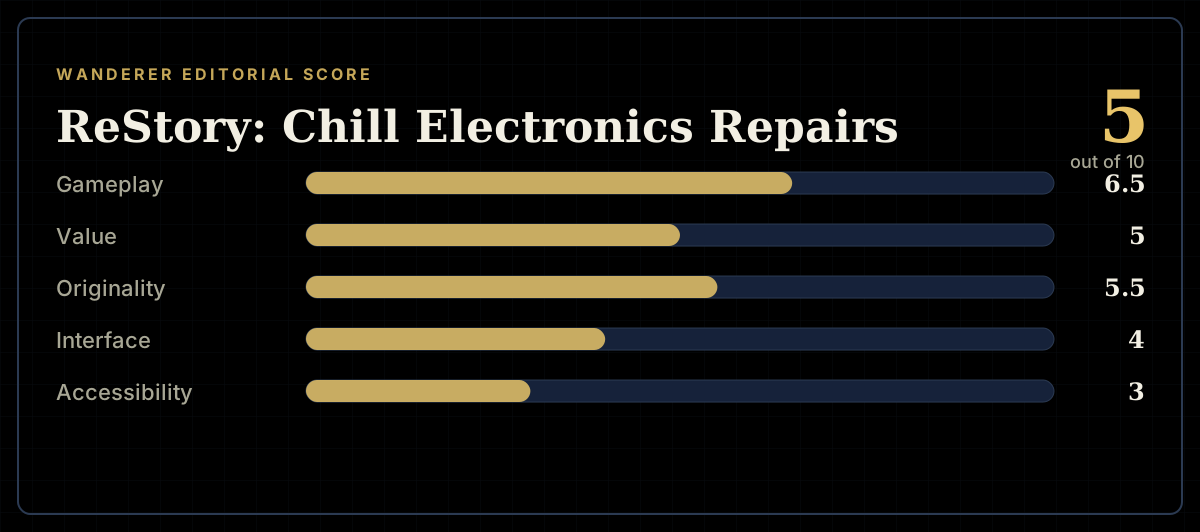
How the review scores each part of the gameWanderer Editorial -
The essentials at a glanceWanderer Editorial -
The short versionWanderer Editorial