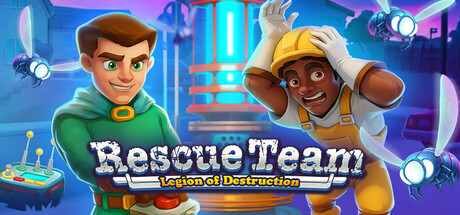
Game review
Rescue Team: Legion of Destruction
5.5 / 10
- Developer
- Game Mixer
- Publisher
- Alawar Casual
- Released
- 18 March 2026
- Platforms
- Windows
- Genre
- Adventure, Casual, Strategy
- Monetisation
- One-time purchase, no in-game purchases listed
- Players
- Single-player
The short version
Rescue Team: Legion of Destruction, released 18 March 2026 by Game Mixer and published by Alawar Casual, is the 20th entry in the long-running Rescue Team time-management series, casting players as a disaster-response crew working to stop a supervillain who has brainwashed former villains turned rescue-team heroes back into agents of chaos. It sits Positive with a small sample of 14 reviews, and reading through the full English-language range reveals a franchise entry that keeps much of what longtime fans love while making one significant, specifically unpopular structural change. Reviewers consistently praise the game's familiar resource-management core and absurd, self-aware villain-redemption premise as continuing to deliver reliable, low-stakes fun. Set against this, at least one detailed longtime fan reports a major format shift away from the series' signature build-your-own-lot structure: levels now ship with sites already fully constructed rather than letting players choose what to build or tear down, with everything visible on screen from the outset rather than gradually revealed as the player expands outward. Separately, multiple reviewers report a specific, concrete audio bug — a loud two-way radio effect that cannot be muted independently, forcing players to disable all game sound to silence it.
Biggest strengths
- The core resource-juggling gameplay loop is repeatedly described as immediately familiar and engaging for genre veterans, with reviewers praising the constant tension between prioritising resource collection, path clearing and rescue operations under time pressure
- The series' absurd, self-aware premise of rehabilitating ridiculous former villains by cleaning up their messes continues to draw genuine, specific enjoyment, with more than one reviewer describing the tone as wildly implausible but consistently fun
- Multiple longtime fans report this entry feels slightly easier and better balanced than recent prior instalments, with one specifically praising more reasonable, achievable achievement requirements than the series has offered previously
Biggest weaknesses
- At least one detailed longtime fan reports a significant, specifically unpopular structural change from the series' traditional format, in which players build, improve and rebuild lots themselves as they progress; in this entry, sites are reported as already fully constructed at the start of each level, removing that core construction choice entirely
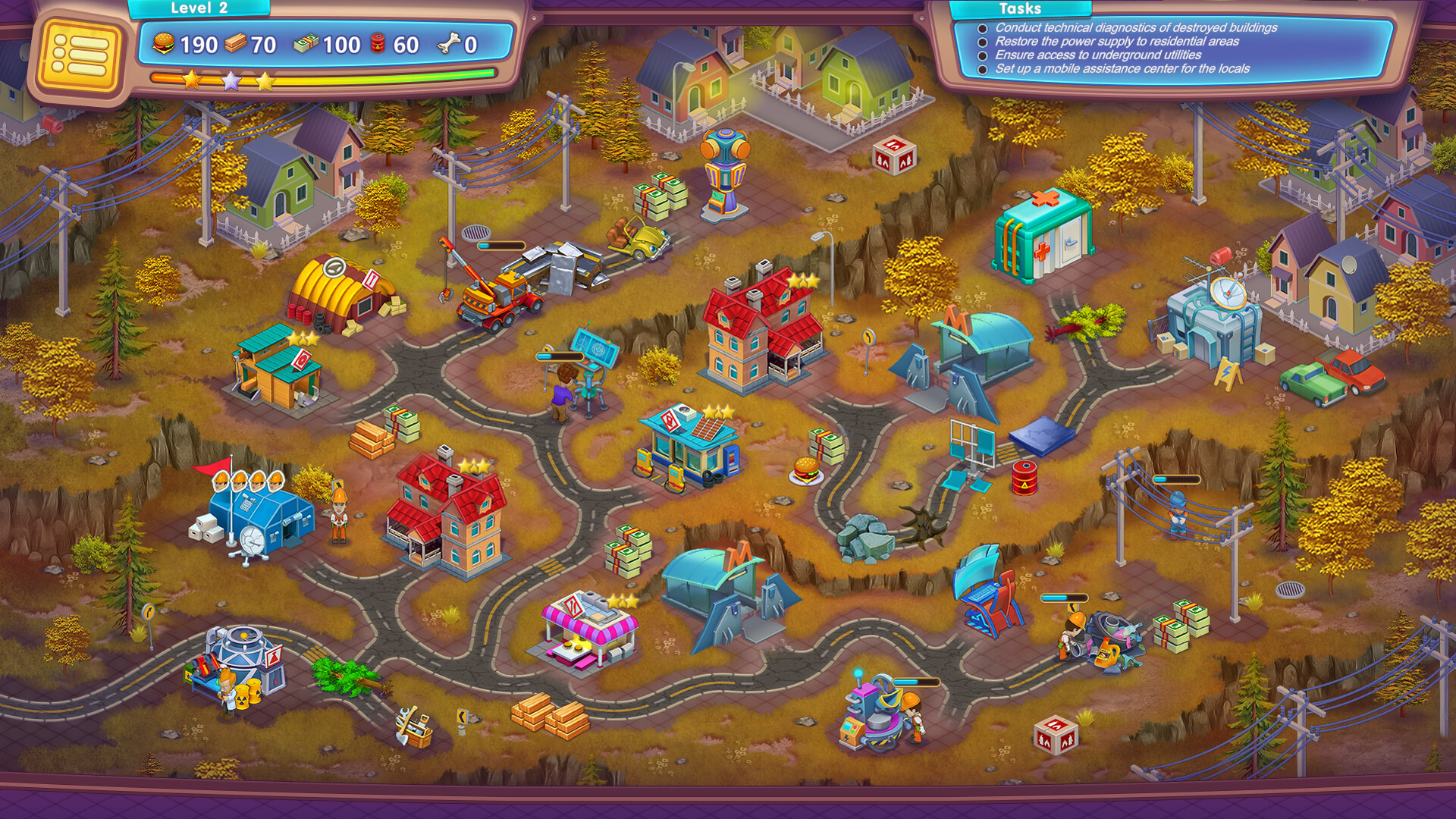
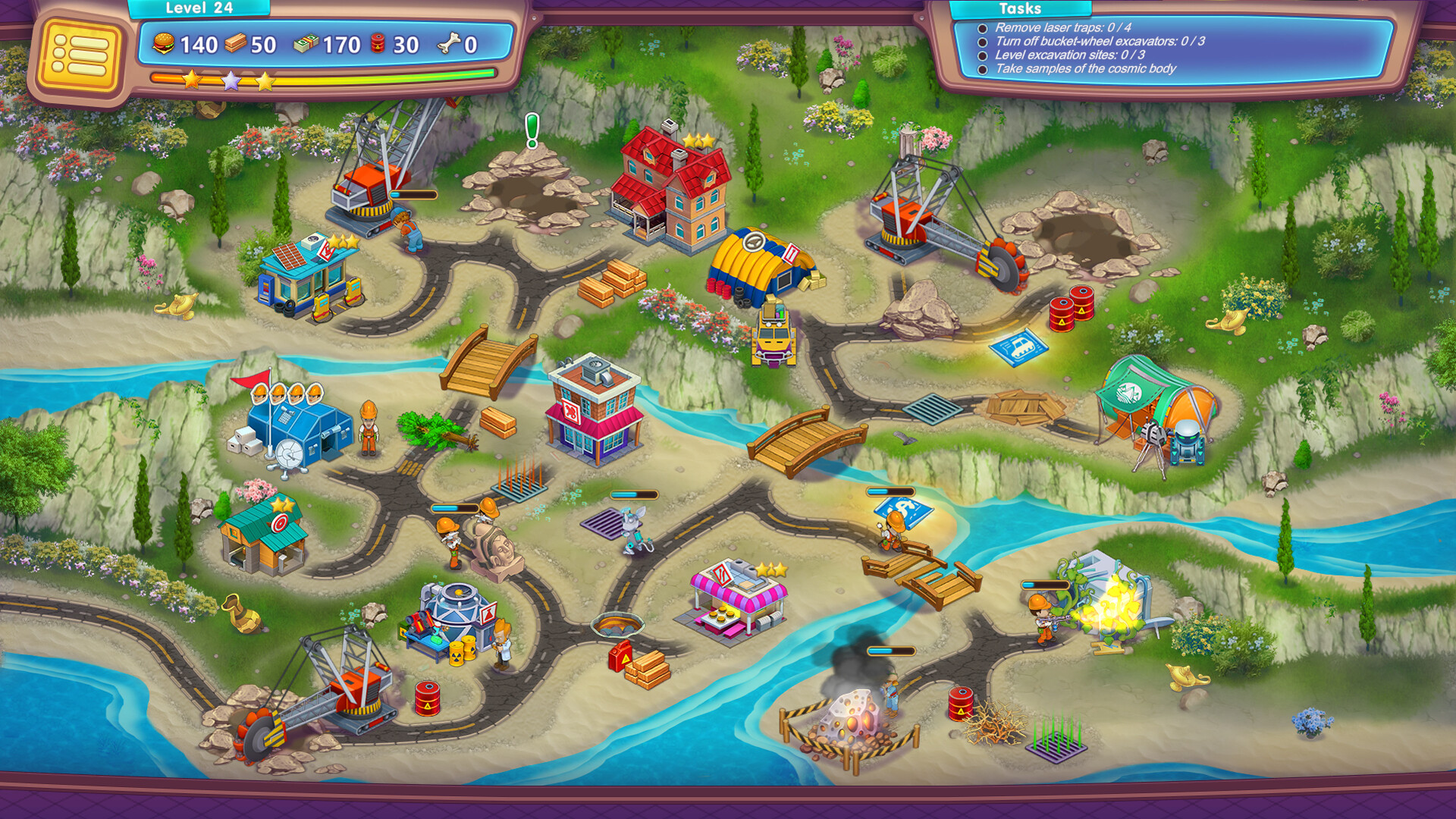
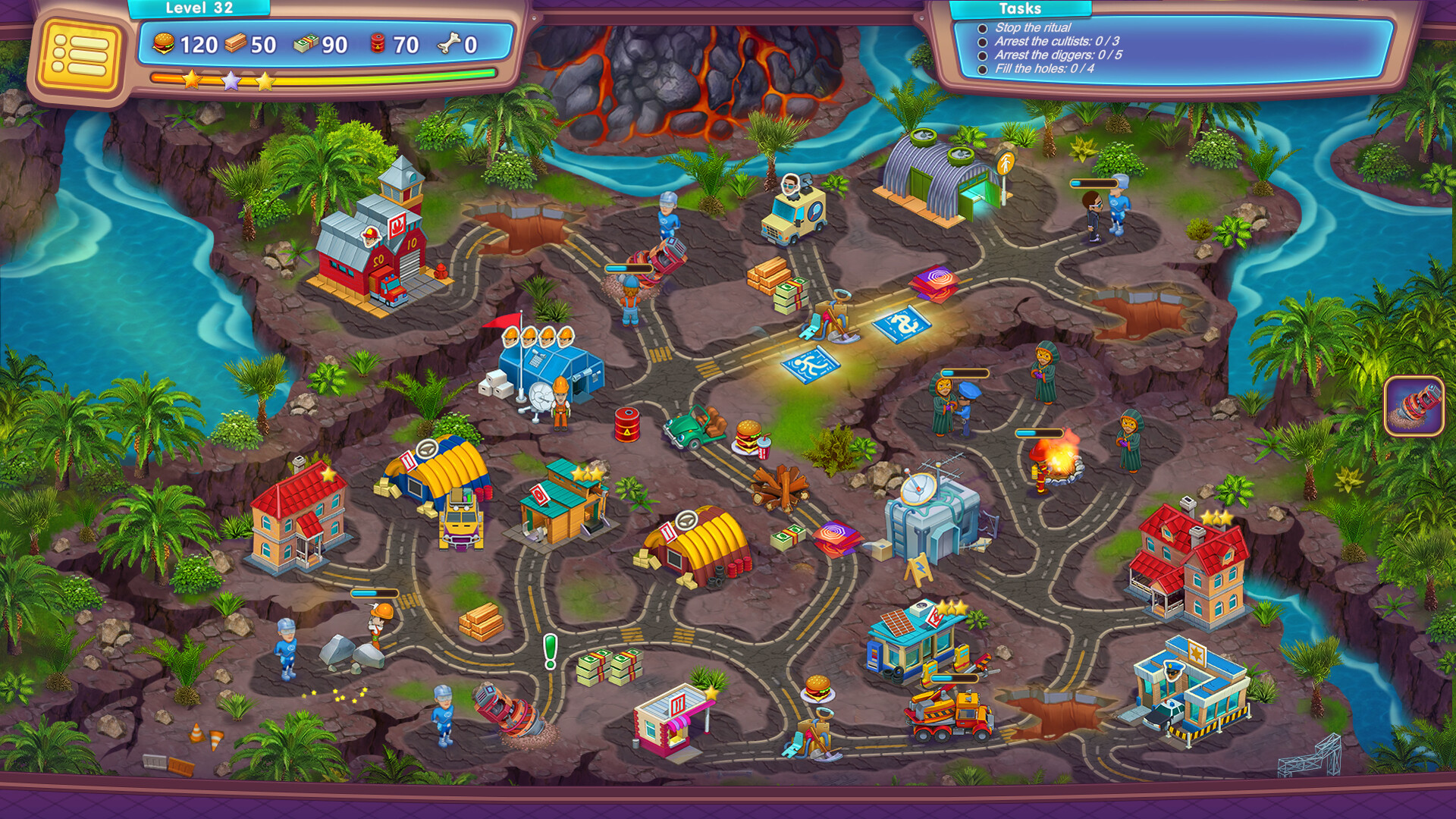
- That same reviewer separately reports the visible level area is smaller and more cramped than in past entries, with the entire map shown from the outset rather than gradually revealed as the player expands into new areas, making it noticeably harder to read and navigate
- Multiple reviewers report a specific, concrete audio bug: a loud two-way radio sound effect that cannot be independently muted or lowered, forcing players who find it annoying to disable all in-game sound entirely to silence it
Who it's for: Longtime fans of the Rescue Team series and casual time-management genre players looking for a reliably low-stakes, absurdly-plotted disaster-management fix, though longtime series purists specifically attached to the build-your-own-lot format should manage expectations.
Our recommendation: A solid, inexpensive pick for casual time-management fans and newcomers to the series; longtime fans specifically attached to the older build-and-expand structure should try a refund-window trial first, since this entry departs from that format more significantly than prior instalments.
5.5 / 10
Introduction
Rescue Team: Legion of Destruction, released 18 March 2026 by Game Mixer and published by Alawar Casual, is the 20th entry in the long-running Rescue Team time-management series. A supervillain called Dr. Armageddon has brainwashed former villains — now rehabilitated rescue-team heroes — back into agents of chaos, and it's up to the player's crew to clean up the destruction and save the day. It sits Positive with a small sample of 14 reviews, and reading through the full English-language range reveals a franchise entry that keeps most of what longtime fans love while making one significant, specifically contested change to its core structure.
Familiar mechanics, absurd charm, still working
The praise here is consistent with what fans of this specific franchise have come to expect. Reviewers describe the core resource-juggling loop — balancing debris clearing, material gathering, structure repair and civilian rescues under constant time pressure — as immediately familiar and still genuinely engaging for genre veterans. The series' self-aware, wildly implausible premise of rehabilitating ridiculous former villains by cleaning up their messes draws specific, repeated enjoyment, with reviewers describing the tone as absurd but consistently fun rather than tired after nineteen prior entries. More than one longtime fan reports this specific entry feels slightly easier and better balanced than recent instalments, with one specifically praising more reasonable, achievable achievement requirements than the series has previously offered.
A significant, specifically unpopular structural change
Set against that continuity, this review found one detailed, specific complaint that stands apart from ordinary genre criticism. A longtime fan who has played every prior entry in the series reports a major departure from what they describe as the franchise's signature format: rather than building, improving and rebuilding construction lots themselves as they progress through a level, players in this entry find every site already fully constructed from the outset, with no ability to choose what to build or tear down. That same reviewer separately reports the visible play area feels smaller and more cramped than in past entries, with the entire map shown from the very beginning rather than gradually revealed as the player expands into new territory — a change they describe as making levels noticeably harder to read and navigate. This reviewer frames the shift specifically as a marketing risk, arguing a series with an established, popular structure shouldn't change that structure without testing the new approach under a separate series name first.
A specific, concrete audio bug
Beyond the structural debate, this review found a repeated, concrete technical complaint. Multiple reviewers report a loud two-way radio sound effect that cannot be muted or lowered independently of the rest of the game's audio, forcing anyone who finds it annoying to disable all in-game sound entirely just to silence it. This is a specific, easily reproducible usability gap rather than a subjective taste complaint, and it's worth flagging directly for anyone sensitive to unexpected loud audio.
A small sample, but a clear signal from its most invested reviewer
With only a handful of English-language reviews available, this review is cautious about treating any single account as universally representative. That said, the most detailed critical review in this sample comes specifically from a reviewer with the deepest personal history with the series — someone who has played every prior entry — which gives their specific, structural complaint about the build-your-own-lot format real weight despite the small overall sample size. Newer players or those less attached to that particular mechanic may reasonably not notice or mind the change at all, and the broader, less format-specific praise in this sample suggests the core time-management experience remains solid regardless.
Refinement versus reinvention, from the series' own perspective
One detailed reviewer frames their overall assessment specifically in terms of refinement rather than reinvention, arguing the game's real strength lies not in the complexity of any individual action a player takes, but in the order those actions are executed — deciding whether to prioritise resource collection, path-clearing or rescue operations first becomes a constant, engaging balancing act that rewards careful planning over reflexive clicking. That framing is a useful way to understand where this entry succeeds even for reviewers who noticed the structural changes: the moment-to-moment decision-making that has always been the series' actual mechanical backbone remains intact and functional, even as the surrounding presentation of that backbone — how lots look and how much is visible on screen at once — has shifted in ways some longtime fans find genuinely disappointing.
A franchise built on longevity, and what that implies for buyers
It's worth placing this entry briefly within the context of its own remarkable longevity. Twenty entries into a series is a genuinely unusual achievement in an industry where most franchises don't survive a fraction of that run, and it speaks to a consistently reliable core formula that has kept a dedicated audience returning release after release. That history cuts both ways for a prospective buyer weighing this specific entry: on one hand, a franchise with this track record has clearly figured out what its audience wants and delivers it reliably; on the other, the exact reviewers most qualified to judge whether a given entry lives up to that history are also the ones most likely to notice, and object to, a change like the one documented here. Newer players approaching this as their first Rescue Team game are unlikely to share that specific frustration, since they have no prior format to measure this entry against.
Final Verdict
Rescue Team: Legion of Destruction keeps the absurd, self-aware charm and dependable resource-management core that has sustained this series across twenty entries, and reviewers report a slightly more forgiving, better-balanced difficulty curve than recent prior instalments. What holds this score down is a significant, specifically documented departure from the series' own signature build-your-own-lot structure that at least one longtime fan reports as a real loss, compounded by a loud, unmutable audio bug this review found concrete and worth flagging directly. Worth it for newcomers and less format-attached casual fans at this low price; longtime series purists should go in aware of exactly how much has changed before committing.
Pros and cons
Pros
- The core resource-juggling gameplay loop is repeatedly described as immediately familiar and engaging for genre veterans, with reviewers praising the constant tension between prioritising resource collection, path clearing and rescue operations under time pressure
- The series' absurd, self-aware premise of rehabilitating ridiculous former villains by cleaning up their messes continues to draw genuine, specific enjoyment, with more than one reviewer describing the tone as wildly implausible but consistently fun
- Multiple longtime fans report this entry feels slightly easier and better balanced than recent prior instalments, with one specifically praising more reasonable, achievable achievement requirements than the series has offered previously
- The very low asking price draws favourable comment as fair for a reliably chill, low-stakes genre experience, with multiple reviewers stating they intend to buy future entries in the series sight unseen based on this one
Cons
- At least one detailed longtime fan reports a significant, specifically unpopular structural change from the series' traditional format, in which players build, improve and rebuild lots themselves as they progress; in this entry, sites are reported as already fully constructed at the start of each level, removing that core construction choice entirely
- That same reviewer separately reports the visible level area is smaller and more cramped than in past entries, with the entire map shown from the outset rather than gradually revealed as the player expands into new areas, making it noticeably harder to read and navigate
- Multiple reviewers report a specific, concrete audio bug: a loud two-way radio sound effect that cannot be independently muted or lowered, forcing players who find it annoying to disable all in-game sound entirely to silence it
- At least one reviewer frames the format change as a marketing misstep, arguing a series with an established, popular structure shouldn't alter that structure without releasing the new approach under a different series name to gauge separate reception first
Screenshots
-
Rescue Team Legion of DestructionImage: Alawar Casual via Steam -
Rescue Team Legion of DestructionImage: Alawar Casual via Steam -
Rescue Team Legion of DestructionImage: Alawar Casual via Steam -
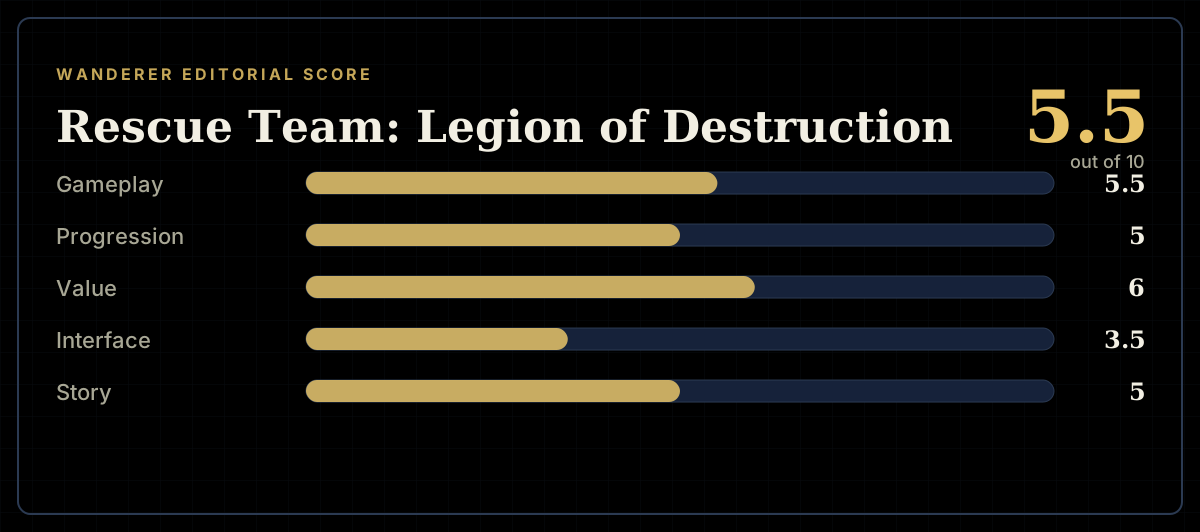
How the review scores each part of the gameWanderer Editorial -
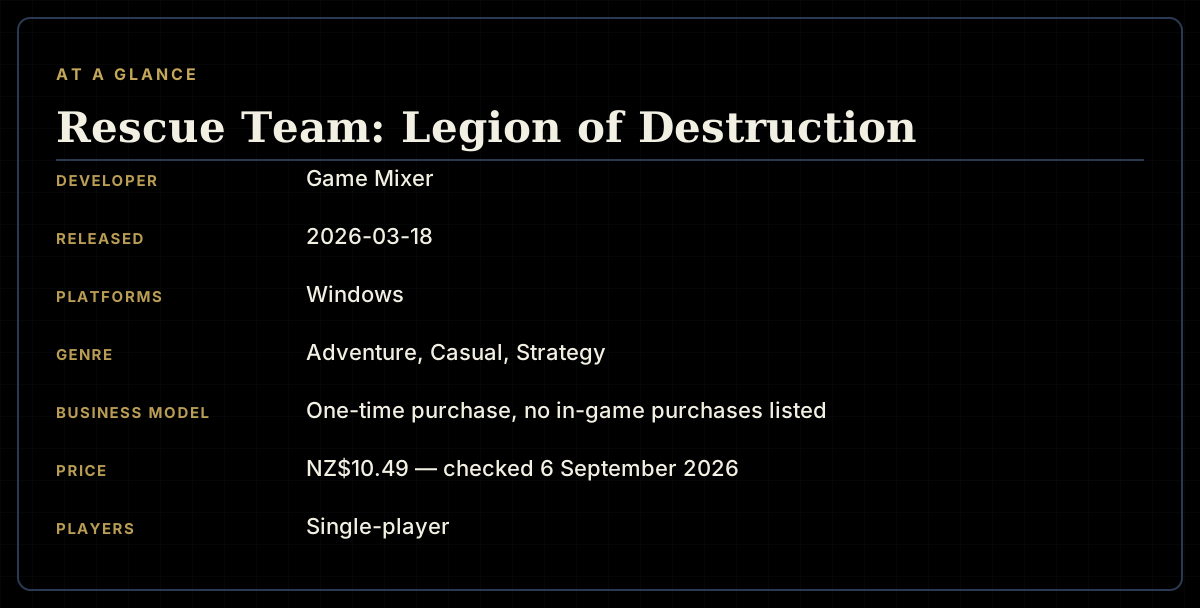
The essentials at a glanceWanderer Editorial -
The short versionWanderer Editorial