
Game review
Realm Revolutions
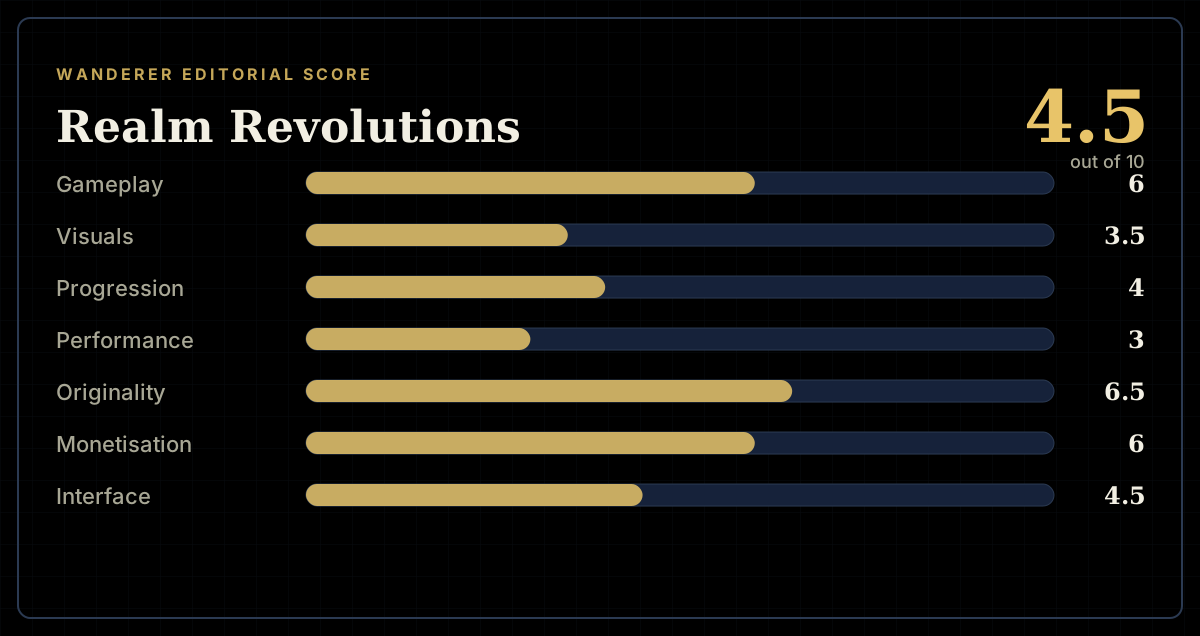
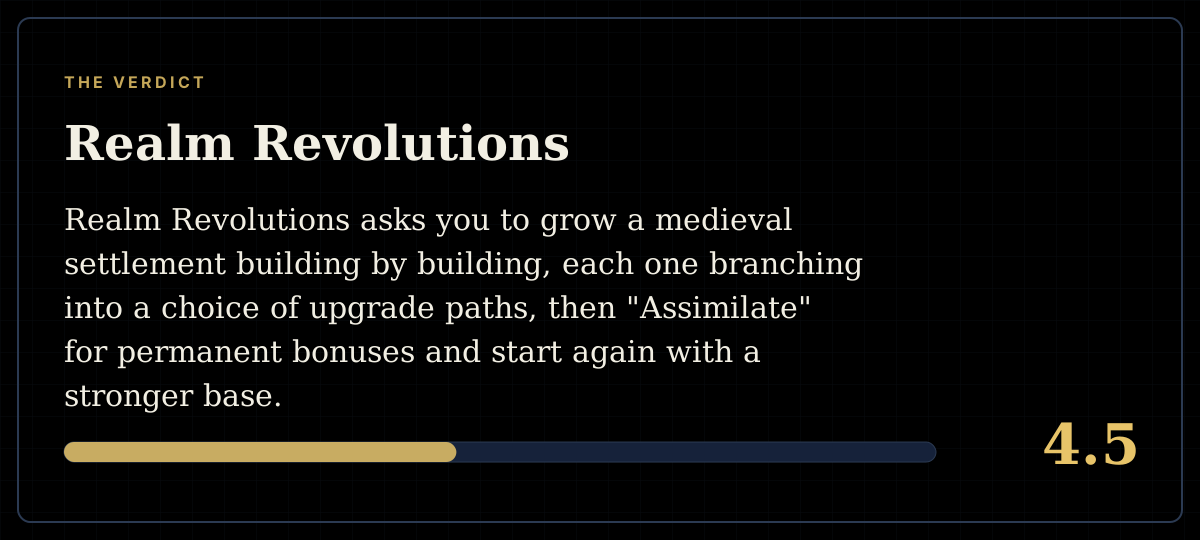
4.5 / 10
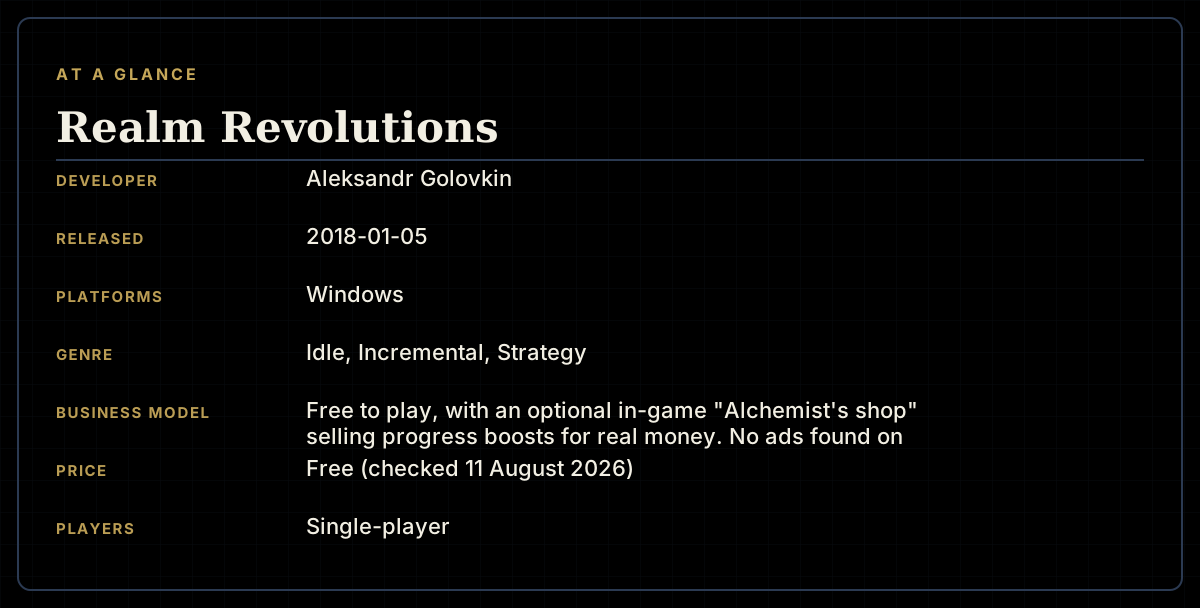
- Developer
- Aleksandr Golovkin
- Publisher
- Aleksandr Golovkin
- Released
- 5 January 2018
- Platforms
- Windows
- Genre
- Idle, Incremental, Strategy
- Monetisation
- Free to play, with an optional in-game "Alchemist's shop" selling progress boosts for real money. No ads found on the store page or in reviews.
- Players
- Single-player
The short version
Realm Revolutions asks you to grow a medieval settlement building by building, each one branching into a choice of upgrade paths, then "Assimilate" for permanent bonuses and start again with a stronger base. There's a real strategy game trying to get out of that loop — one veteran of the developer's later Territory Idle calls this the more interesting of the two, "due to more depth/variety in strategies." But this is also the oldest and least maintained of Aleksandr Golovkin's three idle games. Its content additions stopped in August 2018, seven months after launch, and complaints about the game silently wiping saved progress on crash or update run in a straight, unbroken line from release week to a review posted in the last three months.
Biggest strengths
- Buildings branch into genuine either/or upgrade choices rather than a single flat production number, and a veteran of the developer's later games calls this one deeper and more varied strategically than Territory Idle
- "Assimilation," the prestige layer, hands out multiple bonus categories (money, army strength, trade) that reshape how the next run opens rather than just restarting with a multiplier
- Completely free with no ads and, by most reviewers' account, no hard paywall — one of the earliest reviews specifically praises it for having "No Microtransactions" pressure
Biggest weaknesses
- Save loss and crashes are the single most consistent complaint in the review history, from launch week in January 2018 ("everything got wiped out... losing my progress in a crash sure is") through a review posted in November 2025 describing a full reset after 188 hours — there is still no autosave players can rely on
- Content development stopped in August 2018, seven months after release; the only later entry in the game's own news feed is a 2023 announcement for the developer's next, unrelated game
- Multiple reviewers across different years describe progression grinding to a near-halt after the third or fourth Assimilation, with waits described in the "literally months" range for the next unlock
Who it's for: Genre veterans curious about the building-and-prestige system that seeded Territory Idle, who are willing to save-scum or accept the occasional total wipe as the cost of playing something the developer stopped patching in 2018.
Our recommendation: Free and worth a look for the strategic bones alone, but back up your save data yourself — the game won't do it for you — and go in knowing nothing here has been touched in any meaningful way for over eight years.
4.5 / 10
Realm Revolutions is the oldest of the three idle games solo developer Aleksandr Golovkin has published on Steam, and reading its review history in order feels a little like watching a building's foundation get poured before the two towers that went up next door. Long before Territory Idle's pantheons and prestige layers, or Underworld Idle's four faction chains, there was this: a settlement, a handful of buildings, and a choice at the top of every branch about what kind of place you're building. It started life on Kongregate before its January 2018 Steam port, and its earliest reviewers — several of whom say as much directly — followed it over from there.
Buildings that branch, and an "Assimilation" that means it
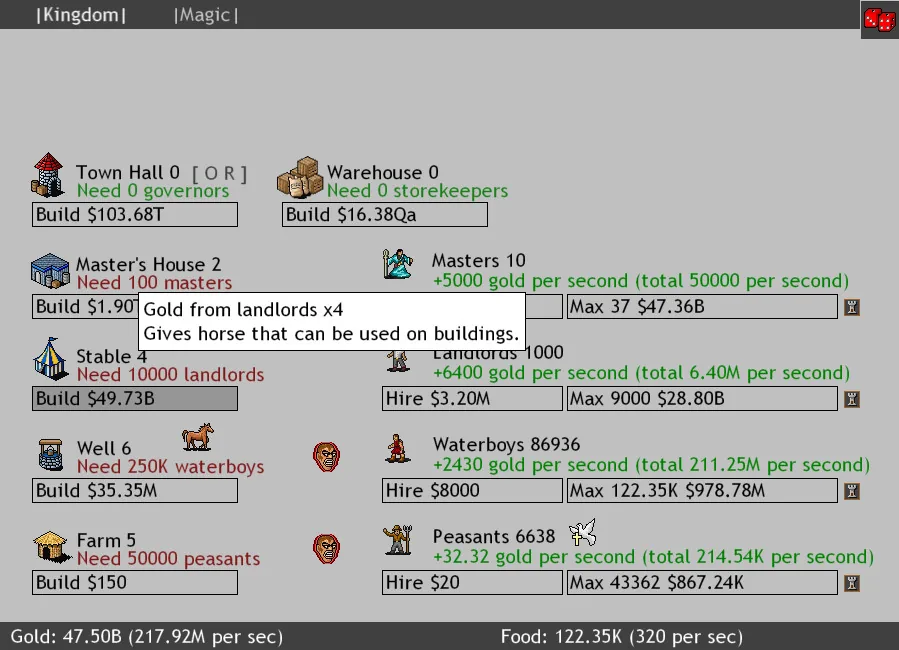
The core loop is a familiar shape wearing a more thoughtful outfit than most free idlers bother with. You buy buildings, staff them, and watch resources climb — but nearly every building forks into an either/or choice rather than a single upgrade line. One of the earliest reviews on the page puts it plainly: "choosing the right building (wells) can make the difference between having wells in your city, and absolute suffering." That's not flavour text; multiple reviewers describe genuinely different playthroughs depending on which branch they picked, years apart from each other.
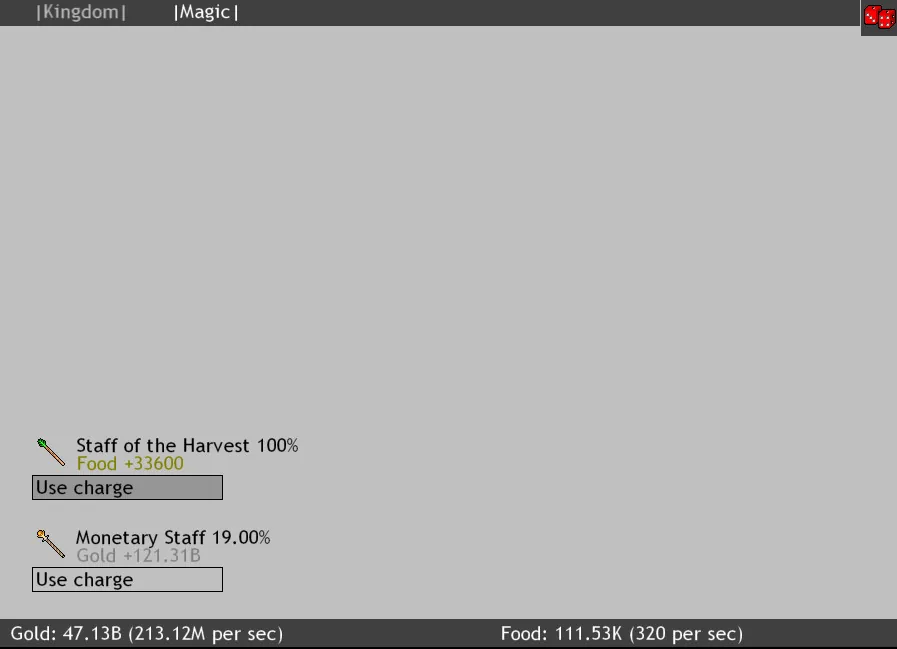
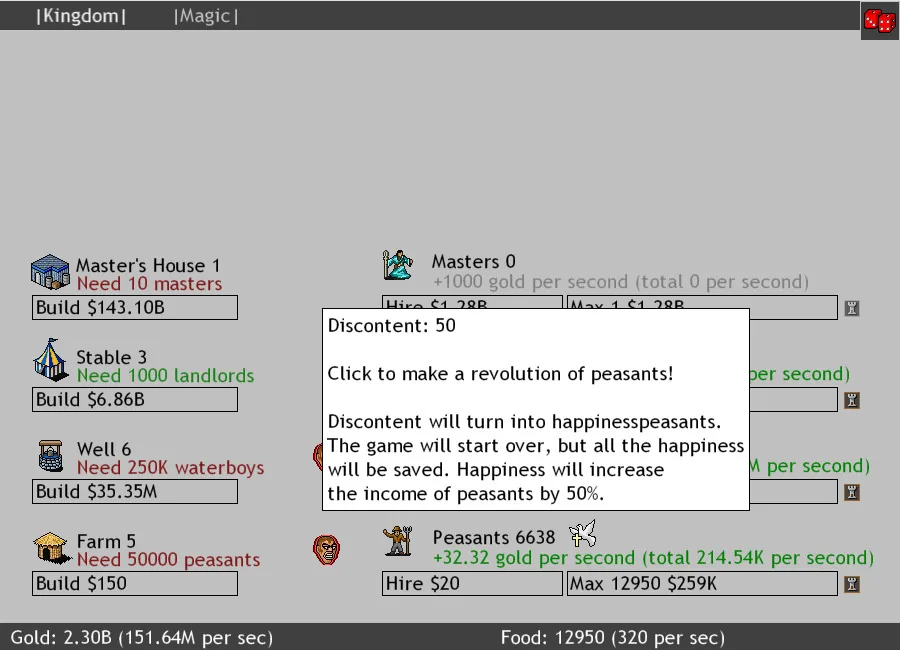
The prestige layer, called Assimilation in the game's own patch notes and "Revolution" or "Revolt" by several players, works the same way — it isn't one reset button but a menu of bonus categories. A December 2023 review with over 30,000 hours logged singles this out as the game's best feature: "the various 'revolutions': Revolt for more money, stronger armies, better trading." Later content adds a battling layer for contested territory and a "Throne Room" of royal decrees, giving the mid-game somewhere to go beyond the opening build order. It's enough that a reviewer who's also played Territory Idle rates this game the more interesting of the two specifically for its "more depth/variety in strategies" — a notable claim, since Territory Idle is the game this developer is best known for and the one Wanderer scored higher between the two later releases.
The wall after the third Assimilation
Depth doesn't mean the game stays generous about handing it to you. Where Territory Idle's pacing complaints centre on a slow opening, Realm Revolutions' centre on what happens once you're past it. A 2018 review describes prestiging into a dead end: "the game stays as slow as it was" after the first few resets. A 2021 review is more specific about where that shows up — "the first couple of conquests aren't too bad, after the third or fourth the game basically comes to a full stop... I have to wait literally months for the next tier." That's not one frustrated outlier; a 2024 review makes the identical structural complaint in different words, calling the reset mechanics "too obfuscated" and the scaling "too slow" once you're past the early game. A May 2026 review — one of the very few posted this year — describes the same imbalance still present eight years later: gold accelerates faster than food after each Assimilation, so one resource permanently drags behind the other no matter how many times you reset.
The bug that never got fixed
What separates this game from its two younger siblings isn't pacing, though — it's stability. Complaints about the game silently corrupting or wiping saved progress appear in review week one and never really stop. "Everything got wiped out. all progress gone," reads a March 2018 review from a player past 100 hours, who adds: "I'm 90% sure that the crash was not the game's fault. losing my progress in a crash sure is!" A January 2019 review with 22,000 hours logged reports the same thing happening three separate times across 360 hours. An October 2023 review states it flatly as a known hazard: "If your power gets cut the game will lose your save." And in November 2025 — the most recent detailed account in the sample — a reviewer with 188 hours invested describes exactly the same failure mode Steam users were reporting in the game's first month: "every now and again it seems to fully reset all your progress."
There's no autosave feature reviewers can point to that would prevent this, and nothing in the game's own patch history after August 2018 suggests it was ever addressed. For an idle game, where the entire value proposition is time invested compounding while you're not looking, a bug that can erase that time without warning is close to the worst possible failure — worse, in a specific way, than either of the pacing or monetisation complaints levelled at this developer's later games, because it doesn't just slow the compounding down, it can zero it out.
Free, but not polished
The monetisation story here is milder than either later game. There's an in-game "Alchemist's shop" selling progress items for real money — one reviewer's complaint about paying roughly NZ$20 (quoted as "13 cad") for a single item gives a sense of the pricing — but the more common verdict, including from one of the most-upvoted reviews on the page, is that the game is playable and enjoyable with "No Microtransactions" pressure at all. A 2020 review calls it something to "let run in the background," and a handful of long-tenured players describe exactly that use case without ever mentioning the shop.
What reviewers do bring up, repeatedly, is a rougher production polish than either Territory Idle's spreadsheet density or Underworld Idle's faction art. One 2021 review, blunt but representative, calls it "a 2D/text/MS Paint tier clicker/idler game" built in "the godawful GameMaker Studio," and a 2020 review flags a 4K scaling bug that makes the window unusable without manually adjusting Windows' display scaling — a complaint that shows up again, in substance, in a 2018 review about "720p or lower" resolution on high-DPI monitors. Neither appears to have been fixed in the years between those two reports. There are also no Steam achievements at all — a gap two different reviewers, three years apart, flag as a genuine missed feature rather than a nice-to-have.
Stopped in 2018, mentioned again in 2023
The game's own Steam news feed tells the abandonment story with unusual precision. A dense run of content and bugfix patches from launch on 5 January 2018 through a "Trade Posts" update on 16 August 2018 — new locations, new races, a world map, a throne room — and then nothing. The only later entry in the feed is dated 1 August 2023: an announcement for Epic Auto Towers, a different game from the same developer, the same announcement that also appears in the news feed for Underworld Idle. Realm Revolutions itself hasn't been touched since. And yet the most recent review in the sample, posted in July 2026 by a player with 8,624 hours logged, is a one-line positive review that reads simply: "More updates? Pls." Eight years on, someone is still asking.
Verdict
Realm Revolutions is the origin point for a developer whose later, better-known games this outlet has already reviewed — and on the evidence of its own review history, it's the one with the least excuse for its rough edges, because it's had the longest to fix them and hasn't. The branching buildings and multi-category Assimilation system are a genuinely more interesting strategic core than the pacing complaints around them suggest, and one veteran of the developer's whole catalogue rates it above Territory Idle for exactly that reason. But a save system that's been reported as capable of erasing your progress since release week, content that stopped seven months into the game's life, no achievements, and a 4K display bug that's never been addressed all point the same direction: this is a free download worth the strategic curiosity, not a game anyone should trust with hours they'd mind losing.
Pros and cons
Pros
- Buildings branch into genuine either/or upgrade choices rather than a single flat production number, and a veteran of the developer's later games calls this one deeper and more varied strategically than Territory Idle
- "Assimilation," the prestige layer, hands out multiple bonus categories (money, army strength, trade) that reshape how the next run opens rather than just restarting with a multiplier
- Completely free with no ads and, by most reviewers' account, no hard paywall — one of the earliest reviews specifically praises it for having "No Microtransactions" pressure
- A small but real strategic identity distinct from the flood of flat "buy the next tier" idle games it shares shelf space with
Cons
- Save loss and crashes are the single most consistent complaint in the review history, from launch week in January 2018 ("everything got wiped out... losing my progress in a crash sure is") through a review posted in November 2025 describing a full reset after 188 hours — there is still no autosave players can rely on
- Content development stopped in August 2018, seven months after release; the only later entry in the game's own news feed is a 2023 announcement for the developer's next, unrelated game
- Multiple reviewers across different years describe progression grinding to a near-halt after the third or fourth Assimilation, with waits described in the "literally months" range for the next unlock
- No Steam achievements exist for the game at all, a gap two reviewers flag by name years apart, and the interface still has a years-old, never-fixed scaling bug that makes it hard to use on 4K displays
Screenshots
-
Realm RevolutionsImage: Aleksandr Golovkin via Steam -
Realm RevolutionsImage: Aleksandr Golovkin via Steam -
Realm RevolutionsImage: Aleksandr Golovkin via Steam -
How the review scores each part of the gameWanderer Editorial -
The game at a glanceWanderer Editorial -
The short versionWanderer Editorial