Game review
Tom Clancy's Rainbow Six Siege
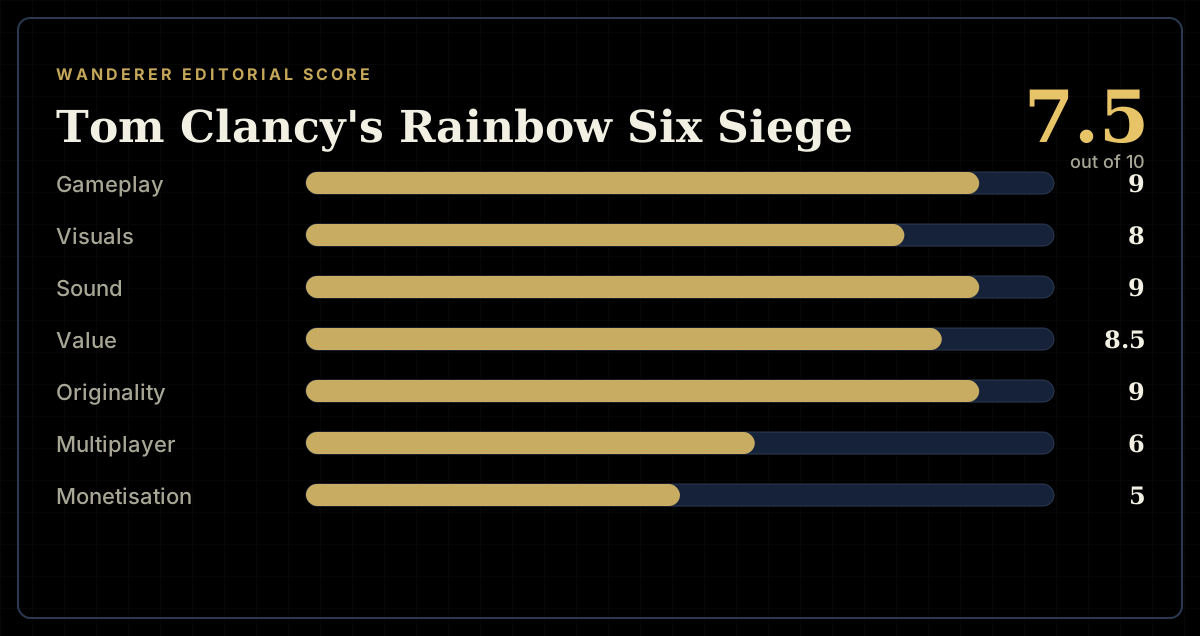
7.5 / 10
- Developer
- Ubisoft Montreal
- Publisher
- Ubisoft
- Released
- 1 December 2015
- Platforms
- Windows, PlayStation 5, Xbox Series X|S
- Genre
- Tactical Shooter
- Monetisation
- Free to play, funded by operator unlocks, battle passes, cosmetics and a player-to-player marketplace.
- Players
- Online only — 5v5 attack and defend, ranked, casual and rotating limited-time modes
The short version
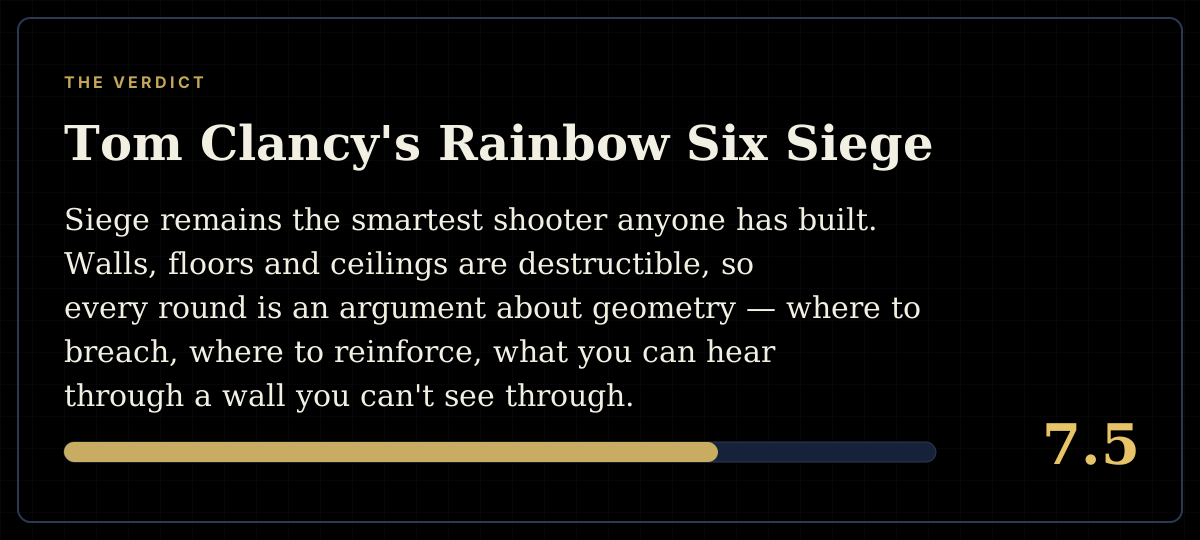
Siege remains the smartest shooter anyone has built. Walls, floors and ceilings are destructible, so every round is an argument about geometry — where to breach, where to reinforce, what you can hear through a wall you can't see through. Eleven years and forty-plus operators later, nothing else plays like it, and it's now free.
Its Steam page is another case of inherited reviews. The 82.2% badge and the 2015 release date belong to a paid game; the free-to-play relaunch happened on the same entry. Half of the hundred most-helpful English negatives were written in 2025 and 2026, and of the last hundred English reviews only 74 are positive. Cheating, ranked matchmaking and Ubisoft's account support are what the modern era is arguing about.
Biggest strengths
- Destructible environments make every round a genuinely fresh tactical problem
- Sound design is load-bearing — you fight by listening as much as looking
- Forty-plus operators with real mechanical identity rather than cosmetic differences
Biggest weaknesses
- Cheating appears in nearly a third of the most-helpful negative reviews
- Ubisoft is named in 40 of 100 negatives, more than any other term, often over account support
- Ranked and matchmaking changes draw sustained criticism across the whole review history
Who it's for: Anyone who wants the deepest tactical FPS available, now at no cost. Expect a brutal learning curve, a community with a difficult reputation, and a cheating problem the developers are still fighting.
Our recommendation: Install it — free access to a game this good is an easy yes, and Year 11 is still receiving serious balance work. Read the recent reviews rather than the badge, and be aware that account security and Ubisoft support are recurring complaints.
7.5 / 10
Earlier today I wrote about Counter-Strike 2, whose store page reports a 2012 release date and nine million reviews it inherited from CS:GO. Rainbow Six Siege is the same trick in a different shape.
Its Steam entry says 1 December 2015 and carries 1,536,989 reviews at 82.2% positive. It also says "Free to Play" — because Siege was a paid game for most of that decade and relaunched free on the same listing. Every review of the boxed product, the Starter Edition, the season passes and the paid operator unlocks counts toward the badge on a game you can now install for nothing.
Check the release date against the product you're reviewing. Twice today it hasn't matched.
What the years say
Bucket the hundred most-helpful English negatives: one in 2017, eleven in 2018, then one, one, eight, ten and five through 2023. Then thirteen in 2024, thirty-six in 2025, fourteen in 2026 — half the sample in the last two years.
And the 2018 cluster, the second largest, is about things that no longer exist: the Starter Edition pricing model that made unlocking operators punitive, and an automated language filter that a 1,153-vote reviewer complained was banning Spanish and French speakers for ordinary words. Both are historical. Both still count.
The honest current figure is the recent window: 74 of the last 100 English reviews are positive, eight points under the lifetime badge, from players with a 68-hour median.
What the modern complaints are
Ubisoft. Named in 40 of the hundred negatives — more than cheating, more than ranked, more than anything about the game itself. The second most-upvoted negative in the game's history, at 1,827 votes from a 606-hour player, is one sentence: "Lost my account and Ubisofts customer service refused to help recover it so I lost everything I had in siege." Account security and support recur through the 2025 and 2026 reviews, sometimes alongside claims about a credit-related security incident that I can't independently verify and won't repeat as fact.
Cheating, at 32 of a hundred. It's the same story as Counter-Strike 2 and Delta Force — a competitive shooter where the anti-cheat is losing often enough that experienced players talk about it more than they talk about tactics.
Ranked, at 21. Siege has rebuilt its ranked system repeatedly and is on Ranked 3.0 as of 2026, with the developers publishing early adjustments and player feedback. Every iteration annoys the people who learned the last one.
Drift. The most affecting criticism is older and sadder. A 4,662-hour player in 2022 catalogues what changed: Terrorist Hunt renamed and hollowed out, blood and corpses reduced, and a PvP scene that became "a costume freak-show, fast-paced run and g[un]." A 4,684-hour player two years earlier: "they took a truly amazing game, and just turned it into complete garbage." Those are people with two working years inside it, describing a game drifting from a grounded tactical simulator toward a faster, brighter hero shooter.
Why it's still worth your time
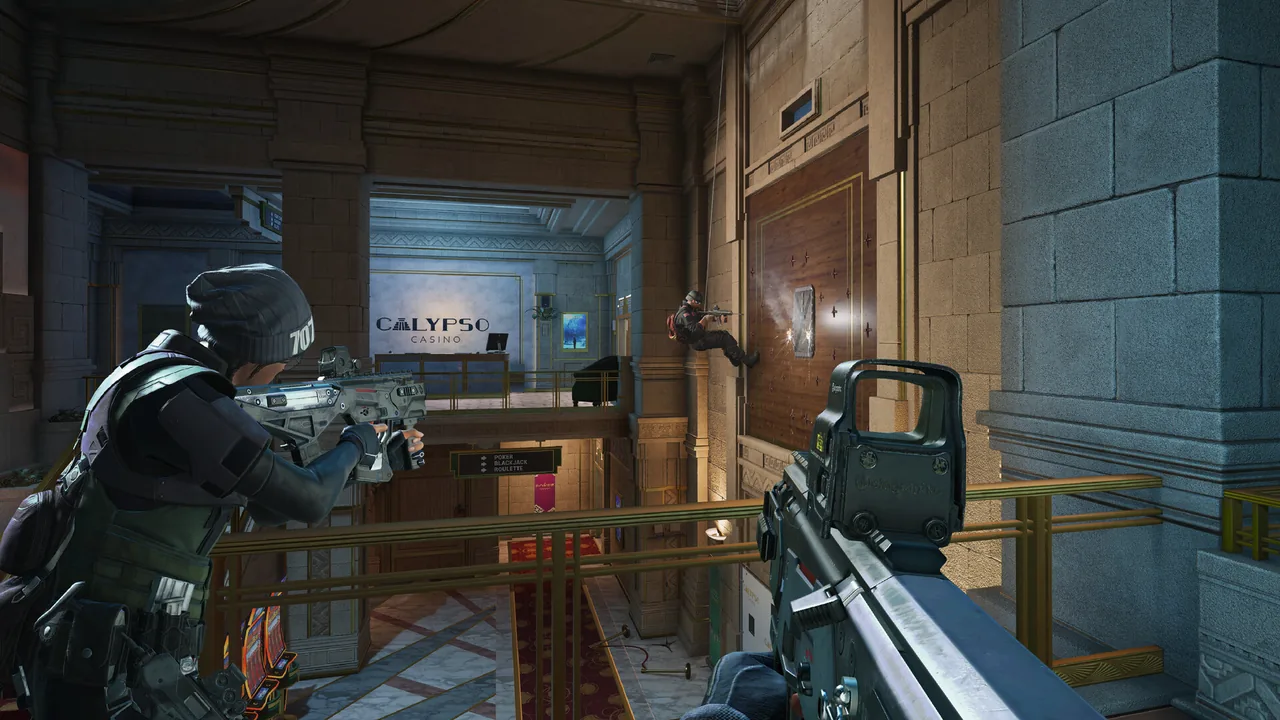
Because the core is untouchable. Siege's destruction is not scenery — it's the whole game. Attackers breach walls, floors and ceilings; defenders reinforce, barricade and counter-breach; and every round becomes a negotiation over which surfaces still exist. Nothing else has replicated it in eleven years, and plenty have tried.
The sound design deserves its own mention, because it's genuinely load-bearing. You track people through floors by footstep, hear a drone before you see it, know a wall is being reinforced by the noise it makes. Playing with headphones isn't an enhancement here; it's the interface.
Forty-plus operators each carry a real mechanical identity, and Ubisoft are still working: Year 11 Season 2 shipped in 2026 with operator rebalances, mouse-and-keyboard support on consoles, a limited Arms Race mode, published designer's notes, and a stated "new direction" for the marketplace economy.
The verdict
Rainbow Six Siege earns a 7.5. As tactical design it's a 9 and has been since 2015 — the most intelligent shooter on the market, now free, which makes trying it a genuinely easy recommendation.
It sits lower because of what surrounds it: a cheating problem in common with its whole genre, a publisher its own players name more often than any gameplay issue, an economy that has grown steadily more elaborate, and a decade-long drift away from the grounded game its longest-serving players fell for. Half its serious criticism is from the last two years, and its recent reviews run below its badge.
Install it, because free access to this is a gift. Just don't read the 82% as a statement about the game you'll actually download — read the last hundred reviews instead.
Pros and cons
Pros
- Destructible environments make every round a genuinely fresh tactical problem
- Sound design is load-bearing — you fight by listening as much as looking
- Forty-plus operators with real mechanical identity rather than cosmetic differences
- Free to play, with an enormous amount of game behind that
- Eleven years in and still substantially supported — Year 11 Season 2, Ranked 3.0, designer's notes and regular balance patches
Cons
- Cheating appears in nearly a third of the most-helpful negative reviews
- Ubisoft is named in 40 of 100 negatives, more than any other term, often over account support
- Ranked and matchmaking changes draw sustained criticism across the whole review history
- Operator and cosmetic monetisation has grown steadily, including a player-to-player marketplace
- The lifetime score reflects a paid game that no longer exists
Screenshots
-
Tom Clancy's Rainbow Six SiegeImage: Ubisoft via Steam -
Tom Clancy's Rainbow Six SiegeImage: Ubisoft via Steam -
Tom Clancy's Rainbow Six SiegeImage: Ubisoft via Steam -
How the review scores each part of the gameWanderer Editorial -
The short versionWanderer Editorial