Game review
Rail Estate Review
7.5 / 10
- Developer
- Holonautic
- Publisher
- Holonautic
- Released
- 16 July 2026
- Platforms
- ["Windows"]
- Genre
- Strategy
Ticket To Ride Meets Power Grid, Live And Cutthroat
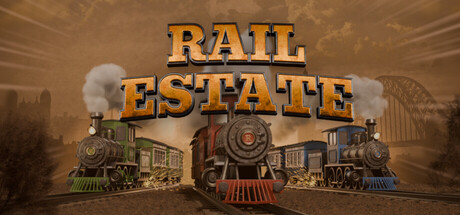
Rail Estate is a $7.99 real-time multiplayer strategy game from solo developer Holonautic, released on Steam on July 16, 2026 after roughly six months of public playtests and demos that never opened as purchasable early access, so the July launch stands as its clean original release. The pitch, straight from the store page, is "Ticket to Ride meets Power Grid, but live, cutthroat," and it delivers on that promise through a single mechanic that reviewers keep coming back to: railway routes between cities are won through a blind auction, one bid, no second chances, and every track built either strengthens a network or cuts off a rival's income. Two months after launch the reception sits at a Positive 94%, with 31 of 33 English reviews recommending it, and the two negatives both center on the same auction system that everyone else calls the game's best idea.
The Blind Auction Is The Whole Game
Reviewers are unusually aligned on what makes Rail Estate click: the tension of bidding on a route without knowing what your opponents are willing to pay. "The blind auction system is an interesting new mechanic," wrote one reviewer, while another described the resulting chaos in vivid detail: "One moment I am peacefully expanding my rail network... Then longtime friend I will refer to as 'bb' calls for an auction, a new line between two big cities, deep in my network. My heart jolts, I try to outbid them for the rights to the road but they happen to outbid me, by only $10." A third reviewer called it "real time monopoly with train logistics," and another summed up the appeal bluntly: "you will get your routes cutoff, outbit at auctions, and have your passengers stolen. The fun is in fighting back and taking their routes at auction, taking their passengers by creating shortcuts between their cities." The two negative reviews in the pool disagree entirely, with one calling it "a hard thumbs down" specifically because "you only get one chance at bidding for a train route," and describing a "strong snowball effect" where an early loss can leave a player "twiddling your thumbs waiting for the money to come in." That split is real, but it's a 31-to-2 split, and the more common reaction is closer to a reviewer who called it "mechanically simple but strategically deep," or one who compared it to "a board game style rail tycoon game."
Built For Friends, Tolerable Alone
Nearly every enthusiastic review frames Rail Estate as a game to play with people you know rather than strangers or bots. "If you have 2 or more friends that you play online games with, and you are looking for any kind of strategy game to add to the mix, pick this one! You don't have to be a train-game enthusiast to enjoy this one," wrote one reviewer, while another called it "a really fun game to play with friends," and a third joked that the co-op mode is "a lot of fun. I can't think of a better way to hang out with your friends and shout at them every couple of minutes." That social framing comes with a real caveat, though: multiple reviewers flagged the single-player experience and AI opponents as the weak link. "The AI opponents are far too weak even on highest difficulty," wrote one reviewer, adding they'd "love to see an option to adjust each player's starting money to make matches more challenging." Another noted a practical problem for solo players hoping to find people online: "it's quite difficult to find multiplayer matches." One long-time beta tester pushed back a little, noting "I can beat level 4 AI difficulty but it is debatable if I can defeat level 5 AI difficulty," and the single-player campaign does earn praise elsewhere for a well-paced tutorial and a series of scenario-style missions that a couple of reviewers described as "more like puzzle levels." Still, the consensus is clear: this is fundamentally a multiplayer design that single-player mode accommodates rather than a single-player game with multiplayer bolted on.
Fast, Cheap, And Occasionally Too Short
Match length is a recurring topic, and reviewers land on both sides of it. Free Mode matches default to around 30 minutes of real time, compressing roughly 20 in-game years, and several players wanted more room to breathe: "I wish Free Mode multiplayer matches lasted longer than 30 minutes. Matches that run for 60 or 90 minutes would be much more fun when playing with friends," wrote one, while another, more amused than frustrated, wrote that "even with the game speed on slow (30 minutes) the seem short, but its just because youre having so much fun that it surprises you when its over." A different reviewer who logged eight hours in the campaign flagged the flip side of the blind-bidding tension: "it can be tricky to gauge how a specific rail connection will impact your overall network and cash flow, which makes bidding feel like a shot in the dark," suggesting the game could use a projected-impact indicator for newcomers. On price, the reception is close to unanimous: "Price is very fair for the content so far I feel," "Cool game and not very expensive," and "fairly cheep [sic], I would definitely recommend trying it out" are all typical of how this small, $7.99 release is discussed.
A Fresh Concept That Reviewers Want To See Grow
A notable share of the review pool frames Rail Estate less as a finished, maximalist strategy game and more as a strong, focused foundation. "INCREDIBLE CONCEPT. NEEDS MORE COMPLEXITY AND CUSTOMIZABILITY ESPECIALY IN SKIRMISH MODE... BUT IM SURE THAT WILL COME ALONG IN THE LONG RUN," wrote one enthusiastic reviewer, and a more measured review echoed the same idea: "right now really Rail Estate needs some more depth to feel complete and more playable in the long term," suggesting additions like competitor finance reports, the ability to buy, sell, or trade routes, and a way to borrow capital and manage debt. One beta tester specifically praised Holonautic's responsiveness to feedback so far, noting "it is been so fun having my suggestions so quickly and so well incorporated into the game from concept to execution," and another separately reported the developer fixing a bug promptly with a patch already prepped. For a solo developer's first strategy release, that's a promising track record, even if the game as it stands today is leaner on long-term depth than some of its most invested fans would like.
Presentation And Accessibility
Rail Estate pairs its systems with a clean, simple art style that several reviewers singled out specifically, one calling it a favorite alongside "the sounds," another praising the game's "controls" as "fast and intuitive." It supports full controller support, DualShock and DualSense-specific input, and cross-platform online play, a solid accessibility spread for a small indie strategy title. Procedurally generated maps mean no two matches play out identically, which helps offset the relatively thin campaign content for players who stick mainly to skirmish and multiplayer modes.
Verdict
Rail Estate takes a genuinely clever idea, a real-time train network strategy game built around one-shot blind auctions, and executes it well enough that a small but decisively positive review pool keeps reaching for comparisons to Ticket to Ride, Power Grid, and Monopoly rather than to other tycoon games. The core loop is tense, fast, and best enjoyed with friends, weak AI and a shallow long-term progression system are the real, corroborated soft spots, alongside a minority who find the single-shot auction format more frustrating than exciting. At under eight dollars, with a responsive solo developer already patching and expanding it, it's an easy recommendation for anyone with a regular multiplayer group looking for a quick, cutthroat strategy game; solo players chasing a deep, slow-burn management sim should look elsewhere, at least until the additional depth several reviewers are hoping for arrives.
Screenshots
-
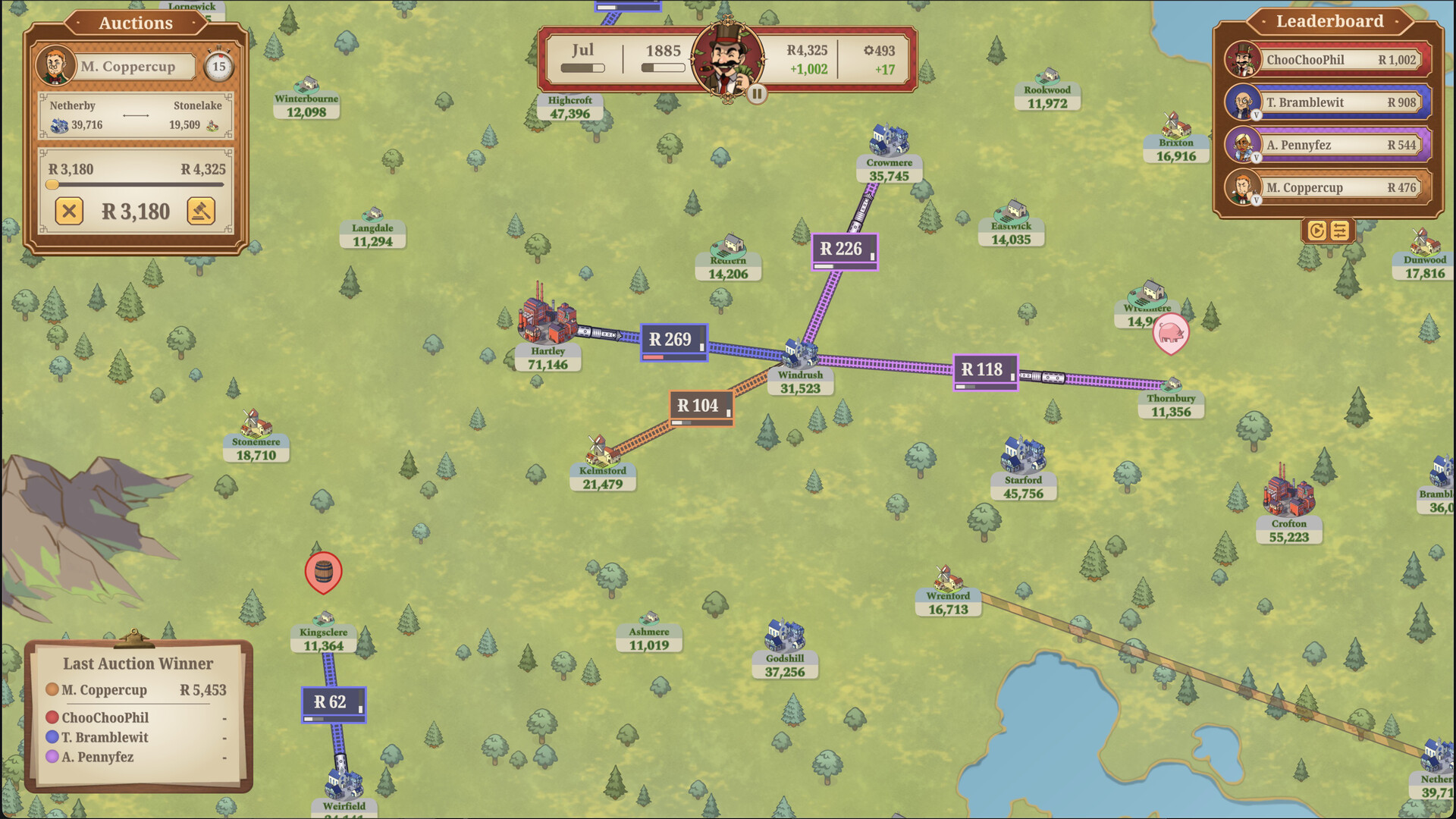
A mid-match network in full swing: colored tracks show each rival's territory while an auction for a new route ticks down in the corner.Image: Holonautic via Steam -
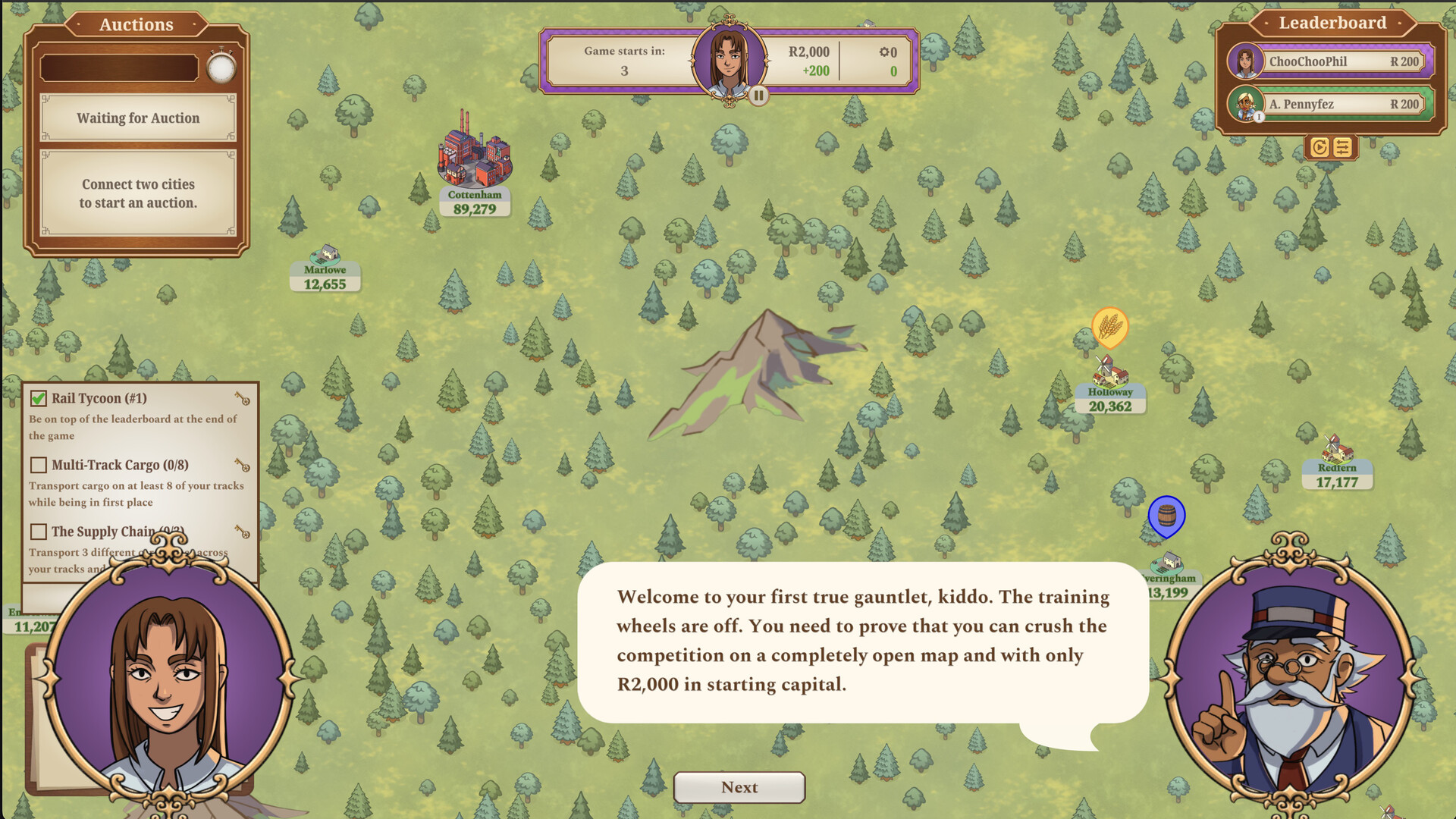
The single-player campaign frames each scenario with a bit of character dialogue before dropping the player onto an open map with a tight starting budget.Image: Holonautic via Steam -
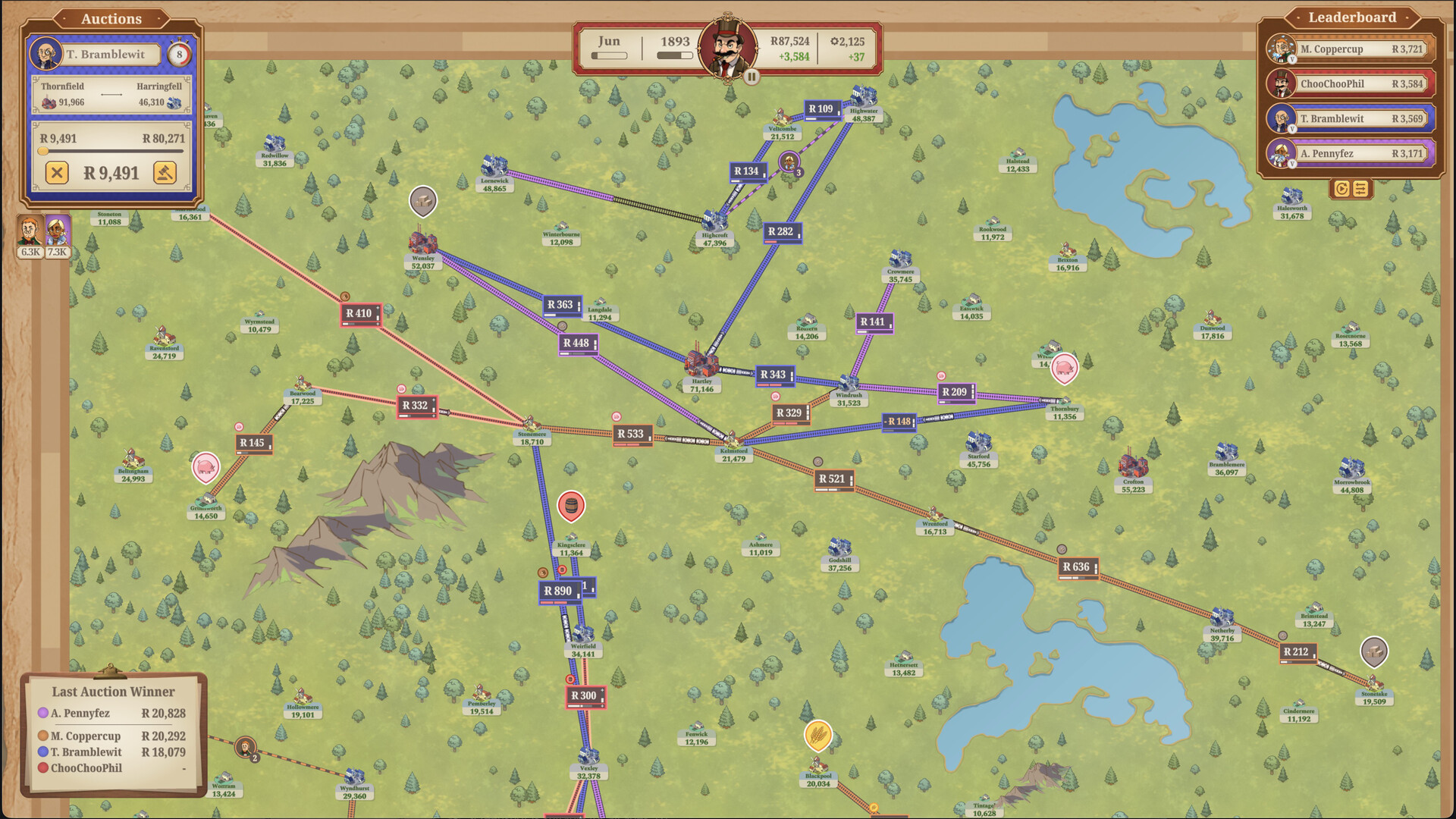
A late-game map dense with overlapping rival networks, exactly the kind of snowballing competition reviewers describe fighting through.Image: Holonautic via Steam