Game review
Psi/Clash Rumble!!
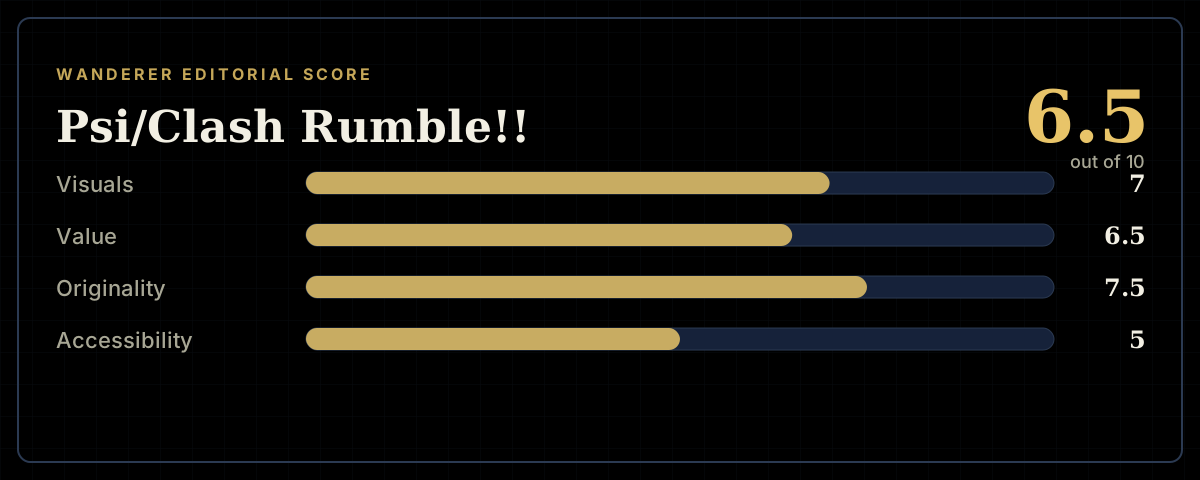
6.5 / 10
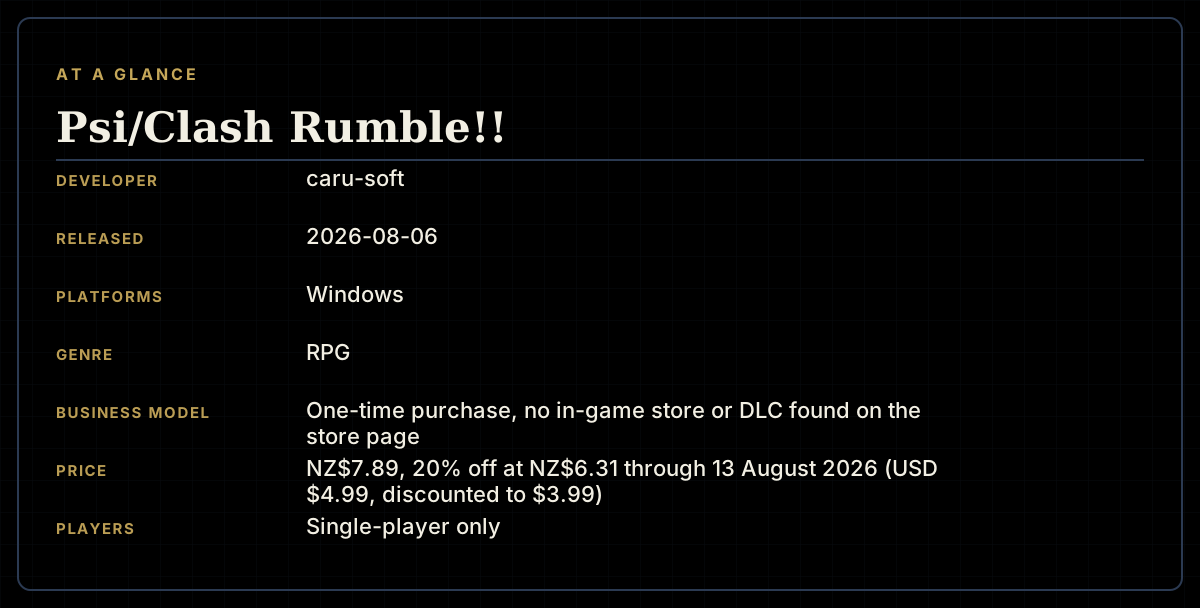
- Developer
- caru-soft
- Publisher
- caru-soft
- Released
- 6 August 2026
- Platforms
- Windows
- Genre
- RPG
- Monetisation
- One-time purchase, no in-game store or DLC found on the store page
- Players
- Single-player only
The short version
Psi/Clash Rumble!! skips the genre's usual filler entirely: there's no wandering monster encounters to grind through, just a short run of one-on-one boss fights against spirits and fellow psychics in the small town of Yamacho, stitched together over five in-game days and designed to be finished in a single sitting. The turn-based menu is the standard Attack, Skills, PSI, Guard, Items and Escape lineup, but the framing around it is deliberately unusual for a new release: no waypoints, no quest log, and a stated expectation that the player will work out where to go and what a boss is weak to without being told.
That's a real design position, not a missing feature, and it's the single most interesting thing about the game a day after launch. It's also completely untested by anyone but the developer right now. Psi/Clash Rumble!! shipped 6 August 2026 with zero Steam user reviews, no achievement data, no demo and no outside coverage anywhere this review could find, so every claim here comes from the store page, its own screenshots and trailer, and system requirements that hint at a heavier rendering pipeline than the pixel-art screenshots first suggest.
Biggest strengths
- Structured entirely around one-on-one boss encounters rather than random mob fights, which keeps a short game from padding itself out with filler battles
- A clear, stated design philosophy — no waypoints, no quest log, deduction over hand-holding — that's a genuine point of view rather than an oversight, in a genre that rarely commits to it
- Over 15 unlockable abilities and an optional secret bonus boss give a short story real reasons to dig past the main line rather than just walking the critical path
Biggest weaknesses
- Released with zero Steam user reviews and no outside coverage this review could find, so nothing about pacing, difficulty or how the deduction-based design actually plays has been checked against real players yet
- The "figure it out yourself" structure the store page leans on is exactly the kind of design choice that splits a genre's audience, and there's no accessibility option or lower-difficulty mode mentioned anywhere on the store page for players who'd rather not be stuck
- Windows only, with no demo, so there's no low-commitment way to see whether the combat and puzzle-boss structure clicks before paying
Who it's for: Players who like short, self-contained JRPG-style stories built around boss encounters rather than open maps or grinding, and who don't mind a game that refuses to hold their hand — plus anyone comfortable buying a brand-new solo or small-team release with no community feedback yet to check it against.
Our recommendation: At just over five US dollars for a story pitched at a single afternoon, the financial risk is small. The real risk is the design philosophy itself — going in without a quest log will delight some players and frustrate others, and there's no demo or review sample yet to tell you which camp you're in before you buy.
6.5 / 10
Most small turn-based RPGs pad themselves out with random encounters between the moments that actually matter. Psi/Clash Rumble!! doesn't bother. It launched yesterday built almost entirely out of the moments that matter: one-on-one fights against spirits and fellow psychics, strung together across a handful of in-game days in a small town where the protagonist has just discovered he can do things nobody else can explain. It's a five-dollar, weekend-length story with zero Steam reviews to weigh against that pitch, and its most interesting quality — a stated refusal to hold the player's hand — is also the thing most likely to make or break it for any given buyer.
A tournament built out of boss fights
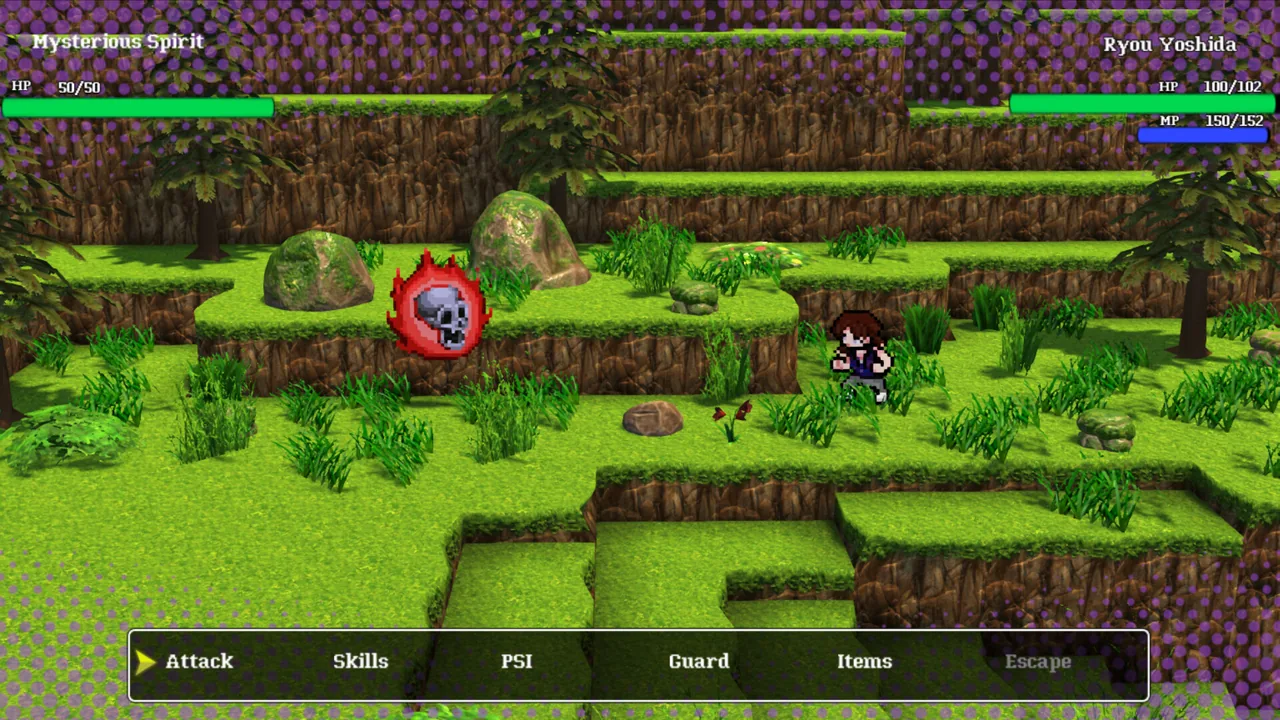
The premise, per the store page, is straightforward on its face and stranger underneath it: in the sleepy mountain town of Yamacho, the player's psychic abilities awaken, and rather than staying a private problem, they somehow lead to signing up for a tournament. From there the game structures itself almost entirely around "meaningful one-on-one turn-based battles" against spirits and other psychics, rather than the wandering-monster encounter tables that pad out most games in this bracket. Its own screenshots back that structure up directly — one shows a boss fight against a "Mysterious Spirit" on a stepped, grassy arena under a strange purple-speckled sky, HP and MP bars tracked for both sides, with a battle menu offering Attack, Skills, PSI, Guard, Items and Escape. That's a conventional JRPG battle menu wearing an unconventional structure: every fight the store page describes is a set-piece rather than a random roadblock, and for a game explicitly designed to be finished in an afternoon, that's the correct instinct. There's no version of "finish this in a weekend" that survives a random encounter rate.
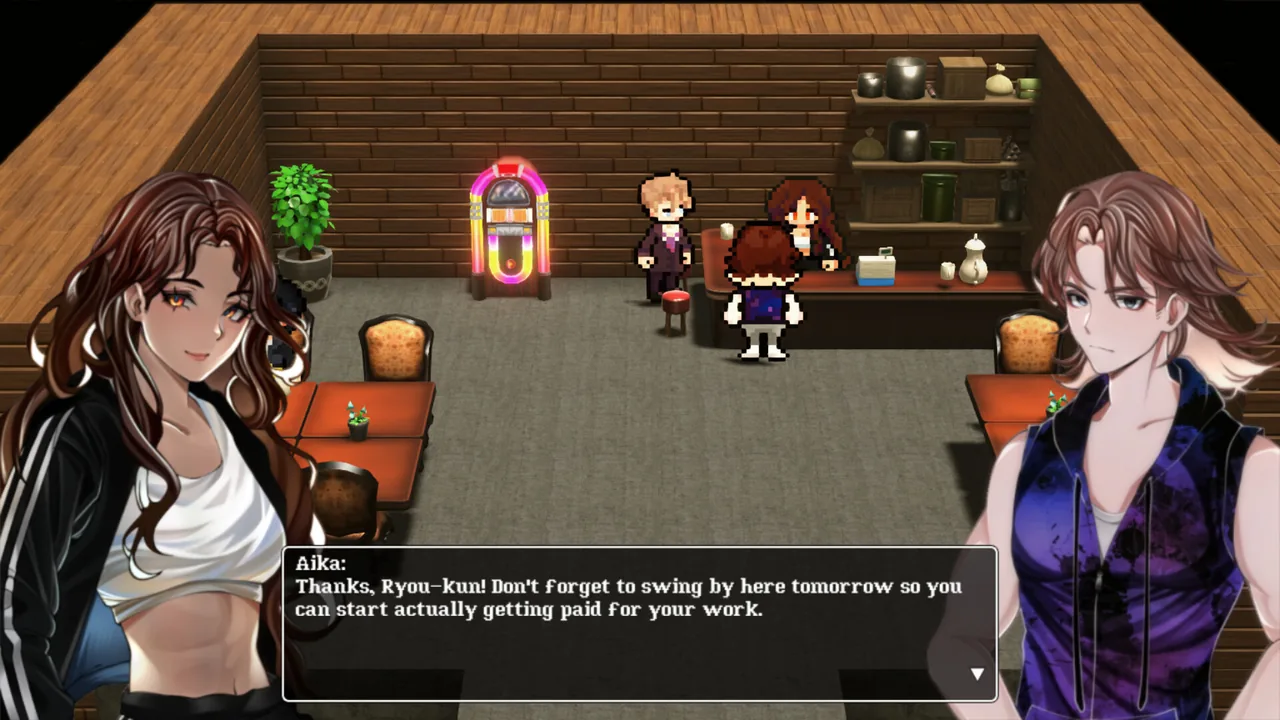
The PSI option sitting alongside ordinary Skills is a small but telling detail. Combined with the modern small-town setting, a teenage protagonist, and a jukebox-and-milkshakes hangout scene visible in one of the game's own screenshots, the influence being worn here is legible without the store page needing to say it out loud. Whether the combat carries that influence as well as it wears the aesthetic is exactly the kind of question that needs real playtime to answer, and this review has none to offer yet — nobody does, publicly, a day after release.
Deliberately no hand-holding
The single most distinctive line on the store page isn't about combat at all. It states plainly that the game "does not offer waypoints or quest logs, and requires the player deduce where to go next, or what weaknesses an enemy might have." That's a genuine design position, and a fairly bold one for a brand-new release with no established audience yet to absorb the friction. Most games in this space have spent the last decade adding more guidance, not less — quest arrows, highlighted objectives, weakness indicators baked into the UI. Psi/Clash Rumble!! is explicitly opting out of all of it, betting that working things out yourself is part of the appeal rather than an obstacle to it.
That's a defensible bet for a five-dollar, single-afternoon game with over 15 additional abilities to unlock across five in-game days and an optional secret bonus boss for players who go looking for it — a short, dense experience is exactly the kind of thing that rewards close attention rather than punishing it with hours of backtracking. It's also a real risk with nothing yet to hedge it. There's no lower-difficulty toggle, no hint system, and no accessibility section anywhere on the store page for a player who'd rather have the option to turn guidance on. Players who enjoy that kind of deduction-driven design — reading an enemy's animations and dialogue for clues rather than checking a weakness chart — are exactly the audience this is built for. Players who bounce off obtuse design on principle should treat the "no hand-holding" pitch as a warning rather than a selling point, because right now there's no reviewer sample and no demo to tell either group which side of that line they're actually on.
What the screenshots show, and what the specs suggest
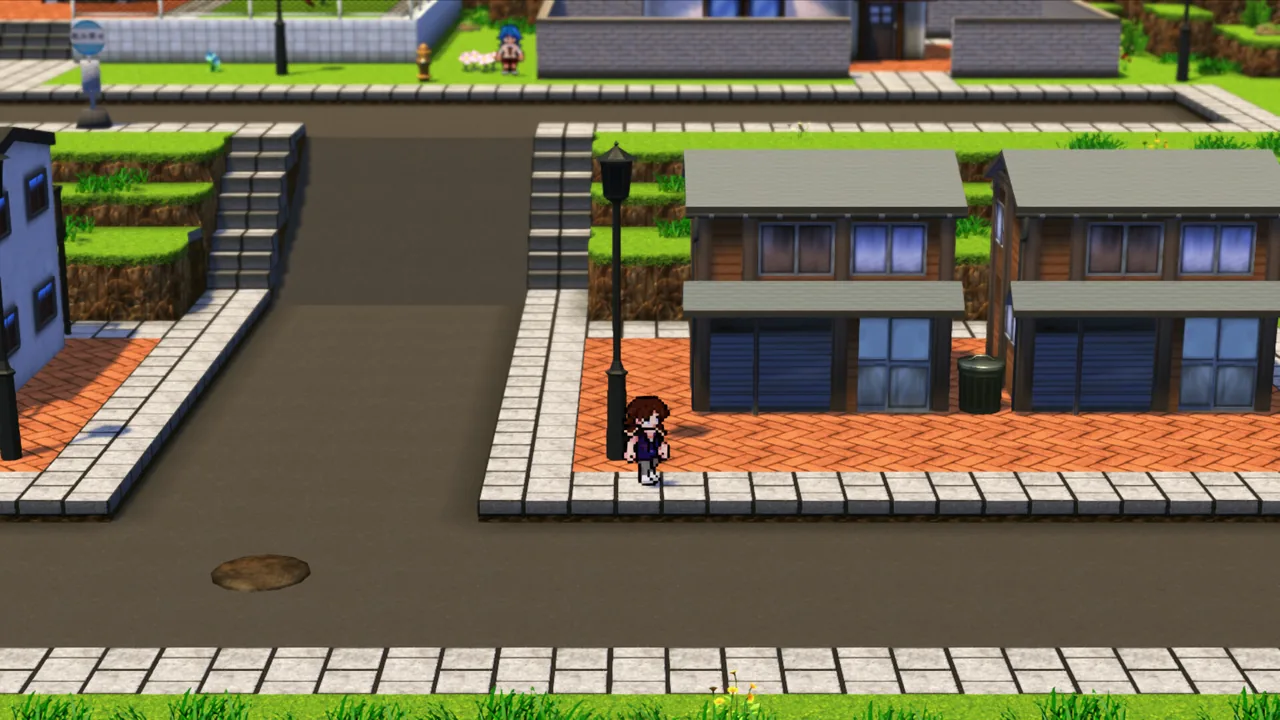
The game's own screenshots are the clearest evidence available before any player feedback exists, and they show a specific, coherent visual approach: small, expressive pixel-art character sprites moving through what reads as fully three-dimensional, textured environments — grassy terraced battle arenas, a residential street with brick paving and streetlamps — rather than flat 2D tile art. Dialogue scenes switch styles entirely, dropping in full anime-style character portraits alongside the pixel sprites for conversations, the way a lot of small JRPG-adjacent games use CG art for key story beats. It's a combination that can look striking when the pieces are balanced well, and the screenshots on offer suggest a developer who's put real thought into that balance rather than defaulting to a single flat aesthetic throughout.
That approach also explains something the price and pixel-art tagging wouldn't otherwise predict: the recommended system requirements ask for a GTX 1650-class GPU and 16GB of RAM, well above what a purely 2D pixel game usually needs. Rendering pixel sprites over genuinely 3D scenery, rather than pre-rendered 2D backdrops, is the likeliest explanation, and it's a reasonable one given what the screenshots show — but it's also the sort of thing that's only provable once players with a range of hardware start reporting back, and right now nobody has.
A short story, honestly sized
Where a lot of new releases oversell their scope, Psi/Clash Rumble!! undersells its own: the store page calls it "designed to be completed on a weekend afternoon" and describes it as "a concise and complete story that still offers depth with optional content" rather than pretending a five-dollar game is secretly forty hours long. That's a refreshing bit of honesty on a storefront that usually rewards inflated scope claims, and it sets expectations correctly for what this actually is: a tight, boss-focused story rather than an open-ended RPG built for dozens of hours. The trade-off is that everything the game is betting on — the deduction-based design, the PSI ability tree, the secret bonus fight — has to land inside that short a window, with no filler content to fall back on if any individual piece doesn't work.
Final verdict
Psi/Clash Rumble!! makes a clear, coherent pitch: cut the padding most small RPGs rely on, build the whole game out of boss encounters, and trust the player to find their own way through it. That's a genuinely interesting structural choice for a genre that usually plays it safe, and the game's own screenshots back up a visual identity distinct enough to stand out in a crowded field of small pixel-art RPGs. None of that comes with any player validation yet — no reviews, no demo, no achievement data, and nothing published anywhere else this review could locate a day after launch.
Six and a half out of ten reflects a first look at a game with a real point of view and a low financial ask, held back from a stronger score by the total absence of outside confirmation that its central gamble — asking players to find their own way with no map and no hints — actually pays off across a full playthrough rather than just sounding good on a store page. Worth a look for anyone who likes boss-focused JRPGs and doesn't mind being first through the door; worth waiting on for anyone who wants to know how the deduction design plays before committing.
Readers who want that same commitment to a self-contained world without needing to guess where the guidance stops, in a persistent setting built to keep growing rather than end in an afternoon, may also want to look at Wanderer.
Pros and cons
Pros
- Structured entirely around one-on-one boss encounters rather than random mob fights, which keeps a short game from padding itself out with filler battles
- A clear, stated design philosophy — no waypoints, no quest log, deduction over hand-holding — that's a genuine point of view rather than an oversight, in a genre that rarely commits to it
- Over 15 unlockable abilities and an optional secret bonus boss give a short story real reasons to dig past the main line rather than just walking the critical path
- A modern-day psychic-powers setting, complete with a jukebox diner and visual-novel-style character portraits layered over pixel sprites, gives it a distinct identity from the usual fantasy JRPG wallpaper
- Cheap enough, and short enough by the developer's own description, that trying it costs very little of either money or time
Cons
- Released with zero Steam user reviews and no outside coverage this review could find, so nothing about pacing, difficulty or how the deduction-based design actually plays has been checked against real players yet
- The "figure it out yourself" structure the store page leans on is exactly the kind of design choice that splits a genre's audience, and there's no accessibility option or lower-difficulty mode mentioned anywhere on the store page for players who'd rather not be stuck
- Windows only, with no demo, so there's no low-commitment way to see whether the combat and puzzle-boss structure clicks before paying
- Recommended specs (a GTX 1650-class card and 16GB of RAM) are notably heavier than the pixel art in its own screenshots would suggest, and nothing on the store page explains why
- A five-in-game-day, weekend-afternoon runtime means the wider systems teased — 15-plus abilities, a secret boss — have to do a lot of work in a genuinely short amount of playtime
Screenshots
-
Psi/Clash Rumble!!Image: caru-soft via Steam -
Psi/Clash Rumble!!Image: caru-soft via Steam -
Psi/Clash Rumble!!Image: caru-soft via Steam -
How the review scores each part of the gameWanderer Editorial -
The game at a glanceWanderer Editorial -
The short versionWanderer Editorial