
Game review
Prop Sumo Review: Smash Bros with Furniture, and It Mostly Works
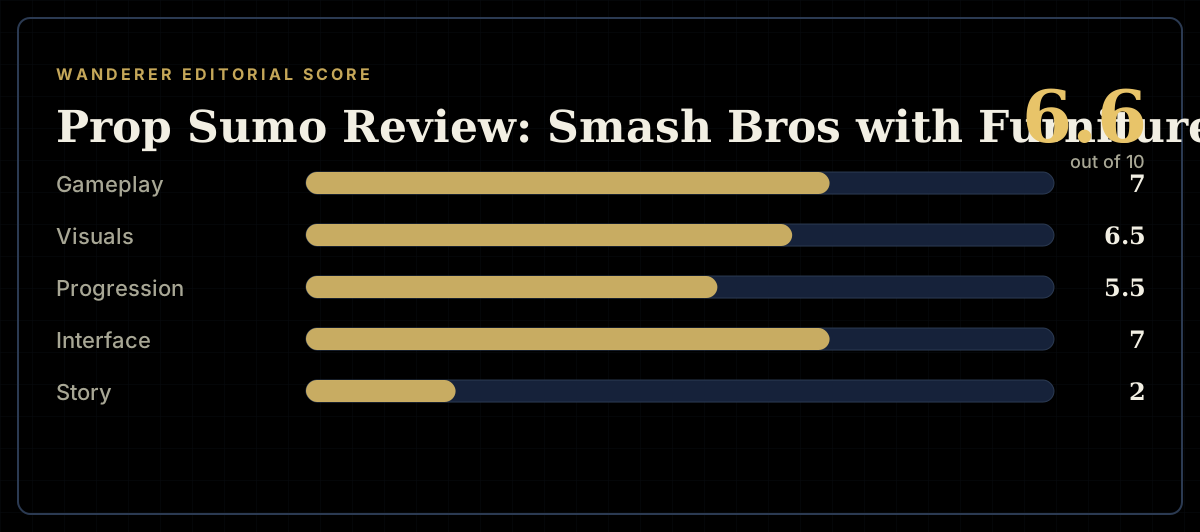
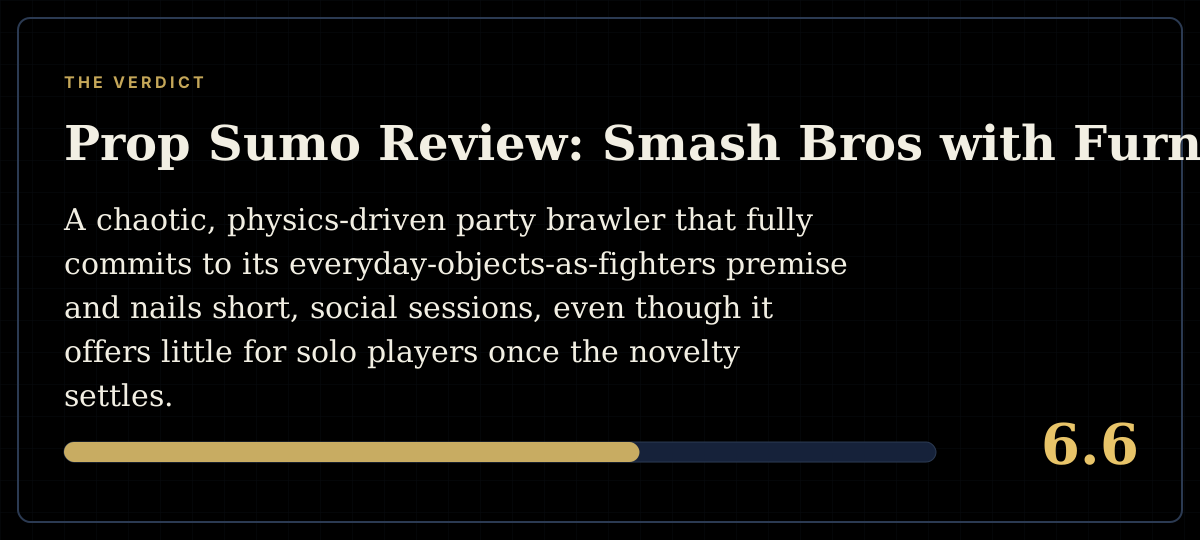
6.6 / 10
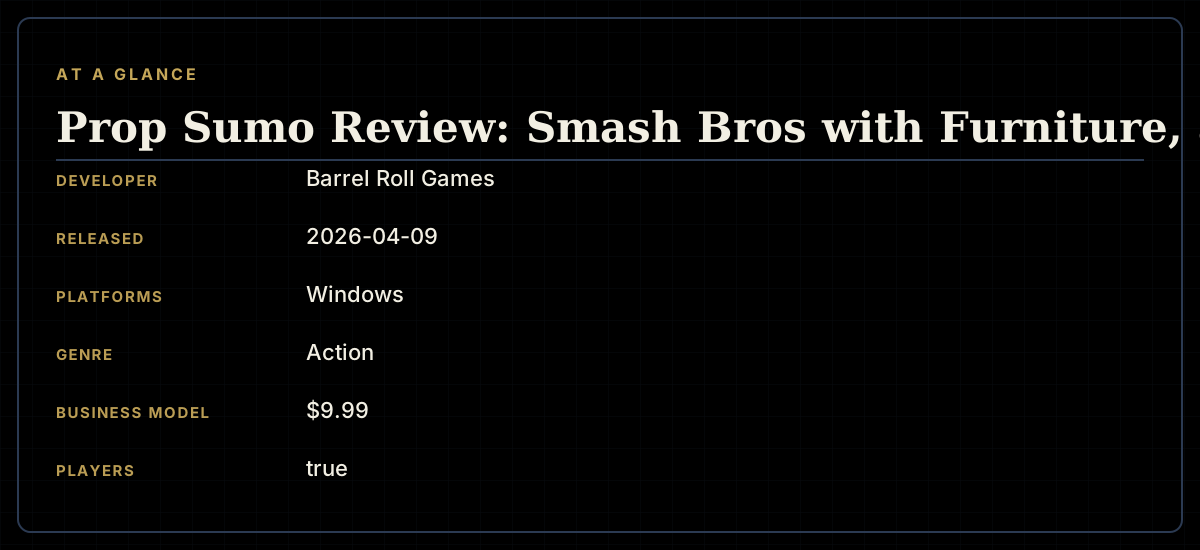
- Developer
- Barrel Roll Games
- Publisher
- Barrel Roll Games
- Released
- 9 April 2026
- Platforms
- Windows
- Genre
- Action
- Monetisation
- $9.99
- Players
- true
The short version
A chaotic, physics-driven party brawler that fully commits to its everyday-objects-as-fighters premise and nails short, social sessions, even though it offers little for solo players once the novelty settles.
Biggest strengths
- Simple, responsive controls that are easy to pick up but stay chaotic and unpredictable in the moment
- A generous Friend Pass lets up to eight people play together for under $10 total, a real value point for group nights
- Interactive arenas with hazards and moving platforms that meaningfully change how each match plays out
Biggest weaknesses
- Deliberately unbalanced mechanics that can feel more random than skill-based, especially around charge attacks
- Thin solo content — the core loop is explicitly built around group play and repeats quickly without other people
- No CPU spectator or streaming mode yet, despite reviewer requests
Who it's for: Groups of friends looking for a cheap, easy-to-learn Smash-style party game for couch or online sessions, not players chasing competitive depth or long-term solo progression.
Our recommendation: Worth playing
6.6 / 10
The pitch: furniture, physics, and chaos
Prop Sumo is a party fighting game with a simple, silly hook: instead of ninjas or plumbers, you're playing as everyday objects — a crystal ball, a sunflower, a sarcophagus, a mandrake — knocking each other off small arenas using light attacks, heavier strikes, and charge-based movement. It's an unmistakable riff on the Super Smash Bros formula, filtered through physics-driven unpredictability rather than precise, competitive systems. Developer and publisher Barrel Roll Games bills it as "the next chapter in the Witch It universe" (the studio's hide-and-seek game), though the two share only a shared setting rather than any actual mechanical overlap.
Controls that are easy to learn, chaos that's hard to master
Every review in the sample, positive without exception, agrees on the same core strength: Prop Sumo is easy to pick up. One detailed 730-minute review called the controls "easy to grasp, making the game approachable even for newcomers," while noting the real challenge comes from "understanding how momentum and physics influence every interaction." Another reviewer with 480 minutes logged echoed the same point almost exactly — "controls feel simple and responsive, which is pretty much essential for a PvP game" — while praising the amount of match customization on offer: lives, round timers, respawns, map rotation, pickups, and skill toggles are all adjustable, letting a group tune matches to their taste.
The tradeoff: deliberately unbalanced, not competitively fair
That same physics-driven unpredictability is a double-edged sword, and reviewers are honest about it rather than pretending otherwise. "Don't expect super balanced mechanics/characters," one wrote bluntly, "it's definitely not Smash but it has its own fun quirky playstyle." The most thorough review in the sample put it more precisely: "the same physics system that makes the game entertaining can occasionally lead to moments that feel random rather than skill-based, which may frustrate players looking for a more competitive experience." That's a fair, specific trade to flag for anyone expecting Smash-level balance rather than party-game chaos — this is a game that wants charge attacks to sometimes backfire spectacularly, not a fighting game chasing tournament viability.
Built for groups, thin alone
The most consistent structural caveat across the review sample is that Prop Sumo is designed around social play, and it shows the moment you're not playing with other people. "Without the social element, the core loop can begin to feel repetitive, as there is limited variation in objectives or gameplay modes," one reviewer noted, giving the game a still-respectable 7/10 specifically because of how well it delivers when other players are involved. The $9.99 Friend Pass — letting up to eight people join a single copy's owner for free — is repeatedly singled out as smart value, explicitly aimed at exactly the audience this game is for: a group of friends who want a cheap, chaotic party game for a few rounds between other activities, not a long solo session.
What the numbers show
Prop Sumo's 13 Steam achievements form a clean, believable difficulty curve rather than the suspiciously flat clustering that can signal shallow or bot-driven engagement: the easiest achievement (10 matches played) sits at 44.2%, dropping steadily through mid-tier goals (25 wins at 4.8%) down to a genuinely hard 500-match achievement at just 0.7%. That's exactly the shape you'd expect from a real party game — most buyers play a session or two with friends and move on, while a small committed core keeps grinding matches. Post-launch support backs up the "still developing" read too: alongside the day-one release, the studio shipped a 1.0.1 hotfix and a "Capricious Bots!" patch specifically improving CPU behavior within weeks — a direct response to at least one reviewer's request for smarter or more usable bots for solo practice and spectating.
A spin-off in name more than mechanics
Barrel Roll Games frames Prop Sumo as "the next chapter in the Witch It Universe," a nod to the studio's earlier hide-and-seek game where players disguise themselves as everyday objects to avoid being caught by hunters. The connection is mostly aesthetic and thematic rather than mechanical — Witch It is about stealth and misdirection, while Prop Sumo is a straightforward arena brawler with no hiding involved — but it does explain why the roster leans so heavily on household objects rather than more conventional fighter archetypes, and it gives returning Witch It fans a reason to check out something new from a studio they already trust. One reviewer's tongue-in-cheek description, "Prop Sumo / Ikea: Fantasy Warriors," captures the shared aesthetic well even if the gameplay itself owes far more to Smash Bros than to anything in the studio's back catalog.
Verdict
Prop Sumo delivers exactly what it promises: a cheap, chaotic, easy-to-learn party brawler that turns household objects into fighters and leans into unpredictable physics rather than tight competitive balance. It's a genuinely good pick for a group game night, helped enormously by a Friend Pass that makes it trivial to get seven friends playing alongside you for well under $10 total. Just go in knowing it's a social game first — solo players will find the core loop thins out fast, and anyone chasing Smash-level precision will find the physics-driven chaos more frustrating than fun. For the price of a couple of coffees, though, it's an easy game night pick that already has a studio behind it committed to tuning it further, and the Friend Pass alone makes it one of the cheapest ways to get a full room of people laughing at the same time.
Pros and cons
Pros
- Simple, responsive controls that are easy to pick up but stay chaotic and unpredictable in the moment
- A generous Friend Pass lets up to eight people play together for under $10 total, a real value point for group nights
- Interactive arenas with hazards and moving platforms that meaningfully change how each match plays out
- Active post-launch patching, including a bot-behavior update within weeks of release
Cons
- Deliberately unbalanced mechanics that can feel more random than skill-based, especially around charge attacks
- Thin solo content — the core loop is explicitly built around group play and repeats quickly without other people
- No CPU spectator or streaming mode yet, despite reviewer requests
- Very small review base (9 reviews) at time of writing, though uniformly positive
Screenshots
-
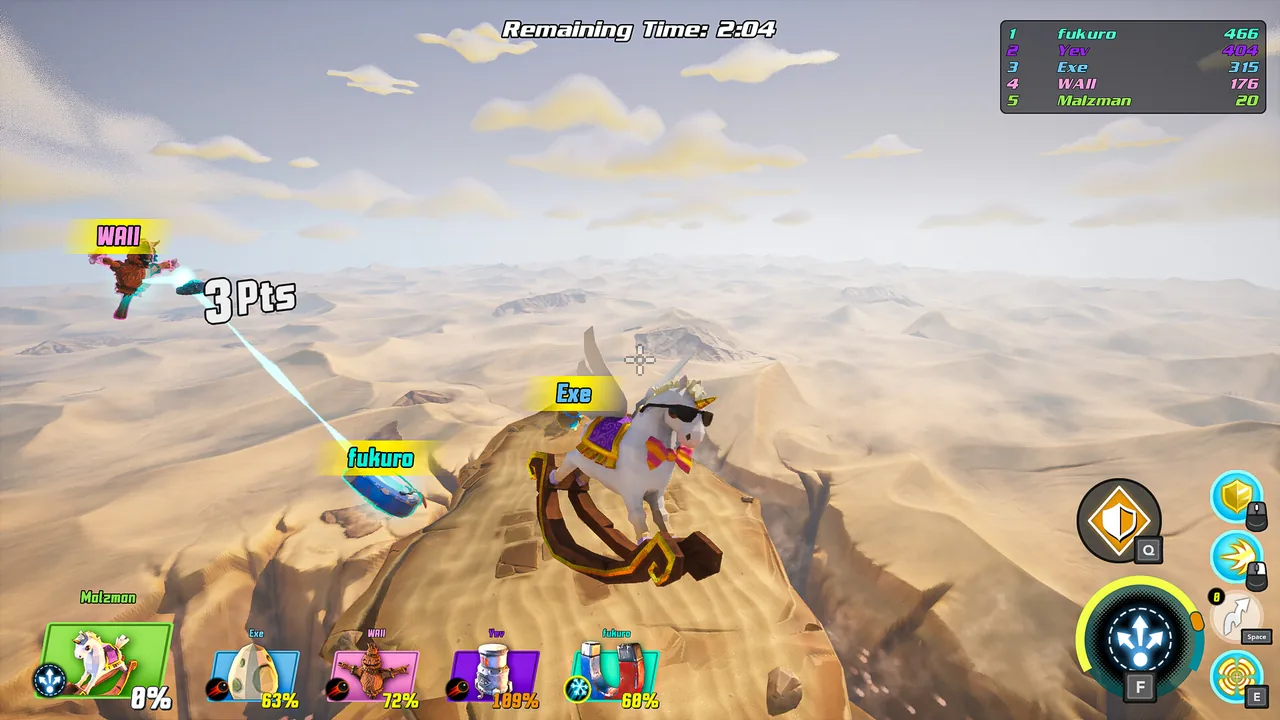
Image: Barrel Roll Games via Steam -
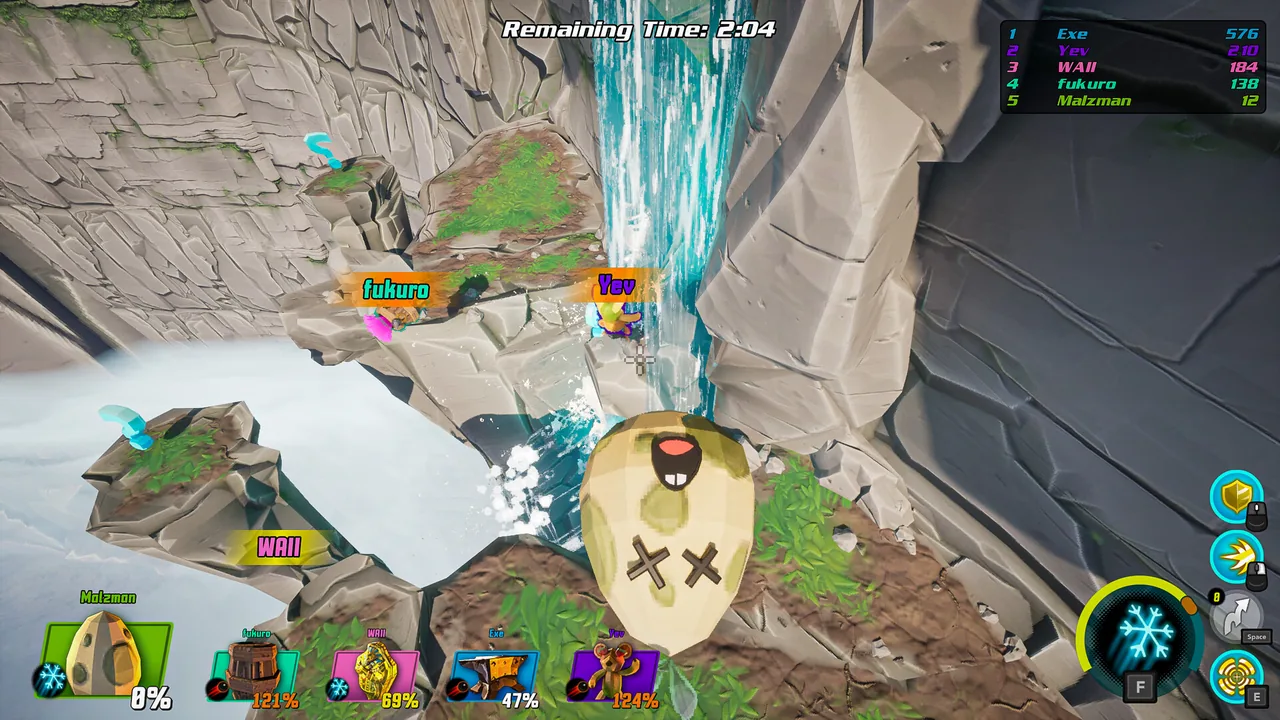
Image: Barrel Roll Games via Steam -
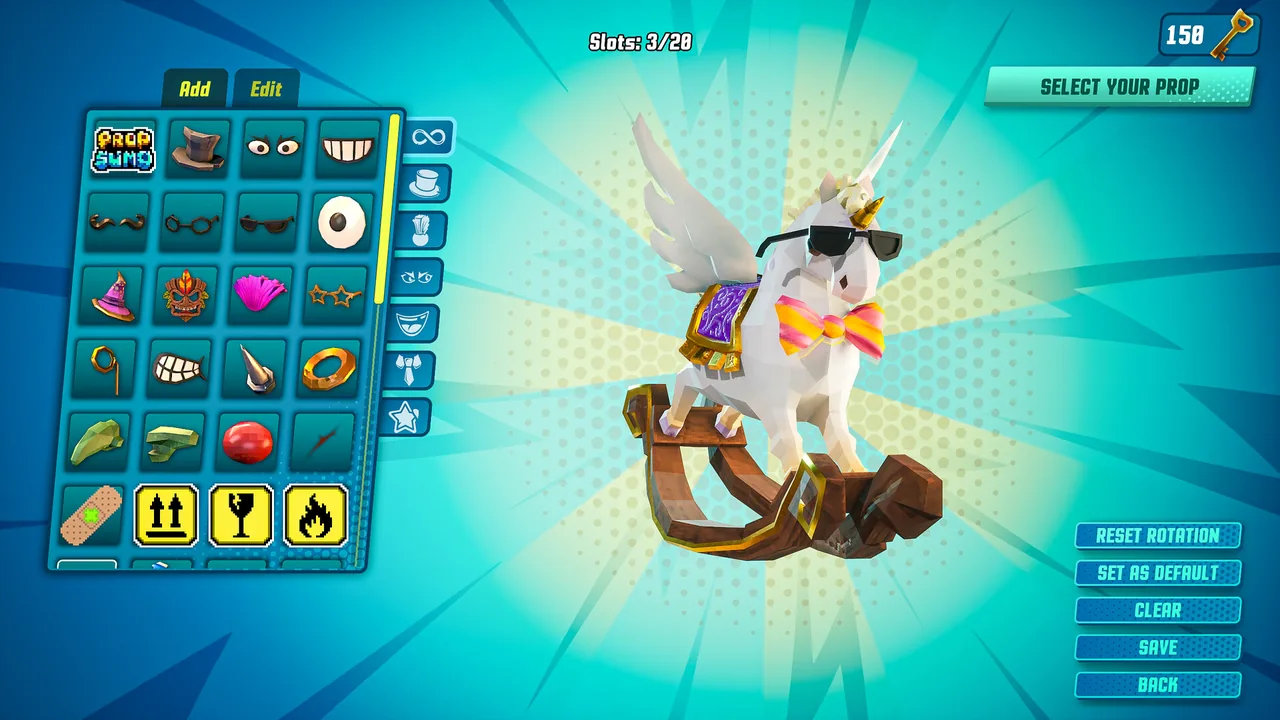
Image: Barrel Roll Games via Steam -
Wanderer Editorial -
Wanderer Editorial -
Wanderer Editorial