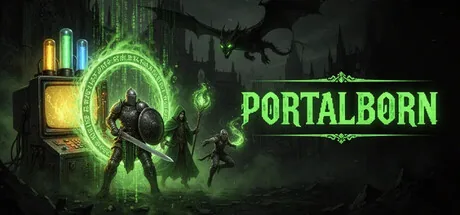
Game review
Portalborn
7.5 / 10
- Developer
- TheHand
- Publisher
- TheHand
- Released
- 24 June 2026
- Platforms
- Windows
- Genre
- RPG
- Monetisation
- One-time purchase, no in-game store, no IAP
- Players
- None; fully single-player, built around a solo-simulated take on a traditionally multiplayer genre
The short version
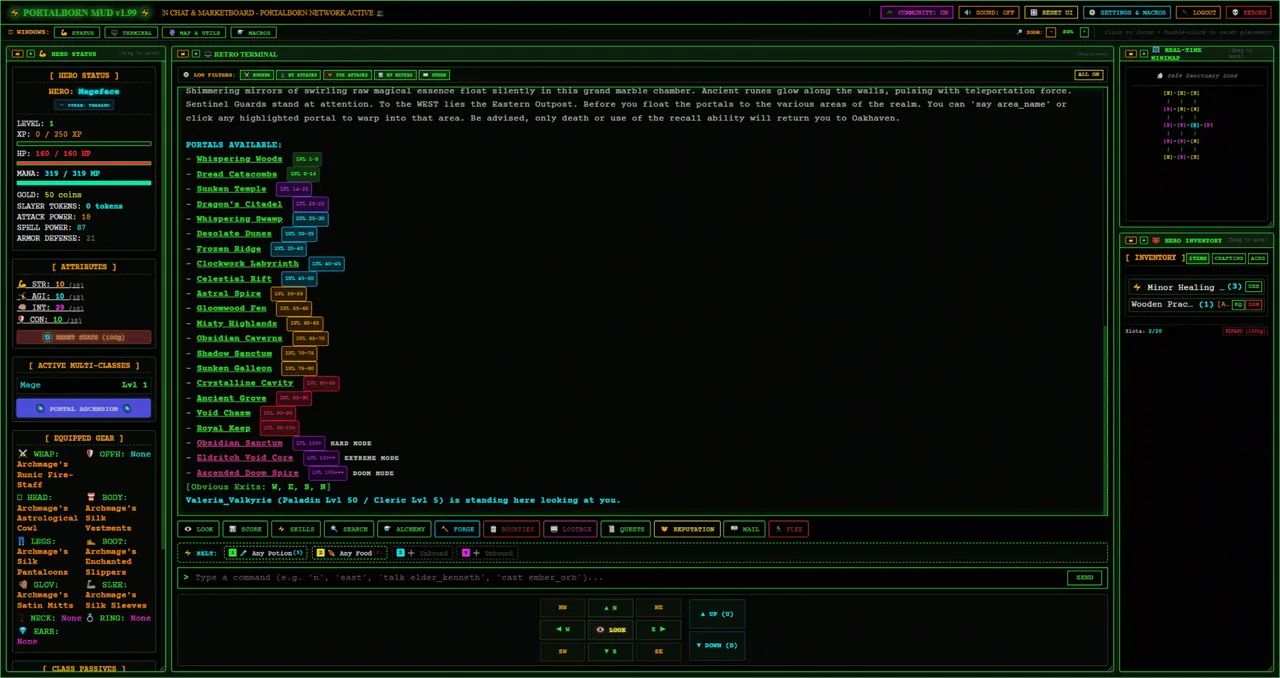
Portalborn is a genuine oddity on modern Steam: a fully text-based single-player RPG, deliberately built in the tradition of classic MUDs (Multi-User Dungeons), where imagination and a keyboard replace graphics entirely. You explore portal realms, build a character through flexible class progression, and — unusually for the genre — can create and share your own content through a built-in Portal Workshop tied to Steam Workshop.
This review read its complete 16-review English sample and translated its small, entirely Chinese-language negative sample (6 of the game's 68 reviews) in full. The English side is unanimously positive and specific, repeatedly praising UI customisation and an unusually responsive solo developer; the Chinese-language complaints cluster almost entirely around harsh default UI brightness and tiny text. This review checked the patch history and found the developer's own "Player Comfort Update," posted 24 July, addresses that exact complaint by name — new theme presets, a font-size control on every window, and an apology for not surfacing the existing settings clearly enough.
Biggest strengths
- A genuinely rare concept for modern Steam — a fully text-based, single-player MUD experience — executed with real ambition rather than as a novelty
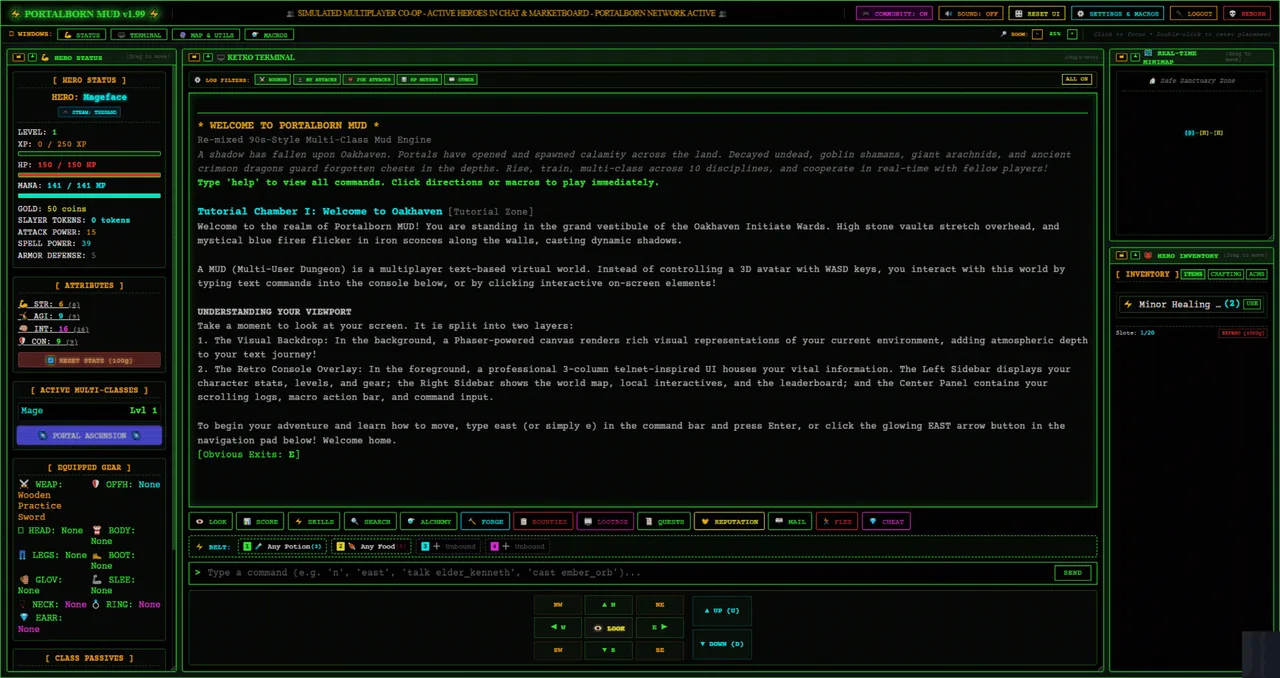
- Deep UI customisation repeatedly praised by reviewers: adjustable themes, per-window font sizing, a colour-intensity slider, and a full theme editor
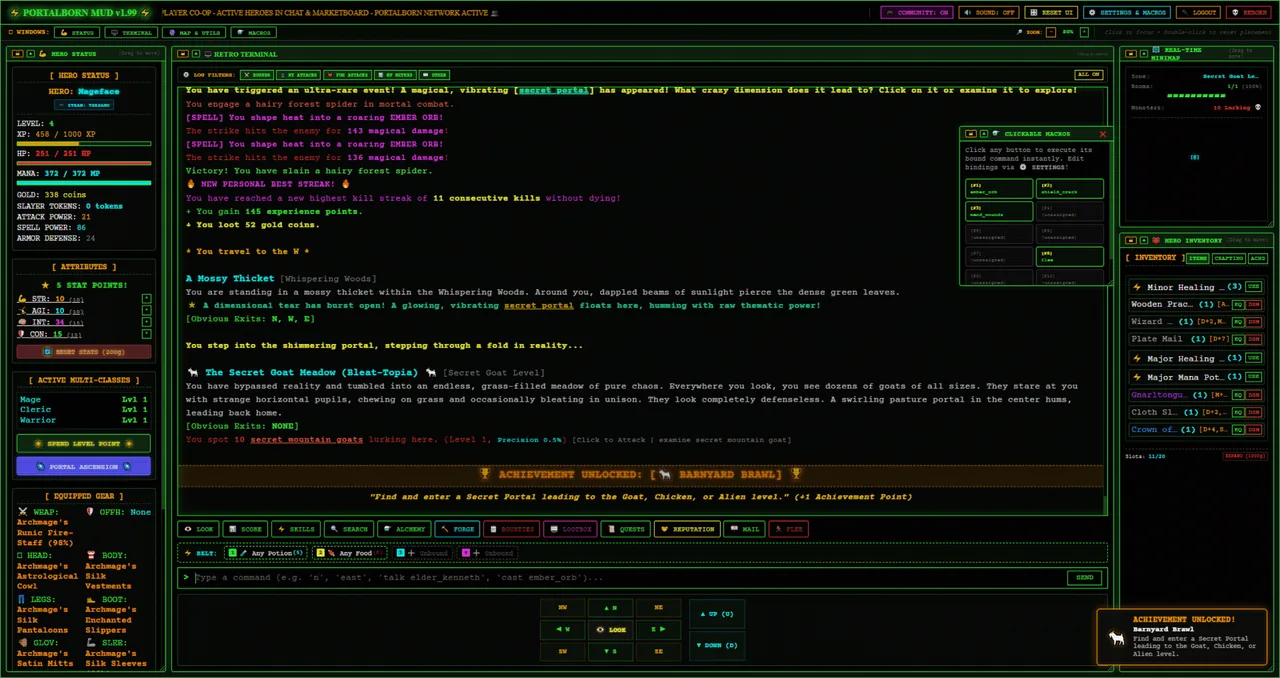
- A built-in Portal Workshop letting players create and share their own areas, NPCs, and classes via Steam Workshop, extending the game well beyond its own authored content
Biggest weaknesses
- Several of the game's own positive English reviewers independently describe the current content as fairly barebones for an early Early Access build, with specific requests for deeper worldbuilding, more skill checks, traps, and advanced enemy mechanics
- A small cluster of Chinese-language negative reviews at launch specifically criticised default UI brightness and tiny, hard-to-read text; this review confirmed the developer's 24 July "Player Comfort Update" adds calmer theme presets and per-window font controls in direct response, though it can't confirm from outside how completely that resolves every case
- One Traditional Chinese review, dated 1 August, still describes the game as too monotonous for a MUD despite the format's inherent flexibility — a more recent, content-depth complaint distinct from the earlier UI issues
Who it's for: Fans of classic MUDs like Achaea or Starmourn looking for a modern, single-player, non-predatory take on the genre; players who want deep UI customisation; and anyone curious about a genuinely unusual genre revival most of today's Steam audience has never tried.
Our recommendation: A genuine curiosity worth a look for text-RPG and old-school MUD fans specifically — go in aware it's five to six weeks into Early Access, several of its own positive reviewers describe the content as still fairly barebones, and its core appeal (pure text, no visuals or music) is inherently a hard sell outside its niche.
7.5 / 10
Most modern RPGs compete on how good their graphics look. Portalborn doesn't have any — it's a fully text-based single-player game, deliberately built in the tradition of classic MUDs, the text-driven multiplayer dungeons that predate almost every graphical RPG on Steam today. It's a genuinely unusual pitch for 2026, and five to six weeks into Early Access, it's landed a Very Positive reception: 62 of 68 reviews recommend it. This review read its complete 16-review English sample in full and translated its entire 6-review Chinese-language negative sample — the whole critical side of the corpus — rather than leaning on the aggregate score alone.
A real MUD, rebuilt for one player
The core pitch draws its comparisons from deep in genre history rather than anything recent. "This game scratches a very niche itch i have had for years," reads one review, while another compares it directly to two real, currently-running MUDs: "Reminds me of playing Achaea or Starmourn (without the predatory P2W!)." A reviewer with over five thousand minutes logged — by far the heaviest playtime in the sample — writes: "I've never played a MUD before, but the tutorial made it as easy to pick up as the non-text-based RPGs I'm used to," going on to praise just how far the customisation goes: "adjusting all the colors to be whatever I want them to be, moving and resizing UI elements, and everything in between." Another reviewer sums up the appeal more simply: "What is this the 90's where I have to use my imagination?? And I love it, this could be game of the year for me, I can't put it down."
The developer comes up specifically and often, credited by name-adjacent praise rather than a passing mention. "The developer seems nice, putting hotfixes shortly after a bug is mentioned," reads one review, and another: "Dev is responsive on the discussion board... I very much like the idea of a Steam-based MUD that is new and being updated." That praise lines up with what this review found in the patch history directly: dozens of update posts since the 24 June launch, several arriving within a day of each other, alongside detailed public dev-diary posts explaining upcoming systems well before they ship.
Real, specific, constructive feedback — even from the positive side
What's notable about this sample is that its positive reviews aren't uncritical. Several reviewers pair genuine enthusiasm with detailed, specific requests. "This game holds immense potential... that said, there are still numerous areas that need polishing and refinement," reads one long, detailed review, going on to suggest expanded craftable utility skills like lockpicking and equipment repair. Another, after two weeks of the game being live, writes: "I would love to see a deeper investment in worldbuilding and dungeon mechanics. Right now it's essentially a barebones experience, but the game did just come out only 2 weeks ago as of writing so you shouldn't expect a huge amount of features," before listing specific requests: more skill checks, traps, advanced enemy mechanics, and a direct balance complaint about one class being able to "permastun" enemies.
A UI complaint this review found already fixed
The entire negative side of this game's review corpus — six reviews, all in Simplified or Traditional Chinese — converges heavily on one specific issue: default interface brightness and text size. "The interface colours are way too bright and glaring, and the font is tiny — enlarging the font wrecks the layout completely. Playing for even a little while makes your eyes hurt," reads one, translated. A separate review agrees: "The UI layout is terrible — a huge blank area in the middle, with character, map, and equipment crammed on the two sides. The text is also tiny."
This review checked whether that complaint had been addressed, and found a direct, dated response. Both negative reviews above are dated 28 June, four days after launch. The developer's "Player Comfort Update," posted 24 July, opens by naming this exact issue: "Some players have mentioned that the interface can feel too bright, or that the text is too small. Portalborn has included settings for both of these for a while — they just haven't been easy to find. That's my oversight, not yours." The update adds calmer and high-contrast theme presets, a font-size control built into every window's title bar, and moves the tutorial to point new players at these settings immediately. This review can't confirm from outside whether every affected player has seen the fix, but it's a specific, dated, and unusually candid response to a specific, dated complaint.
Not every Chinese-language complaint is about UI, though, and this review found one worth passing on plainly rather than folding into the fixed issue above. A Traditional Chinese review, dated 1 August — after the comfort update — argues the content itself feels too monotonous for the format: "Logically, a MUD should make it easier to realize more fantastical ideas, but from that angle this game is too one-note." That lines up with the barebones-content feedback from English-language positive reviewers above, and reads as the more durable, still-open criticism compared to the already-addressed UI complaints.
A quick note on AI, and what it doesn't mean here
Portalborn's store page carries an AI Generated Content Disclosure, and its exact wording is worth reading rather than assuming: "AI-assisted tools were used as part of the development workflow for prototyping, implementation support, and content iteration... The game does not use live generative AI during gameplay." That's a disclosure about the developer's own tools, not about in-game content generation — worth separating clearly from one reviewer's unrelated mention of playing an "AI teammate" companion class feature in their build, which is a fictional in-game ally, not a generative-AI system.
Final verdict
Portalborn is a genuinely rare thing on today's Steam storefront: a text-only single-player MUD built with real ambition, deep customisation, and a solo developer whose patch cadence and public communication reviewers trust enough to recommend the game despite openly calling its current content thin. The one clear complaint pattern in its small negative sample — harsh default UI and tiny text — already has a dated, specific fix on record, and the more substantive complaint about content depth is a fair, honest thing to flag for a build barely a month and a half into Early Access.
Recommended specifically for MUD veterans and text-RPG-curious players who want to see where this goes, with the honest expectation that it's still early and growing rather than a finished experience.
Players who want that same sense of a persistent, evolving world built to reward long-term investment rather than a single session, delivered with rather more visual flair, may also want to look at Wanderer.
Pros and cons
Pros
- A genuinely rare concept for modern Steam — a fully text-based, single-player MUD experience — executed with real ambition rather than as a novelty
- Deep UI customisation repeatedly praised by reviewers: adjustable themes, per-window font sizing, a colour-intensity slider, and a full theme editor
- A built-in Portal Workshop letting players create and share their own areas, NPCs, and classes via Steam Workshop, extending the game well beyond its own authored content
- An unusually responsive solo developer, credited directly by multiple reviewers for fast hotfixes and near-daily patch notes, plus detailed public dev-diary posts explaining upcoming systems like the ten in-development Hero Classes
- Flexible, hybrid combat options (from fully turn-based to faster real-time-feeling pacing) and a flexible multi-classing system reviewers describe experimenting with extensively
Cons
- Several of the game's own positive English reviewers independently describe the current content as fairly barebones for an early Early Access build, with specific requests for deeper worldbuilding, more skill checks, traps, and advanced enemy mechanics
- A small cluster of Chinese-language negative reviews at launch specifically criticised default UI brightness and tiny, hard-to-read text; this review confirmed the developer's 24 July "Player Comfort Update" adds calmer theme presets and per-window font controls in direct response, though it can't confirm from outside how completely that resolves every case
- One Traditional Chinese review, dated 1 August, still describes the game as too monotonous for a MUD despite the format's inherent flexibility — a more recent, content-depth complaint distinct from the earlier UI issues
- As a pure-text experience with no graphics or music, the genre itself is a hard sell to most of today's Steam audience regardless of execution quality
- Very early Early Access; features like the promised Hero Class system are still in active development rather than shipped
Screenshots
-
PortalbornImage: TheHand via Steam -
PortalbornImage: TheHand via Steam -
PortalbornImage: TheHand via Steam -
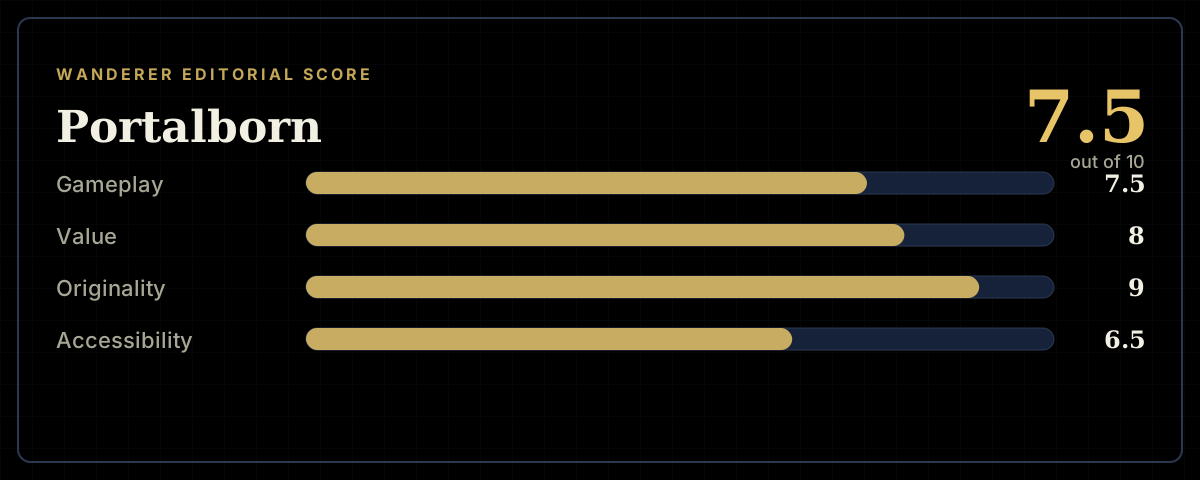
How the review scores each part of the gameWanderer Editorial -
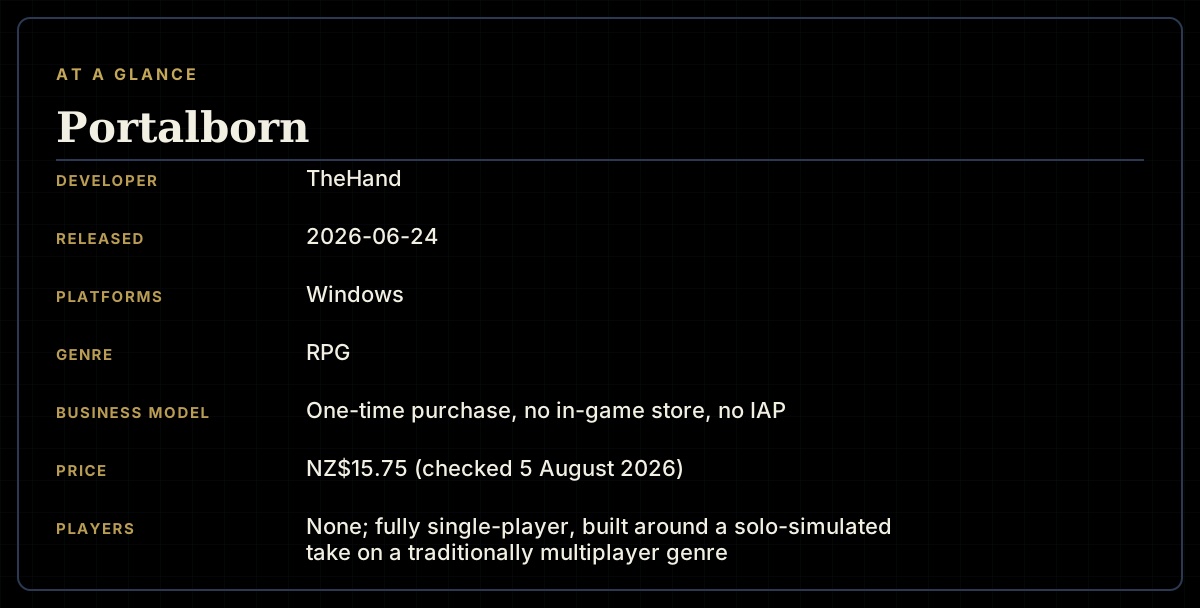
The game at a glanceWanderer Editorial -
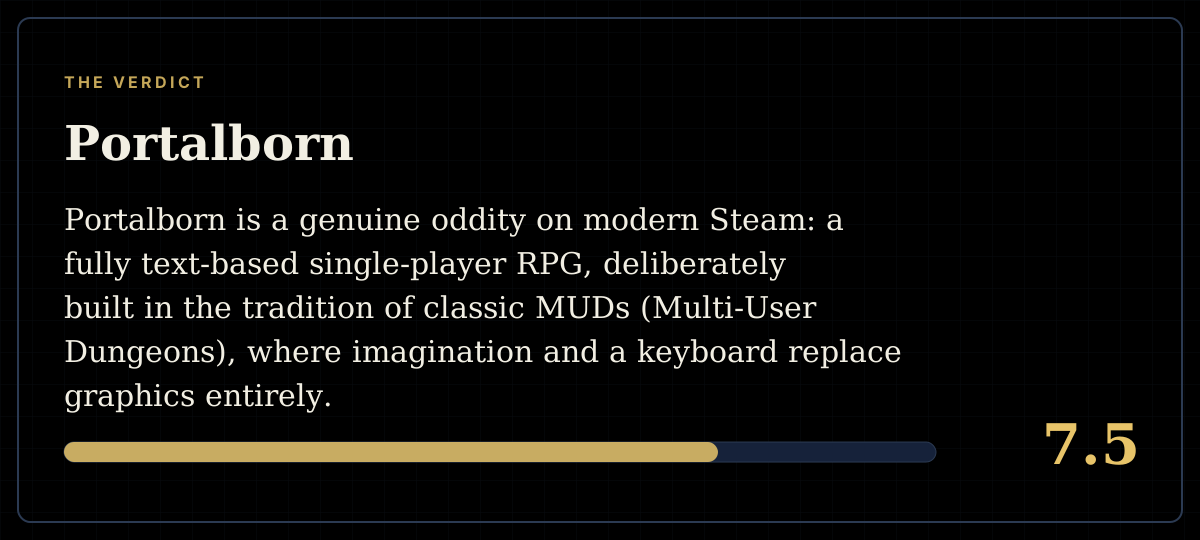
The short versionWanderer Editorial