Game review
Pizza Deathlivery
6 / 10
- Developer
- Kusa Games
- Publisher
- Kusa Games
- Released
- 23 October 2025
- Platforms
- [Windows]
- Genre
- Horror
- Monetisation
- Paid
- Players
- Single-player plus online co-op, up to 6 players
The short version
Pizza Deathlivery landed in October 2025 as a janky, unbalanced "spooky chores" party game — fun with friends for an evening, undercut by an unstoppable monster, opaque mechanics and a punishing curfew system. Kusa Games has spent the months since patching aggressively, and by spring 2026 reviewers were describing a meaningfully improved economy, HUD and difficulty curve. It's still a rough-edged, short co-op horror romp rather than a polished production, but it's a far better one than it was at launch.
Biggest strengths
- Distinctive, tense curfew-and-delivery hook that suits short, frantic co-op sessions
- Developer has been unusually responsive, shipping real balance and quality-of-life fixes
- Strong atmosphere — fog, map randomisation and enemy variety were praised even by critics
Biggest weaknesses
- At launch, at least one enemy type was reported as functionally unstoppable and near-certain death
- Delivery map markers can still point to the wrong spot, and dark hazards like sinkholes can kill instantly
- Early economy design forced awkward one-item-at-a-time item runs before patches addressed it
Who it's for: Groups of three to six friends looking for a cheap, short-session horror party game in the Lethal Company mould, who don't mind some remaining navigation jank.
Our recommendation: A solid pick for a couple of horror-tinged co-op evenings at a low price, especially now that several of its worst launch balance problems have been patched out.
6 / 10
Deliver the Pizza, Survive the Curfew
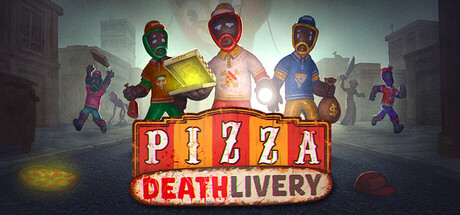
Pizza Deathlivery drops up to six players into a city blanketed by an oppressive mist that has turned most of its population into monsters, tasking the survivors — playing as pizza delivery staff — with getting orders to the remaining humans before a midnight curfew sends anyone still outside "into the night." It's a premise built for co-op chaos: players split up to cover more delivery ground, race the clock, and have to decide in the moment whether ducking into a building to avoid a threat is worth falling behind on quota. One reviewer's plot summary captures the tone well — "go risk your life for minimum wage" — and that dark-comedy framing runs through most of the positive reviews in the sample, alongside genuine praise for the atmosphere: randomised fog, map layout and enemy placement were singled out even by critical reviewers as a genuine strength.
The game sits squarely in the "spooky chores" party genre popularised by titles like Lethal Company — deliberately mundane objectives made tense by the threat of sudden, often unfair death. Reviewers who came in expecting exactly that comparison tended to have the best time with it, treating each run as a short, replayable dare against friends rather than a deep survival system to master.
A Launch Week That Tested Players' Patience
The October 2025 launch reviews in the sample are a genuinely rough read. Multiple players described refunding within the first two hours, citing a shallow core loop — walking between doors and the pizzeria, largely unchanged map to map — paired with monster encounters that offered little real counter-play. One detailed critical review described a specific "pizza monster" enemy that couldn't be stunned, moved faster than players, and represented close to certain death on contact, alongside cars that could clip straight through building walls and kill players with no warning. The same review, and several others, flagged a punishing economy: because upgrade costs scaled for the whole team rather than the individual player buying them, only one or two people in a group could realistically afford gear, leaving the rest as "dead weight" unable to flee threats effectively. Compounding that, players could only carry one item in each hand, meaning a supply run for upgrades or cash required repeated round trips rather than a single efficient errand.
Those launch-week complaints paint a picture of a game whose central idea was sound but whose systems actively fought against it — no way to check the in-game clock without returning to base, no reliable way to warn far-flung teammates that curfew was approaching, and monster mechanics, like glowing eggs of unclear purpose, that several groups simply couldn't figure out despite trying.
The Developer Kept Coming Back to Fix It
What separates Pizza Deathlivery from a game that launched rough and stayed that way is the volume and specificity of the patches that followed. A detailed review posted in May 2026, from a player returning to the game after trying it at launch, laid out the turnaround point by point: enemy spawn frequency and proximity were tuned down and new, better-balanced enemies were added; the shared-cost upgrade economy was reworked so prices scale per player rather than penalising the whole team for one person's purchase; a new special-coin reward system was added specifically to solve the carry-capacity problem players had complained about, letting the team unlock a shared wallet upgrade; and a HUD with a compass and watch was added so players no longer had to guess how much time was left or navigate blind. Two more reviews from around the same period specifically thanked the developers for adding a toggleable filter after players reported the game's mask effect was causing motion sickness, and another reviewer noted a previously-missing save system was added directly in response to negative feedback. That's an unusually responsive patch cadence for a small indie team, and the reviewer summarised it bluntly: "I've seen AAA studios drop games for less."
Rough Edges That Patches Haven't Fully Solved
Even in its improved state, Pizza Deathlivery isn't without friction. As recently as spring 2026, reviewers reported delivery markers on the in-game map pointing to the wrong location within a zone, forcing frustrating searches for orders that turned out to be nowhere near where the map indicated. One player described falling to their death in a sinkhole that was nearly invisible in low light — a reminder that navigating the city still carries real, sometimes unfair risk even after the worst enemy-balance issues were addressed. New groups still report steep early difficulty, with one recent review describing repeated early deaths and no clear way to learn evasion techniques other than trial and error. None of these are launch-week-severity complaints, but they're evidence the game is still a work in progress rather than a fully finished product, even a year after release.
Verdict
Pizza Deathlivery is a case study in a small developer taking a rough, occasionally broken launch seriously and grinding out fix after fix until the game underneath the jank became genuinely fun. Its curfew-and-delivery hook, strong atmosphere and dark comic tone make it an easy sell for a group of friends after a short, tense co-op horror session, and the price makes that an easy bet even if the game only lasts a handful of sessions. It's still not a polished production — navigation quirks and difficulty spikes remain — but the distance between its October 2025 launch state and where it stands now is exactly the kind of improvement that's worth rewarding with a look.
Pros and cons
Pros
- Distinctive, tense curfew-and-delivery hook that suits short, frantic co-op sessions
- Developer has been unusually responsive, shipping real balance and quality-of-life fixes
- Strong atmosphere — fog, map randomisation and enemy variety were praised even by critics
- Cheap enough that a handful of good sessions easily justifies the price
Cons
- At launch, at least one enemy type was reported as functionally unstoppable and near-certain death
- Delivery map markers can still point to the wrong spot, and dark hazards like sinkholes can kill instantly
- Early economy design forced awkward one-item-at-a-time item runs before patches addressed it
- Difficulty can spike sharply for new groups still learning the systems
Screenshots
-
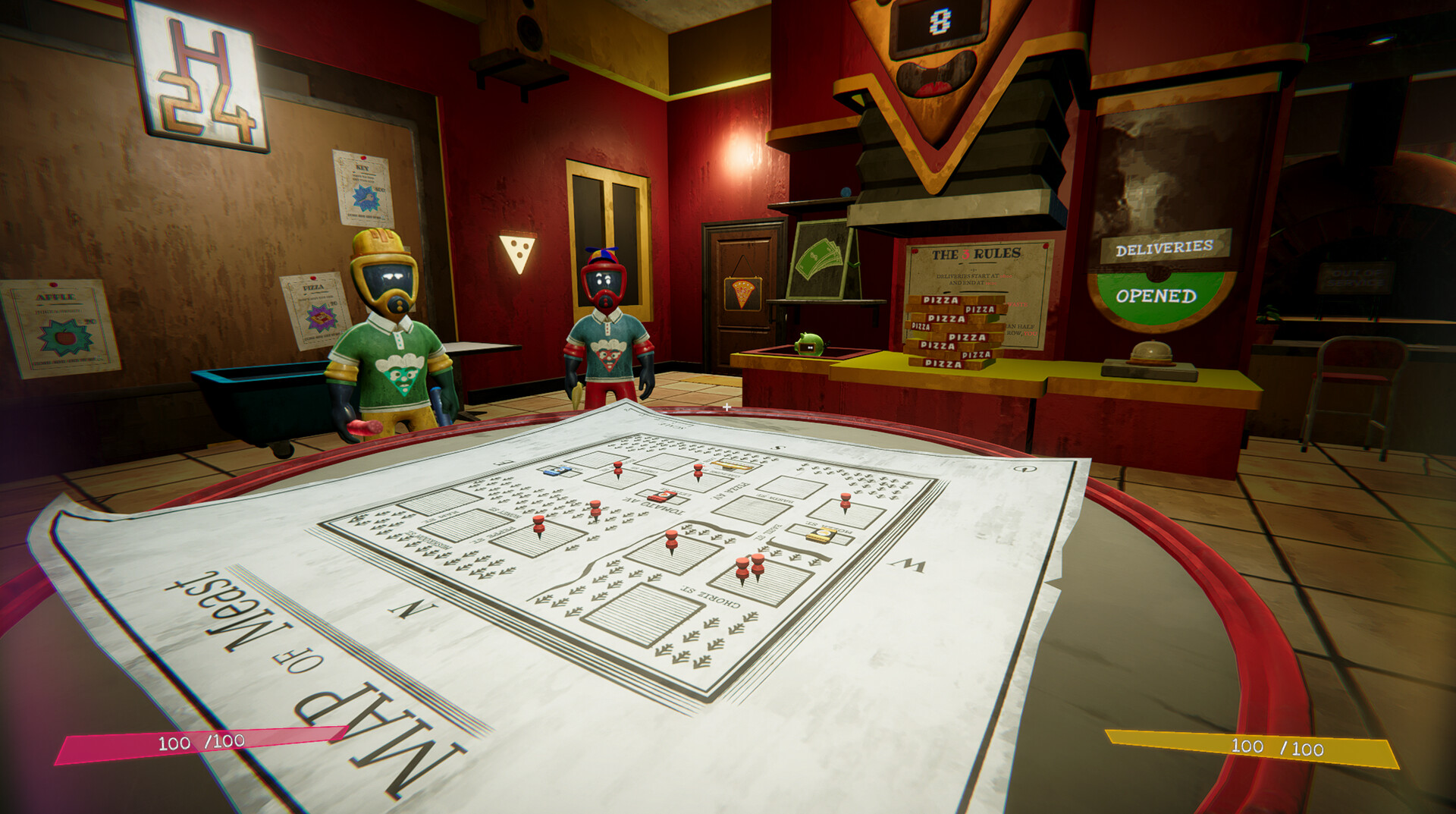
Planning a delivery route from the safety of the pizzeria, where stacked pizza boxes and a rules board set the tone before curfew hitsKusa Games -
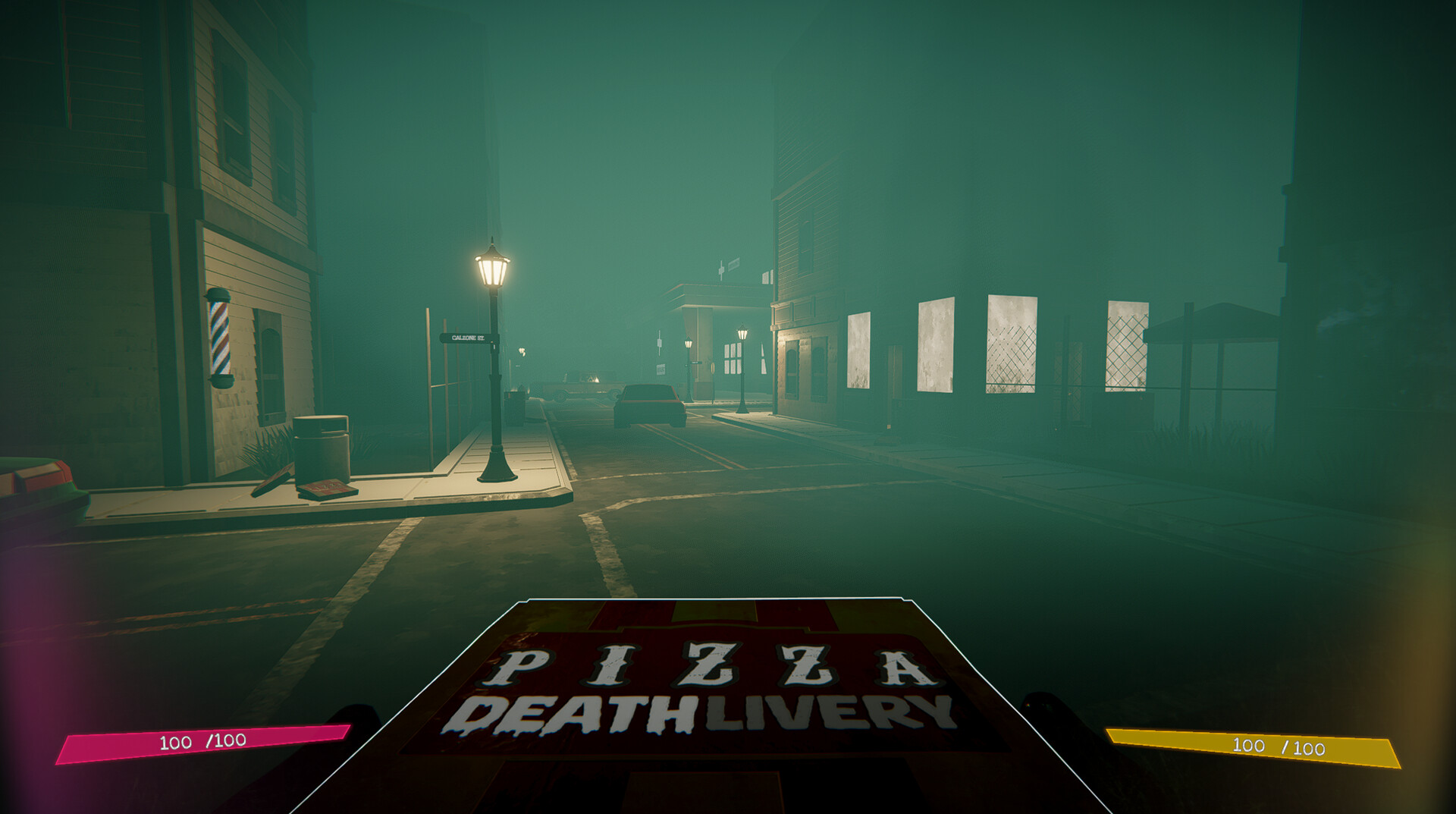
The city's rolling fog and randomised streets were consistently praised for atmosphere, even by reviewers who were frustrated with the mechanics underneathKusa Games -
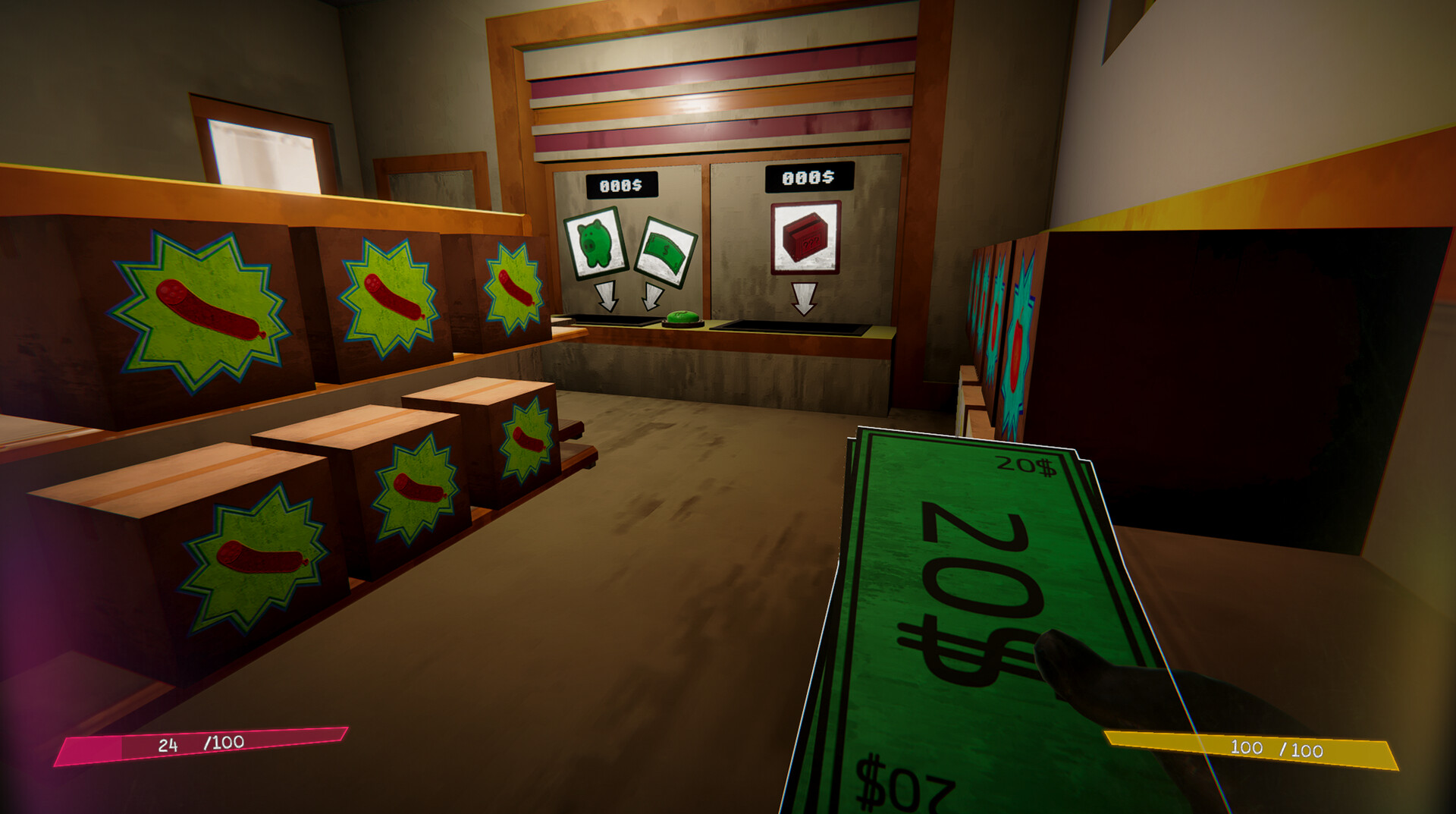
The upgrade shop economy was one of the most heavily reworked systems after launch, moving from team-wide price scaling to per-player costsKusa Games -
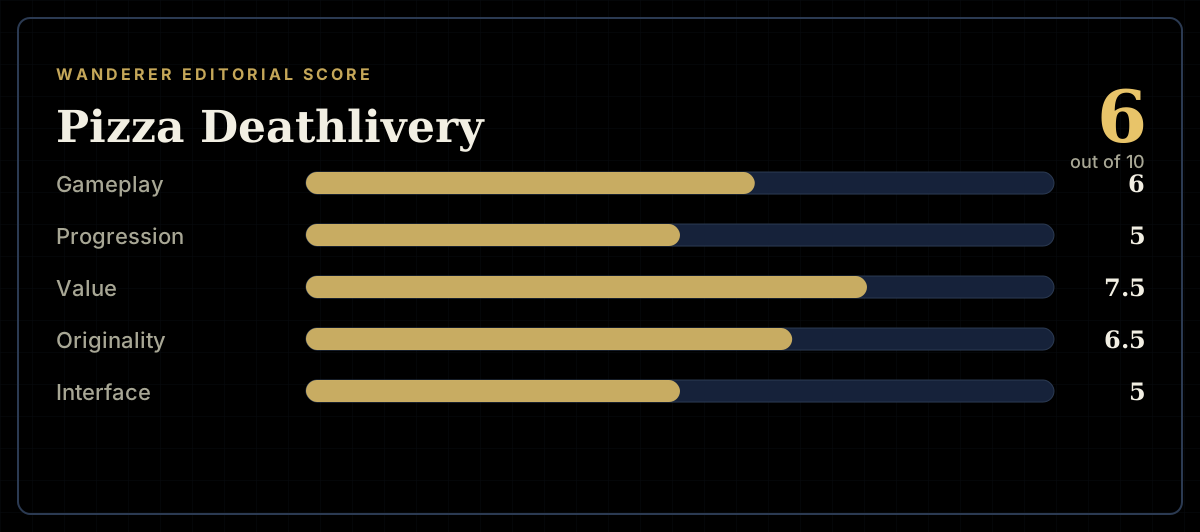
How the review scores each part of the gameWanderer Editorial -
The short versionWanderer Editorial