
Game review
Pight Review
7 / 10
- Developer
- Mindlabor
- Publisher
- Mindlabor
- Released
- 8 August 2026
- Platforms
- ["Windows"]
- Genre
- Minimalist Sokoban Puzzle
Pistons, Not Pigs, Despite the Name
Pight, from solo Minecraft-puzzle specialist Mindlabor, launched on Steam on August 8, 2026 at $3.99. Following a Steam Next Fest demo appearance and a couple of years of quiet visibility as a wishlist item, the full release arrived to an unusually clean reception: every one of its 33 English-language reviews at time of writing is positive, a perfect 100% score. The premise is as minimalist as the presentation: push a block onto a marked tile using a grid of one-space-reach devices, mostly pistons borrowed conceptually from Minecraft's redstone system, with no explicit tutorial text beyond a single teaching interaction on the first level. From there, the game layers on new device types roughly every ten levels: sticky pistons that pull instead of push, teleporters, dynamite blocks, and eventually electric pistons that complicate the puzzle logic considerably.
A Confident, Well-Taught Puzzle Loop
The review pool is remarkably consistent about what Pight gets right. Reviewers repeatedly praise the game's teaching-by-doing structure, introducing one new mechanic at a time and letting the level design do the explaining rather than any written tutorial, with several specifically calling out how satisfying it feels to have a new idea "click" a few levels after it's introduced. The minimalist art direction and sound design come up again and again as "charming," "cute," and "well polished," a strong compliment for a genre where visual clarity often matters more than visual flash. Several reviewers who describe themselves as longtime followers of Mindlabor's other puzzle games, explicitly ranking Pight as the developer's best work to date and praising a consistent "vibe" and sense of care about overall feel across the catalogue, giving the positive reception an extra layer of credibility beyond first-time buyers. The core loop of clicking devices to nudge a block toward its goal, with unlimited moves but strictly limited reach per device, earns consistent praise for being easy to grasp yet capable of producing genuinely difficult, multi-step solutions once several device types are combined on a single grid.
Electric Pistons Bring Bugs, and a Few Levels Spike Hard
Set against that goodwill, the review pool converges on two specific complaints. The first is a cluster of bugs concentrated in the game's second half, once electric pistons are introduced: multiple reviewers independently describe solving levels through what felt like an unintended, "hacky" workaround rather than the puzzle's actual intended solution, a strong enough pattern across separate reviews to treat as a real, corroborated issue rather than one player's bad luck. One long-form review specifically frames this as the game's most significant flaw, even while still recommending it overall. The second is uneven difficulty pacing: several reviewers report a handful of specific levels that cost them upward of two hours to solve, sitting jarringly next to stretches that flow smoothly, with more than one asking for a level select option so a stuck player could skip ahead rather than being blocked entirely. There's no in-game hint system either, though an undo button at least makes experimentation cheap. A smaller, more subjective complaint from a couple of reviewers calls the visual style "derivative" of other minimalist puzzle games, though this view is very much a minority position against the broader chorus of praise for the presentation.
Short, Replayable, and Backed by a Level Editor
Playtimes in the review pool vary widely, from under an hour for quick completions to reports well past ten hours, reflecting both the game's short core length and the fact that several reviewers mention spending extra time in what appears to be a built-in level creator, letting players build and presumably share their own piston puzzles beyond the roughly 30-plus levels in the main campaign. At $3.99, that combination of a tight, well-taught core campaign plus community-driven extra content pushes the value proposition solidly in the game's favor, and several reviewers explicitly frame the price as more than fair for what's on offer. Nobody in the sample describes the game as overstaying its welcome; if anything, the more common regret is that specific difficulty spikes made certain sections feel disproportionately punishing relative to the otherwise smooth ten-level teaching cadence established elsewhere.
Verdict
Pight is a small, confident puzzle game that does the fundamentals of its genre well: a mechanic that's instantly legible, a teaching curve that respects the player's intelligence without a word of explicit instruction, and presentation charming enough that multiple reviewers single it out unprompted. The Minecraft-redstone framing is a smart hook for a genre that can otherwise feel abstract and dry, and the unlimited-use, limited-reach piston rule generates real depth once several device types share a single grid.
It isn't flawless. The electric-piston bugs in the back half are corroborated across multiple independent reviews and represent a real quality issue rather than an isolated complaint, and the jagged difficulty curve on a handful of specific levels, without any hint system or level select to relieve the pressure, will frustrate players who don't enjoy being stuck for hours at a time. At $3.99, though, those flaws are easy to forgive given the size of the ask, and Mindlabor's evident track record with this specific kind of puzzle design, repeatedly praised by returning fans in the review pool, suggests a developer worth following into whatever they build next.
For fans of sokoban-style logic puzzles or anyone nostalgic for tinkering with Minecraft redstone circuits, Pight is an easy, low-cost recommendation, provided you're willing to ride out a rough patch or two in the second half without official hints to fall back on.
Screenshots
-
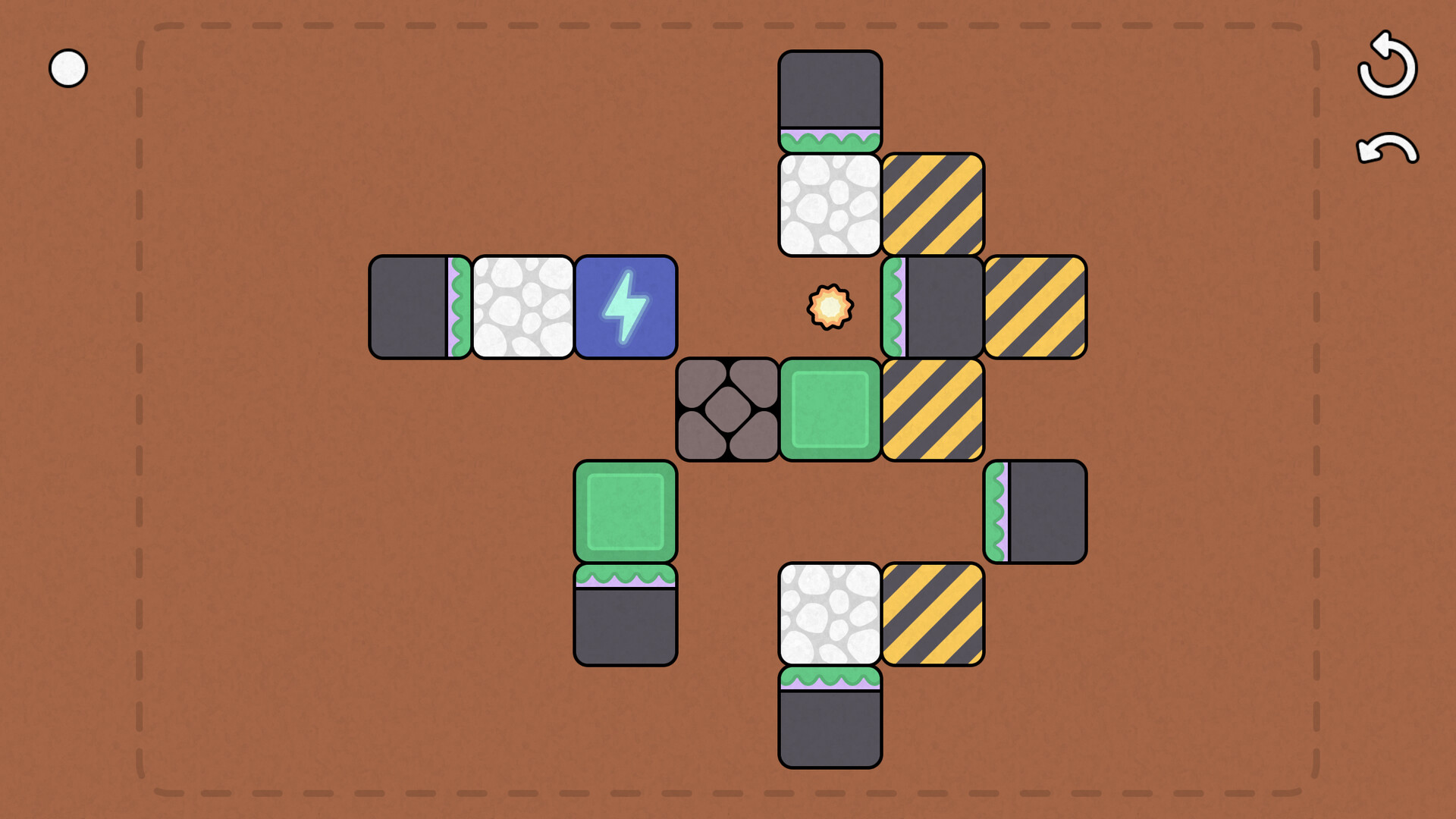
An early-mid puzzle layout: stone blocks, hazard tiles, and a single electric piston to plan around.Image: Mindlabor via Steam -
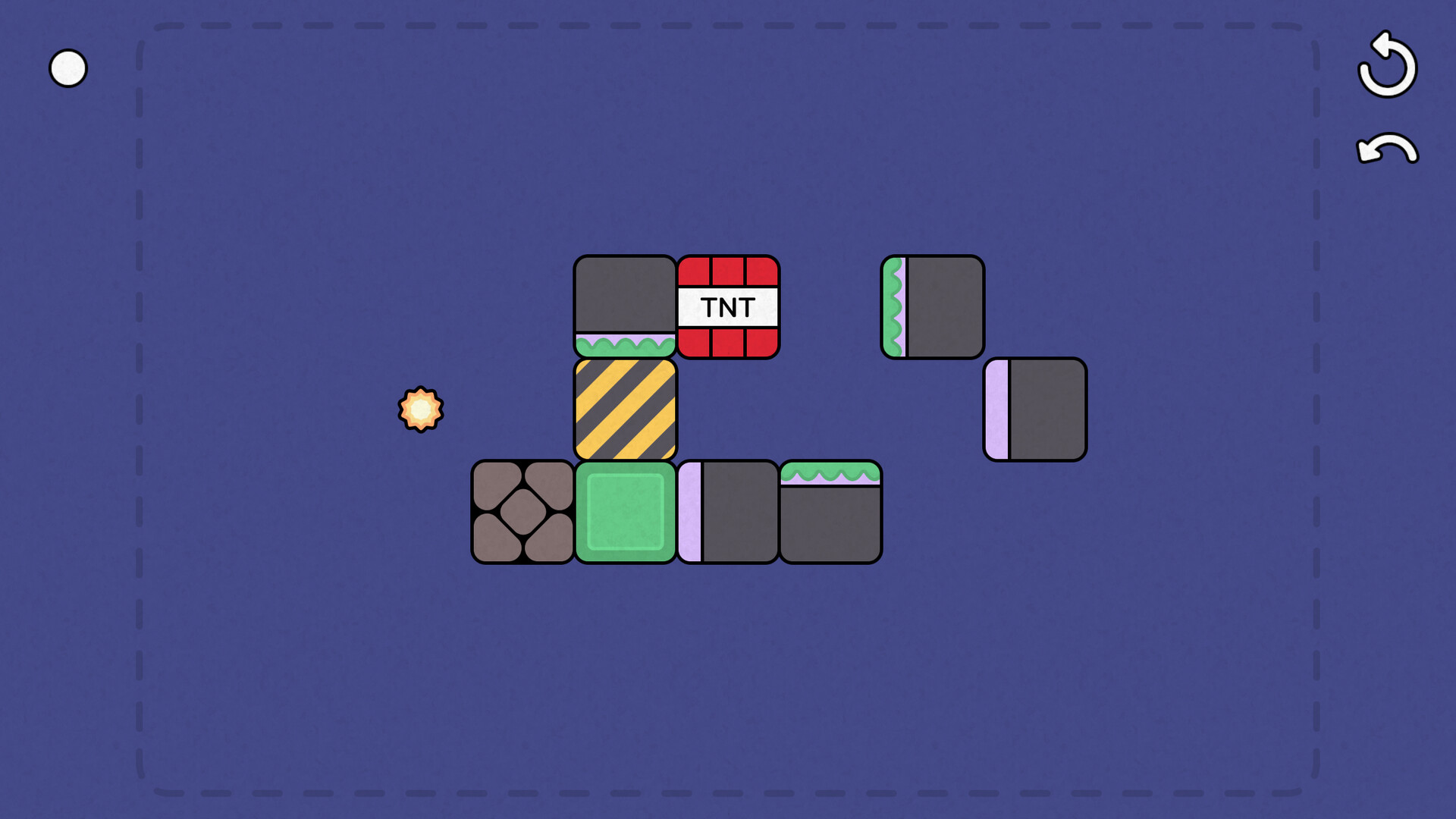
A TNT block joins the toolkit, one of several new device types introduced roughly every ten levels.Image: Mindlabor via Steam -
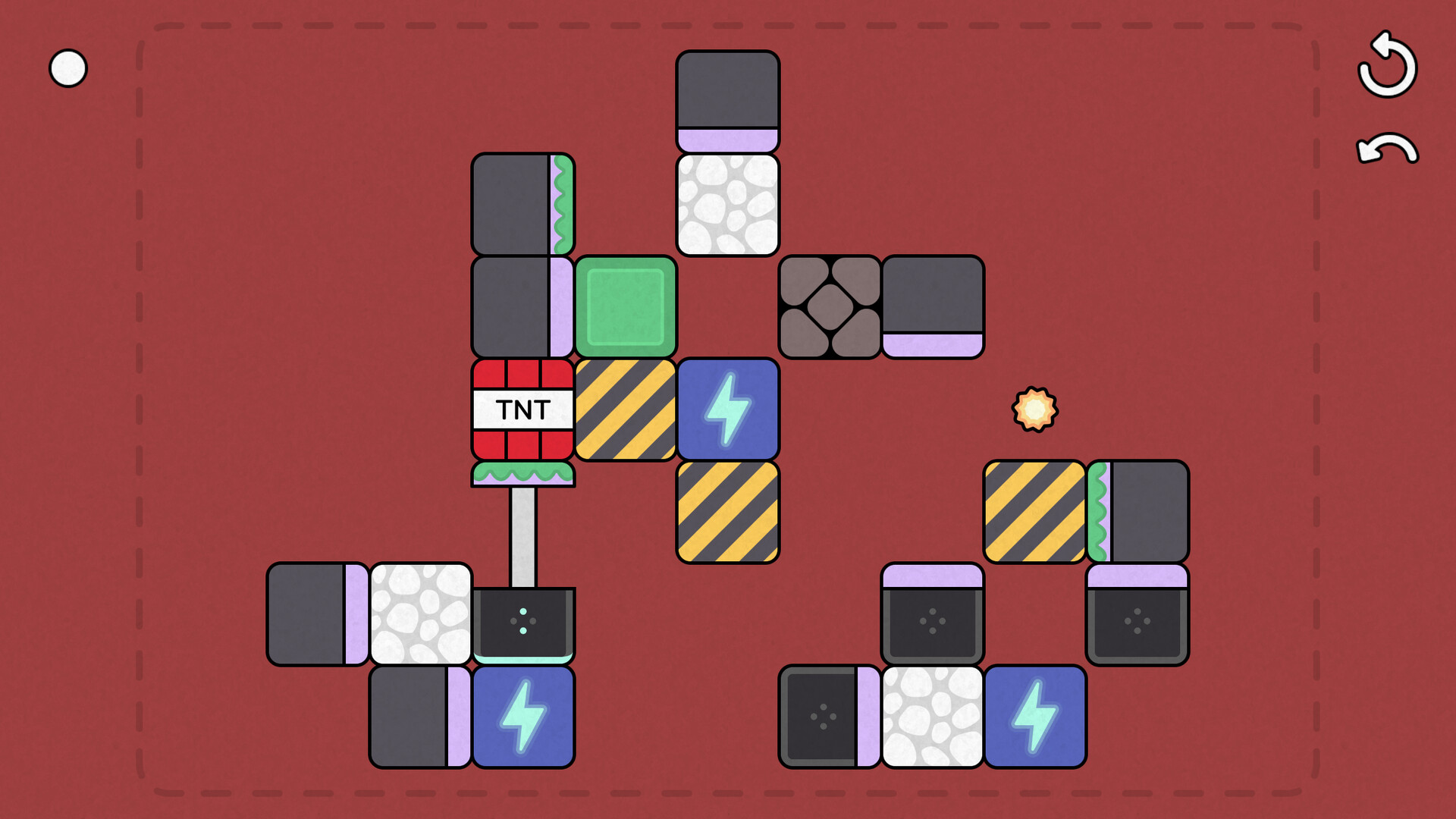
A later, more crowded level stacking TNT, electric pistons, and teleporters, the kind of combination reviewers say can produce buggy, unintended solutions.Image: Mindlabor via Steam