Game review
Paleo Dive Review
6.4 / 10
- Developer
- Astra Render
- Publisher
- Astra Render
- Released
- 4 September 2026
- Platforms
- ["Windows"]
- Genre
- Simulation
Swimming with the ancients
Paleo Dive takes a formula that VR ocean-exploration fans already know well — the arm-stroke swimming, the open water, the quiet sense of discovery that games like Subside built a following on — and reskins it around deep time instead of the present-day sea. Instead of hunting for sunken coins or toys, you're photographing extinct marine life, collecting DNA samples, and slowly filling out a personal aquarium of creatures pulled from five different prehistoric periods, including dedicated day and night dives. It's not a wholly original mechanical idea, but the setting does a lot of work: swimming face-to-face with a trilobite or watching something enormous and ancient glide past in near-total darkness carries a genuine sense of wonder that the underlying swim-and-scan loop wouldn't have on its own. Astra Render, reportedly a solo developer working on this as a first project, clearly understood that the concept alone could carry a lot of the game's appeal, and largely it does. Multiple reviewers make a point of noting they didn't expect a single person to deliver five distinct biomes, a working photo-and-DNA documentation system, and a persistent aquarium all in one launch build, and there's a real sense across the review pool that people are grading the game with that context in mind — impressed by the scope even when individual pieces feel unfinished.
A loop that's fun until it isn't
The core swimming mechanic is well liked across the review pool — arm-stroke movement feels intuitive once you get the hang of it, and the sense of genuinely propelling yourself through open water is frequently called out as satisfying. Where the loop runs into trouble is progression: several players describe needing to fully document every creature and collectible in a given area before the next map unlocks, which turns what should be a leisurely, explorer-paced game into a checklist that some found themselves grinding rather than enjoying. The camera and DNA-scanning tools used to document species are functional but rough, with more than one reviewer wishing for clearer feedback on what's actually been scanned and what hasn't. Hand-tracking issues compound this in spots — hands occasionally clip through rocks or get stuck near the seafloor, and while none of this breaks the game, it chips away at the immersion a game like this depends on. The soundtrack fares much better by comparison: several reviewers specifically praise the ambient score for matching the mood of each dive site, and it's one of the few elements of the presentation that draws no complaints at all, quietly doing the atmospheric work that the visuals and interface sometimes fumble.
Performance is the real fault line
The single biggest divide in Paleo Dive's audience isn't taste, it's hardware. Players running high-end setups — RTX 4070s, 4090s, and 5090s — generally describe the game as visually stunning and reasonably smooth, especially with DLSS and motion smoothing engaged. Players on more modest rigs report considerably worse results, with one negative review specifically citing poor performance even on a 5090 alongside broken Index controller support. The recommended specs sit meaningfully above what a typical VR headset owner might have on hand, and for a solo-developer VR title asking $19.99, that's a real barrier — this isn't a game that's forgiving of older hardware. On top of that, the surfacing effect — water streaming down the lens when you come up for air — is called out repeatedly as overdone, with at least one player reporting it induced motion sickness severe enough to request a refund. To Astra Render's credit, the developer has been visibly fast to respond: multiple reviewers note that day-one performance and visual complaints were patched within hours or days of launch, and the surfacing effect specifically got toned down after community feedback.
One note worth flagging
A small number of reviewers raised a more pointed concern: that some of the achievement icons, a handful of in-game models, and the item shop artwork appear to use AI-generated imagery, and that the shop images in particular don't match the actual in-game items they're meant to represent. This is a minority complaint within an otherwise positive review pool, but it's the kind of thing worth knowing going in if AI-generated art in a paid product is something that would affect your purchase decision — the core gameplay assets themselves (the creature models, environments, and swim mechanics) don't appear to be the target of that criticism, which was aimed more narrowly at cosmetic and promotional imagery.
Verdict
Paleo Dive is a genuinely charming idea — a Subside-style VR diving loop transplanted into deep prehistory — held back by rough edges that are common to ambitious solo-developer VR projects: uneven performance across hardware tiers, a progression system that can turn tedious, and interface choices (that surfacing water effect chief among them) that needed more testing before launch. The developer's rapid post-launch patch cadence is a genuinely good sign, and the atmosphere during night dives and the aquarium payoff at the end of a research arc are real highlights. If you've got the GPU to run it comfortably and patience for a still-settling launch, there's a rewarding, quietly wondrous game here. If your hardware is more modest or you're sensitive to VR motion discomfort, it's worth waiting for a few more patches first. Given how quickly Astra Render has already moved on player feedback, the version of Paleo Dive worth judging a few months from now may look meaningfully different from the one at launch, and that trajectory alone makes it a game worth keeping an eye on even if you decide to hold off buying today.
Screenshots
-
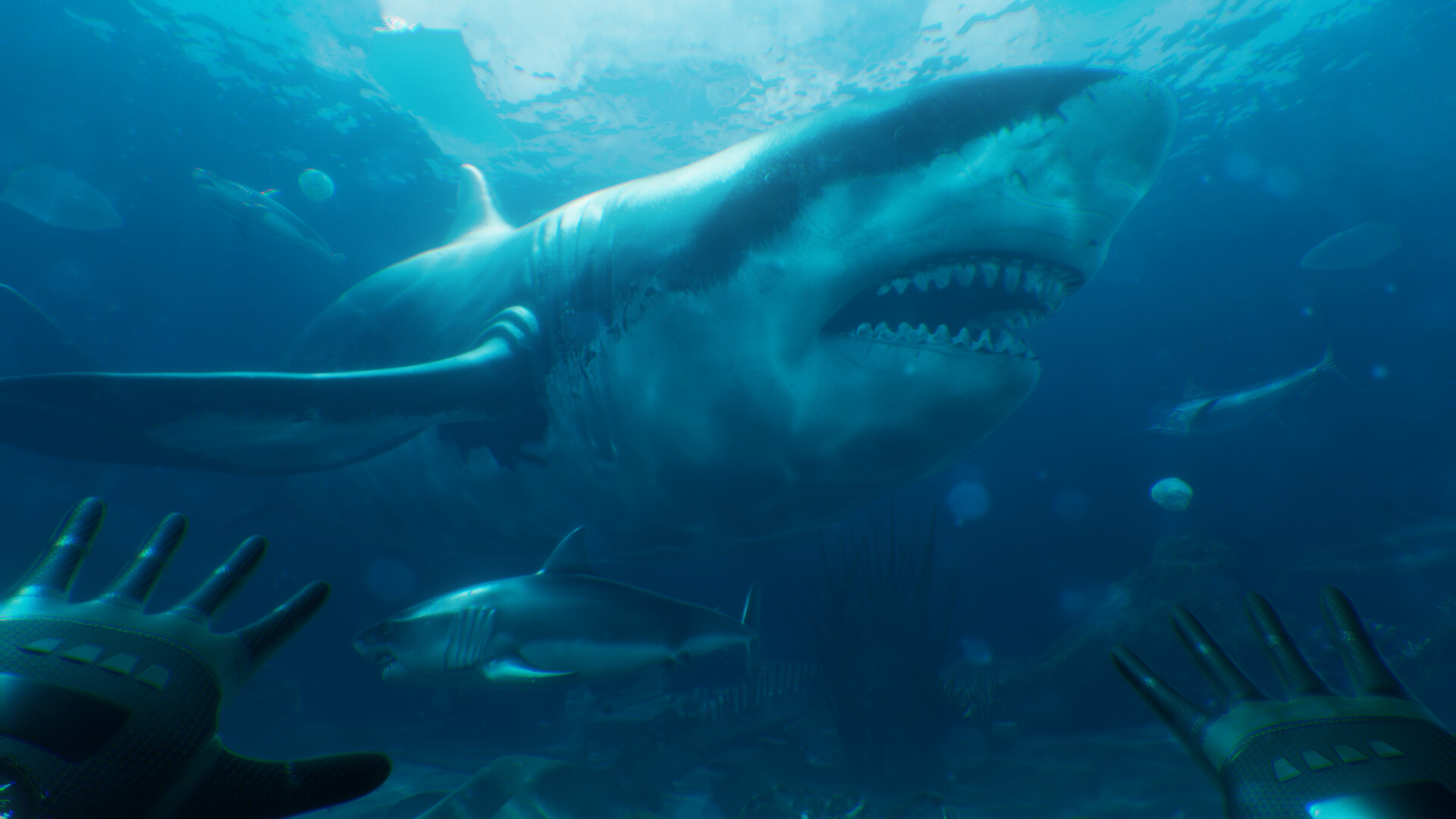
Close encounters with apex predators are a recurring highlight of the open-water dives. -
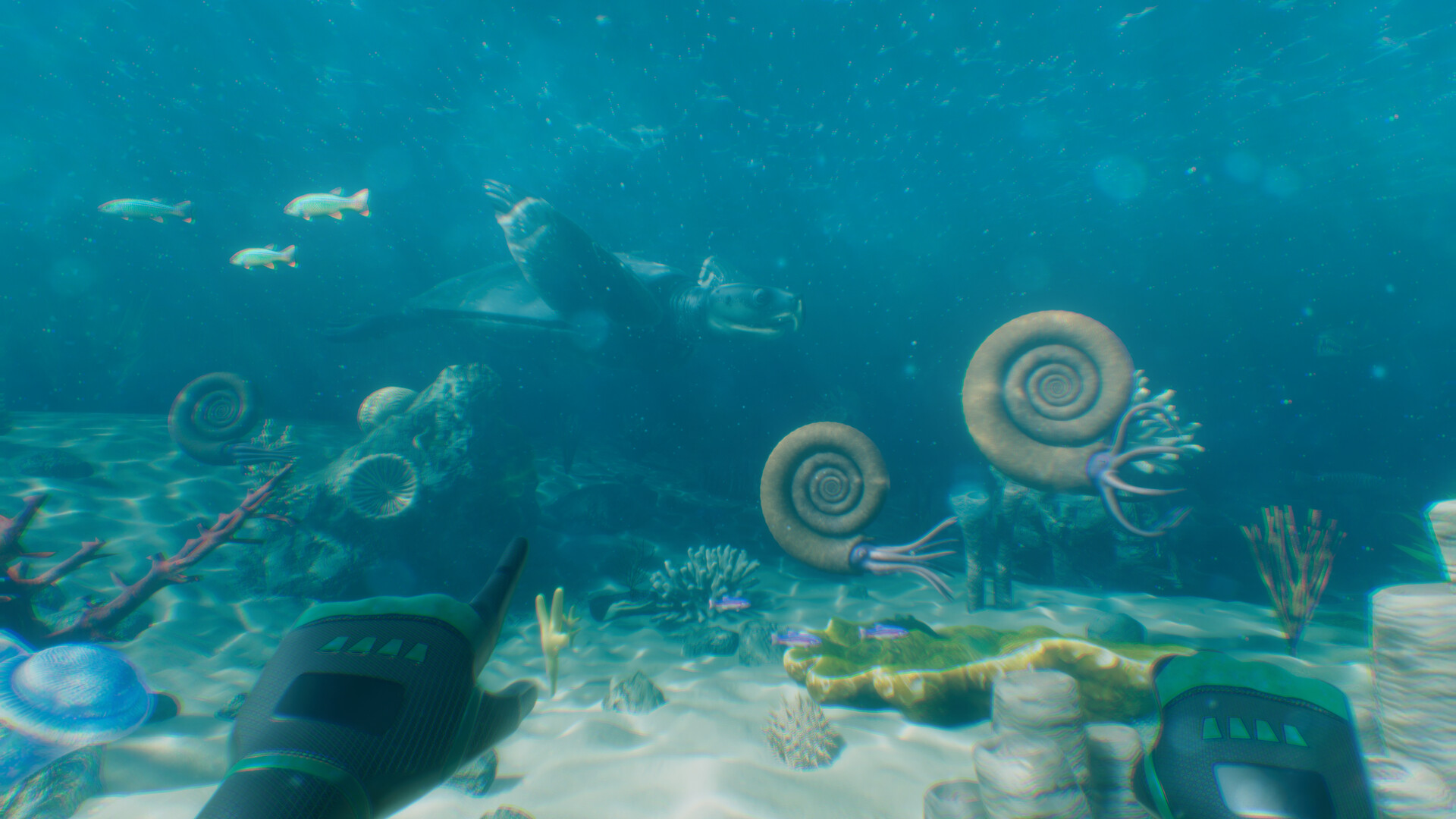
Shallower reef dives mix ammonites, coral, and larger swimming reptiles in the same scene. -
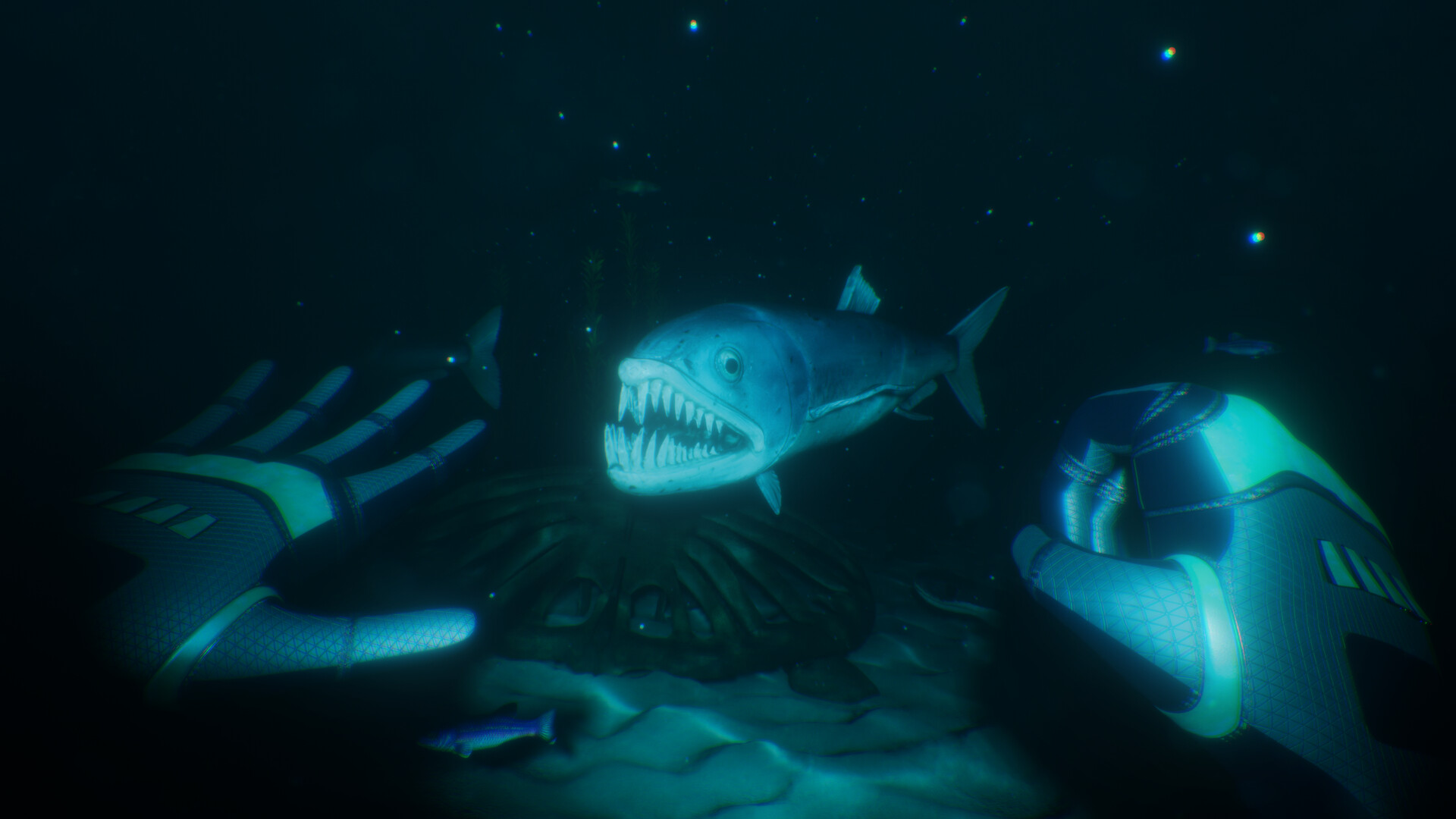
Night dives lean into darkness and sudden predator encounters for a tenser mood.