
Game review
Oscillon Review
7.5 / 10
- Developer
- Test Stack Studio
- Publisher
- Test Stack Studio
- Released
- 16 July 2026
- Platforms
- ["Windows"]
- Genre
- Casual
Defend the Core, Build the Beat
Oscillon is a $4.99 arcade survival game from Test Stack Studio, built around a simple, hypnotic loop: a paddle-like arc rotates around a central core, deflecting waves of coiled, spring-shaped projectiles before they can chip away at the core's health, while a built-in music track editor lets the same underlying system double as a beat-making tool. It launched July 16, 2026, and its review sample is tiny — just two reviews, both enthusiastically positive — but both independently zero in on the same qualities: an easy-to-learn, hard-to-master arcade hook, a soundtrack reviewers single out by name, and a surprising amount of structural variety packed into a small package.
Four Very Different Ways to Play the Same Core Loop
Rather than offering a single mode, Oscillon splits into four: Survival, an endless arcade defense with persistent upgrades and global leaderboards; Vibe, a no-damage, no-fail-state mode built purely for audio-visual relaxation; Wave, a structured 30-wave gauntlet with card-drafting and boss waves every fifth round; and Challenge, eight hand-crafted skill tests with specific, punishing gimmicks like tiny paddles, invisible balls, or a core that constantly drains health. One reviewer explicitly calls out this spread, noting there's "a LOT to explore" and singling out Wave mode as "super fun" while expressing genuine curiosity about how far they can push their own score. That's a meaningfully different design decision than most score-attack arcade games make — rather than one loop with difficulty settings, Oscillon reframes its core mechanic four separate ways, each asking something different of the player.
Difficulty That Refuses to Coast
Both reviews agree the game does not let skill plateau translate into safety. One reviewer describes it plainly: even once you're fully upgraded, you can't just sit back and rack up points — the game keeps demanding improvement, and getting better at it produces a genuine sense of accomplishment rather than a rubber-stamped high score. The same reviewer draws a direct line to classic arcade cabinets, saying the leaderboard-chasing hook would fit right into a physical arcade setting, and is glad an online leaderboard lets that competitive itch scratch itself digitally instead. That's a strong signal for a genre where padding-out difficulty via bullet-sponge health bars is common — Oscillon's challenge instead seems to come from pattern-reading and reflexes, which tracks with the tightly-timed ability prompts visible directly on the playfield, like the Shock charge arc that builds visibly around the core before it's ready to fire.
A Soundtrack Good Enough to Get Named-Checked
Arcade games live or die on feel, and one reviewer volunteers, unprompted, that "the soundtrack rocks" — a small detail, but a telling one, since most reviews of small arcade titles don't bother mentioning music unless it stands out. Given that the game's entire secondary pitch is a built-in track editor for building your own beats and exporting them to WAV, having reviewers praise the baked-in soundtrack independently of that toolset suggests the audio design carries weight on its own, not just as a gimmick bolted onto the survival gameplay.
The Track Editor Is a Real Feature, Not Filler
One reviewer specifically tried the music track editor and reports it's "super easy to use," capable of producing "some awesome tracks to play to." That's a meaningful data point for a feature that could easily have been a half-finished afterthought bundled in to pad out the store page's feature list. Instead, it reads as a legitimately separate creative mode sitting alongside the four gameplay modes — letting players compose the very beats their paddle will later have to survive against, which closes an unusually satisfying loop between the game's two stated pillars of "defend the core" and "build the beat."
No Pay-to-Win Shortcuts
Both reviewers frame the game's difficulty and progression as something you have to earn through practice rather than purchase, and one goes out of their way to praise a game "that requires skill and doesn't let you pay your way around practicing and getting better." At $4.99 with no mention of microtransactions anywhere in the store material or reviews, that's a refreshing, if perhaps unsurprising, confirmation that the persistent upgrades mentioned in Survival mode are earned through play rather than sold separately.
Visual Presentation Leans Retro-Psychedelic
The screenshots show a distinctive look: a circular radar-grid arena bounded by a wobbling, hand-drawn outer ring, with coiled spring-shaped projectiles in bright, saturated colors closing in from every angle against a black backdrop. Bold pixel-font callouts like "OVERDRIVE!" punctuate high-intensity moments, while quieter stretches between waves let the arena's nested rings and scattered stray projectiles read almost like an oscilloscope display — a fitting visual identity for a game whose name and core mechanic are both built around signal-like waveforms. It's a clean, readable style that keeps the actual threats legible even when the screen fills up, which matters more than usual in a genre built on split-second reactions.
Thin Coverage, but Real Signal
Two detailed, substantive reviews is not much to build a verdict on, and Oscillon deserves a second look once a larger sample exists. But unlike many small arcade releases where a handful of reviews amount to little more than a thumbs-up and a shrug, both of the reviews here independently praise specific, concrete things — the mode variety, the escalating difficulty curve, the soundtrack, and the track editor — without a single complaint raised between them. That kind of unanimous, detail-rich agreement from a tiny sample is a genuinely positive sign, even if it can't yet carry the statistical weight of a larger review base.
Verdict
Oscillon takes a familiar arcade-survival shape — defend a core, dodge and deflect incoming threats, chase a leaderboard score — and gives it real depth through four distinct modes, a difficulty curve that keeps demanding improvement rather than plateauing, a soundtrack strong enough that reviewers mention it unprompted, and a genuinely functional built-in music editor that ties the whole experience together thematically. At $4.99, with two enthusiastic, detail-rich reviews and no red flags of any kind, it's an easy recommendation for arcade and rhythm fans looking for a tight, skill-based score chase, with the caveat that its review base is still small enough to warrant checking back in as more players weigh in.
Screenshots
-
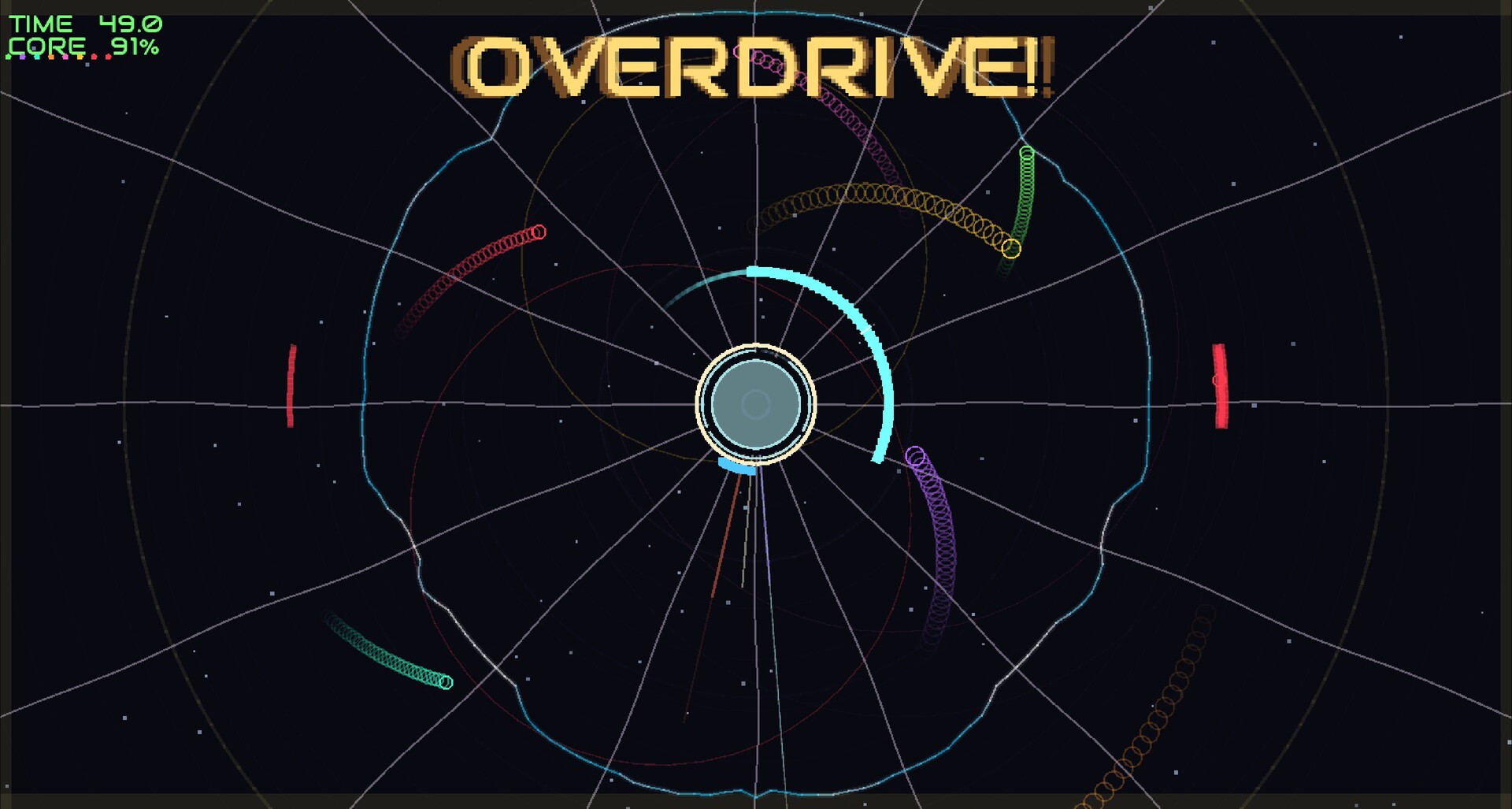
An Overdrive moment in full swing — the core sits at 91% health while a ring of coiled, color-coded threats closes in from every compass point.Image: Test Stack Studio via Steam -
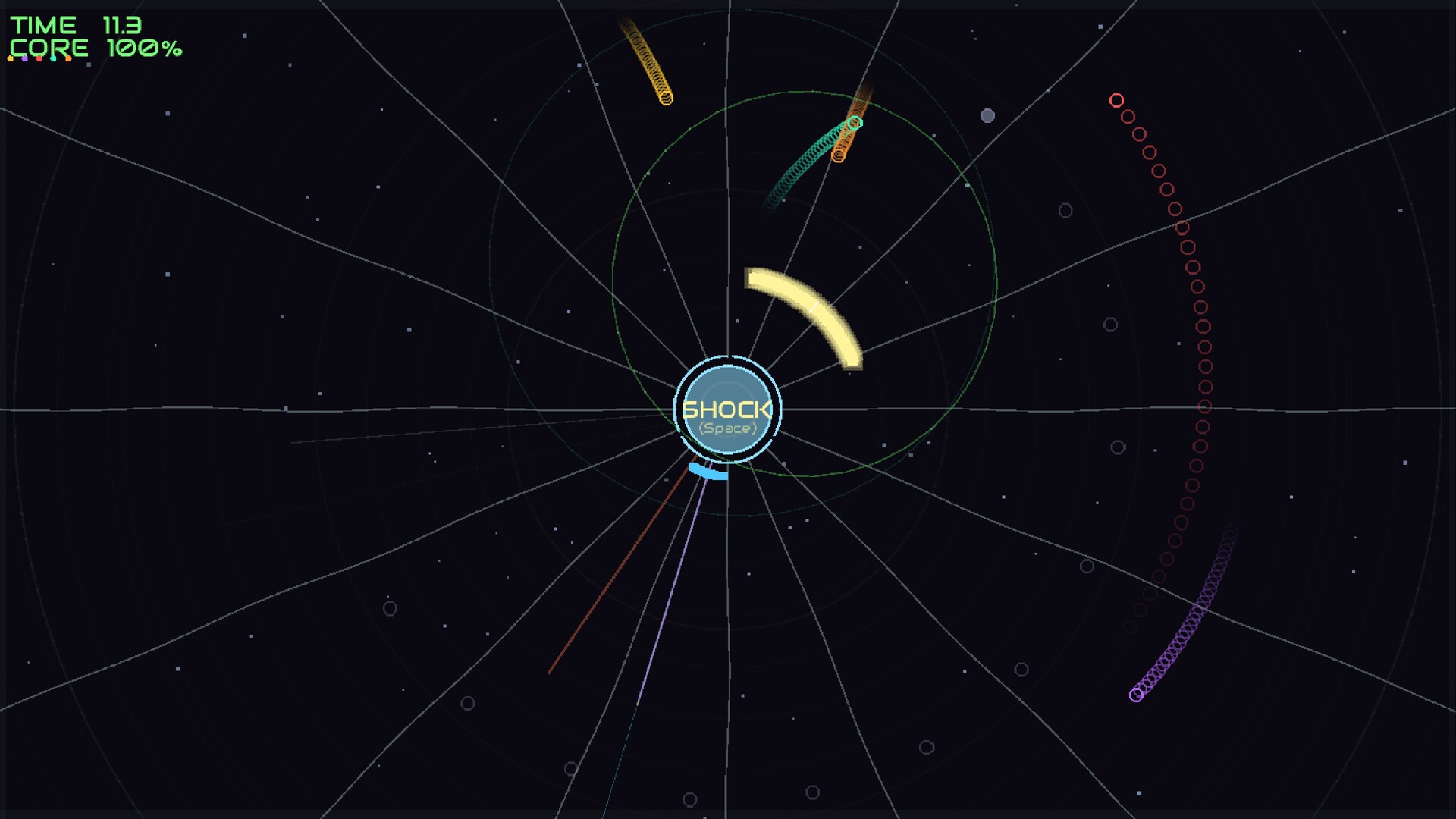
Ability prompts like this Shock charge are laid directly over the playfield, telling you exactly when a screen-clearing option is ready without breaking focus on the incoming threats.Image: Test Stack Studio via Steam -
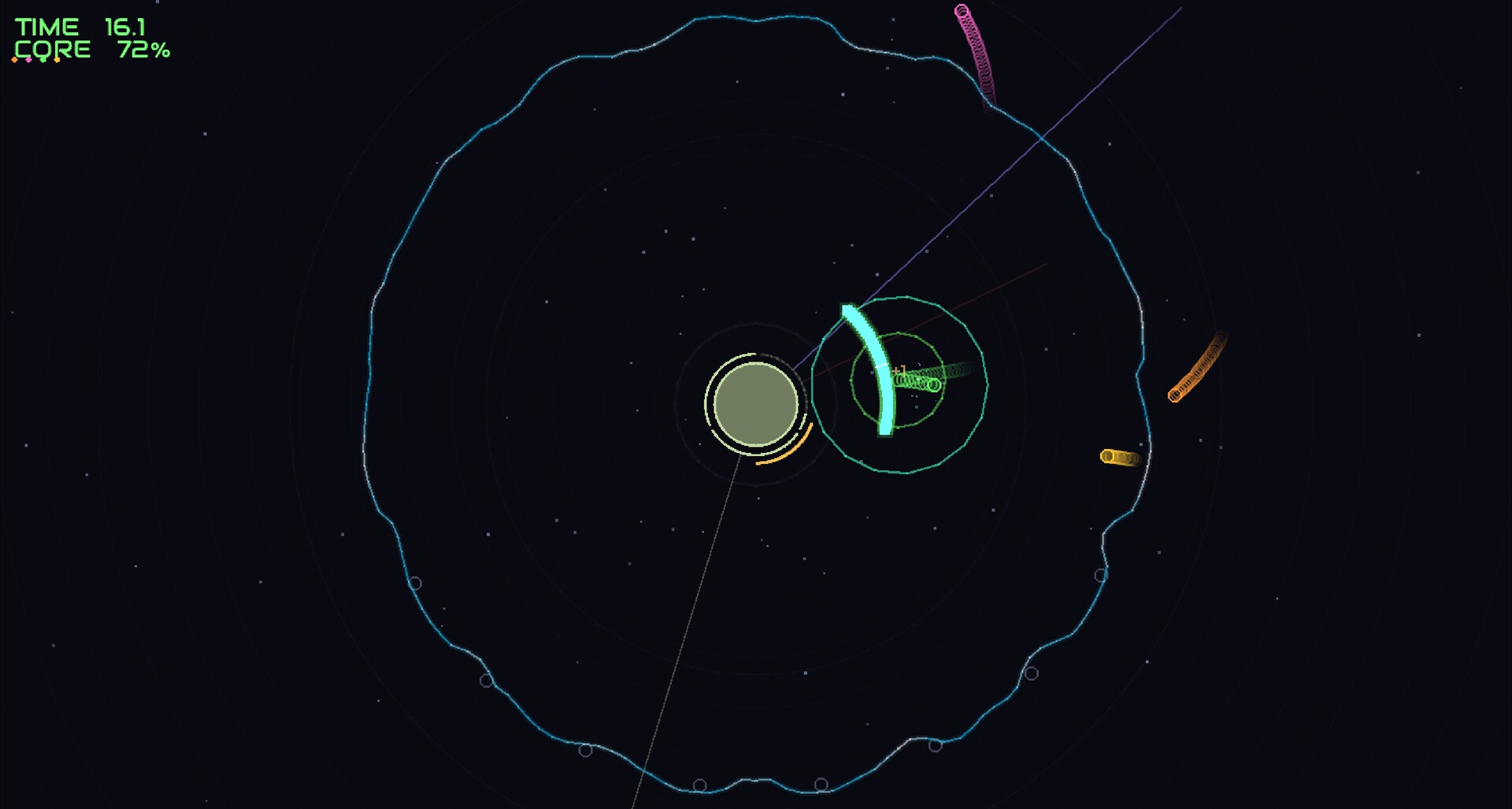
Between waves, the arena's wobbling outer boundary and nested rings give the whole thing the look of a hand-drawn oscilloscope reading as much as a game board.Image: Test Stack Studio via Steam