Game review
Orbitmine
6.5 / 10
- Developer
- vibemaker1
- Publisher
- vibemaker1
- Released
- 6 April 2026
- Platforms
- Windows
- Genre
- Incremental
- Monetisation
- Premium, one-off purchase; free demo available
- Players
- Single-player
The short version
Orbitmine takes the simplest possible incremental hook — point a laser at a planet, drill toward the middle, buy upgrades, repeat — and dresses it in a genuinely pleasant neon aesthetic and a soundtrack built for winding down rather than grinding out. Four seasonal zones each twist the core loop with a distinct hazard, which is more design ambition than a $4.49 solo project needed to bring.
It's held back by a travel problem baked into its own map layout: only two launch points exist per planet, so once you've drifted away from them you're often flying back across ground you've already cleared instead of drilling anything new. Combined with a short, linear upgrade path and no reason to return once all four cores crack open, it's a pleasant weekend rather than a game with legs.
Biggest strengths
- Each of the four seasonal zones changes the moment-to-moment drilling puzzle in a real way — regenerating blocks in Spring, overheating in Summer, wind gusts in Autumn, freezing in Winter — rather than just reskinning the same hazard
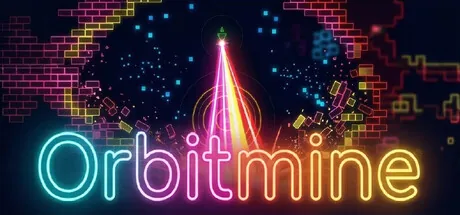
- The neon orbit visuals and ambient score consistently land the "cozy space mining" mood the store page promises
- A free demo lets you test the core laser-and-orbit feel before spending anything
Biggest weaknesses
- Each planet only offers two launch points, so once you've drilled away from either one you're often flying back over already-cleared ground instead of mining anything new
- Fuel and cargo capacity sit in a small corner readout, and a full cargo hold silently discards freshly mined blocks rather than warning you first
- The upgrade tree runs in a single line with no branching choices, so there's little build variety to chase across a playthrough
Who it's for: Players who want a short, low-stress incremental to have running in a window between other things, and anyone drawn to the "cozy space mining" pitch specifically for its look and sound rather than deep systems.
Our recommendation: Worth the asking price for a few relaxed evenings, especially since a free demo lets you feel out the drilling loop before buying — just go in expecting three or four hours of content and a genre-standard difficulty spike on the last core, not a long-term incremental.
6.5 / 10
Orbitmine doesn't pretend to be anything more complicated than it is: you're a ship in orbit around a planet, you fire a laser straight down through its layers, and you keep firing until there's nothing left between you and the core. That's the entire pitch, and for a solo developer's $4.49 release it's a perfectly reasonable one to build a whole game around. What's more interesting is how much texture vibemaker1 manages to add to that one-sentence loop before the seams start showing — four distinct seasonal zones, a genuinely deep-looking upgrade tree, and a look and sound design that punch well above the asking price. What keeps it from being more than a pleasant few hours is a map-layout decision that turns half of every session into transit time.
Drilling as the whole game
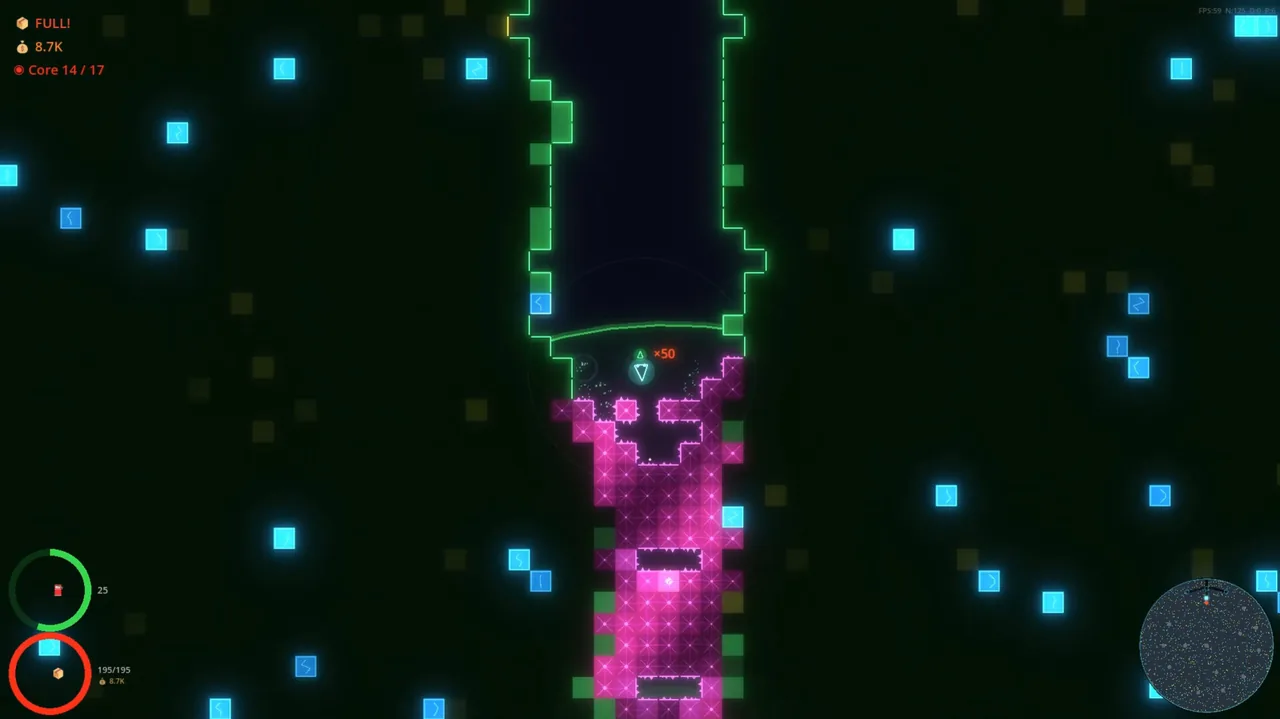
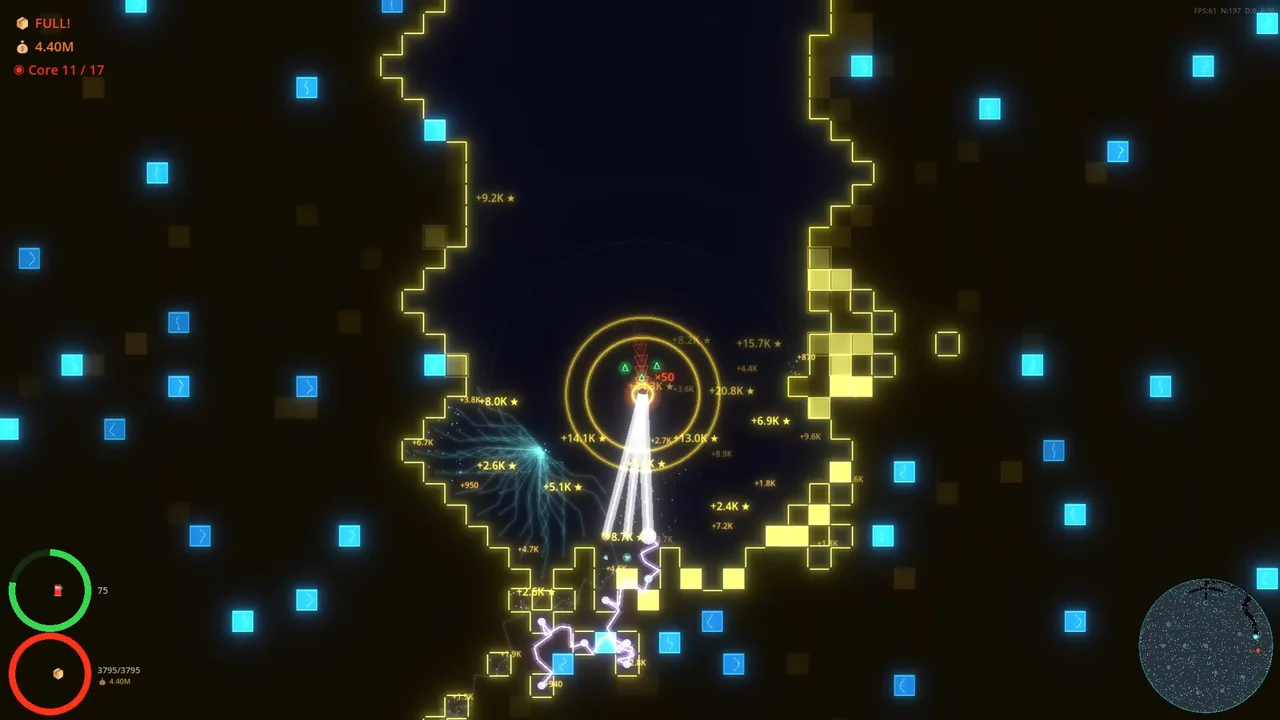
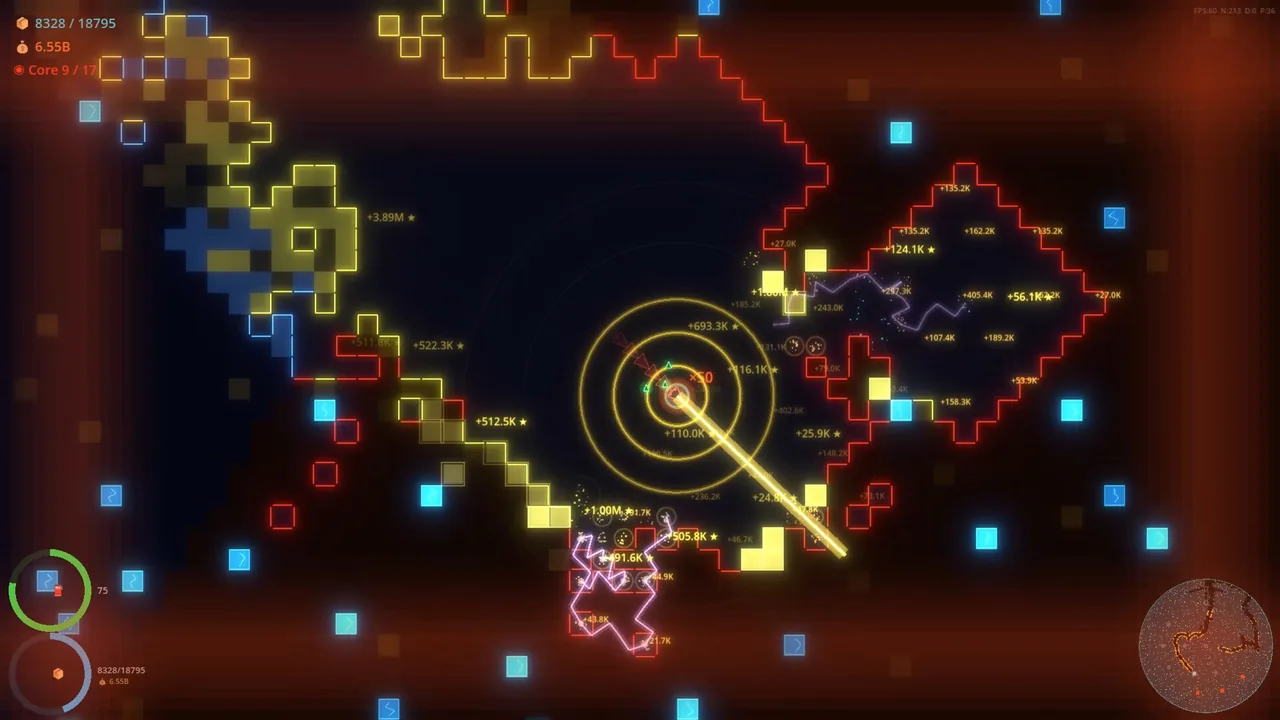
The moment-to-moment loop is orbit, aim, fire, repeat. Each planet is built from layers of blocks that chip away under sustained laser fire, and the further down you dig the tougher the material gets, which is standard incremental math dressed up in a mining-laser skin. What separates Orbitmine from a browser tab you'd forget about in a week is that the block layers aren't just harder — they behave differently depending on which of the four seasonal zones you're working through. Spring's blocks regenerate if you don't clear them fast enough, turning careful routing into a real consideration rather than a formality. Summer punishes sustained fire with overheating, forcing you to manage burst timing instead of just holding the trigger down. Autumn adds wind gusts that push your orbit off-line mid-drill, and Winter freezes exposed surfaces, changing which blocks are worth prioritizing. None of these hazards reinvent incremental design, but they do mean the four zones actually feel like four different puzzles rather than four palette swaps on the way to a harder number, and that's worth crediting in a genre where reskinning is the norm.
The upgrade tree backing all of this is broader than the core loop needs it to be, in a good way: laser power and barrier strength are the expected baseline, but Mega Laser, Shockwave, Drones and Overdrive abilities give you actual toys to unlock rather than just bigger multipliers on the same verb. Each season ends at a boss core that gates progress to the next zone, and the final one is notably harder than anything that comes before it — hard enough that reviewers have specifically flagged the difficulty spike as an odd choice for a game that otherwise reads as a relaxed, low-stakes idler. It's not a bad boss fight on its own terms, but it does sit awkwardly against everything the rest of the game trains you to expect from it.
The travel problem no upgrade fixes in time
The single biggest source of friction isn't a hazard or a boss — it's geography. Each planet only gives you two places to actually launch a drilling run from: your original starting point and one additional site on the far side. Once you've moved your effective mining position away from either of those anchors, getting back to unfinished work means flying there yourself rather than relaunching directly into it, and that flight time adds up across a session that's mostly supposed to be about drilling, not commuting. It's the kind of design choice that probably reads fine on paper — more launch points would trivialize positioning — but plays out as dead time in practice, and player feedback singles it out as the most common complaint about the game specifically because it recurs on every planet rather than being a one-off annoyance.
The upgrade that would actually solve this — unlimited fuel, removing the need to budget trips at all — sits so late in the tree that it unlocks right before the game ends rather than partway through it. By the time you have it, there's barely any playtime left in which it matters. That's a frustrating sequencing choice rather than a fundamentally bad idea: infinite fuel as a late-game reward is a reasonable incentive structure in principle, it's just tuned to arrive after the problem it solves has already stopped being relevant.
Resource tracking has a similar rough edge. Fuel and cargo capacity live in a small readout tucked in a corner of the screen, easy to lose track of during an active drilling run, and a full cargo hold doesn't pause or warn you — it just starts discarding whatever you mine next. Losing freshly drilled material to an inventory cap you weren't watching feels like a design oversight rather than an intentional resource-management challenge, especially in a game whose whole appeal is supposed to be low-stress.
A short, linear tree with nowhere further to go
Once the upgrade path is laid out, there isn't much decision-making left to do with it. It runs in a straight line rather than branching into meaningfully different builds, so two players who finish Orbitmine will have made almost identical choices to get there. That's a defensible design for a three-to-four-hour game aiming at a casual, relaxing audience rather than a min-maxing one — not every incremental needs a build-crafting layer — but it does mean there's little reason to start a second save once the fourth core cracks open. Nothing carries over, no harder tier unlocks, no alternate path reveals itself. The credits roll and that's the whole experience.
Whether that's a problem depends entirely on what you paid to get there. At NZ$4.49, a tight three- or four-hour incremental with a beginning, middle and end is a fair trade, and it's priced like exactly what it is rather than padded out to look more substantial than it is. Some player feedback has pushed back on even that modest price, comparing the finished product to something that would have felt at home as a free browser game a decade ago — a fair reaction if you're judging Orbitmine purely on mechanical depth, less fair if you're judging it on the specific mood it's going for. The developer's own storefront disclosure is worth noting here too: AI tools were used for the store page's capsule art and to assist with localization into its dozen supported languages, but the game states plainly that no AI was used for in-game visuals, sound or music, which is exactly the kind of clarity Steam's disclosure rules are meant to produce and more transparency than plenty of releases at this price point bother with.
Presentation is doing more work than the systems
What actually sells Orbitmine, more than any individual mechanic, is its look and feel. The neon lighting against the dark of space, the way each planet's surface layers peel away under laser fire, and an ambient soundtrack built for winding down rather than pumping you up all combine into something that earns the "cozy" label the store page reaches for. It's the reason player sentiment splits the way it does: praise clusters tightly around atmosphere and the initial satisfaction of watching a planet shrink under sustained fire, while criticism clusters just as tightly around the travel friction, the thin upgrade tree, and a runtime that doesn't leave much behind it. That's not a game with scattered, unrelated flaws — it's a game whose appeal and its ceiling both come from the same small, tightly scoped design, and reading the reviews in bulk shows a genuinely consistent picture rather than a scattershot of unrelated complaints.
Players who come to Orbitmine from something like Wanderer, where progression is built to reward checking back in over days and weeks rather than a single sitting, should adjust expectations accordingly — this is a complete, self-contained experience rather than a long-term incremental with a live roadmap behind it.
Final verdict
Orbitmine is a competent, good-looking first release built around one idea that mostly works: drill a planet down to its core, season by season, while a genuinely varied set of hazards keeps each zone from feeling like the last one with a new coat of paint. It doesn't score higher because the map layout actively fights the loop it's built around, the reward that would fix that arrives too late to matter, and a strictly linear upgrade tree gives you nothing to chase once the credits roll. For a few relaxed evenings at a low price, backed by a free demo that lets you check the fit first, it's an easy enough recommendation. Anyone hoping for a longer-term incremental with build variety and a reason to keep coming back should look elsewhere.
Price and Steam review data checked 31 July 2026.
Pros and cons
Pros
- Each of the four seasonal zones changes the moment-to-moment drilling puzzle in a real way — regenerating blocks in Spring, overheating in Summer, wind gusts in Autumn, freezing in Winter — rather than just reskinning the same hazard
- The neon orbit visuals and ambient score consistently land the "cozy space mining" mood the store page promises
- A free demo lets you test the core laser-and-orbit feel before spending anything
- Twelve Steam achievements and full localization into a dozen languages are more polish than a $4.49 solo release usually bothers with
Cons
- Each planet only offers two launch points, so once you've drilled away from either one you're often flying back over already-cleared ground instead of mining anything new
- Fuel and cargo capacity sit in a small corner readout, and a full cargo hold silently discards freshly mined blocks rather than warning you first
- The upgrade tree runs in a single line with no branching choices, so there's little build variety to chase across a playthrough
- Infinite fuel — the upgrade that would fix the travel problem — unlocks so close to the ending that it stops being useful right around when it stops mattering
- No content or progression carries over after the fourth core falls, leaving little reason to start again
Screenshots
-
OrbitmineImage: vibemaker1 via Steam -
OrbitmineImage: vibemaker1 via Steam -
OrbitmineImage: vibemaker1 via Steam -
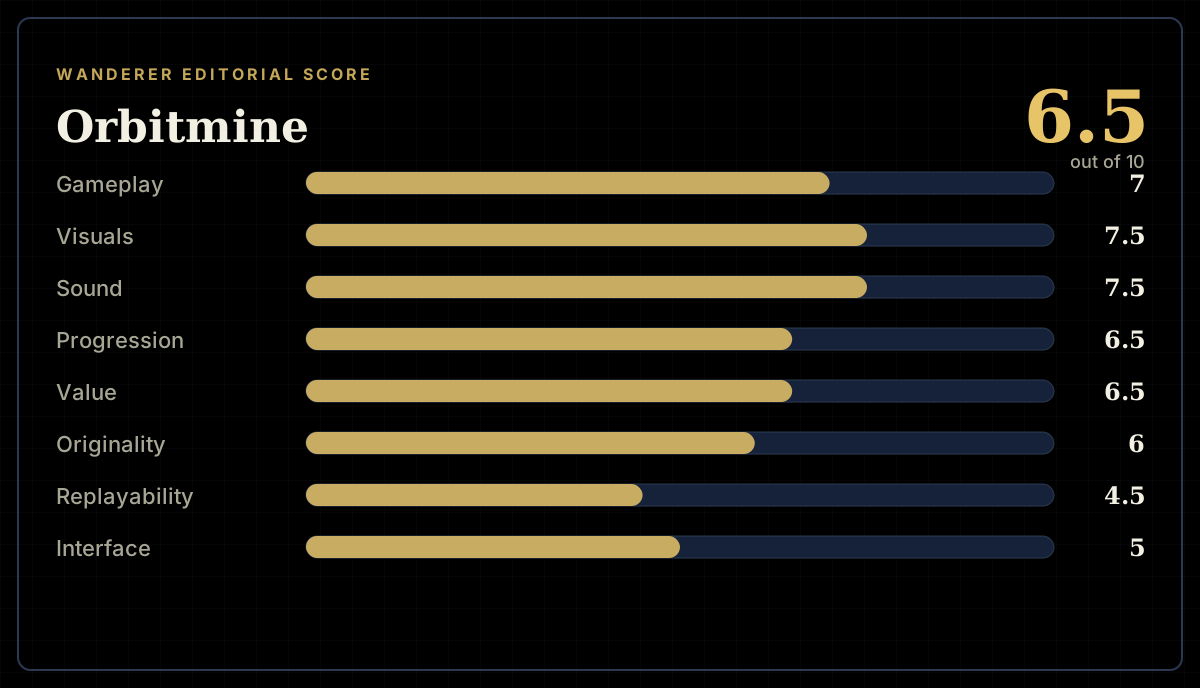
How the review scores each part of the gameWanderer Editorial -
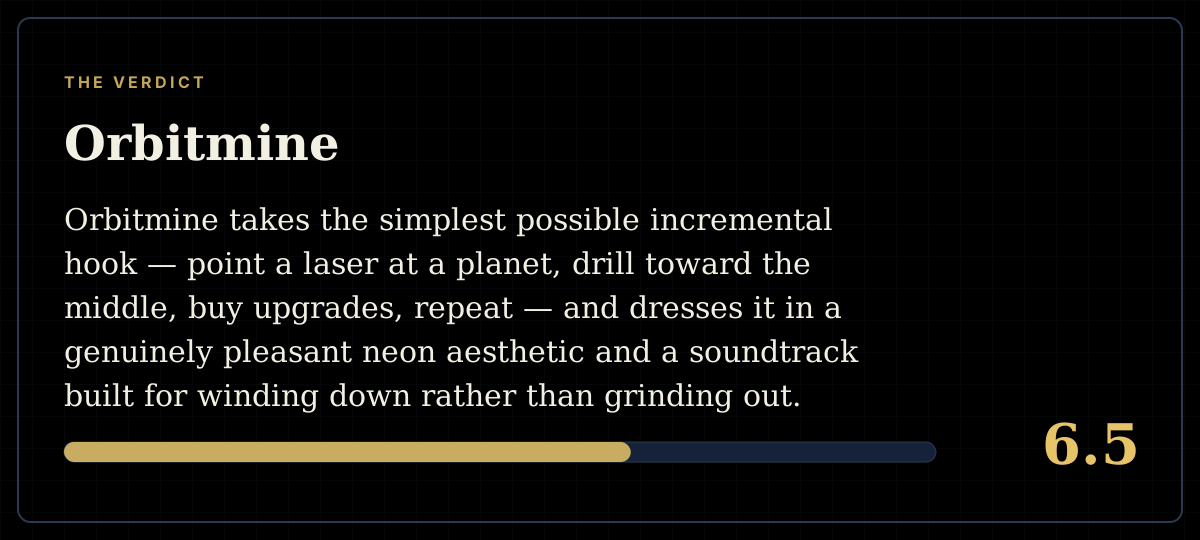
The short versionWanderer Editorial